

Taking several psychiatric medications isn’t, by itself, proof that your treatment is excessive. If you’re asking, “am I taking too much psychiatric medication,” discomfort, new side effects, or changes in how you feel deserve attention. But those experiences can have more than one cause: medication, a mental health condition, or both.
It’s reasonable to wonder whether the benefits still outweigh the burdens. A medication plan may be worth reviewing if side effects are troubling, symptoms have changed, or you’re unsure what each medication is meant to help with. The number of medications alone can’t answer that question. Your safety, day-to-day functioning, treatment goals, and the benefits you experience all matter.
This checklist can help you notice patterns, understand what medication burden can and can’t tell you, and prepare for a conversation with your prescriber. You’ll also learn how clinician-led medication management can support a careful review. Don’t stop or change a dose on your own. Any adjustment should be planned with a qualified clinician who understands your situation.
Key Takeaways
- “Too much” is about more than dose or pill count. Consider safety, unwanted effects, benefits, and how treatment affects daily life.
- If you’re wondering “am I taking too much psychiatric medication,” track what feels different and when it happens to help guide a prescriber conversation.
- Medication effects can overlap with symptoms, sleep, stress, and other health factors. Your observations are more useful than trying to diagnose the cause yourself.
- Bring a complete list of medications and supplements, how you take them, your concerns, and the goals you hope treatment will support.
- A medication review can weigh benefits, risks, and options together without assuming in advance that treatment should stay the same or change.
Am I taking too much psychiatric medication? Start with what 'too much' means
It’s understandable to wonder, “am I taking too much psychiatric medication?” when you’re experiencing unwanted changes or feel unsure about your treatment plan. Asking the question doesn’t mean treatment has failed. It means your experience deserves a thoughtful conversation.
Medication burden is about more than the number of prescriptions. It includes whether your medications are safe and beneficial, whether unwanted effects interfere with your life, and how treatment affects your daily functioning. A plan may be worth reviewing if its effects make it harder to work, sleep, think clearly, or manage everyday tasks. Those concerns are useful information, not proof that a medication is to blame.
The following video offers a perspective on psychiatric medication, but its title isn’t a personal assessment or a substitute for guidance from your prescriber. Your needs and treatment history are individual.
Why the number of medications is not the whole story
Different prescriptions may serve distinct purposes. One might target a core symptom while another addresses a separate concern or supports a treatment goal. Using multiple medications is sometimes called polypharmacy. The term describes a medication pattern, not a conclusion that treatment is inappropriate.
A clinician can consider what each medication is intended to do, its dose and timing, the benefits you notice, possible risks, and your full medication list. That broader view matters more than counting pills. Several medications aren’t automatically unsafe, just as a single medication isn’t automatically the right fit.
What a medication review is, and what it is not
A medication review is a structured discussion of effectiveness, safety, concerns, and your priorities. You can explain what has helped, what feels difficult, and what you hope treatment will make possible. Clinician-led medication management can help put those details in context. For more background, read the compassionate guide to psychiatric medication management.
A medication review is a chance to understand your options, not a decision to stop treatment. It doesn’t automatically mean reducing a dose or discontinuing a medication. Any change should be planned with your prescriber and based on your circumstances and goals.
Signs your psychiatric medication deserves a closer review
Changes in how you feel or function can be a reason to check in with your prescriber, especially if they’re persistent, troubling, or interfering with everyday activities. They don’t prove that you’re taking too much or that medication is the cause. If you’re asking, “am I taking too much psychiatric medication,” tracking what changed and when can make the conversation more specific.
A pattern may deserve a review, but it can’t identify the cause on its own. Focus on what you noticed, when it began, and how it affects your routine.
Changes in how you feel or function
Notice both physical and emotional changes. Sleep, alertness, mood, concentration, or appetite may shift, or usual tasks may feel harder to manage. For example, feeling unusually tired during the day or struggling to focus is worth mentioning, even though neither experience points to one definite cause.
Pay attention to timing. Did the change begin after starting a medication, adjusting a dose, or adding another prescription? Has it continued, eased, or affected particular parts of your day? A brief note about what you noticed and when can help your prescriber consider medication effects alongside symptoms, stress, sleep, and other health factors.
For a separate discussion of signs of prescription drug misuse, Mental Health America explains what misuse can involve. Unwanted effects during prescribed use and medication misuse aren’t the same thing, so describe your situation without labeling yourself.
When medication combinations or interactions raise questions
Keep a current list of prescriptions, over-the-counter medicines, and supplements, including how and when you take them. Share it if you’re concerned about a possible interaction or notice a new change after adding something to your routine. Interaction risks depend on the specific combination and your individual circumstances, so a general online list can’t determine what applies to you.
Your prescriber or pharmacist can review the exact list and address your questions. Don’t stop, skip, or change a medication on your own while trying to identify a possible cause. For support discussing your treatment goals and concerns, clinician-led medication management provides a setting for a careful review.
Medication effects or symptoms? Compare the clues without self-diagnosing
If you’re wondering, “am I taking too much psychiatric medication,” a timeline can help you describe what’s happening without trying to diagnose the cause. Changes after starting or adjusting a medication are useful clues to share, but timing alone can’t confirm that the medication caused them. Symptoms, sleep, stress, other health changes, and medication combinations can overlap.
Use this table to organize observations for a conversation with your prescribing clinician. The possibilities are examples, not conclusions.
| Observation | Timing to note | Possible explanations | What to tell your clinician |
|---|---|---|---|
| A change in sleep or daytime alertness | When it began, and whether it followed a medication start, dose adjustment, or addition | Medication effects, a change in symptoms, stress, or a disrupted sleep routine | Describe the change and how it affects your day |
| Shifts in mood, concentration, or appetite | Whether the change is steady or varies across the day or week | Medication, the underlying condition, sleep, stress, or another health factor | Share when you notice it, how often, and what else was happening |
| A concern that seems to occur around a dose | When you take the medication and when the concern appears | A possible medication effect, another influence, or an unrelated pattern | Report the timing and follow the prescribed directions while awaiting guidance |
Track timing, dose instructions, and daily impact
Keep brief notes rather than trying to monitor every detail. Record when a concern began, when it tends to happen, how often it occurs, and how intense or disruptive it feels. Note effects on work, relationships, sleep, or your usual routine. Follow your prescribed directions, and record any missed or delayed doses honestly. This information gives your clinician useful context. It isn’t a reason to change how you take medication on your own.
Why symptoms can have more than one explanation
A symptom may relate to a mental health condition, a medication effect, an interaction, or an unrelated change in health or routine. Several factors can also contribute at once. A new concern appearing after a medication change is worth mentioning, but it doesn’t prove cause and effect.
Share the full picture with your prescribing clinician, including your notes, medication list, sleep, stress, and other relevant changes. The table isn’t a self-diagnosis tool, and it can’t determine whether a treatment is excessive. Don’t use it to alter or stop medication. Use it to make your questions clearer and support an informed clinical discussion.
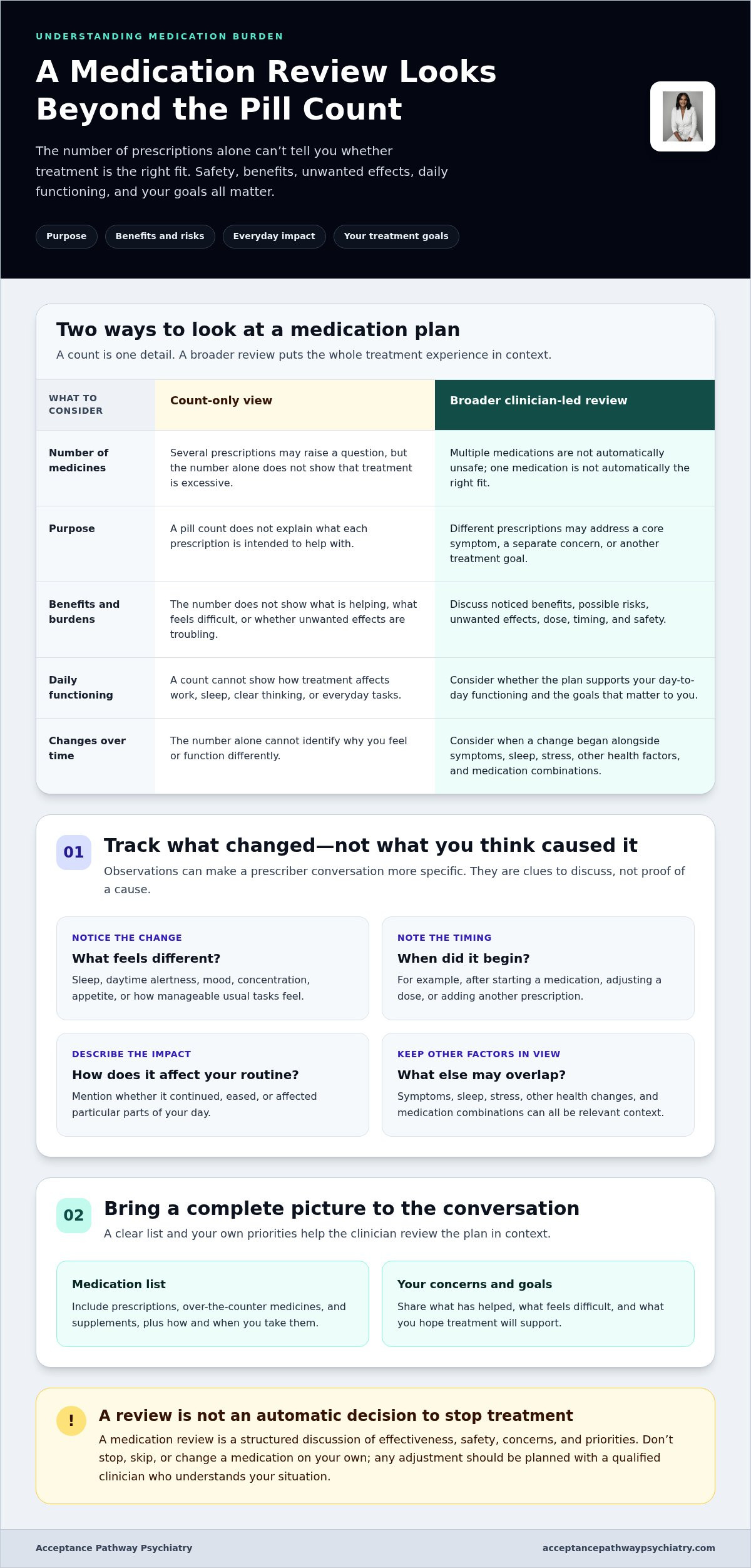
Use this checklist to prepare for a psychiatric medication review
If you’re wondering, “am I taking too much psychiatric medication,” a little preparation can help you explain what concerns you and what you hope will change. You don’t need to arrive with a conclusion. Bring your observations and questions so you and your prescriber can review the plan together.
What to write down before the appointment
Save these notes on your phone or bring them with you. They don’t need to be polished or complete to be useful.
- List every medication and supplement. Include prescriptions, over-the-counter medicines, vitamins, and supplements. Note the directions you were given and when each one was started or last changed.
- Describe what seems helpful. Note any benefits you’ve noticed and which treatment goals feel supported, unchanged, or harder to reach.
- Record concerns honestly. Write down unwanted effects, changes in how you feel or function, and when they happen. Include missed or delayed doses without minimizing or judging yourself.
- Add relevant context. Mention recent health or routine changes that may matter, such as shifts in sleep or increased stress.
- Choose your main questions and goals. For example, you might want to understand what each medication is intended to help with or discuss a change that’s affecting your daily life.
Questions that can make the conversation clearer
Use these prompts to guide the discussion:
- What is each medication intended to help with, and how will we assess whether it’s helping?
- Which effects should I bring to your attention promptly?
- Who should I contact with non-emergency questions or concerns?
- What options could fit my goals, and what benefits and risks should we weigh?
You don’t have to cover every question in one conversation. Your prescriber can help you sort through what matters most and discuss options with you. Don’t stop or change a medication on your own. Make treatment changes only with prescriber guidance.
To discuss your goals, experiences, and concerns with a clinician, explore medication management care.
What happens after you raise a medication concern?
Sharing a concern doesn’t commit you to a particular treatment change. Your clinician may review your goals, symptoms, health and treatment history, the benefits and risks you’ve noticed, and your complete medication list. If you’re still asking, “am I taking too much psychiatric medication,” the aim is to understand your experience together, not reach a predetermined answer.
How a collaborative review can guide next steps
You and your clinician can identify what matters most, such as easing a difficult effect, improving daily functioning, or maintaining progress. Together, you can discuss possible approaches and their benefits and risks. Any adjustment or discontinuation plan should come from your prescriber. Follow-up may help you both understand how an agreed plan is working over time. When clinically appropriate, psychotherapy can complement medication care and support your broader treatment goals.
There isn’t one outcome every review should produce. The discussion may clarify the purpose of each medication, address questions, or identify a carefully planned change. Your preferences and concerns belong in that conversation.
When to seek urgent help instead of waiting for an appointment
Don’t wait for a scheduled appointment if you’re in immediate danger, suspect an overdose, or are experiencing a severe reaction. Call emergency services or go to an emergency department. In the United States, you can call or text 988 for crisis support. If someone may have taken too much medication, contact emergency services or Poison Control for guidance.
Acceptance Pathway Psychiatry PLLC is not a 24/7 crisis service, so use emergency or crisis resources for urgent situations rather than waiting for an appointment. For non-emergency questions, clinician-led medication management can help you consider your experiences, goals, and options. Explore medication management support.
Make room for a thoughtful medication conversation
Asking “am I taking too much psychiatric medication” is a reason to pause and seek clarity, not a sign that treatment has failed. Medication burden depends on the balance of benefits, unwanted effects, safety, and how you’re functioning, not pill count alone. Your observations and goals can help your prescriber understand what’s working and what deserves a closer look.
A review doesn’t predetermine the outcome. It creates space to discuss your concerns and weigh options together. Don’t stop or change medication without guidance from your prescriber.
At Acceptance Pathway Psychiatry PLLC, medication management can support a collaborative review of your treatment. Psychotherapy is also available, and telehealth appointments offer flexible access to care. Explore compassionate medication management support.
You deserve care that takes your experience seriously. A clear, steady conversation can be a meaningful next step.
Frequently Asked Questions
How do I know if I am taking too much psychiatric medication?
There isn’t a single pill count or symptom that can answer this for everyone. Ask “am I taking too much psychiatric medication” if you’re experiencing persistent unwanted effects, safety concerns, or changes that interfere with daily life. A prescriber can review the medication’s purpose, your experience of its benefits and risks, and your overall health. Don’t change your dose or stop medication without prescriber guidance.
Can taking multiple psychiatric medications be appropriate?
Yes. A clinician may prescribe more than one medication when each has a distinct purpose and the overall plan is appropriate for the person. The number alone doesn’t establish whether treatment is excessive. A review can look at what each medication is intended to help with, how well it’s working, possible risks, and the full list of prescriptions, over-the-counter medicines, and supplements you take.
What are common signs that psychiatric medication may need a review?
Consider asking for a review if unwanted effects persist, new concerns appear, symptoms change, or daily activities become harder. Changes in sleep, alertness, mood, concentration, or appetite may be useful to report, but no single symptom proves that medication is the cause. Note when the concern began, including whether it followed starting or changing a medication, and discuss the pattern with your prescriber.
Should I stop taking psychiatric medication if I feel overmedicated?
No. Don’t stop, skip, or change a dose on your own, even if you suspect a medication is causing a problem. Contact your prescriber to discuss what you’re experiencing and ask how to proceed safely. Medication changes, including discontinuation, should be planned with a qualified clinician who understands your treatment and health history. If you suspect an overdose or have a severe reaction, seek urgent help rather than waiting for an appointment.
How can I tell whether a symptom is a side effect or my condition?
You may not be able to tell on your own because medication effects can overlap with symptoms of a condition, sleep changes, stress, interactions, or other health factors. Timing can offer useful context, but a symptom that appears after a medication change doesn’t prove the medication caused it. Record when it occurs, how often, and how it affects you, then share the full context with your clinician.
What should I bring to a psychiatric medication review?
Bring a current list of prescriptions, over-the-counter medicines, and supplements, along with the directions for each and when it was started or changed. Add notes about benefits, unwanted effects, missed or delayed doses, and relevant health or routine changes. Write down your treatment goals and questions, such as what each medication is intended to help with and how you’ll assess progress. Honest details help guide the conversation.
When should I seek urgent help for a psychiatric medication concern?
Seek emergency help if you’re in immediate danger, suspect an overdose, or experience a severe reaction. Call emergency services or go to an emergency department instead of waiting for a routine appointment. In the United States, call or text 988 for mental health crisis support. For a suspected overdose, contact emergency services or Poison Control. Use urgent resources for emergencies, not a routine medication review.


