

What if a useful routine didn’t depend on perfect focus or a perfectly predictable day? If remembering recurring tasks and shifting between activities feels hard, building routines for adult ADHD can seem like one more demand. When a rigid schedule falls apart, it’s easy to feel as though you’ve failed, even when life simply changed.
That frustration makes sense. Routines can support attention and executive function, but they work best as flexible external cues, not tests of willpower. You don’t need to overhaul your day or create a long checklist to get started.
This guide will help you build a few realistic routines around the parts of daily life that need support. You’ll learn how to start small, use reminders and environmental cues, and adjust routines when plans shift. You’ll also find ways to return after an interruption without treating a disrupted day as a failure. The goal is a system that can support you even when your attention or circumstances change.
Key Takeaways
- Think of a routine as a repeatable sequence supported by cues, not a schedule you must follow perfectly.
- Use visible reminders and a few clear actions to make it easier to remember and begin a routine.
- When building routines for adult ADHD, start with one daily need and test a simple first step before adding more.
- Choose predictable cues while letting the timing adapt to changing plans and attention.
- If a routine gets interrupted, return to one cue, choose the next action, and adjust the routine if needed.
Why building routines for adult ADHD can feel harder than it looks
A routine can look simple from the outside: get ready, begin work, make a meal, or wind down for bed. But each sequence may involve remembering several steps, deciding what to do first, and shifting attention between activities. For adults with ADHD, planning, task initiation, working memory, or time awareness may make some of those moments more demanding. The experience varies from person to person.
An ADHD-friendly routine is a repeatable sequence supported by external cues, with enough flexibility to fit real life. It helps make the next action easier to notice, rather than demanding a perfect timetable. For a broader overview of symptoms and management, see Adult attention deficit hyperactivity disorder.
This video explores why starting a task can feel difficult, even when the task seems straightforward:
What can make everyday routines difficult with adult ADHD?
A routine with several parts can ask you to hold the next step in mind while completing the current one. Getting ready might mean finding clothes, gathering what you need, and leaving on time. If one step slips from working memory, it may be hard to pick up the sequence again. Transitions can add friction too: stopping one task and beginning another often calls for a clear prompt and a manageable first action.
Distractions, interruptions, or an unclear starting point can also break the flow. That doesn’t mean you’re careless or that every routine will be difficult. It may mean a plan that depends entirely on remembering each step needs more support. For example, placing the items you need together can make the next action easier to see than relying on memory alone.
How are routines different from rigid schedules?
A schedule assigns an activity to a specific time. A routine connects a cue with an action or short sequence. For example, finishing breakfast could cue packing a work bag. The cue can stay familiar even if breakfast happens earlier or later on different days.
This distinction matters when plans change. A rigid timetable can make a small delay feel like the whole day is off track; a flexible routine can still serve its purpose at another time. If you miss a step, you haven’t erased your progress. Return to the next useful action rather than starting over. That flexibility is a practical foundation for building routines for adult ADHD.
How ADHD-friendly routines use cues, small steps, and the environment
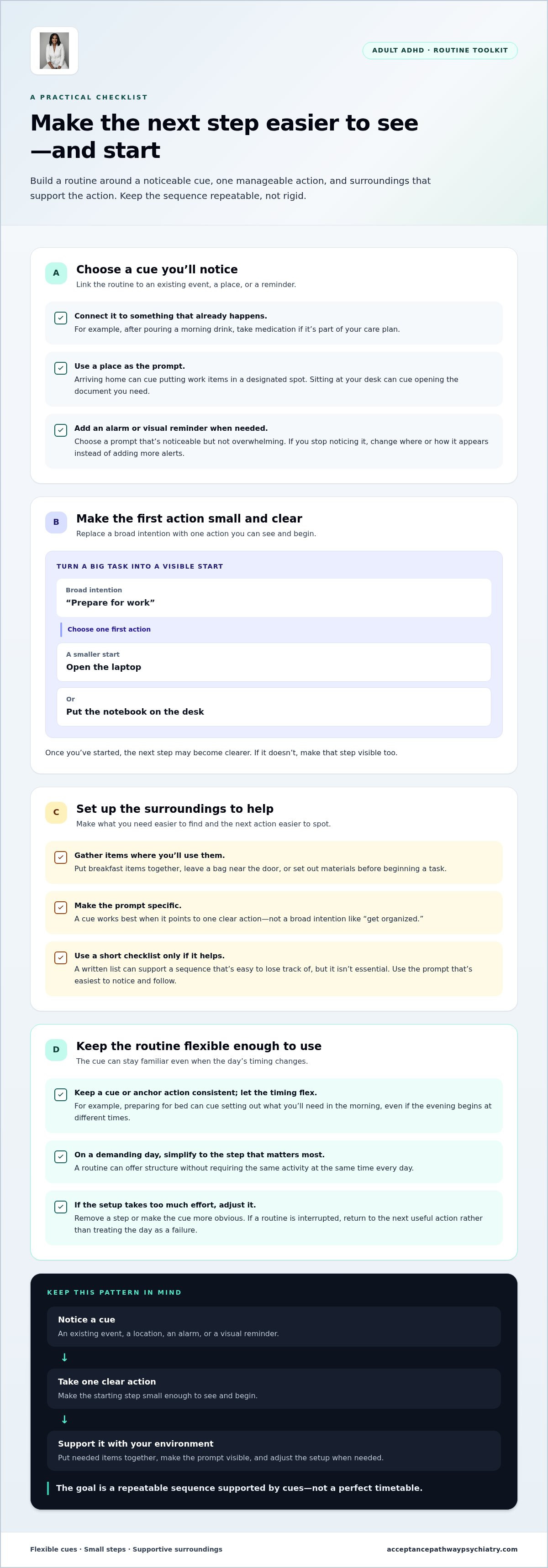
A routine is easier to follow when you don’t have to keep every step in mind. A cue in your surroundings can prompt one clear action: seeing your keys by the door can remind you to put them in your bag, while sitting at your desk can signal that it’s time to open the document you need.
Visible cues and smaller steps make routines easier to remember and begin, even when attention shifts. The best prompt is one that fits naturally into your day. It might be an existing event, a specific location, an alarm, or a note where you’ll see it. Choose a cue that’s noticeable but not overwhelming, and connect it to a single action rather than a broad intention like “get organized.”
What makes a useful cue for an ADHD routine?
Try linking an action to something that already happens. After you pour your morning drink, take your medication if that’s part of your care plan. When you arrive home, put your work items in a designated spot. An alarm or visual reminder can help when there isn’t a reliable event or location to use. If you stop noticing a reminder, change where or how it appears instead of adding more alerts. The cue’s purpose is to make the next step easier to spot, not to create another demand to manage.
How can you make a routine easier to start?
Look at a task that feels like one big effort and identify the smallest meaningful first action. “Prepare for work” could become “open the laptop” or “put the notebook on the desk.” Once you’ve started, the next step may feel clearer. If not, make that step visible too.
Shape the environment to support the action. Put breakfast items together, leave a bag near the door, or set out the materials you’ll need before beginning a task. A short checklist can help with a sequence that’s easy to lose track of, but a written list isn’t essential. Use whichever prompt is easiest to notice and follow. HelpGuide’s tips for getting organized and controlling clutter offer additional ideas for making your surroundings more supportive.
Keep the routine light enough to use on an ordinary day. If it takes too much effort to maintain, remove a step or make the cue more obvious. You can adjust the setup as you learn what works. If ADHD-related challenges continue to make daily life difficult, individualized support such as ADHD psychotherapy and medication management may help you explore strategies that fit your needs.
Do routines for adult ADHD need to be strict to work?
No. A routine can provide structure without requiring you to do the same thing at the same time every day. A tightly scheduled plan may leave little room for a late start, an unexpected responsibility, or a shift in energy. If one delay makes the rest of the plan feel impossible, the routine may depend too much on exact timing.
Instead, keep a cue or anchor action consistent and let the timing flex. For example, preparing for bed could cue setting out what you’ll need in the morning. The evening may begin at different times, but the sequence still has a familiar starting point. On a demanding day, simplify the routine to the one step that matters most. Building routines for adult ADHD is about creating useful support, not proving you can follow a plan perfectly.
Can flexible routines still provide structure?
Yes. Predictability can come from what happens next, rather than from a fixed time on the clock. If your usual morning changes, one anchor action, such as putting your lunch in your bag before leaving, can preserve part of the routine. Return to the fuller sequence when the day allows. The routine keeps its purpose even as its timing or length changes.
What should you do when a routine is interrupted?
Resume at the next available cue. You don’t have to catch up on every missed step or recreate the morning exactly as planned. If you skipped preparing lunch, for instance, decide what to eat when you next have a moment. One interruption is not evidence that you lack effort, and it doesn’t cancel the steps you did complete.
If interruptions happen repeatedly, treat them as useful information, not a reason to criticize yourself. Ask what got in the way: Was the cue easy to miss? Did the sequence take more time than you had? Did an unexpected task interrupt it? A one-off disruption may simply call for returning to the routine. A recurring obstacle may mean the routine needs a smaller step, a more noticeable cue, or a different place in your day.
Flexibility also means having a lighter version ready for unusually busy or difficult days. You might keep one essential action and let the rest wait. That isn’t giving up on the routine. It’s adjusting the plan to your circumstances so it remains usable, rather than turning consistency into an all-or-nothing test.
How to build a realistic routine for adult ADHD in small steps
Start with one recurring point of friction, not a plan to change your whole day. Maybe mornings feel rushed, or preparing for bed keeps getting delayed. Choose a practical, specific outcome: “Make it easier to leave with what I need” or “Have what I need for bed ready.” Building routines for adult ADHD becomes more manageable when you test one small sequence at a time.
Which routine should you build first?
Choose a moment that matters in everyday life and describe the outcome you want. Keep the routine short enough to explain in a few clear actions. For example, an evening routine might be putting your charger by the bed and setting out tomorrow’s work items. It doesn’t need to cover every part of the evening to be useful.
How can you test and adjust a new routine?
Use this simple process to create a first version:
- 1. Choose one need. Pick a recurring situation that creates friction, such as getting out the door or starting a task.
- 2. Define the first action. Make it concrete and small, such as putting your bag by the door or opening the file you need.
- 3. Add a cue. Connect that action to something you’ll notice, like finishing breakfast, arriving at your desk, or seeing a reminder.
- 4. Test the sequence. Try it in your actual day and notice whether the cue stands out and the first action feels manageable.
During a short trial, jot down what helped and what got in the way. Did the reminder blend into the background? Was the action unclear, or did it take more time than you expected? A brief checklist can make these observations easier to capture. Then change one element, such as the cue, timing, or number of steps. Changing one thing at a time can help you see what makes the routine fit better.
If a step repeatedly feels too large, make it smaller. If the cue is easy to miss, move it somewhere more visible or link it to a regular event. The aim isn’t to earn a perfect streak. It’s to make a helpful action easier to return to and refine the routine as your needs become clearer.
If daily ADHD challenges remain hard to manage, individualized support can help you explore strategies that fit your needs. Acceptance Pathway Psychiatry offers ADHD-focused mental health care, including psychotherapy and medication management. Learn more about ADHD-focused mental health support.
How to maintain ADHD routines with resets, support, and self-compassion
Even a helpful routine may need to change. Workload, sleep, health, caregiving, and other shifts in life can affect what feels manageable from day to day. A routine that once fit may need fewer steps or a different cue. That isn’t a setback. It’s a chance to adjust the support to your current circumstances.
How do you restart a routine after falling out of it?
Begin with a simple reset: return to one cue, choose the next useful action, and revise the routine if needed. You don’t have to wait for Monday or recreate the full plan. If seeing your packed bag usually prompts you to prepare for the morning, use that cue the next time it fits. Restart with the smallest helpful step.
An interruption can show whether the routine fits your day. Perhaps the cue was easy to miss, or the plan asked too much during a busy stretch. Notice what happened with curiosity, not blame. You can simplify or shift the routine without treating a disrupted pattern as a personal failure.
When might professional support help with ADHD routines?
If attention or organization challenges continue to disrupt daily functioning, discussing them with a qualified mental health professional may help. Routine strategies can be useful, but they don’t replace individualized assessment or care. Depending on your needs, support may include psychotherapy, medication management, or both. The approach can be discussed collaboratively and tailored to your experience.
Building routines for adult ADHD is an ongoing process, not a test you pass once. A routine can change as your needs change, and returning to one small action is meaningful progress. If you’d like to learn more about how cognitive assessment may inform understanding of ADHD, explore this guide to cognitive assessment for ADHD.
If daily challenges remain difficult to manage, Acceptance Pathway Psychiatry offers psychotherapy and medication management for ADHD, with telehealth appointments available. You can learn more about individualized ADHD-related support.
Start with one routine that supports your day
Building routines for adult ADHD doesn’t require a perfect schedule. A useful routine can begin with one daily need, a clear first action, and a cue that helps you remember. Keep the steps manageable, and adjust the timing or setup when life changes.
If a routine gets interrupted, you haven’t lost your progress. Return to the next useful action and treat the interruption as information about what might need to change. Small, flexible supports can make everyday tasks feel more approachable over time.
If ADHD-related challenges continue to affect daily life, professional support may be one part of your care. Acceptance Pathway Psychiatry offers psychotherapy and medication management for ADHD, with telehealth appointments available. Explore ADHD care and support.
You can begin with one small step and build from there. Your routine is allowed to grow and change with you.
Frequently Asked Questions
How do you build a routine when you have ADHD?
Start with one recurring need and create a short sequence around it. Choose a specific first action, such as placing your work bag by the door, then connect it to a cue you’ll notice, like finishing breakfast. Building routines for adult ADHD works best as a practical experiment: try the routine, notice what gets in the way, and adjust one part at a time. You don’t need to redesign your whole day.
Why is it hard for adults with ADHD to stick to routines?
Routines can be hard to maintain when remembering steps, getting started, managing time, or shifting between tasks takes extra effort. A distraction or change in plans may interrupt a sequence, especially if it depends on keeping several steps in mind. Challenges differ from person to person, and difficulty following a routine doesn’t mean you lack effort. External cues, simple steps, and a flexible plan can offer practical support.
Do adults with ADHD need a strict daily schedule?
No. A routine can provide structure without assigning every action an exact time. You might link getting ready for bed to setting out something you’ll need in the morning, even if bedtime shifts. Keeping a cue or a key action consistent can make a routine easier to return to after plans change. If you miss a step, resume with the next useful action rather than treating the day as a failure.
What is the best morning routine for an adult with ADHD?
There isn’t one best morning routine for everyone. Choose a few actions that address your actual morning friction, such as checking a short list, gathering essentials, or eating breakfast if that works for you. Connect the first action to a cue you already encounter, like getting out of bed or making coffee. Keep the routine realistic for your mornings, and revise it if it regularly feels rushed or difficult to start.
How many habits should you add to an ADHD routine at once?
Begin with one routine rather than trying to change several parts of your day at once. Keep its first version to a few clear actions, or even one meaningful starting step if that feels more manageable. Once you’ve tested it in daily life, decide whether to add another action or build a separate routine. A smaller plan is easier to evaluate and adjust than a long list of new habits.
What should you do if you keep falling out of a routine?
Return to the next natural cue and do the smallest useful action. You don’t have to catch up on missed steps or wait for a fresh week to begin again. If the routine keeps getting interrupted, look for a practical reason: perhaps the reminder is hard to notice, the steps take too long, or the timing no longer fits. Use that information to adjust the routine, not to judge yourself.
Can ADHD medication help with daily routines?
ADHD medication may help manage core symptoms for some people, which can make parts of daily life feel more manageable, but its effects vary. Medication doesn’t create a routine automatically, and it isn’t the right approach for everyone. A qualified clinician can discuss your symptoms, goals, and treatment options, which may include medication management, psychotherapy, or both. Don’t start, stop, or change medication without discussing it with your prescriber.


