

What if exploring medication for anxiety didn’t mean committing to it? It’s understandable to wonder whether medication is right for you, or to worry about side effects, dependence, or feeling unlike yourself. Medication management for anxiety is a collaborative process, not a one-time decision made without your input. Your concerns, goals, and experience help shape the conversation.
This guide explains what an initial assessment and follow-up may involve, how treatment plans can be reviewed, and what details to share with your psychiatric clinician. You’ll also find questions to help you understand your options and take part in decisions with greater confidence.
A clinician may discuss potential benefits and concerns, ask how you’re feeling over time, and consider whether psychotherapy could be part of your care. Medication is not the only path, and you don’t need to decide before you’re ready. The aim is to help you feel informed and supported as you consider what may fit your needs.
Key Takeaways
- Medication management for anxiety can include assessment, shared decisions, and follow-up. Medication remains one possible part of care.
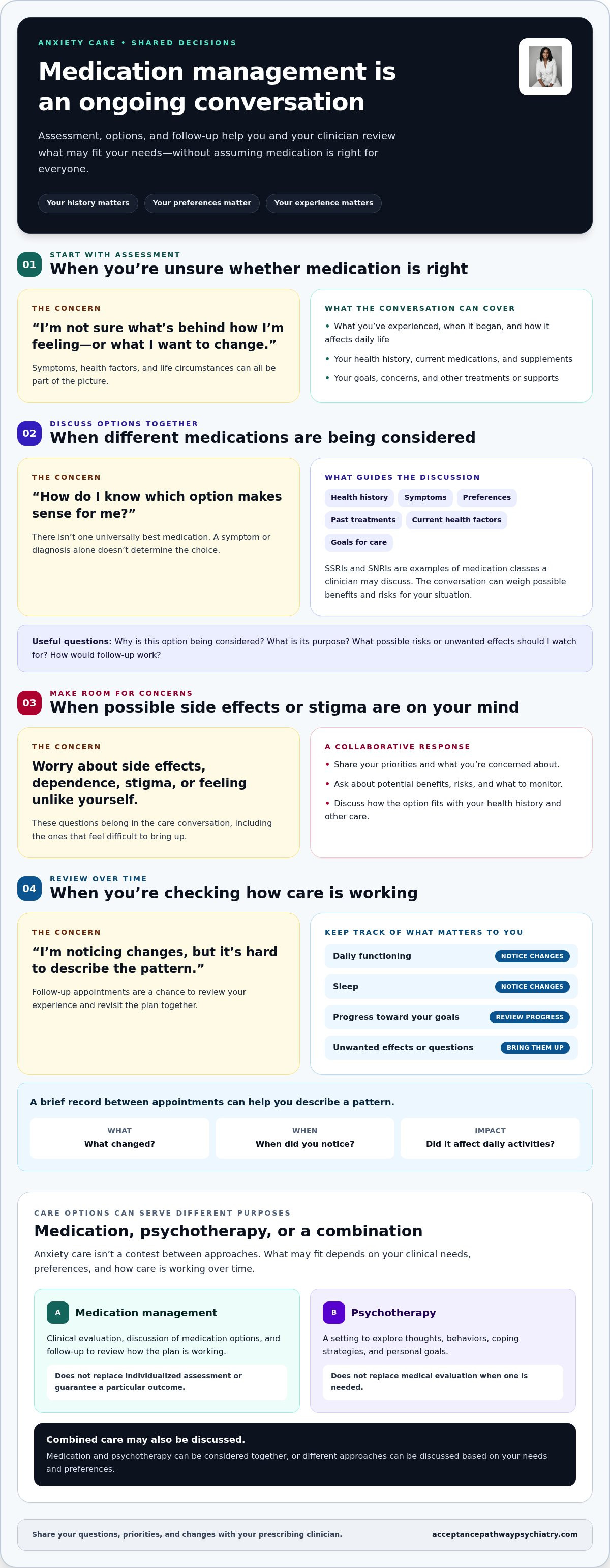
- A clinician may consider your health history, symptoms, preferences, and other treatments when discussing options such as SSRIs or SNRIs.
- Medication, psychotherapy, and combined care can serve different purposes. Understanding those differences can help you discuss what may suit your needs.
- Bring questions about side effects, dependence, stigma, or feeling unlike yourself into the conversation so your concerns can be considered.
- Notice what changes over time and share those experiences with your clinician to support informed follow-up decisions.
What does medication management for anxiety involve?
Medication management for anxiety is an ongoing partnership in which a prescribing clinician assesses your needs, discusses options with you, and follows your experience over time. It involves more than receiving a prescription or attending a one-time evaluation. Follow-up gives you and your clinician time to review how care is going and decide together whether any changes are appropriate.
Medication can be one part of anxiety care, but it isn’t an automatic or universal choice. An evaluation may lead to a discussion of medication, psychotherapy, other supports, or a combination. The goal is to understand your situation and preferences, not to assume that one treatment is right for everyone.
For an additional overview of anxiety symptoms and treatment options, watch this educational video from UC Davis Health:
What happens during an anxiety medication evaluation?
The clinician may ask what you’ve been experiencing, when symptoms began, and how they affect daily life. They’ll also discuss your health history, current medications and supplements, and goals for care. Share what you hope might change, as well as any concerns about taking medication.
The assessment also helps the clinician consider whether other health factors or life circumstances could be contributing to what you’re feeling. The conversation informs possible next steps, but it doesn’t guarantee a prescription. If medication is discussed, ask about its purpose, possible risks, and how follow-up would work. For background, this overview of classes of anxiety medications describes several medication categories. It isn’t a substitute for individualized clinical guidance.
Who may be part of medication management?
A prescribing mental health clinician evaluates whether medication may be appropriate, explains options, and monitors care over time. Your role matters just as much: share questions, priorities, and changes you notice, including concerns that feel difficult to bring up. These details help shape ongoing decisions.
Psychotherapy may also be part of the broader care conversation. Some people consider it alongside medication, while others discuss different approaches based on their needs and preferences. It isn’t a required step for everyone. Acceptance Pathway Psychiatry PLLC provides medication management and psychotherapy, with care shaped by your history, concerns, and goals.
How anxiety medications are considered and monitored over time
Medication choice and monitoring should be individualized to your health history, symptoms, preferences, and experience. A clinician may consider what you’ve tried before, other treatments you’re using, current health factors, and what you hope to change. These details guide a discussion, but they don’t point to one universally best medication.
Why clinicians discuss different medication options
Medication classes can affect the body in different ways. SSRIs and SNRIs are examples a clinician may discuss as part of anxiety care. Whether either is appropriate depends on an individual assessment, not simply on a symptom or diagnosis. The American Psychiatric Association offers an overview of how anxiety disorders are treated, including the role medication may have alongside other supports.
A thoughtful discussion weighs possible benefits and risks in light of your health history and priorities. You can ask why an option is being considered, what concerns to watch for, and how it fits with other treatments. This is a shared decision, not a test with a single right answer.
What follow-up appointments help assess
Follow-up gives you and your prescriber time to review how treatment is affecting more than anxiety symptoms alone. It may help to note changes in daily functioning, sleep, and progress toward your own goals, along with unwanted effects or questions. A brief record between appointments can make it easier to describe patterns. You might jot down what changed, when you noticed it, and whether it affected your day-to-day activities.
If benefits, concerns, or circumstances shift, your clinician can revisit the plan with you. Don’t change your dose or stop a prescribed medication on your own. Discuss any changes you’re considering with your prescriber, who can advise you based on the medication and your situation. Sharing concerns early helps keep the conversation open and focused on what matters to you.
Acceptance Pathway Psychiatry PLLC provides medication management centered on your concerns, goals, and experience. Learn more about psychiatric medication management and the care conversations it involves.
Medication, therapy, and other supports: understanding the options
Anxiety care isn’t a contest between medication and psychotherapy. Each can serve a different purpose, and a plan may involve one approach or a combination. The right fit depends on your clinical needs, preferences, and how your care is working over time. A psychiatric medication management guide can help you understand the medication-focused part of that conversation.
| Approach | What it may contribute | What it doesn’t replace |
|---|---|---|
| Medication management | Clinical evaluation, discussion of medication options, and follow-up to review how the plan is working. | It doesn’t replace individualized assessment or guarantee a particular outcome. |
| Psychotherapy | A setting to explore thoughts, behaviors, coping strategies, and personal goals. | It doesn’t replace medical evaluation when one is needed. |
| Combined care | Medication management and psychotherapy may address different needs as part of a broader plan. | It isn’t necessary or automatically the best choice for everyone. |
What medication management can and cannot do
Medication may be considered to address anxiety symptoms as one part of an individualized plan. Ongoing medication management for anxiety creates opportunities to discuss whether the approach still fits, including what you’re noticing and any concerns. It can support informed decisions, but it can’t promise that symptoms will disappear or predict exactly how treatment will feel for you.
Continued discussion matters. Your needs or preferences may change, and your clinician can help you review the plan rather than treating the initial decision as permanent.
When psychotherapy may be part of anxiety care
Psychotherapy offers space to work with patterns of thought and behavior, build coping approaches, and explore goals that matter in daily life. Some people discuss therapy alongside medication; others consider a different plan. Neither medication alone nor therapy alone is the right answer for everyone.
Talk with your clinician about what you hope care will help you do, what feels manageable, and what questions remain. These priorities can guide a collaborative conversation about options and whether the plan continues to meet your needs.
Addressing concerns about anxiety medication with your clinician
Questions about side effects, dependence, stigma, or feeling unlike yourself deserve a thoughtful conversation. You don’t have to minimize your concerns or arrive with a decision already made. Risks differ across medications and individuals, so your prescribing clinician can discuss what’s relevant to your health history and the option being considered.
How to prepare for a medication conversation
A few notes can help you feel more grounded and make the appointment more useful. Before you meet, consider writing down:
- The symptoms you’ve noticed and how they affect daily life.
- Relevant health history and the medicines or supplements you currently take.
- Your main concerns, such as possible side effects or feeling different.
- What meaningful improvement would look like for you.
You might also ask: “What risks should I understand?” “What follow-up should I expect?” and “How will we review whether this plan is helping?” Sharing your priorities is part of medication management for anxiety. It helps your clinician understand what matters to you and explain the reasoning behind possible next steps.
What to do when concerns or symptoms change
If you notice a new or troubling experience, or your symptoms change, tell your prescriber. Describe when it started, how it affects you, and whether anything else changed around the same time. Your clinician can help assess whether the care plan needs to be reviewed and discuss appropriate next steps.
Don’t stop a prescribed medication or change how you take it without guidance from your prescriber. If you’re unsure what to do, contact them for advice rather than making an adjustment on your own.
If you’re in the United States and facing an immediate mental health crisis, call or text 988 for the Suicide & Crisis Lifeline. If there’s immediate danger or urgent medical need, call 911.
Acceptance Pathway Psychiatry PLLC provides medication management and psychotherapy shaped by your concerns and goals. Read about medication management support.
Starting medication management for anxiety with supportive psychiatric care
Taking a first step doesn’t mean you’ve already decided to take medication. Acceptance Pathway Psychiatry PLLC provides medication management and psychotherapy for anxiety and other mental health concerns. Care conversations can begin with what you’ve been experiencing, what matters to you, and what questions you’d like answered. Appointments are available in person and virtually.
What to bring into an initial medication management conversation
You don’t need to prepare a perfect explanation. A few notes can help you describe your experience and make room for questions. Consider bringing or writing down:
- Relevant health history and current medications or supplements.
- Previous treatment experiences, including what felt helpful or unhelpful.
- How anxiety affects everyday activities, relationships, sleep, or responsibilities.
- Your questions, concerns, and hopes for care.
It’s also useful to describe what you’d like to be easier in daily life. For example, you might want to feel more able to manage a recurring worry or take part in an activity you’ve been avoiding. You can be uncertain, ask for explanations, and take time to consider options. Your input is part of the conversation, not something you need to earn by knowing exactly what you want.
How ongoing care can remain collaborative
Medication management for anxiety continues through follow-up conversations, where you and your clinician can revisit your concerns, goals, and experience with the plan. You can share what has changed, what still feels difficult, and whether new questions have come up. This helps keep care responsive to your needs rather than treating an initial discussion as the final word.
Psychotherapy may also be discussed as part of a broader care conversation. It can offer a setting to explore thoughts, behaviors, coping, and personal goals, whether considered alongside medication or as part of a different approach. The options can be discussed without assuming that one path fits everyone.
Explore supportive psychiatric care to learn more. There’s no need to have every answer before beginning a conversation. Sharing your perspective is a meaningful place to start.
Take the Next Step at Your Own Pace
Medication management for anxiety is a shared process: your clinician brings clinical guidance, while your experiences, questions, and goals help shape care. Medication is one option, not an expectation, and follow-up creates space to revisit how a plan fits over time. Psychotherapy may also be part of the conversation, depending on your needs and preferences.
Acceptance Pathway Psychiatry provides medication management and psychotherapy for anxiety and other mental health concerns. You can choose in-person or virtual appointments, and the practice provides assistance with insurance and payment options. You don’t need to have every question answered before starting a conversation. Sharing what feels difficult and what you hope might change is enough to begin.
When you’re ready, explore psychiatric care with Acceptance Pathway Psychiatry. Your concerns deserve to be heard, and you can take part in decisions about your care.
Frequently Asked Questions
Can medication management help with anxiety?
Medication management for anxiety may help by assessing whether medication could be part of your care and monitoring how the plan affects you over time. A clinician considers your symptoms, health history, preferences, and goals before discussing options. Medication isn’t right or necessary for everyone, and results can vary. Follow-up provides a chance to talk about benefits, concerns, and whether the plan still fits your needs.
What happens at an anxiety medication management appointment?
An appointment usually includes a conversation about your symptoms, health history, current medicines, previous treatment experiences, and what you hope to address. The clinician may discuss possible care options and answer questions, but an evaluation doesn’t guarantee a particular prescription. Follow-up appointments can review your experience, daily functioning, and any concerns. Bringing notes about symptoms or questions can help you use the time in a way that feels useful.
How long does anxiety medication take to work?
The time varies depending on the medication and the individual. Some medications, including commonly used antidepressants, may take several weeks for their effects to become clearer. Your prescriber can explain what to expect for a specific option and when to review how it’s working. If you don’t notice a change right away, don’t take more than prescribed or stop on your own. Share your experience with your clinician.
Can I stop taking anxiety medication when I feel better?
Talk with your prescribing clinician before stopping or changing a medication, even if you’re feeling better. The right approach depends on the medication and your circumstances. For some medicines, stopping suddenly may cause unwanted effects or a return of symptoms. Your prescriber can discuss whether a change makes sense and how to approach it safely. If you’re considering stopping, share what’s prompting the decision and any concerns you have.
Will anxiety medication change my personality?
Anxiety medication isn’t intended to change who you are, but people can experience treatment differently. You may notice shifts in anxiety or other changes that affect how you feel. If you feel unlike yourself, emotionally dulled, unusually restless, or concerned about another change, tell your prescriber. Describe what you’ve noticed and when it began. Your clinician can help assess whether it may relate to medication or another factor and discuss next steps.
Can therapy and medication be used together for anxiety?
Yes. Psychotherapy and medication may be used together, though the right approach depends on your needs and preferences. Medication management involves discussing medication options and reviewing your experience with a clinician. Psychotherapy can offer space to work on thoughts, behaviors, coping strategies, and personal goals. These approaches can serve different purposes rather than compete. You can discuss whether one or both may fit your care with your mental health clinician.
What should I do if my anxiety gets worse while taking medication?
Contact your prescribing clinician promptly and describe what has changed, when it began, and how it’s affecting you. Don’t change your dose or stop taking the medication without guidance. Your clinician can help assess whether the treatment plan needs to be reviewed. If you’re in the United States and facing a mental health crisis, call or text 988. If there’s immediate danger or urgent medical need, call 911.


