

A panic attack can feel sudden and overwhelming, but treatment can address both the distress in the moment and the patterns behind it. Panic attack treatment online may include cognitive behavioral therapy (CBT), which helps people recognize thoughts linked to panic, examine them, and practice coping strategies. Medication may also be considered as part of care.
If you’ve experienced a racing heart, shortness of breath, trembling, or intense fear, it can be difficult to know what is happening or what support might help. Panic attacks can arise with little warning. Potential contributing factors include stress, phobias, major life changes, and biological influences.
This article explains what panic attacks are, how online CBT may support treatment, and what to discuss about medication and possible contributing factors. It also covers how a mental health professional can shape care around your symptoms and concerns.
Key Takeaways
- Recognizing common panic symptoms can help you describe what you’re experiencing and discuss it clearly with a mental health professional.
- Online CBT can help you explore thoughts and situations connected with panic and develop coping strategies with a therapist.
- Medication is one possible part of care; learn about the main options and the points to discuss with a prescriber.
- Stress, life changes, phobias, and biological factors may contribute to panic, so understanding your context can inform treatment.
- Explore how online appointments, psychotherapy, and medication management may support a care plan suited to your needs.
What is a Panic Attack?
A panic attack is a sudden wave of intense fear that can cause strong physical symptoms. A clinician can assess whether treatment may help by considering how often attacks occur, how long they last, and what they disrupt.
Symptom Patterns and Duration
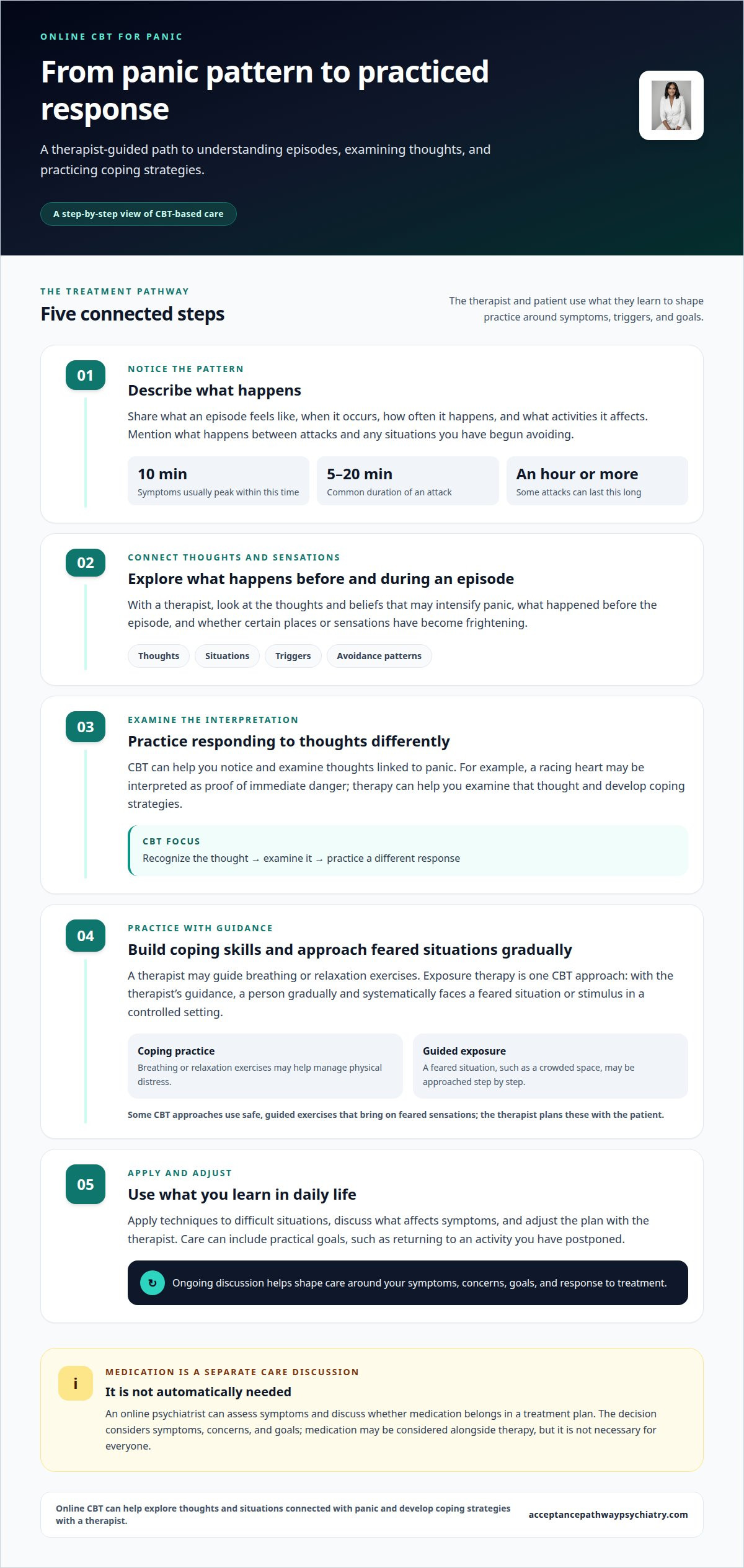
Symptoms can include a racing heart, shortness of breath, trembling, sweating, dizziness, chest discomfort, nausea, or tingling in the hands. A sense of terror may arrive abruptly, sometimes with little warning. Symptoms usually peak within 10 minutes, and attacks commonly last 5 to 20 minutes. According to the National Institute of Mental Health, some people experience attacks lasting an hour or more.
Effects on Daily Life
The effects can continue after the physical symptoms ease. Someone who panics on public transit, for example, may begin avoiding buses or crowded stations. Over time, avoidance can affect work, relationships, and daily routines. When describing symptoms to a clinician, mention which situations are affected and any changes you’ve made to avoid another attack.
Panic attacks and panic disorder aren’t the same. An estimated 2.7% of U.S. adults have panic disorder, according to the National Institute of Mental Health. The institute also estimates that 4.7% of U.S. adults experience panic disorder at some time in their lives. These figures describe panic disorder, not the number of people who may experience an isolated panic attack.
Clinicians assess the pattern over time, including how often attacks happen and whether worry or avoidance continues. Panic disorder may involve recurrent attacks followed by at least a month of concern about further attacks or behavior changes to avoid them. A clinician may also consider whether symptoms relate to another mental health or medical concern. Sharing when attacks began, what they feel like, and what happens between them can help clarify the picture.
Therapy should reflect the frequency and intensity of symptoms and their effects on daily life. Someone with occasional attacks and little disruption may have different goals from someone who avoids work or travel because of persistent fear. Behavioral therapy, including CBT, can address thoughts and responses connected with panic. A clinician can discuss whether individual therapy, telehealth, or another format suits your needs.
During a telehealth session, a clinician can help you describe what you’re feeling and notice how symptoms change. They may guide breathing or relaxation exercises to help manage physical distress, then discuss what happened before and during the episode. Describing symptoms, timing, and possible triggers gives the clinician useful context for ongoing care.
Insurance coverage for online therapy and telehealth varies by plan. Review your plan’s behavioral health and telehealth benefits, including any conditions that apply.
Can an online psychiatrist prescribe medication for panic disorder?
Online therapy may address panic symptoms through CBT; medication isn’t automatically needed. An online psychiatrist can assess your symptoms and discuss whether medication belongs in your treatment plan. That decision takes your symptoms, concerns, and goals into account.
CBT helps people notice thoughts and beliefs that may intensify panic, then practice responding to them differently. For example, someone who interprets a racing heart as proof of immediate danger can work with a therapist to examine that thought and develop coping strategies. The therapist and patient apply these techniques to difficult situations and adjust the plan as they learn what affects symptoms.
Individual psychotherapy offers space to understand your specific pattern of panic. A therapist may explore what happened before an episode, the thoughts that followed, and whether certain places or sensations have become frightening. This can bring triggers and avoidance patterns into focus. Sessions can also address practical goals, such as returning to an activity you’ve postponed.
Exposure therapy is one CBT approach. With a therapist’s guidance, a person gradually and systematically faces a feared situation or stimulus in a controlled setting. For instance, treatment may address fear of crowded spaces by approaching them step by step. Some CBT approaches also use safe, guided exercises that bring on feared sensations. The therapist plans these exercises with the patient, rather than asking them to face fears alone.
Therapy format can shape how care feels and works in practice. Individual counseling gives focused attention to personal symptoms and triggers. Group therapy offers a shared setting to discuss experiences and practice coping techniques. Online sessions let you speak with a therapist remotely. Your preferences and daily responsibilities can be part of the discussion when choosing a format.
Medication may be considered alongside therapy, but it isn’t necessary for everyone. An online psychiatrist reviews symptoms and relevant health information, discusses potential benefits and concerns, and determines whether medication management is appropriate. Treatment for panic disorder may combine therapy, medication, and lifestyle changes. The right balance depends on your needs and response to care, with follow-up helping guide adjustments.
To make an initial appointment more focused, describe what the episodes feel like, when they occur, and what activities they affect. Bring questions about CBT techniques, exposure therapy, medication, and available therapy formats. Insurance coverage for online therapy or telehealth depends on the plan, so ask your insurer which services and appointments are covered. Exploring online psychotherapy and medication management can help clarify the care options available.
Medication options
Online treatment can include a psychiatric assessment and a medication discussion, but a prescription isn’t automatic. Before deciding whether medication may fit, a clinician considers your symptoms, health history, current medicines, and how panic episodes affect daily life.
Medication options for panic attacks may include selective serotonin reuptake inhibitors (SSRIs), serotonin and norepinephrine reuptake inhibitors (SNRIs), and benzodiazepines. SSRIs may take a few days to a few weeks for patients to see results, while SNRIs may take a few weeks to start working. Benzodiazepines are generally prescribed short term because they can cause dependence.
These medicines differ in their purpose and timing. A prescriber considers whether symptoms are ongoing, how intense the episodes feel, and whether anxiety is part of a broader anxiety disorder. They also review other medicines and relevant health information. This helps guide a treatment plan, including which options to discuss and how progress will be followed.
During online medication management, the psychiatrist gathers information and discusses options with you. Describe your episodes, possible triggers, past experiences with medication, and any concerns about taking it. The prescriber can explain the intended role of a recommended medicine and what changes to report at follow-up. Remote care depends on clear communication, so mention new symptoms or changes in your health history.
Questions about online prescriptions often come down to whether a medication suits your situation. A telehealth appointment lets a psychiatrist assess symptoms and discuss medication, but it doesn’t mean every medication is appropriate or will be prescribed. Benzodiazepines require particular care because of their dependence risk. The prescriber weighs that risk, the symptoms being treated, and other relevant health details.
Online care also has limits. A clinician relies on the information available during remote appointments, including your description of symptoms and health history. If symptoms may signal a medical emergency, a video or phone appointment isn’t a substitute for urgent help. If you think you could be having a heart attack, call 911 immediately.
Medication management involves ongoing discussion, not just choosing a medicine. Tell your prescriber if symptoms change, a medicine causes concerns, or you have questions about when it may take effect. For example, someone taking an SSRI may want to discuss how long results can take, while someone prescribed a benzodiazepine should understand why short-term use is generally recommended. Don’t change a prescribed medicine without discussing it with your prescriber.
Medication is one possible part of care, alongside psychotherapy and other approaches. The next section looks at factors that may contribute to panic and inform treatment discussions.
Potential causes and contributing factors
Several factors may contribute to a panic attack, and its cause is often unclear. Considering stress, health, and personal history can help a clinician understand the context.
Causes and Triggers
Stress, phobias, major life changes, and biological factors can contribute to panic attacks. A frightening event or feared situation may come before an episode, but attacks can also occur without an obvious trigger. A mental health professional can explore the timing and circumstances with you and consider whether a recurring pattern links particular situations, thoughts, or feelings with panic.
Contributing Factors and Risk
Family history may matter: having a first-degree relative with panic disorder is associated with a 40% increased risk of developing the condition. High stress or traumatic experiences can also trigger attacks, especially for someone already predisposed to anxiety. Adverse childhood experiences, meaning negative experiences between ages 1 and 17, may contribute to panic attacks or panic disorder.
These factors don’t explain every episode or mean that panic disorder will develop. Two people facing the same stressful life change, for example, may respond differently. A clinician considers how influences may interact, including current stress, past experiences, and mental health. This broader view helps avoid treating one event as the full explanation for someone’s symptoms.
Physical health can also affect how panic feels. Heart problems or respiratory disorders may exacerbate symptoms, so a clinician may ask about medical conditions as well as emotional stressors. This context matters when someone describes a racing heart or difficulty breathing, since similar sensations can have different explanations. A careful assessment considers health history rather than assuming every intense episode has the same cause.
Useful assessment steps include discussing when episodes occur, what was happening beforehand, and whether particular fears or life changes stand out. A clinician may also ask about family history, trauma, and existing health conditions. These questions help distinguish a possible trigger from a contributing risk factor and provide context for discussing an appropriate approach to treatment.
Understanding contributing factors can guide care without blaming the person experiencing panic. For instance, if work stress repeatedly comes before episodes, treatment can consider that pattern alongside symptoms and other health concerns. If a medical condition is part of the picture, that matters too. A licensed mental health professional can use these details to shape an informed conversation about next steps.
Online CBT-based panic treatment
Online cognitive behavioral therapy (CBT) provides structured support from a mental health professional through remote sessions. Symptoms may begin to ease within several weeks and may go away within several months with successful treatment. The timeline depends on your symptoms, goals, and progress discussed with your therapist. Panic attack treatment online can provide a way to work toward these goals through scheduled remote appointments.
CBT sessions help connect sudden panic with the thoughts, feelings, and responses that follow. A therapist might explore what you predict will happen when your heart races, then help you examine that prediction. This can make the pattern clearer and support new ways of responding to feared sensations or situations. Between sessions, you and your therapist can review how these strategies fit everyday life.
Online appointments can provide a private setting to discuss panic without traveling to an office. You and your therapist can review recent episodes, identify situations that increase anxiety, and set treatment goals. For example, a goal might be reducing avoidance of a routine activity that has become associated with panic. If you’re considering panic attack treatment online, discuss whether remote sessions suit your comfort and circumstances.
Plan exposure work with your therapist rather than treating it as an assignment to face every fear at once. You and your therapist can identify a feared situation, discuss its difficulty, and develop a gradual approach that suits your treatment goals. If crowded spaces trigger anxiety, for example, you might plan manageable steps toward that setting and review your responses in later sessions.
CBT can also address what you make of physical sensations. A therapist may help distinguish a sensation from the thought that it signals immediate danger. You can practice alternative interpretations and coping strategies in session, then discuss how they fit your experiences. This collaborative process keeps treatment focused on your needs.
Online care has practical limits. A therapist relies on clear communication and the details you share about symptoms, daily life, and progress. If video or phone sessions feel distracting, or you find it hard to speak openly in that format, discuss whether another therapy arrangement would better support your work. Comfort and privacy matter for meaningful participation.
Successful treatment may reduce panic symptoms within several weeks, with symptoms possibly going away within several months. These timeframes describe potential progress, not a schedule everyone follows. Reviewing goals, symptom changes, and difficult situations with a mental health professional helps keep your treatment plan responsive.
To explore whether remote CBT fits your needs, schedule an online mental health appointment and discuss your symptoms, goals, and preferred format with a professional.
Acceptance Pathway Psychiatry PLLC
Acceptance Pathway Psychiatry PLLC offers psychotherapy and medication management to help you explore care for panic symptoms. These services provide space to discuss how panic affects your life, whether CBT may suit your needs, and whether medication is worth discussing with a prescriber.
If stress, sleep, or other wellness concerns also affect how you feel, integrative wellness services can be part of a broader care conversation. Creyos Cognitive Testing is also available as a supportive clinical tool, not a diagnostic test for panic disorder. Your clinician can discuss which forms of support align with your concerns and goals.
To discuss support and treatment options, contact Acceptance Pathway Psychiatry PLLC and take the next step toward care.
Take the Next Step Toward Support
Choosing panic attack treatment online can start with a simple conversation about what you’d like to change in daily life. You don’t need to explain every symptom or know which approach is right before reaching out. Sharing what feels hardest, what you hope to return to, and what questions you have gives a mental health professional a starting point for understanding your needs.
Care works best as a collaborative process, with room to discuss your concerns and shape next steps together. If you’re ready to explore support, contact Acceptance Pathway Psychiatry PLLC. Taking that first step can make space for thoughtful guidance and progress at a pace that feels manageable.
Frequently Asked Questions
How much does panic disorder treatment cost?
There isn’t one standard cost for panic disorder treatment. Fees depend on the appointment type, session length, care format, and your insurance benefits. For care through a practice, pricing is provided after a quote request and depends on the services involved. Check your plan’s behavioral health coverage and whether it applies to online sessions, since coverage can differ between plans and services.
What are the symptoms of anxiety?
Anxiety can involve intense fear or worry and physical sensations that feel alarming. During a panic attack, symptoms may include a racing heart, shortness of breath, trembling, sweating, dizziness, nausea, chest discomfort, or tingling. Some people also feel detached from themselves or reality. Symptoms vary, so describing what you experience, when it happens, and how it affects daily activities can help a clinician understand your concerns.
What is the most effective therapy for panic disorder?
Cognitive behavioral therapy (CBT) is a commonly used approach for panic disorder. It helps people identify thoughts connected with panic, examine how those thoughts affect feelings and behavior, and build coping strategies. Exposure therapy may be included to approach feared situations gradually with a therapist’s guidance. The best fit depends on your symptoms, goals, and preferences, so discuss treatment as an individual plan rather than a universal method.
What are effective treatments for panic attacks available online?
Online care may include psychotherapy, CBT, and an assessment with a psychiatric prescriber to discuss medication. Online panic attack treatment may also involve guided exposure work and follow-up conversations about progress. A clinician can help determine which approaches fit your symptoms and goals. Remote sessions work best when you can describe your experiences clearly and participate in a private setting without interruptions.
How does online CBT for panic disorder work, and what does it cost?
Online CBT takes place in sessions with a therapist, who helps connect panic-related thoughts, feelings, and behavior. Sessions may include reviewing difficult situations, practicing coping strategies, and planning gradual exposure to feared situations. Costs depend on session type, length, frequency, and applicable insurance benefits. Coverage varies, so consider both the appointment fee and how often the treatment plan schedules sessions.
What medications are commonly prescribed for panic attacks, and what are their risks?
Medication options can include selective serotonin reuptake inhibitors (SSRIs), serotonin and norepinephrine reuptake inhibitors (SNRIs), and benzodiazepines. SSRIs and SNRIs may take time to work, while benzodiazepines are generally prescribed short term because they can cause dependence. A prescriber considers your symptoms, health history, and current medicines before discussing options. Ask about a medicine’s intended role, expected timing, and any concerns to report.
What should I look for when choosing a licensed online therapist who treats panic disorder in the United States?
Look for a licensed mental health professional whose experience and treatment approach address panic symptoms. Consider whether they offer CBT, explain how sessions are structured, and work with goals such as reducing avoidance or returning to daily activities. A clear discussion of privacy, telehealth format, and follow-up can help you decide whether the arrangement feels workable. If medication is a consideration, psychiatric prescribing is a separate part of care.
How can a clinician guide you during a panic attack, and when should you seek emergency care?
During a remote appointment, a clinician can help you describe symptoms, stay oriented to the conversation, and consider what support is appropriate. Telehealth isn’t a substitute for emergency medical care. If you could be having a heart attack, call 911 immediately. For an appointment afterward, sharing when the episode began, what you felt, and whether symptoms changed can help the clinician understand the situation and discuss next steps.


