

Yes, you can see a therapist and a psychiatric provider at the same time. Combining psychotherapy with medication may ease symptoms that make daily life and therapy harder, while therapy can help you build coping skills and work through patterns over time. The treatments can complement each other, but the right approach depends on your needs and response.
It’s understandable to wonder whether combining treatments offers more support than either one alone, and what to expect if medication causes side effects or takes time to help. This article explains how combined care works, how it compares with therapy or medication alone, and what to discuss with your providers about progress. It also covers how clear communication and shared goals can keep care coordinated.
Key Takeaways
- Tell your psychiatric provider about any therapist or mental health professional already involved in your care.
- Shared goals and clear communication can help keep care coordinated when different clinicians provide therapy and medication management.
- Combined care may offer added support for depression, but the balance of benefits can vary by condition and individual needs.
- Discuss changes in symptoms, medication response, and side effects with your prescribing provider before making treatment changes.
- Choosing an approach you understand and feel ready to continue can help you stay engaged in care.
Can I see a therapist and psychiatrist at the same time?
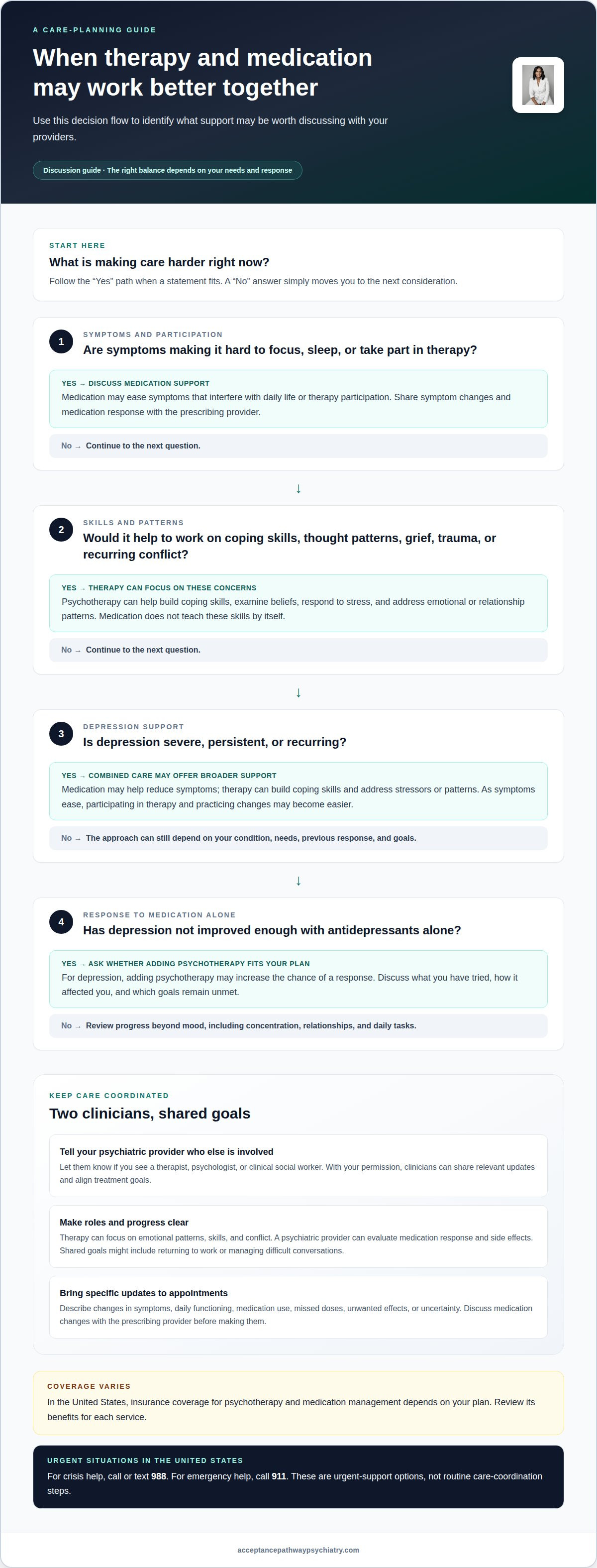
Yes, a therapist and psychiatric provider can both be part of your care. In the United States, insurance coverage for psychotherapy and medication management depends on your plan, so review its benefits for each service.
Complementary Effects of Therapy and Medication
Medication may ease symptoms that make it harder to focus, sleep, or participate in therapy, while therapy can help you build coping skills and address thought patterns. The treatments can complement each other rather than replace one another. For example, reduced anxiety may help someone discuss a conflict in therapy, while cognitive strategies can help them respond differently when anxiety returns.
Adherence and Therapeutic Alliance
A therapeutic alliance is the working relationship built through trust, shared goals, and open discussion. When a medication plan makes sense to you, it may feel easier to discuss concerns and stay engaged with care. Tell the prescribing provider about missed doses, unwanted effects, or uncertainty. Honest communication helps the provider understand your experience and consider adjustments safely.
Coordination matters when different clinicians provide therapy and medication management. Tell your psychiatric provider if you already see a therapist, psychologist, or clinical social worker. With your permission, the clinicians can share relevant updates and align treatment goals. For example, a therapist may work with you on panic triggers while the psychiatric provider tracks sleep, anxiety symptoms, and medication response.
Clear roles reduce confusion. A therapist can focus on emotional patterns, skills, and conflict, while a psychiatric provider evaluates medication response and side effects. Shared goals help both providers understand what progress means for you, such as returning to work or managing difficult conversations. If your care feels disconnected, explain what each clinician is addressing and where the plans seem to conflict.
Keep communication specific and timely. Describe changes in symptoms, daily functioning, and medication use during appointments. If your concentration improves but relationship conflict remains difficult, that distinction gives both clinicians useful context. Medication may support your participation in therapy, but it doesn’t teach coping strategies or resolve interpersonal problems by itself. Therapy can address those concerns while your medication plan is reviewed.
For people in crisis in the United States, the Substance Abuse and Mental Health Services Administration says to call or text 988 for help. For emergency help, call 911, according to the National 911 Program. These options are for urgent situations, not routine coordination between appointments.
What makes combined treatment better?
For depression, psychotherapy and medication address different parts of the experience. Combining them can support symptom relief while helping people build skills and restore daily functioning.
Benefits of Combined Depression Treatment
Combined treatment pairs medication with therapy, giving care two complementary ways to address depression. Medication may reduce symptoms, while psychotherapy helps people examine beliefs, respond to stress, and strengthen coping skills. This can matter when low energy or poor concentration makes daily responsibilities difficult. As symptoms ease, it may become easier to take part in therapy and practice changes between sessions.
Therapy can also address concerns medication doesn’t teach someone to resolve, such as grief, trauma, or recurring interpersonal conflict. Someone might regain enough energy to return to work, then use therapy to explore patterns contributing to distress. For depression that is severe, persistent, or recurring, combining approaches can offer broader support than focusing on symptoms alone.
Combination Treatment for Depression
Combination treatment means using psychotherapy and antidepressant medication as parts of one depression care plan. The American Psychological Association identifies evidence-based psychotherapy and second-generation antidepressants as treatment options for adults with depression. Cognitive-behavioral therapy and interpersonal psychotherapy are among the approaches shown to help. The treatment plan can reflect symptoms, goals, and the person’s willingness to continue care.
Cognitive-behavioral therapy helps people identify negative thought patterns and develop different responses. Interpersonal psychotherapy focuses on relationships and life changes connected to distress. Behavioral activation supports meaningful activity, while mindfulness-based cognitive therapy builds awareness of thoughts and feelings. Each approach gives therapy a distinct focus, so finding the right fit can support engagement and daily functioning.
When depression hasn’t improved enough with antidepressants alone, adding psychotherapy may increase the chance of a response. Therapy can help identify stressors and habits that sustain symptoms, while medication may address symptoms that interfere with participation. If earlier care hasn’t helped, discuss what you tried, how it affected you, and which goals remain unmet. Progress includes more than mood: it can also involve concentration, relationships, and managing daily tasks.
For a focused discussion of depression-related thoughts, stress, and coping, depression-focused psychotherapy can be part of care.
Combined treatment compared with single-modality treatment
Therapy, medication, or both may be considered as treatment approaches. The comparison depends on the disorder, symptom severity, previous response, and goals such as returning to work or managing relationships.
Combined Treatment Versus Medication Alone
Combined treatment adds psychotherapy to medication, while medication alone relies on the prescription as the primary treatment. For depression, adding therapy may help when symptoms haven’t responded adequately to antidepressants. Therapy can address thought patterns, daily stress, and relationship concerns that medication does not directly teach someone to manage.
These approaches serve different purposes. Medication may reduce symptoms, while therapy helps people understand and respond to them. If medication eases low mood but interpersonal conflict continues, therapy can focus on communication and recurring patterns. Compare treatment by looking at symptom changes and daily functioning, not only whether someone feels better temporarily.
Combination Treatment for Panic Disorder and OCD
For some people with panic disorder or obsessive-compulsive disorder (OCD), psychotherapy and medication together may work better than medication alone. The two approaches can address both distressing symptoms and responses that keep disrupting daily life. Treatment goals may include reducing panic’s effect on daily activities or responding differently to intrusive thoughts.
The comparison can differ by disorder. Research generally finds psychotherapy effective for anxiety disorders, and adding medication doesn’t significantly improve outcomes over psychotherapy alone. That makes personal goals and response important. For example, an adult whose anxiety remains disruptive despite therapy can discuss whether medication may offer useful support.
Integrated and Split Treatment Arrangements
Integrated treatment means one clinician provides therapy and manages medication, while split treatment involves separate clinicians. Either arrangement can support care, but split care requires communication about symptoms, goals, and treatment changes. For example, a therapist and psychiatric provider can coordinate around panic episodes and medication response.
With separate providers, shared goals can help prevent conflicting plans and give each clinician a clearer view of progress. With one provider, both treatment approaches can be considered together during care. The arrangement matters less than clear roles and communication. Your preference for a trusted therapist or psychiatric provider can also shape what feels workable.
Considering Combined Treatment
Combined care may be considered when symptoms are severe, persistent, or recurring, or when one approach hasn’t helped enough. For depression, someone who still struggles with concentration and daily responsibilities after starting medication may discuss adding psychotherapy. Someone already in therapy may discuss medication if symptoms continue to interfere with participation.
For bipolar disorder or schizophrenia, adding cognitive-behavioral or family psychotherapy to medication may improve functional outcomes. In each case, the discussion considers the disorder, symptom impact, earlier treatment response, and willingness to continue care. A clinician and patient can review these factors together and revisit the plan as symptoms and functioning change.
Medication response, dosage, and side effects
Medication response can shape how treatment progresses, but the experience varies from person to person. When reviewing a medication plan, a prescribing provider considers symptom changes, daily functioning, and side effects.
Combined treatment has no single timeline. Results usually don’t happen overnight, and finding an appropriate antidepressant and dosage may take time. Noticeable change depends on a person’s response, symptoms, and whether the current plan supports their goals.
Psychotherapy can support recovery and is associated with lower relapse rates in some treatment approaches when combined with medication. That doesn’t automatically mean medication doses can be reduced. A prescribing provider guides any dose change, and antidepressants shouldn’t be stopped abruptly without that provider’s guidance.
Before starting combined treatment, a provider reviews your symptoms, current concerns, and treatment goals. They also consider medication response and side effects, while your therapist can clarify behavioral patterns or stressors affecting daily life. For example, sleep disruption and panic symptoms may shape what the care team monitors.
Response involves more than a change in mood. Medication may improve sleep or ease physical symptoms of anxiety; it may also reduce panic, intrusive obsessive thoughts, or severe depression. You might sleep better but still struggle with concentration. Sharing both changes helps your provider distinguish partial benefit from ongoing difficulties.
Dosage decisions depend on response and side effects, not a fixed schedule that fits everyone. If a medication helps with anxiety but causes an unwanted effect, the prescribing provider can review that trade-off and discuss next steps. Be specific: describe what changed, when it began, and how it affects work, relationships, or sleep.
Discuss side effects directly, even when symptoms improve. You may be unsure whether a new sensation relates to medication, anxiety, or another change. Describe the experience to the prescriber rather than stopping medication on your own. The prescriber can assess its timing and impact, then explain options in understandable terms.
Therapy adds context to medication follow-up. A therapist may notice that avoidance continues even as panic eases, or that a difficult interpersonal pattern remains. Sharing relevant observations can help align the care plan. The therapist and prescriber can focus on the same goals, such as steadier sleep, reduced distress, and improved daily functioning.
At each review, discuss symptom changes, medication use, side effects, and progress toward agreed goals. If depression persists despite taking medication as prescribed, that information can guide a conversation about adding or adjusting psychotherapy. Treatment decisions remain collaborative and responsive to your experience.
Combining medication and psychotherapy
Combining psychotherapy with medication brings symptom-focused care and skill-building into one plan. The key is not simply using both treatments, but connecting them to shared mental health goals and reviewing how each contributes.
Medication may ease symptoms, while psychotherapy helps people understand emotional patterns and develop responses that support daily life. For example, cognitive-behavioral therapy can help identify automatic negative thoughts and practice alternative responses. Medication doesn’t teach those skills, resolve interpersonal conflict, or create emotional boundaries. Therapy gives these concerns direct attention while the prescribing provider monitors medication response.
The two approaches can also support similar areas of change through different routes. Psychotherapy and medication have been associated with similar brain changes in people with mental illness. That doesn’t make them interchangeable: therapy involves working through experiences and practicing skills, while medication affects neurochemical signaling. A care plan can address both symptoms and their effects on relationships, routines, and emotional well-being.
For depression, combining cognitive-behavioral therapy with medication has been associated with lower relapse rates than medication alone. Interpersonal therapy paired with medication has also been associated with better long-term social adjustment than medication alone. For patients older than 60 years, this pairing has been shown to reduce depressive relapse. These findings show why care can include goals beyond immediate symptom relief.
Psychotherapy can help people build distress-tolerance skills, mindfulness practices, and emotional boundaries. These tools can matter during stressful periods, while medication is reviewed for symptom response. If medication eases severe depression but negative thought patterns remain, therapy can focus on those beliefs and how they influence behavior. Progress includes both symptom changes and a person’s ability to use new skills.
A shared plan makes each treatment easier to evaluate. You and your clinicians can identify goals, such as reducing intrusive thoughts, responding differently to stress, or improving social adjustment. The American Psychological Association emphasizes shared decision-making when choosing psychotherapy, antidepressants, or their combination. Discussing your preferences and willingness to continue treatment can help align the clinical plan with what feels workable.
One clear takeaway: medication can help create room for therapeutic work, while psychotherapy develops skills that medication doesn’t provide. If you’re ready to discuss a coordinated approach, explore combined mental health care.
Acceptance Pathway Psychiatry PLLC: Medication Management
Acceptance Pathway Psychiatry PLLC offers Medication Management and Psychotherapy for people considering coordinated mental health care. If symptoms continue, you have questions about medication response, or you want therapy alongside medication, these services can support a plan shaped around your needs and treatment goals.
A conversation about your symptoms, current treatment, and priorities can help clarify whether Medication Management, Psychotherapy, or both fit your needs. Creyos Cognitive Testing and Integrative Wellness Services are also part of the practice’s offerings.
Contact Acceptance Pathway Psychiatry PLLC to discuss your care.
Take the next step toward care that fits
Choosing to combine psychotherapy with medication isn’t about following a fixed formula. It’s about finding an approach that makes sense to you, addresses what’s affecting your life, and leaves room to review your experience as care progresses. Start by naming what you most want help with, such as feeling steadier at work, reconnecting with people, or processing a difficult experience.
That starting point can shape a focused conversation about your priorities and the support that may help. It’s also okay to bring uncertainty into the discussion. Questions about starting treatment, continuing it, or changing direction are part of making an informed decision with a mental health professional.
If you’re ready to talk through your needs and possible next steps, contact Acceptance Pathway Psychiatry PLLC. You deserve care that takes your experience seriously and supports progress at a pace you can work with.
Frequently Asked Questions
Does Psychotherapy Work?
Yes, psychotherapy can help people address mental health concerns and make changes in their thoughts, feelings, or behavior. Its usefulness depends partly on the approach and how well it fits a person’s needs. For example, someone coping with grief may want space to process a loss, while someone facing recurring anxiety may focus on understanding triggers and practicing responses. Discuss progress and adjust goals during care.
Does taking antidepressants mean I will need them forever?
No. Starting an antidepressant doesn’t automatically mean taking it forever. Treatment duration depends on your symptoms, treatment history, response, and ongoing needs. Bring questions about continuing, changing, or stopping medication to the prescriber, including any side effects or changes in daily functioning. Don’t stop an antidepressant abruptly without guidance from the prescribing provider, since a safe plan considers your situation and current medication.
How Does Therapy Help When You Are Already Taking an Antidepressant?
Therapy can help you address concerns that remain while taking an antidepressant and make sense of changes you notice. For instance, your mood may improve while decision-making or relationships still feel difficult. A therapy session can explore those challenges and help set practical goals. Sharing relevant changes with the prescriber also provides context for medication follow-up, without making therapy a substitute for medication guidance.
Is Therapy Plus Medication More Effective Than Medication Alone?
For depression, combined care can improve recovery compared with using only one treatment, and adding psychotherapy may help when antidepressants haven’t helped enough. That doesn’t mean the combination is always more effective for every condition. For anxiety disorders, research finds that adding medication doesn’t significantly improve outcomes from psychotherapy alone. Consider how each approach relates to your diagnosis, treatment goals, and response so far.
Why Does Coordinated Mental Health Care Matter?
Coordination helps everyone involved in your care understand the same priorities and avoid working at cross-purposes. For example, if a prescriber changes your medication plan, your therapist may need relevant context to interpret changes in mood or participation. With your permission, providers can share useful updates and clarify their roles. Raise any concerns about inconsistent recommendations so the care team can discuss them.
How does combining psychotherapy and medication help mental health conditions?
Combining psychotherapy with medication can address symptoms while therapy helps you work on thought patterns, relationships, or coping responses. The balance depends on the condition. For example, someone with depression may use therapy to examine negative beliefs, while someone with panic symptoms may work on responding to fear. The care plan connects these aims to meaningful changes in daily life, not just symptom tracking.
Which conditions are best treated with both psychotherapy and medication?
There isn’t one combination that works best for everyone. Combined approaches may be considered for depression, including persistent or recurring symptoms, and for some people with panic disorder or obsessive-compulsive disorder. For bipolar disorder or schizophrenia, psychotherapy added to medication may support functional outcomes. Eating disorders also call for careful attention to physical safety. The condition, symptom impact, prior response, and treatment preferences all shape the approach.
How effective is combined therapy compared with medication or psychotherapy alone?
Effectiveness varies by condition and by the outcome being considered. In depression, combining treatments may improve short-term recovery and reduce relapse compared with medication alone. For anxiety disorders, psychotherapy can be effective on its own, and adding medication may not improve its outcomes. A useful comparison considers symptom relief, recurrence, and daily functioning rather than treating one result as a complete measure of progress.


