

When mood symptoms return in sync with your menstrual cycle and begin affecting work, relationships, or daily routines, it can be hard to tell whether you’re experiencing PMDD, PMS, or something else. A PMDD treatment psychiatrist can help you explore that pattern and discuss care options without assuming medication is the only answer.
It’s understandable to want clarity before deciding what to do next. A psychiatric evaluation may consider when symptoms appear, how severe they are, how they affect your life, and whether another mental health condition could be contributing. Tracking symptoms across at least two menstrual cycles may also help clarify the pattern.
This article explains what to expect from an evaluation and how a psychiatrist may compare treatment approaches with you. You’ll learn how medication management and psychotherapy can fit into an individualized care plan, what questions to bring, and how to discuss your preferences and goals.
Key Takeaways
- Keep a private symptom record with dates, intensity, daily impact, and treatments you’ve tried.
- A PMDD treatment psychiatrist can discuss how your symptom pattern, health history, and preferences may inform next steps.
- Compare medication, psychotherapy, and supportive strategies by their potential roles, trade-offs, and fit for your needs.
- Prepare questions about treatment options and what you’d like care to help you work toward.
- Medication management and psychotherapy can be part of a collaborative care conversation shaped around your goals.
PMDD treatment starts with understanding the pattern of your symptoms
Recurring mood or physical changes before a period can be upsetting, especially when they disrupt parts of life that usually feel manageable. Timing matters, but no single symptom proves that you have premenstrual dysphoric disorder (PMDD). A clinician considers the overall pattern, symptom intensity, and impact on daily functioning.
What symptoms and timing may lead someone to seek PMDD care?
PMDD can involve emotional, behavioral, and physical symptoms in the days before menstruation. These may include marked irritability, mood swings, anxiety, sadness, or difficulty concentrating. Changes in sleep, appetite, or energy, as well as physical discomfort such as breast tenderness, bloating, or headaches, may also occur. Experiences vary, and these symptoms can have other explanations.
A useful clue is whether symptoms recur in a pattern across the menstrual cycle. They may build before a period and ease as menstruation begins or soon after. For some people, this pattern strains relationships, makes work harder, interrupts routines, or affects wellbeing. Noticing that impact is useful context to share with a clinician.
Tracking symptoms can make the pattern easier to discuss than relying on memory alone. In a private record, note:
- Dates of symptoms and menstrual bleeding
- Each symptom’s intensity and effect on work, relationships, sleep, or routines
- Days when symptoms ease, along with treatments or other relevant changes
Recording this information over at least two menstrual cycles can help a clinician assess whether symptoms follow a consistent cycle-related pattern. You don’t need a perfect log. Brief daily notes can still make changes across the month easier to see.
How is PMDD distinguished from PMS or other conditions?
In brief, PMS may involve premenstrual symptoms, while PMDD involves a recurring pattern of more severe symptoms that causes meaningful distress or disrupts daily life. For a broader overview of symptoms and diagnosis, see Premenstrual Dysphoric Disorder (PMDD) on Wikipedia.
Timing and impact help inform an assessment, but they’re only part of the picture. Anxiety, depression, and other mental health conditions can overlap with PMDD symptoms. A clinician may explore whether symptoms occur mainly before menstruation, continue throughout the month, or change with other factors. Your health history and current treatments can also help clarify what may be contributing.
An online checklist can help you find words for what you’re experiencing, but it can’t diagnose PMDD or rule out another explanation. A PMDD treatment psychiatrist can discuss symptom timing, severity, history, and daily impact as part of a careful assessment. Sharing what you’ve noticed, even if the pattern feels uncertain, is a useful place to begin.
How a psychiatrist evaluates PMDD and discusses treatment options
An appointment is a chance to make sense of what you’ve been experiencing, not a test you need to pass. A psychiatrist may ask when symptoms occur, how they affect daily life, what care you’ve tried, and what you hope might change. The discussion can help distinguish cycle-related symptoms from concerns that may need a different or broader approach.
A PMDD assessment considers symptom timing, severity, effects on functioning, health history, and other possible explanations. No single test alone confirms the diagnosis. Symptom records can show patterns over time, while a conversation adds context that a checklist can’t capture.
What may happen during a psychiatric evaluation for PMDD?
You may discuss emotional and physical symptoms, their timing, previous treatment, current medications, and relevant mental and physical health history. The psychiatrist may ask how symptoms affect responsibilities, relationships, and wellbeing. Your priorities matter too, including medication concerns, past experiences with care, and what you’d like support to help you manage.
You don’t need to know exactly how to describe your experience or what treatment you want. Bring questions, share what feels important, and talk through uncertainty at your own pace. If another clinician is involved in your care, coordination may be considered when it would support a clearer understanding of your health history or treatment needs.
What treatment approaches may a clinician discuss?
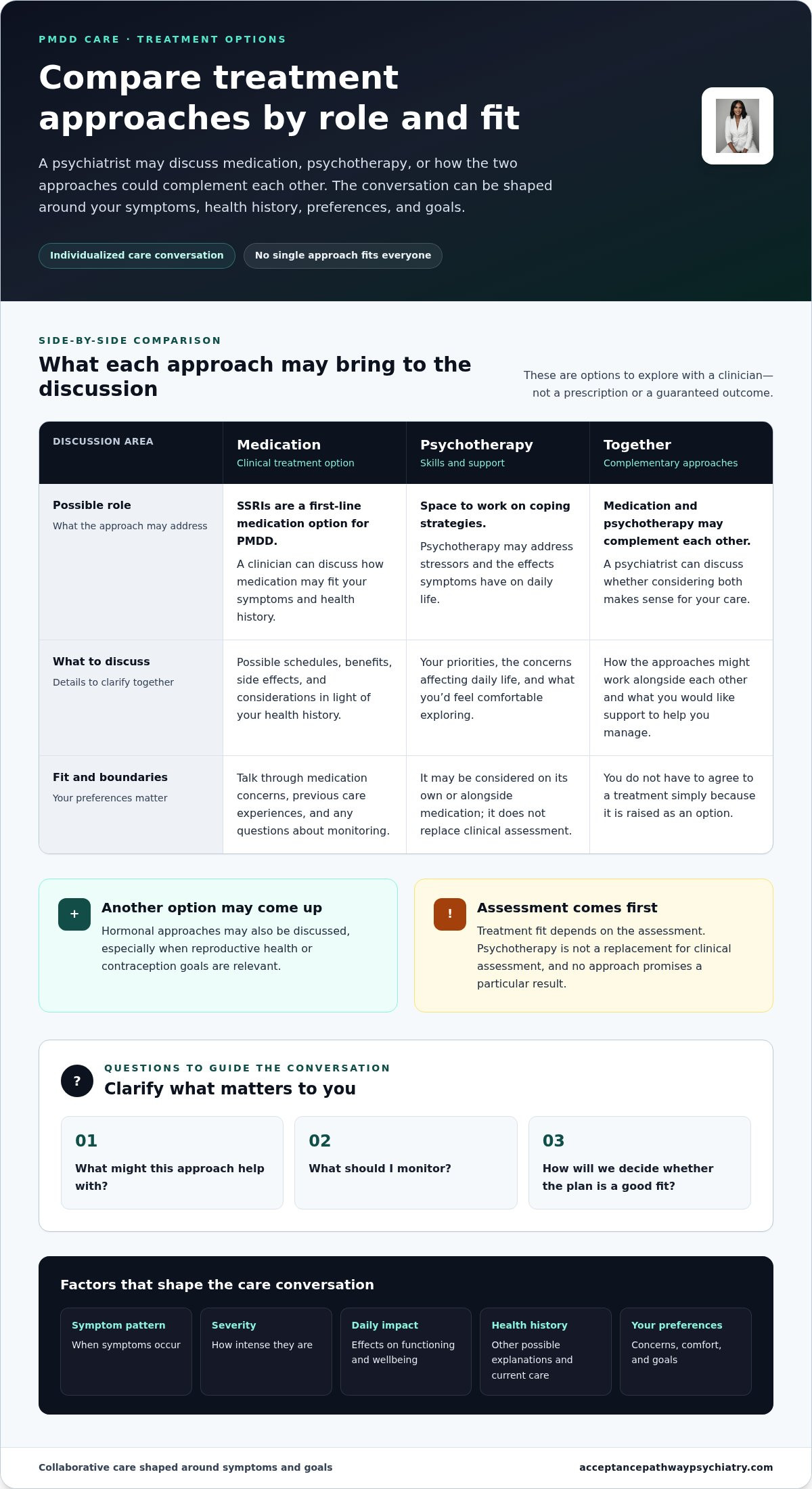
Treatment isn’t one-size-fits-all. Depending on the assessment, a psychiatrist may discuss medication, psychotherapy, or how these approaches could complement each other. SSRIs are a first-line medication option for PMDD. A clinician can explain possible schedules, benefits, side effects, and considerations in light of your health history. Hormonal approaches may also come up, especially when reproductive health or contraception goals are relevant.
Psychotherapy can provide space to work on coping strategies, stressors, and the effects symptoms have on daily life. It isn’t a replacement for clinical assessment and may be considered on its own or alongside medication. The right fit depends on your symptoms, preferences, other health factors, and what you’re comfortable exploring. You don’t have to agree to a treatment simply because it’s raised as an option.
A PMDD treatment psychiatrist can help you weigh options without promising a particular result. Useful questions include: What might this approach help with? What should I monitor? How will we decide whether the plan is a good fit? Clear answers can make the next step feel more manageable.
At Acceptance Pathway Psychiatry, medication management and psychotherapy are part of a collaborative conversation about your symptoms and goals. Explore psychiatric care options as you consider what support may fit your needs.
Compare PMDD treatment approaches by goals, fit, and trade-offs
There isn’t one right treatment choice for everyone. A clinician can help weigh what you want support with, your health history, and the practical considerations of each approach. Some people discuss one option at a time; others consider approaches together. The aim is to find a plan that fits your needs and can be reviewed as you learn what works for you.
| Approach | Potential role | Discussion points |
|---|---|---|
| Clinician-guided medication | Medication may be considered to address PMDD symptoms. SSRIs are a first-line medication option for PMDD, while hormonal approaches may be relevant for some people. | Discuss possible benefits, side effects, interactions with current treatments, health history, preferences, and follow-up. Suitability and choices require an individual clinical assessment. |
| Psychotherapy | Therapy can support emotional wellbeing, coping skills, and practical challenges that arise when symptoms affect relationships or daily responsibilities. | Consider what you want help with, your preferred way of working, and how therapy could fit alongside other care. Its role may differ based on your concerns and goals. |
| Supportive strategies | Tracking symptoms and discussing sleep, stress management, and daily routines may help you identify useful supports and share context with your clinician. | Choose realistic steps that suit your circumstances. These strategies can complement clinical care, but shouldn’t replace assessment or treatment when symptoms are severe. |
When might medication management be part of PMDD care?
Medication may be an option to discuss if symptoms cause distress or disrupt daily life. The decision depends on your symptoms, medical and mental health history, other medications, and preferences. Ask about possible benefits and risks, side effects to watch for, and how you and your clinician will review the plan. This psychiatric medication management guide offers more context about collaborative medication conversations.
How can psychotherapy and supportive strategies complement care?
Psychotherapy may help you work through emotional strain, build coping strategies, and address the practical impact of symptoms. Sleep habits, stress, and symptom tracking can also be part of a broader conversation. These approaches may be used separately or alongside medication, depending on your circumstances. If symptoms feel severe, supportive strategies alone may not be enough. Discuss their impact with a clinician.
A PMDD treatment psychiatrist can help you compare options without assuming you need a particular treatment. You might ask, “What goal would this approach address for me?” and “How will we know whether it’s a good fit?” Your answers can help shape a plan that reflects clinical guidance and what matters in your daily life.
Prepare for a PMDD psychiatrist appointment with a clear decision checklist
Some preparation can help you focus an appointment on what matters, but you don’t need a perfect record or a finished explanation. Jot down what you’ve noticed and what you hope to discuss. Even a few examples can help connect symptoms with your cycle and daily life.
What information can help make the appointment more useful?
Bring notes that show your experience over time rather than relying only on what you remember during the visit. A private phone note, calendar, or paper record can work. If tracking has been inconsistent, you can still start the conversation with what you recall.
- Symptom timeline: Note symptom dates, menstrual dates if known, intensity, and when symptoms ease.
- Daily-life impact: Add a specific example, such as difficulty concentrating at work or increased conflict at home.
- Health history: List relevant physical and mental health concerns, past care, and questions about possible overlap.
- Current treatments: Include medications, supplements, or other strategies you use, along with what you’ve noticed.
- Your priorities: Write down what you most want help with and any treatment concerns or preferences.
Your notes don’t need to be polished. They’re a starting point for a thoughtful discussion with your clinician.
Which questions can help you compare care options?
Choosing a few questions in advance can help, especially if appointments feel stressful or you worry you’ll forget something. Ask how your goals, preferences, and health history will guide care, then discuss the potential benefits and risks of options that come up.
- What might each option help address, and what are the main considerations for me?
- How would we follow up and decide whether to continue or adjust a plan?
- Could medication management, psychotherapy, or both be relevant to my goals?
- Are in-person and telehealth appointments options for my care?
- Who can explain practical payment questions, including insurance and payment options?
You can also explain what would make care feel workable, such as wanting to discuss therapy before medication or having concerns about side effects. A PMDD treatment psychiatrist can take those priorities into account as part of a collaborative conversation.
When you’re ready to discuss your symptoms and goals, explore a collaborative psychiatric appointment with Acceptance Pathway Psychiatry. In-person and telehealth appointments offer ways to begin a conversation about support that may fit your needs.
Starting PMDD treatment with Acceptance Pathway Psychiatry
Seeking support for cyclical mood symptoms can bring up mixed feelings. You may want help while still feeling unsure about medication, therapy, or what an appointment will involve. At Acceptance Pathway Psychiatry, the conversation can begin with your concerns and what you’d like to change. You don’t need to arrive with a diagnosis or a firm treatment decision.
Care planning takes your symptoms, health history, preferences, and goals into account. The aim is to discuss options together, not assume one approach fits everyone. Acceptance Pathway Psychiatry provides medication management and psychotherapy, which may be considered in light of your needs. The conversation can include what you’ve tried before, what felt helpful or difficult, and what questions you still have.
What can a collaborative care conversation look like?
A useful conversation makes room for clinical guidance and your perspective. You might describe which symptoms concern you most, how they affect daily life, and what kind of support you feel comfortable exploring. If medication is discussed, raise questions about potential benefits, side effects, and follow-up. If psychotherapy comes up, talk about the challenges or coping goals you’d like to focus on.
Recommendations are individualized, and a plan can be revisited as you and your clinician learn more. Follow-up discussions give you a chance to share what you’ve noticed, raise new concerns, and consider whether the next step still fits your goals. You don’t need to make every decision at the first appointment. Ask for clarification and take time to consider your options.
How can you take a comfortable next step?
Before scheduling, review appointment options and note anything you’d like to ask. Acceptance Pathway Psychiatry offers in-person and telehealth appointments. The practice also offers assistance with insurance and payment options, so you can raise practical questions while planning care.
- Write down the main symptoms or concerns you want to discuss.
- Choose one or two goals for care, even if they’re broad, such as feeling more steady or managing daily responsibilities.
- Note questions about medication, psychotherapy, appointment format, or follow-up.
- Bring any symptom notes or treatment information you already have. Incomplete records are still a useful starting point.
You can move at a pace that feels manageable. Start by reviewing appointment options and gathering your questions, then decide what you’re ready to discuss. If you’re looking for a PMDD treatment psychiatrist, a collaborative conversation can help you consider care in light of your experience rather than a one-size-fits-all expectation.
Explore care with Acceptance Pathway Psychiatry when you feel ready to take that next step.
Take the next step at a pace that feels right
You don’t have to arrive with every answer or decide on a complete treatment plan at your first appointment. A useful next step can be as simple as naming the concern that’s taking the greatest toll and asking what options might be worth discussing. You can take time to consider recommendations and return with questions. Your preferences belong in the process.
If you’re considering a PMDD treatment psychiatrist, look for a conversation where your experience and goals can help guide care. Starting a discussion doesn’t commit you to a particular treatment. It gives you space to share what’s happening and explore possible next steps with support.
Explore a collaborative conversation about your mental health care with Acceptance Pathway Psychiatry. You can begin with the questions you have today and take the process one step at a time.
Seeking clarity is a meaningful beginning, and you deserve care that treats your concerns with respect.
Frequently Asked Questions
Can a psychiatrist diagnose PMDD?
Yes. A psychiatrist can evaluate symptoms and determine whether they fit PMDD or may be better explained by another concern. The assessment relies on clinical history and symptom patterns, not a single lab test or online screening result. If the picture is unclear, the clinician may suggest gathering more information over time before reaching a conclusion. You can discuss distressing symptoms even if you don’t know what’s causing them.
Is PMDD treatable, and what kinds of care may help?
Yes, PMDD can be treated, though the right approach differs from person to person. A clinician may discuss medication, psychotherapy, or a combination, considering your health history and priorities. If you’re exploring care with a PMDD treatment psychiatrist, ask how you’ll review whether a plan is helping and what adjustments might be considered. A treatment discussion is an opportunity to weigh options together, not a commitment to start a particular medication.
Can PMDD symptoms overlap with depression, anxiety, or bipolar disorder?
Yes. Some symptoms can overlap, and a person may have PMDD alongside another mental health condition. Sadness or low energy, for example, may occur before a period, persist at other times, or be part of a separate concern. A clinician may ask about mood changes throughout the month, past episodes, sleep, and treatment history. Share changes that happen outside the premenstrual phase, too, since they can help clarify the full picture.
How long does it take to know whether a PMDD treatment is helping?
There isn’t one timeline that applies to every treatment or person. The time needed to assess a change may depend on the approach, your symptoms, and the follow-up plan you make with your clinician. You can agree on what to monitor, such as mood, functioning, or unwanted effects, and when to check in. Don’t change or stop a prescribed medication on your own. Discuss concerns and next steps with the prescriber.
Can I see a psychiatrist for PMDD through telehealth?
Telehealth may be an option for psychiatric care, including conversations about PMDD. Acceptance Pathway Psychiatry offers virtual appointments. A remote visit can let you speak with a clinician from a private space and refer to notes during the conversation. If you’re considering this format, think about whether you have a confidential place and reliable connection for appointments.
Do I need to track symptoms before discussing PMDD with a psychiatrist?
No. You can book a conversation even if you haven’t tracked symptoms or aren’t sure how to describe the pattern. Start with what you remember, such as a recent difficult week or changes you’ve noticed around your period. If more detail would help clarify the picture, you and the clinician can discuss keeping a record going forward. Incomplete notes are still a valid starting point for care.
What should I do if PMDD symptoms make me feel unsafe?
If you may harm yourself or someone else, or can’t stay safe, seek immediate help now. In the United States, call 911 or go to the nearest emergency department for immediate danger. You can also call or text 988 for crisis support. If possible, tell someone you trust and ask them to stay with you while you get help. Don’t wait for a routine appointment when safety is at risk.


