

What if your psychiatric evaluation felt like a safe, collaborative conversation rather than a cold clinical interrogation? For many people living with the aftermath of long-term trauma, the search for a psychiatrist for complex PTSD is often stalled by the fear of being misunderstood or simply handed a prescription and sent away. You likely already know that C-PTSD requires a different approach than standard PTSD. It needs a strategy that respects the intricate ways your nervous system has adapted to survive.
It's exhausting to repeat your story to providers who see a list of symptoms instead of a whole human being. You deserve a partnership where your voice is the most important one in the room. This guide will show you how to find a psychiatrist who specializes in trauma-informed care and truly understands the nuances of complex trauma. We'll explore how an integrative path, combining precise medication management with psychotherapy and wellness tools, can help you move from survival to a state of wholeness.
You'll learn what to look for in a provider who treats you as an equal partner in your care. We'll also discuss how modern tools like cognitive testing can provide the objective data needed to create a plan that feels safe and effective. Healing is possible when you have a steady, compassionate guide by your side.
Key Takeaways
- Learn why complex PTSD requires a specialized psychiatric approach to manage physiological symptoms that differ from standard PTSD.
- Discover the specific criteria to look for when selecting a psychiatrist for complex PTSD to ensure they prioritize safety and a collaborative partnership.
- Understand how objective tools like Creyos Cognitive Testing can help clear trauma-related cognitive fog and guide precise treatment decisions.
- Find out how to prepare for your first evaluation without the pressure of retelling your entire history at once.
- Explore how an integrative care model combines medication management with psychotherapy and wellness for a more holistic path to healing.
Understanding the Role of a Psychiatrist for Complex PTSD
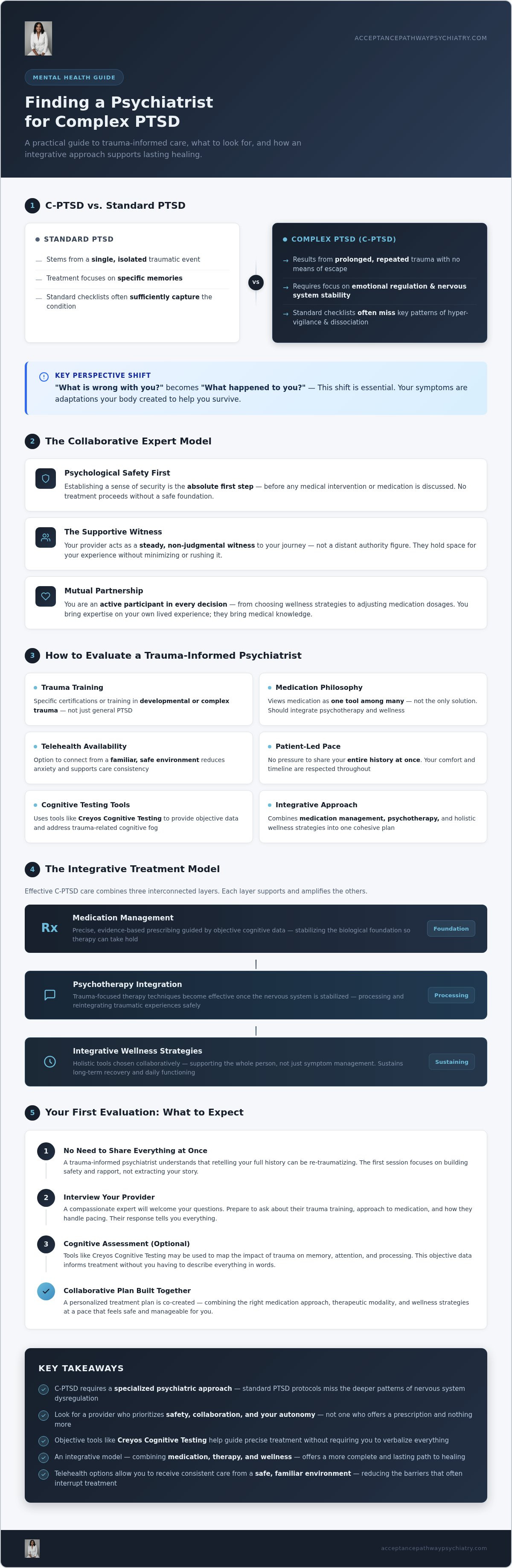
When you've experienced long-term, repeated trauma, your brain and body undergo significant physiological changes. Unlike standard PTSD, which often stems from a single, isolated event, Complex PTSD is the result of prolonged exposure to trauma, frequently occurring in situations where escape seems impossible. A psychiatrist for complex PTSD plays a vital role that goes far beyond simply checking boxes on a diagnostic list. They act as a specialized guide who understands how these chronic experiences have reshaped your nervous system and your sense of self.
In a trauma-informed clinical setting, the fundamental question shifts from "What is wrong with you?" to "What happened to you?" This change in perspective is essential for healing. It acknowledges that your symptoms are actually brilliant, albeit painful, adaptations your body created to help you survive. A psychiatrist helps bridge the gap between the mind, brain, and body, ensuring that your treatment plan addresses the biological roots of your distress alongside your emotional needs.
C-PTSD vs. PTSD: A Medical Perspective
Chronic trauma keeps the body's "fight or flight" system in a state of constant, exhausting activation. While standard PTSD treatments focus on specific memories, C-PTSD requires a deeper focus on emotional regulation and the nervous system's baseline stability. A psychiatrist for complex PTSD understands that standard diagnostic checklists often miss these nuances. They look for the underlying patterns of hyper-vigilance and dissociation that characterize complex trauma. By focusing on stabilizing the nervous system first, a psychiatrist creates the biological foundation necessary for traditional therapy to be effective.
The Collaborative Expert Model
True healing happens within a partnership, not a hierarchy. The collaborative expert model means your psychiatrist brings high-level medical knowledge, but you remain the expert on your own lived experience. This relationship is built on the following principles:
- Psychological Safety: Establishing a sense of security is the absolute first step before any medical intervention or medication is discussed.
- The Supportive Witness: Your provider acts as a steady, non-judgmental witness to your journey, rather than a distant authority figure.
- Mutual Partnership: You are an active participant in every decision, from choosing wellness strategies to adjusting medication dosages.
This approach moves away from the cold, detached style of traditional medicine. It prioritizes your comfort and autonomy, ensuring you feel safe and heard during every evaluation. When you don't feel pressured to perform or "get better" on a strict timeline, your nervous system can finally begin the slow, steady process of coming back into balance.
Key Criteria: How to Evaluate a Trauma-Informed Psychiatrist
Finding the right psychiatrist for complex PTSD is a deeply personal process. It requires looking beyond a medical degree to find a provider who truly understands how trauma reshapes the human experience. You aren't just looking for a prescriber; you're looking for a partner in your recovery. A truly trauma-informed psychiatrist recognizes that your history influences your current physiological state, and they treat you with the specialized care that trauma-informed psychiatric treatment requires.
When you begin your search, look for specific mentions of trauma training or certifications in developmental trauma. A provider's philosophy on medication is also a critical indicator of their approach. Do they see medication as the only solution, or do they view it as one tool among many, including psychotherapy and integrative wellness? For many, the convenience and safety of telehealth appointments are also a priority. Being able to connect from a familiar, safe environment can significantly reduce the anxiety that often comes with visiting a clinical office. This accessibility ensures you can maintain consistency in your care without the added stress of a difficult commute.
Questions to Ask During Your First Consultation
The first meeting is your opportunity to interview the provider. A compassionate expert will welcome your questions and treat them with respect. Consider asking:
- "How do you approach medication management for those with a history of trauma?" This helps you understand if they start with low doses and prioritize your comfort.
- "Do you offer integrated psychotherapy alongside medical treatment?" C-PTSD healing often requires a blend of approaches rather than pills alone.
- "How do you handle potential side effects or medication sensitivities?" Many people with complex trauma have sensitive nervous systems that react differently to medications.
Red Flags in Psychiatric Care for C-PTSD
Trust your intuition during your evaluation. If a provider dismisses the impact of your childhood or prolonged trauma, it's a sign they may not be the right fit. A "one-size-fits-all" approach to antidepressants or anti-anxiety meds is another warning sign. Every nervous system is unique, and your treatment plan should reflect that. Be wary of environments that feel cold or detached. Healing requires a sense of psychological safety. A provider who remains distant or overly clinical may inadvertently trigger feelings of being unheard or marginalized. If you're looking for a provider who values your unique journey, you might explore the collaborative care options available to help you find your way forward.
Advanced Treatment Options: Medication, Therapy, and Cognitive Testing
Effective treatment for C-PTSD requires more than just a general understanding of trauma. It demands a sophisticated blend of medical science and compassionate support. A modern psychiatrist for complex PTSD uses objective data to move beyond guesswork. By incorporating evidence-based care for Complex PTSD, providers can create a roadmap that addresses the unique ways trauma has impacted your brain's processing and your body's stress response.
Recovery isn't just about managing distress. It's about restoring your ability to focus, remember, and feel present in your own life. This is where an integrative approach becomes essential. It combines traditional medical expertise with innovative tools and holistic support to treat the whole person rather than just a collection of symptoms. Finding a psychiatrist for complex PTSD who utilizes these advanced tools can make a significant difference in your recovery timeline.
Precision Care with Creyos Cognitive Testing
Many people living with complex trauma describe a persistent "cognitive fog" that makes daily tasks feel overwhelming. Creyos Cognitive Testing provides a clear, objective way to measure how trauma affects your memory, attention, and focus. Instead of relying solely on how you feel on a particular day, this testing offers concrete data that helps your provider understand your unique cognitive profile.
These results allow your psychiatrist to track your healing over time with high accuracy. When you can see visual evidence of your progress, it often provides a powerful sense of hope and validation. It also helps your provider adjust your treatment plan based on how your brain is actually responding. This ensures that every intervention, from medication to wellness strategies, is tailored to your specific needs.
Trauma-Informed Medication Management
In the context of complex trauma, the goal of medication management isn't to numb your emotions. Instead, it's to help stabilize your nervous system so you can stay within your "window of tolerance." This is the space where you feel grounded enough to engage in psychotherapy without becoming overwhelmed or shutting down. When your body feels safe, your mind can finally begin the work of healing.
A trauma-informed psychiatrist focuses on targeting specific, disruptive symptoms like hyperarousal, persistent insomnia, or intrusive flashbacks. They often follow a "start low and go slow" philosophy. This careful approach respects the sensitivity of your nervous system and minimizes the risk of side effects. When medication is used thoughtfully as part of an integrative wellness plan, it creates the biological stability needed for deep, transformative recovery.
Preparing for Your Evaluation: Navigating the First Steps
Taking the first step to meet with a psychiatrist for complex PTSD is a brave act of self-care. It's completely normal to feel a mix of hope and apprehension. Many survivors worry about being retraumatized by having to recount their entire history in a single sitting. In a trauma-informed practice, this isn't the expectation. Your provider will move at your pace, focusing on building safety before diving into deep historical details. You don't have to tell everything at once to be understood.
A comprehensive initial evaluation typically lasts between 60 and 90 minutes. This extended time ensures you don't feel rushed or pressured. It's a collaborative dialogue where you can share your current struggles and what you hope to achieve through psychiatric care. You might discuss your sleep patterns, emotional triggers, and how your symptoms impact your daily life. It's also an ideal time to set personal goals. These goals could be as specific as wanting to feel more present with family or improving your focus at work. Having clear objectives helps your psychiatrist for complex PTSD tailor a plan that truly supports your life.
Preparing your space for a telehealth session can significantly enhance your comfort. Choose a private area where you won't be interrupted. Have a glass of water nearby, and perhaps a comforting object like a soft blanket or a sensory tool. Telehealth appointments allow you to remain in a controlled, familiar environment. This can lower your baseline anxiety and make the conversation feel much more manageable than it might in a traditional clinical office.
Managing Appointment Anxiety
Anxiety is a common companion when seeking care. You can use grounding techniques, such as the 5-4-3-2-1 method, to stay anchored in the present moment before your session begins. It's also helpful to write down your questions or concerns beforehand so you don't have to rely on your memory during the meeting. If it makes you feel safer, you're welcome to bring a supportive advocate or take notes during the discussion. Your comfort is the priority.
Following Up and Staying Consistent
The journey toward healing continues between your appointments. Staying consistent with follow-up visits is key to fine-tuning your integrated care plan. Consider these steps for ongoing progress:
- Track your response: Note any changes in your mood, energy, or sleep patterns between visits.
- Communicate openly: Share any concerns about side effects or treatment adjustments immediately.
- Be patient with the process: Healing is a steady evolution, not a quick fix.
If you're ready to start this journey in a safe, supportive environment, you can schedule your initial evaluation today to begin your path toward wholeness.
The Acceptance Pathway: A Compassionate Approach to Healing
At Acceptance Pathway Psychiatry PLLC, we believe that your lived experience is the most important element of your recovery. We don't just provide clinical oversight; we offer a non-judgmental partnership where your unique internal journey is respected. This "Acceptance Pathway" is a collaborative journey, moving away from distant medical authority toward a supportive witness model. We're here to help you navigate the complexities of your nervous system with a focus on your inherent capacity for wholeness.
We understand that trauma often brings social anxiety or environmental triggers, which is why our national telehealth model is designed for maximum accessibility and comfort. Whether you connect with a psychiatrist for complex PTSD from the safety of your own home or visit one of our in-person locations, you'll find a steady, reliable presence. This flexibility ensures that you can maintain the consistency needed for long-term progress without the added stress of a traditional clinical commute.
Why Our Approach is Different
Unlike traditional settings that might feel rushed or cold, we maintain a methodical, patient rhythm that respects your individual healing pace. We prioritize your personal evolution, ensuring that every treatment decision is made together. By focusing on the internal experience rather than just a list of symptoms, we provide a path that feels human-centric and safe. Our commitment is to offer a supportive environment where you can slowly rebuild trust in yourself and your care team.
Your Next Steps Toward Recovery
Starting your journey with Acceptance Pathway Psychiatry PLLC is a straightforward and supportive process. Our team is ready to help you navigate insurance and payment options to ensure your path to care is clear and manageable. You deserve a psychiatrist for complex PTSD who treats the relationship as a mutual partnership and values your autonomy. When you're ready to move toward a life of greater stability and presence, we're here to walk that path with you.
Begin your pathway to healing with Acceptance Pathway Psychiatry PLLC
Embracing Your Path to Recovery
You've taken a significant step today by learning how to advocate for the specialized care you deserve. Finding a psychiatrist for complex PTSD is about more than just managing symptoms; it's about finding a guide who respects your history and uses tools like Creyos cognitive testing to bring data-driven precision to your recovery. By integrating medication management with psychotherapy, you create a steady foundation where your nervous system can finally feel safe and supported.
You don't have to navigate this journey alone or settle for a clinical environment that feels cold and detached. Our warm, non-judgmental approach ensures you're heard and valued at every stage of your personal evolution. Whether you choose the convenience of telehealth or an in-person visit, your psychological safety remains our highest priority. Healing is a patient, methodical process, and we're honored to be a supportive witness to your progress.
Schedule Your Compassionate Psychiatric Evaluation
Frequently Asked Questions
Can a psychiatrist diagnose Complex PTSD if it isn’t in the DSM-5 yet?
Yes, a psychiatrist can provide a diagnosis of Complex PTSD by utilizing the World Health Organization’s ICD-11 criteria, even though the DSM-5 does not yet list it as a separate category. Many specialists recognize that the symptoms of prolonged, repeated trauma require a more nuanced label than standard PTSD. Your provider will focus on your specific symptoms, such as emotional dysregulation and negative self-concept, to ensure your treatment plan is accurate and supportive.
How does medication help with C-PTSD if the problem is rooted in trauma?
Medication works by stabilizing the physiological stress response that trauma has over-activated in your body. While pills don't fix the memory of the trauma, they can quiet the hyperarousal and anxiety that make daily life difficult. By calming your nervous system, medication creates the internal stability needed to engage effectively in deeper healing work. It's a tool to help you stay within your window of tolerance and reclaim your sense of calm.
Do I have to do therapy and medication together, or can I just choose one?
You always have the choice to pursue the path that feels safest for you. While many people find that combining medication management with psychotherapy offers the most comprehensive relief, some choose to start with just one. A psychiatrist for complex PTSD will collaborate with you to determine which approach aligns with your current goals. The focus is on your comfort and autonomy, ensuring you never feel pressured into a treatment you aren't ready for.
What is Creyos cognitive testing, and how does it help with trauma?
Creyos cognitive testing is a series of brief, objective tasks used to measure brain functions like memory, attention, and reasoning. For trauma survivors, this helps identify how cognitive fog or hyper-vigilance is impacting your daily mental performance. Instead of guessing why you feel overwhelmed, your provider uses this data to track your healing progress over time. It provides a clear, visual map of your cognitive strengths and areas that need support during your recovery.
Is telehealth as effective as in-person visits for trauma-related care?
Telehealth has proven to be highly effective for trauma-related care, often providing an added layer of safety for those with social anxiety or environmental triggers. Connecting from your own home allows you to remain in a space where you feel in control. This comfort can lead to more open, honest communication with your provider. Our national telehealth model ensures you receive expert care regardless of your physical location, maintaining the same clinical standards as an in-person visit.
How long does it take to see results when treating C-PTSD with a psychiatrist?
Healing from complex trauma is a steady, methodical process rather than a quick fix. You may notice improvements in sleep or a reduction in acute anxiety within a few weeks of starting a targeted treatment plan. However, the deeper work of emotional regulation and nervous system stabilization often takes several months of consistent care. Your psychiatrist for complex PTSD will help you set realistic expectations and celebrate the small, meaningful victories along the way.
Will I have to stay on medication forever if I have Complex PTSD?
Not necessarily, as many people use medication as a temporary bridge to help them through the most intensive stages of their recovery. The goal is often to stabilize your system so you can build the internal skills needed for long-term wellness. As you progress in therapy and your nervous system becomes more resilient, you and your psychiatrist can have an open, ongoing conversation about tapering or adjusting your medication. Every journey is unique and adaptable to your needs.
What should I do if I feel triggered during my psychiatric evaluation?
Please let your provider know immediately if you start to feel overwhelmed or triggered. A trauma-informed psychiatrist will stop the process and help you use grounding techniques to return to the present moment. You are always in control of the pace of the evaluation. It's perfectly okay to take a break, change the subject, or end the session early if you don't feel safe. Your well-being is always more important than completing a diagnostic checklist.


