

What if the persistent heaviness you feel isn't a character flaw, but a call for a different kind of support? It's exhausting to wake up every day feeling stuck in a cycle of hopelessness, where even small tasks feel like climbing a mountain. You might worry that a provider will judge your darkest thoughts or feel confused about whether medication is the only path to relief. Many people find themselves hesitant to reach out because they don't want to feel like a clinical case file or just another list of symptoms. Seeking psychotherapy for depression is a courageous step toward understanding these feelings rather than just managing them.
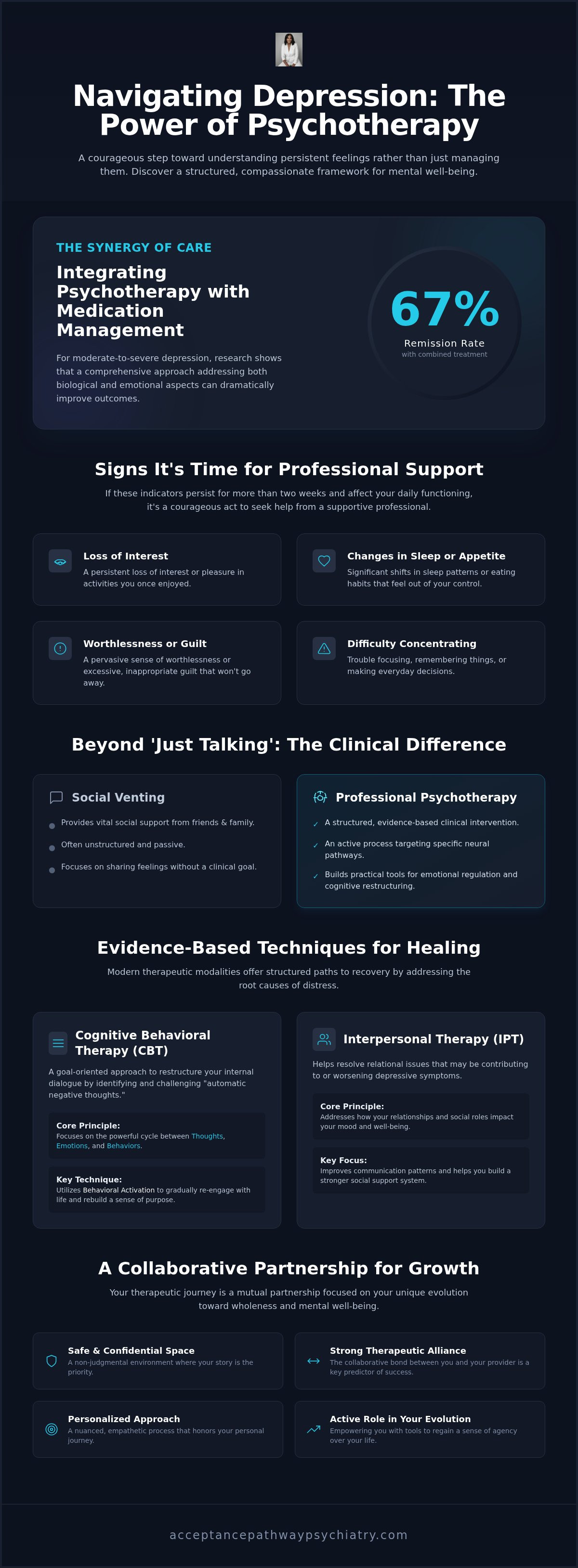
Finding the right psychotherapy for depression is about more than just talking; it's about building a relationship with a provider who acts as a supportive witness to your experience. You'll discover how evidence-based care offers a structured, compassionate framework to help you reclaim your mental well-being and move toward a sense of wholeness. Research indicates that for moderate-to-severe cases, combining psychotherapy with medication can boost remission rates up to 67%. We'll look at the vital, collaborative partnership between you and your provider, clarify how different treatment paths like integrative wellness work together, and show you how to take an active role in your own personal evolution.
Key Takeaways
- Understand the clinical distinction between social venting and the structured, evidence-based intervention provided by professional psychotherapy for Major Depressive Disorder.
- Explore how Cognitive Behavioral Therapy (CBT) and Interpersonal Therapy (IPT) offer practical tools to resolve relational triggers and break negative internal cycles.
- Integrating medication management with psychotherapy for depression Fayetteville NC provides a comprehensive approach that addresses both the biological and emotional aspects of your recovery.
- Gain peace of mind by learning what to expect during a clinical consultation, including how professional confidentiality creates a safe space for your healing.
- Discover the value of a collaborative expert who treats your journey as a mutual partnership, focusing on your unique evolution toward wholeness and mental well-being.
Understanding the Role of Psychotherapy in Treating Depression
Depression is more than just a period of sadness; it's a complex, multifaceted condition that affects how you think, feel, and interact with the world around you. While friends and family offer vital social support, Psychotherapy provides a structured clinical intervention specifically designed to treat Major Depressive Disorder. It's a collaborative process where you work with a professional to untangle the knots of your internal experience. This partnership, often called the therapeutic alliance, is one of the strongest predictors of success in treatment. When you seek psychotherapy for depression Fayetteville NC, you're looking for a safe, non-judgmental space where your unique story is the priority. It's about finding a guide who understands that your journey is personal and requires a nuanced, empathetic approach.
Beyond 'Just Talking': The Clinical Framework
It's a common misconception that therapy is just passive venting. In reality, it's an active, evidence-based framework that targets specific neural pathways and behavioral patterns. We focus on emotional regulation and cognitive restructuring to help you identify thought cycles that keep you stuck. Instead of just talking about the past, we work together to build practical tools for the present. This structured approach helps you regain a sense of agency, transforming the way your brain processes stress and emotion. It's a methodical path toward personal evolution rather than a simple conversation.
Identifying When Professional Support is Necessary
Knowing when to move beyond self-help is a proactive step toward wholeness. While everyone has "off" days, clinical depression often leaves you feeling trapped in a cycle that affects your daily functioning and relationships. You might notice indicators like:
- A persistent loss of interest in activities you once loved
- Changes in sleep patterns or appetite that feel out of your control
- A sense of worthlessness or excessive guilt that won't go away
- Difficulty concentrating or making simple decisions
If these feelings persist for more than two weeks, it's a sign that your system needs professional support. Reaching out isn't a sign of weakness; it's an act of courage. It shows you're ready to partner with a supportive witness who can help you navigate the path back to yourself. Professional intervention provides the stability and confidence you need to start reclaiming your life.
Exploring Modern Modalities: Evidence-Based Techniques for Healing
Healing from depression requires more than willpower; it requires specific, evidence-based tools tailored to your unique internal landscape. When exploring psychotherapy for depression Fayetteville NC, you'll find that different modalities target different aspects of the depressive experience. Whether you're struggling with persistent negative thoughts or relational triggers, modern techniques offer a structured path toward recovery. These methods don't just provide temporary relief; they facilitate a process of personal evolution by addressing the root causes of your distress.
Cognitive Behavioral Therapy (CBT) for Depression
CBT is a goal-oriented approach to restructuring your internal dialogue by focusing on the powerful cycle between thoughts, emotions, and behaviors. This structured approach is a cornerstone of psychotherapy for depression Fayetteville NC, providing a reliable roadmap for those feeling lost in the fog of a low mood. During sessions, we work together to identify "automatic negative thoughts"—those reflexive, self-critical beliefs that often fuel feelings of hopelessness. By challenging these distortions, you can start to shift your emotional state. We also utilize behavioral activation, which helps you gradually re-engage with life through small, manageable steps that rebuild your sense of purpose and joy.
Beyond individual thought patterns, Interpersonal Therapy (IPT) helps you resolve relational triggers that may be contributing to your symptoms. For those who carry the weight of past experiences, trauma-informed care is essential, especially when depression co-occurs with PTSD. This approach ensures you feel safe and supported while processing difficult memories. To truly personalize your care, we utilize Creyos cognitive testing to gain objective insights into your brain's unique functioning, ensuring your treatment plan is as precise as possible.
The Role of Mindfulness and Integrative Wellness
Recovery is about more than just symptom management; it's about wholeness. Integrative wellness connects traditional psychotherapy with mind-body techniques to address the physiological weight of depression. Grounding exercises help you stay present and manage the physical tension or numbness that often accompanies a low mood. Understanding What to Expect During Psychotherapy helps demystify the process, allowing you to focus on the healing work itself. By bridging the gap between clinical expertise and holistic care, we create an environment where you can slowly rebuild your connection to yourself. If you're ready to explore these tools in a supportive partnership, our integrative wellness services are designed to meet you where you are.
The Synergy of Care: Integrating Psychotherapy and Medication Management
While psychotherapy for depression Fayetteville NC offers powerful tools for cognitive change, some individuals find that their symptoms are so overwhelming that they struggle to engage with the process. This is where the synergy of integrated care becomes transformative. Research into evidence-based psychotherapy treatments for depression suggests that for many, a combined approach provides the most robust results. By addressing both the biological and psychological dimensions of depression, we create a more resilient foundation for healing and long-term recovery.
When Medication Becomes a Supportive Ally
Fears regarding psychiatric medications are common and understandable. Many people worry about losing their sense of self or becoming dependent on a pill. We see medication as a tool for stability, not a way to mask your personality. It addresses the biological factors of depression, such as neurotransmitter imbalances, to help lift the heavy fog that often makes daily life feel impossible. By effectively 'lowering the floor' of your symptoms, medication provides the breathing room you need to focus on the deeper work of psychotherapy. It isn't a shortcut; it's a supportive bridge that helps you reach a place where you can actively participate in your own recovery.
A Unified Treatment Philosophy
There is a distinct advantage to having a single practice manage both your therapeutic journey and your medication needs. This integrated approach ensures that your treatment isn't fragmented between different providers who might have conflicting philosophies. As a collaborative expert, we act as a steady, reliable presence, monitoring your progress from both a clinical and a holistic perspective. This continuity leads to more precise adjustments, as we can see firsthand how a specific medication might be impacting your ability to engage in therapy. We value your unique experience and treat the process as a mutual partnership. For more information on how we integrate these services, you can explore our psychiatric medication management guide.
Navigating the Process: What to Expect During Your Therapeutic Journey
Starting psychotherapy for depression Fayetteville NC can feel intimidating, especially when you're already carrying the weight of low energy and hopelessness. The path to healing isn't a mystery; it's a structured, predictable process designed to protect your privacy and promote your growth. From your first interaction, our goal is to lower the barrier to seeking help by providing a clear map of what lies ahead. We view the therapeutic journey as a steady, methodical progression where you are never left to navigate the darkness alone.
The Initial Consultation: Building the Foundation
The first meeting is an opportunity for mutual discovery. It's not an interrogation. Instead, it's a conversation where we gather information about your history, current symptoms, and what you hope to achieve. You are always in control of the pace of disclosure. We'll discuss your experience with depression and any previous treatments to understand your unique needs. This initial step ensures we're the right partner for your journey toward wholeness. It's about establishing a sense of psychological safety from the very beginning.
Professional confidentiality is the bedrock of our practice. It ensures that everything you share remains within the bounds of the therapeutic relationship. This "safe space" allows you to explore difficult emotions without the anxiety of being judged or misunderstood. We act as a supportive witness to your experience, providing a reliable and non-judgmental presence while you work through the complexities of your internal world.
Setting Milestones for Personal Progress
Success in therapy is a collaborative definition. We work together to set specific goals that reflect your personal evolution. These milestones might include:
- Improving your ability to manage daily stressors through grounding techniques.
- Re-engaging with social circles or hobbies that once brought you joy.
- Developing a more compassionate and balanced internal dialogue.
- Gaining a clearer understanding of the relational triggers that impact your mood.
Progress is rarely a straight line. There will be weeks of significant breakthroughs and others that feel like slow, steady maintenance. We treat the treatment plan as an iterative document, adjusting our approach as you grow and your needs change. This flexibility ensures that the care you receive remains relevant to your current state of recovery.
For many, the hurdle of a physical commute can be a barrier to care. We offer telehealth appointments to provide flexibility and accessibility. Virtual sessions allow you to participate in your recovery from the comfort of your own home, maintaining the same level of clinical authority and deep empathy found in an office setting. If you're ready to begin this partnership, you can schedule your telehealth appointment today to start your path toward healing.
A Collaborative Partnership: Why Acceptance Pathway Psychiatry PLLC Prioritizes Your Growth
Choosing to pursue mental wellness is a profound act of self-advocacy. At Acceptance Pathway Psychiatry PLLC, we believe the most effective healing occurs when clinical expertise is balanced with deep, human empathy. Our approach to psychotherapy for depression Fayetteville NC is built on the foundation of a mutual partnership. We don't see you as a collection of symptoms or a clinical case file. Instead, we see an individual with a unique story and the capacity for significant personal evolution. By fostering a non-judgmental environment, we help you lower the barriers to seeking help and create a space where progress feels possible.
The "Acceptance Pathway" philosophy is at the heart of everything we do. It means meeting you exactly where you are today, without expectations or pressure to be "fixed" overnight. This philosophy isn't about passive resignation; it's about radical honesty. By accepting your current reality without judgment, we remove the exhaustion of pretending to be okay, allowing us to focus your energy on actual recovery. We provide a methodical, calm rhythm that helps ground you when symptoms feel chaotic. Our role is to provide a steady, reliable presence as you navigate the complexities of your internal world.
Compassionate Care Without Judgment
We prioritize your psychological safety because we know that true growth requires a secure foundation. In our practice, you'll find a supportive witness who values your unique experience and treats your journey with professional humility. This environment facilitates deeper healing by removing the fear of judgment that often keeps people stuck in cycles of silence. When you feel safe enough to be honest about your darkest moments, you gain the power to transform them. We act as your ally, providing the quiet strength and clinical guidance necessary to move toward a sense of wholeness and mental clarity.
Precision Psychiatry and Modern Tools
Compassion is most effective when it's paired with clinical precision. We utilize advanced assessments like Creyos cognitive testing to gain objective insights into your mental functioning, ensuring your treatment plan is as accurate as possible. This allows us to tailor your psychotherapy for depression Fayetteville NC with a level of detail that traditional methods might miss. By integrating these modern tools with wellness-focused strategies, we support your long-term recovery and overall well-being. We're committed to your growth through every stage of the process, offering both in-person and telehealth appointments to fit your life. If you're ready to reclaim your mental well-being, we encourage you to take the first step by scheduling a consultation with our team today.
Reclaiming Your Path to Wholeness
Depression often feels like a heavy, immovable weight, but it doesn't have to define your future. You've seen how evidence-based care provides a structured map for recovery. It moves beyond simple conversation into genuine cognitive change. By integrating medication management with psychotherapy for depression Fayetteville NC, we can lower the threshold of your symptoms. This makes the work of healing more accessible and sustainable. Our practice utilizes precision tools like Creyos cognitive testing to ensure your treatment is as unique as your internal experience.
We're committed to acting as a supportive witness throughout your personal evolution. You don't have to navigate this journey in isolation. Whether you prefer in-person visits or the flexibility of telehealth, a non-judgmental environment is ready for you. Take the next step toward a life that feels vibrant and connected. Begin your journey toward healing with Acceptance Pathway Psychiatry PLLC. You deserve a partnership that prioritizes your growth and mental well-being.
Frequently Asked Questions
What is the difference between a psychiatrist and a therapist?
Psychiatrists are medical doctors who specialize in the biological aspects of mental health, including the ability to prescribe medication. Therapists focus on evidence-based talk therapies to address emotional and behavioral patterns. Our practice offers both medication management and psychotherapy, providing a unified treatment philosophy. This collaborative approach ensures that your care is integrated rather than fragmented, allowing a single expert to act as a supportive witness to your entire recovery process.
How long does it take to see results from psychotherapy for depression?
Progress in therapy is a unique experience for every individual. While some people notice improvements in their mood or coping strategies within the first few months, others may require a longer period for deep-seated change. Research suggests that consistent engagement in sessions is a key predictor of success. We treat your recovery as a methodical journey, adjusting our strategies as you evolve toward a state of wholeness and reclaimed mental well-being.
Is psychotherapy effective if I am also taking medication?
Combining medication with psychotherapy for depression Fayetteville NC is one of the most effective ways to achieve lasting remission. Medication often addresses the physiological symptoms, such as low energy or sleep disturbances, while therapy helps you develop the cognitive tools to manage stressors. This dual approach provides a comprehensive framework for healing. It allows you to participate more fully in your sessions, accelerating your personal evolution and building a more resilient internal landscape.
Can I attend psychotherapy sessions virtually through telehealth?
Telehealth appointments are a core part of our commitment to accessible care. These virtual sessions allow you to connect with your provider through a secure, confidential platform from the comfort of your home. Virtual care maintains the same clinical standards and empathetic tone as in-person sessions. It's an excellent option for those with busy schedules or those who find a physical office environment intimidating, ensuring that your path to healing remains consistent and manageable.
What happens during the first psychotherapy appointment?
The first session is a structured clinical consultation designed to build a foundation of trust. We'll explore your history and the specific symptoms you're experiencing to understand your unique needs. This is a non-judgmental space where you can share your story at your own pace. We may also introduce precision tools like Creyos cognitive testing to help tailor your treatment. Our goal is to ensure you feel heard, supported, and empowered from day one.
Do I need a referral to start psychotherapy for depression?
You typically don't need a referral to begin psychotherapy for depression Fayetteville NC at our practice. We welcome individuals who are ready to take a proactive step toward their recovery. While some insurance plans might have specific requirements, our team can help you understand your options. Reaching out directly allows us to start building our partnership sooner, positioning us as an ally in your journey toward mental clarity and emotional stability.
How often should I attend therapy sessions for the best results?
For the best results, we generally recommend starting with weekly sessions. This frequency helps establish a strong therapeutic alliance and allows for steady progress in developing new coping mechanisms. As you begin to feel more grounded and confident in managing your symptoms, we can discuss transitioning to a less frequent schedule. The rhythm of your care is always a collaborative decision, focused on what best supports your continued growth and long-term wellness.
Is my information kept confidential during psychotherapy?
Confidentiality is a fundamental legal and ethical requirement that ensures your privacy is protected. Everything you discuss in your sessions stays between you and your provider, with very few exceptions related to immediate safety. This security is essential for creating a safe space where you can be truly honest about your internal experience. By protecting your information, we foster an environment of psychological safety where you can focus entirely on your healing and personal evolution.


