

What if medication and therapy aren’t competing choices, but different kinds of support that can work toward the same goals? It’s understandable to wonder whether they address the same concerns or whether medication might take the place of the personal work therapy involves. In practice, therapy and medication management together can have distinct roles: medication may help address symptoms, while psychotherapy offers space to explore experiences, build coping skills, and work toward change.
Whether both belong in your care plan depends on your needs and preferences. Coordination is clearer when each approach has a defined role, everyone involved understands their responsibilities, and progress is reviewed over time. Combining services doesn’t mean every person needs both or that one approach matters more than the other.
This article explains how psychotherapy and medication management can complement one another, what coordination may involve, and which questions can help you consider next steps. Acceptance Pathway Psychiatry offers both services, with discussions shaped around your individual experience. You can explore the possibilities at your own pace without assuming what care should look like.
Key Takeaways
- Understand how psychotherapy and medication management can support different needs within an individualized care plan.
- Consider how symptoms, daily functioning, preferences, and past care experiences can help guide your next steps.
- When exploring therapy and medication management together, clarify each clinician’s role and how progress will be reviewed.
- Use questions about goals, follow-up, and concerns to make care discussions more collaborative and clear.
- Learn about psychotherapy and medication management at Acceptance Pathway Psychiatry, with in-person and virtual appointments available.
What Does It Mean to Use Therapy and Medication Management Together?
Some people want support for immediate symptoms as well as for the experiences, relationships, or patterns connected to them. It can be confusing to know whether therapy and medication management address the same concerns or whether choosing one makes the other unnecessary. Combined care brings psychotherapy and medication management into an individualized mental health plan, with each approach serving a distinct purpose.
Combined care means including therapy and medication management in one personal plan, with each approach addressing different needs rather than replacing the other. It doesn’t require everyone to use both. The right plan depends on a person’s concerns, preferences, and clinical assessment.
To hear a clinician discuss psychotherapy and medication management, watch this video:
What Are the Different Roles of Therapy and Medication Management?
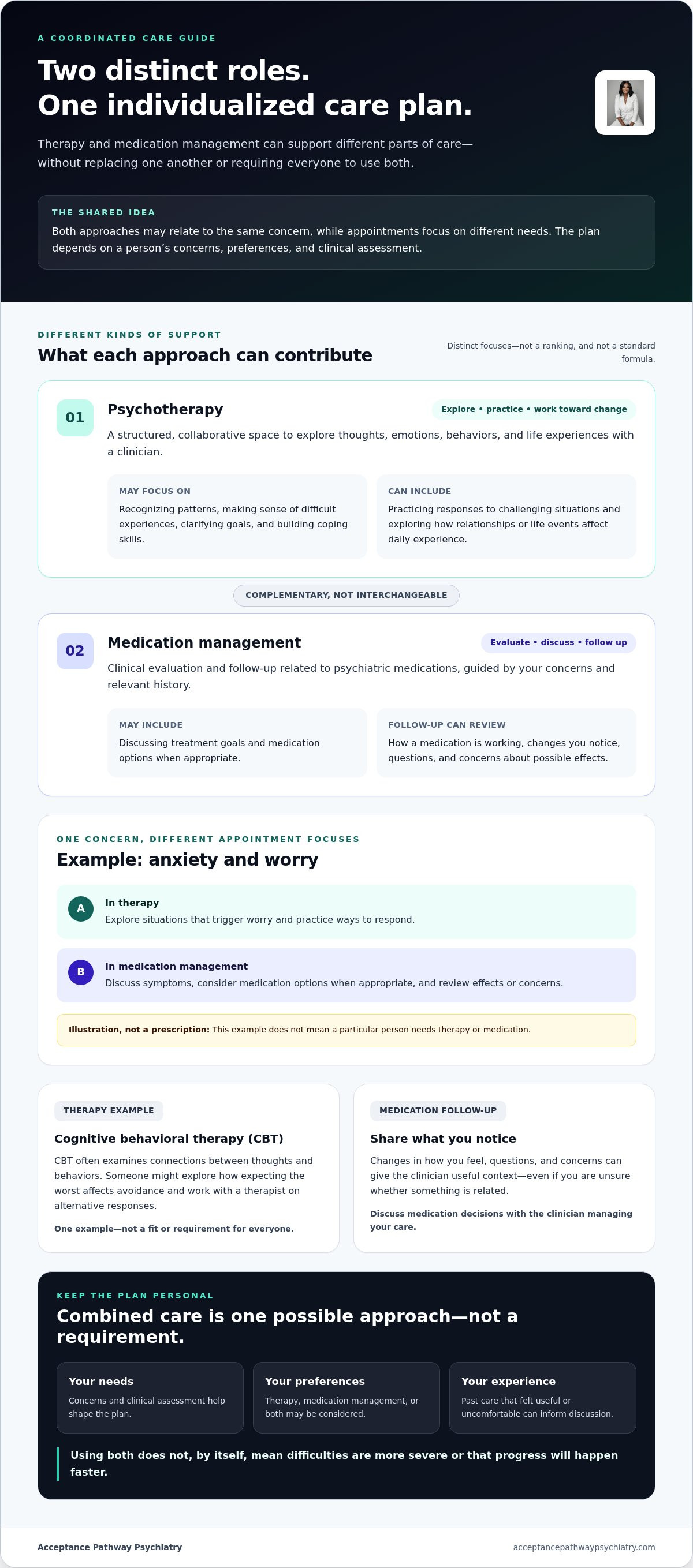
Psychotherapy offers a structured space to explore thoughts, emotions, behaviors, and life experiences with a clinician. Depending on a person’s goals, sessions may focus on recognizing patterns, practicing coping skills, making sense of difficult experiences, or changing responses in daily life. Therapy is collaborative. You don’t have to discuss everything at once or follow a single path.
Medication management centers on clinical evaluation and follow-up related to psychiatric medications. A clinician considers your concerns and relevant history, discusses medication options when appropriate, and reviews how a medication is working or whether you have concerns. The purpose and pace of follow-up depend on your circumstances and the clinician’s assessment.
These roles can complement one another without becoming interchangeable. For example, a person might use therapy to work through recurring stress and develop ways to respond, while medication management focuses on evaluating symptoms and reviewing medication response. This is an example, not a prescription for care. Goals and methods are shaped by the person, not by a standard formula.
Does Combined Care Mean Everyone Needs Both?
No. Treatment choices are individualized, and combined care is one possible approach. Someone may explore psychotherapy, medication management, or both, depending on their needs and preferences. Neither treatment is universally necessary or sufficient. Using both also doesn’t, by itself, mean a person’s difficulties are more severe or that progress will happen faster.
If you’re considering therapy and medication management together, discuss what you hope will change, what concerns you most, and what kinds of support feel acceptable. You might also share previous experiences with therapy or medication, including what felt useful or uncomfortable. These details help a qualified clinician understand your perspective and discuss options with you. You don’t need to arrive with a decision already made.
How Therapy and Medication Management Can Address Different Parts of Care
Therapy and medication management can contribute different kinds of support to a broader care plan. Therapy may focus on understanding experiences and building skills, while medication management centers on clinical evaluation and follow-up about psychiatric medication. Both approaches may relate to the same concern, but appointments often have different focuses.
For example, someone dealing with anxiety might explore situations that trigger worry and practice responding to them in therapy. Separately, medication management could involve discussing symptoms, considering medication options, and reviewing effects or concerns. This illustrates how goals might complement one another. It isn’t a recommendation that a particular person needs medication or therapy.
What Can Psychotherapy Contribute to a Care Plan?
Psychotherapy can offer time to notice patterns and explore how emotions, relationships, life events, or coping strategies affect daily experience. Sessions may help you clarify personal goals, identify responses you want to change, or practice handling challenging situations. The focus can shift as your needs and priorities evolve.
Cognitive behavioral therapy (CBT), for instance, often examines connections between thoughts and behaviors. A person might explore how expecting the worst affects avoidance, then work with a therapist on alternative responses. CBT is one example, not a fit or requirement for everyone. The therapy approach and goals depend on the person’s needs and clinical context.
What Happens During Medication Management?
Medication management involves a clinician evaluating concerns and discussing treatment goals and medication options when appropriate. Follow-up conversations can review your experience, including changes you notice, questions that come up, and concerns about possible effects. Sharing these observations gives the clinician useful context for discussing care.
Before an appointment, note questions such as what a medication is intended to address or what experiences to report. Be open about changes in how you feel and any concerns, even if you’re unsure whether they’re related. Don’t start, stop, or change medication based on general information in an article. Discuss medication decisions with the clinician managing your care.
The two approaches can sit within one plan without promising a particular result or requiring identical goals. You may want therapy to support reflection and coping while medication follow-up addresses clinical questions about symptoms and treatment. The plan can be revisited as your needs, preferences, or experiences change. For a closer look at what follow-up may involve, explore this psychiatric medication management guide.
Acceptance Pathway Psychiatry offers psychotherapy and medication management for individualized care discussions. If you’re considering therapy and medication management together, you can explore care at Acceptance Pathway Psychiatry and reflect on which goals you’d like to discuss.
How to Decide Whether Therapy and Medication Management Together May Fit
Considering both approaches doesn’t mean your situation is more severe, and it doesn’t guarantee faster progress. You may simply be exploring different kinds of support for concerns that affect your life in more than one way. You might want space to understand your experiences while also discussing symptoms and possible medication options. Both are reasonable topics to bring up.
Treatment fit depends on your individual needs, preferences, and clinical assessment. A qualified clinician can discuss potential benefits, limitations, and alternatives in the context of your situation. Take time to ask questions and explain what matters to you. You don’t need to decide on a complete plan before starting the conversation.
What Questions Can Help You Reflect on Treatment Fit?
Before a conversation, consider what you hope will change and what feels difficult right now. Think about how symptoms affect sleep, relationships, work, school, or everyday responsibilities. Consider whether talk-based support feels comfortable and what questions or worries you have about medication. Your preferences are useful information, not obstacles to care.
Previous experiences can offer context, but they don’t dictate what happens next. Note what felt helpful, what didn’t, and what you’d want to approach differently. You could bring a few prompts to discuss:
- Which concerns would I most like support with?
- What changes in daily life would feel meaningful to me?
- What questions do I have about therapy or medication?
- What would help me feel heard and involved in decisions?
These reflections can make the discussion more specific. A clinician can consider them alongside your history and current concerns, then talk through possible next steps without treating one approach as the default.
How Can Combined Care Be Considered for ADHD?
ADHD is one example of how treatment discussions are individualized, not a sign that any one person needs a particular approach. A conversation may take into account the symptoms someone experiences, their goals, and relevant assessment findings. These factors can inform discussion of support options, including therapy and medication management, without presuming a diagnosis or guaranteeing a result.
For adults exploring this topic, an adult ADHD integrated care guide can offer more context. The central question is how the options relate to your circumstances, rather than whether a certain diagnosis automatically calls for a specific plan.
If you’re considering therapy and medication management together, bring these reflections to a care discussion and explore what feels relevant. Acceptance Pathway Psychiatry offers psychotherapy and medication management, with in-person and virtual appointments. You can explore care at Acceptance Pathway Psychiatry to learn about these options.
How to Keep Therapy and Medication Management Coordinated
Clear coordination starts with shared understanding, not assumptions that every clinician automatically communicates with the others. If you’re using therapy and medication management together, clarify who handles each part of your care and how to bring relevant updates into each appointment. Communication arrangements depend on your care team and your consent, so ask what information may be shared and how.
A simple routine can help you prepare and keep your goals in view:
- Name your goals. Describe what you’d like support with and what meaningful progress might look like in daily life.
- Raise questions. Bring up concerns, preferences, or anything unclear about your care.
- Agree on follow-up. Clarify which clinician manages medication questions, whom to tell about therapy concerns, and when you’ll revisit the plan.
- Review progress. Share what feels helpful, difficult, or unchanged, then discuss whether your goals or support need to be reconsidered.
What Should You Discuss When Building a Shared Care Plan?
Start with your priorities and preferences. Explain what you most want help with, what approaches feel comfortable, and any concerns about treatment. Practical barriers matter too. If scheduling, travel, or other responsibilities make appointments difficult, mention them so they can be part of the planning conversation.
Ask how goals will be revisited and what signs of progress might be relevant to you. Clarify who handles each part of care. If sharing information between clinicians is being considered, ask what may be shared, how your consent is handled, and what privacy considerations apply. Don’t assume direct communication is already in place.
How Can You Review Progress Without Expecting a Straight Line?
Progress may be subtle, uneven, or hard to interpret on your own. Keep brief notes about meaningful changes, questions, and experiences you want to remember. You might note that a certain situation felt easier to manage or that a concern remains unchanged. These are observations to discuss, not conclusions about what caused them.
At follow-up, talk openly about what feels helpful, difficult, or the same. A clinician can help interpret those changes in the context of your care and discuss whether your goals or plan need review. If you have a medication concern, contact the prescribing clinician before making any changes yourself.
Acceptance Pathway Psychiatry offers psychotherapy and medication management for individualized care discussions. To explore these services and consider questions you’d like to bring, learn about care at Acceptance Pathway Psychiatry.
Explore Therapy and Medication Management at Acceptance Pathway Psychiatry
Thinking about care can bring up questions about where to begin, what each service involves, and how much you need to decide right away. Acceptance Pathway Psychiatry offers psychotherapy and medication management as options for individualized mental health support. Bring your concerns, preferences, and questions into a clinical discussion, then explore what may fit your needs without assuming every approach is right for you.
Care can be considered one step at a time. Exploring therapy and medication management together doesn’t require you to commit to both. A conversation can help clarify what you’re experiencing and which options you’d like to understand better.
What Services Can You Explore With the Practice?
Psychotherapy offers a setting to discuss personal concerns and work toward goals with a clinician. The focus can be shaped around your experiences and what you hope to address. Medication management includes psychiatric evaluation and appointments to discuss medication-related care. Questions about options, concerns, and your experience can be part of those conversations.
Acceptance Pathway Psychiatry offers appointments in person and through telehealth. You can raise questions about the services you’re seeking and discuss your preferences as you explore care. The practice offers psychotherapy and medication management, but that doesn’t mean one clinician provides both or that the services are automatically combined.
What Is a Helpful Next Step?
Before exploring an appointment, write down your main concerns and a few questions. Note what has been affecting your day-to-day life, what kind of support you’re open to, and anything that makes you hesitant. A short list can give you a starting point if it feels difficult to organize your thoughts in the moment.
You don’t need to know which treatment you want before discussing care. Ask what psychotherapy involves, how medication management is approached, and what options might be considered in light of your circumstances. A discussion is a chance to share what matters to you and learn more, not a promise to pursue every option raised.
If you’re ready to explore what support could look like, Explore care with Acceptance Pathway Psychiatry. You can take the next step at a pace that feels manageable and bring your questions into the conversation.
Take a Thoughtful Next Step at Your Own Pace
You don’t need to arrive with a complete plan. A useful next step can be noticing what you want support with, what questions are on your mind, and what would help you feel comfortable discussing care. Your preferences belong in that conversation, including any uncertainty about whether therapy and medication management together makes sense for you.
Exploring options isn’t the same as committing to a particular treatment. It’s an opportunity to discuss your concerns and consider what feels appropriate for your circumstances. You can move at a manageable pace and revisit questions as your needs become clearer.
If you’re ready to explore what care could look like, explore care options with Acceptance Pathway Psychiatry. A small, considered step can open space for a conversation shaped around you.
Frequently Asked Questions
Can therapy and medication management happen at the same time?
Yes, therapy and medication management can happen during the same period, though appointments may be with different clinicians and on different schedules. For example, someone could continue psychotherapy while attending separate appointments to review psychiatric medication. The clinicians don’t necessarily communicate automatically, so ask each what role they hold and how relevant updates can be shared with your permission. The plan can change as your needs change.
Does a therapist prescribe medication?
Most therapists who provide psychotherapy aren’t medication prescribers. Prescribing authority depends on a clinician’s professional credentials and the rules that apply where care is provided. A therapist can discuss your concerns and help you consider questions to raise, while a qualified prescriber evaluates medication options. If you’re unsure who manages prescriptions in your care, ask directly so you know where to bring medication questions.
Is therapy and medication together better than either one alone?
Not for everyone. Whether one approach or both may be useful depends on a person’s needs, clinical assessment, preferences, and response to care. Using two approaches doesn’t guarantee better or faster results, and choosing one doesn’t mean you’re doing less. A helpful discussion considers what each option could address, its limits, and how well it fits your goals rather than treating combined care as a universal standard.
How do I know if I might benefit from both therapy and medication management?
You can raise the possibility if symptoms continue to affect daily life or if you want support that addresses both practical concerns and personal experiences. Consider what feels hardest right now, what you’ve already tried, and what kind of help you’re open to. These details don’t determine the answer on their own, but they give a clinician useful context for discussing options and whether one or both approaches merit consideration.
Can I stop medication once I start therapy?
Don’t stop or change prescribed medication just because you’ve begun therapy. Therapy and medication serve different roles, and starting one doesn’t automatically mean the other is no longer appropriate. If you’re thinking about stopping, having side effects, or questioning whether medication is helping, discuss it with the clinician managing your prescription. They can consider your situation and explain possible next steps. Avoid making medication changes without their guidance.
Does insurance cover both therapy and medication management?
Coverage varies by insurance plan, the clinicians involved, and the details of your care. Before beginning, ask your insurer whether psychotherapy and medication management are covered separately, whether the clinicians are in network, and what deductibles, copayments, referrals, or prior approvals may apply. Also ask how virtual appointments are handled under your plan. These questions can help you understand expected coverage before scheduling or continuing care.


