
What if choosing not to start medication doesn’t mean facing anxiety alone? If you’re concerned about side effects or long-term use, it makes sense to explore alternatives to medication for anxiety. It can be hard to distinguish approaches with evidence behind them from wellness claims that are less well supported.
The best next step isn’t necessarily one particular technique. It’s a plan that fits your symptoms, preferences, and daily life. This guide explains non-medication approaches, how to weigh their potential benefits and risks, and when self-guided strategies may not be enough.
You’ll learn about psychotherapy and practical approaches such as mindfulness and lifestyle changes, along with important safety considerations around supplements. We’ll also cover how to try a strategy realistically and when to seek professional support. If you already take prescribed medication, don’t stop or change it without guidance from your prescribing clinician. A mental health professional can help you discuss your preferences and consider care options, including psychotherapy.
Key Takeaways
- Alternatives to medication for anxiety can include structured psychotherapy, coping practices, and health-supporting routines. Each has a different role.
- Cognitive behavioral therapy works with anxiety-related thoughts and behaviors in a structured way, unlike self-guided strategies.
- Compare options by purpose, structure, effort, access, and safety, then consider how your symptoms, preferences, and health history affect the fit.
- To try a strategy, set a practical goal, practice consistently, and track changes in anxiety, sleep, and daily functioning.
- A collaborative care conversation can help you discuss your preferences and consider psychotherapy or integrative wellness support.
Alternatives to Medication for Anxiety: What They Can, and Cannot, Offer
Considering alternatives to medication for anxiety doesn’t mean managing everything on your own. Non-medication care can include professional treatment and supportive strategies. Psychotherapy offers guided support, while coping skills can be practiced between appointments or during a stressful moment. Health-supporting routines, such as regular movement or a consistent sleep schedule, may also be part of a broader plan.
There isn’t one plan that works for everyone. Anxiety varies in intensity, duration, triggers, and how much it affects daily life. A brief period of worry around a specific event may call for different support than recurring anxiety that disrupts sleep, work, or relationships. An overview of anxiety disorders on Wikipedia describes different forms of anxiety and treatment approaches. A mental health professional can help you discuss how your own experience affects your daily life and what support may fit. No strategy guarantees that anxiety will go away, and it can take time to identify a useful approach.
What does choosing an alternative to anxiety medication mean?
It means exploring care that doesn’t depend on medication as the only form of support. Options might include psychotherapy, learning to respond differently to anxious thoughts, or building routines that support general well-being. These approaches aren’t interchangeable. A self-guided breathing exercise, for example, isn’t the same as working with a therapist to understand recurring fears and patterns.
Exploring non-medication care doesn’t mean rejecting professional support or making a permanent decision about treatment. You can talk through your preferences, questions, and concerns without committing to a particular approach. Medication and non-medication care aren’t opposing paths; some people use more than one kind of support. If you already take prescribed medication, don’t stop or change it without guidance from the clinician who prescribes it.
When might anxiety call for more support than self-help?
Consider a professional assessment if distress persists, keeps returning, or interferes with work, relationships, sleep, or everyday tasks. It may also be time to seek support if self-help strategies are hard to use, don’t address what’s happening, or leave you unsure how to move forward. You don’t need to wait until anxiety feels overwhelming. A conversation can help clarify what you’re experiencing and what options may suit your needs.
Seek immediate help if you or someone else is in danger. In the United States, call or text 988 for crisis support. If there is immediate danger or urgent risk of harm, call 911 or go to an emergency department. These resources are for urgent situations, not a substitute for ongoing anxiety care. For non-emergency concerns, psychotherapy offers a setting to discuss symptoms and preferences and consider a next step at a manageable pace.
Evidence-Informed Alternatives to Medication for Anxiety
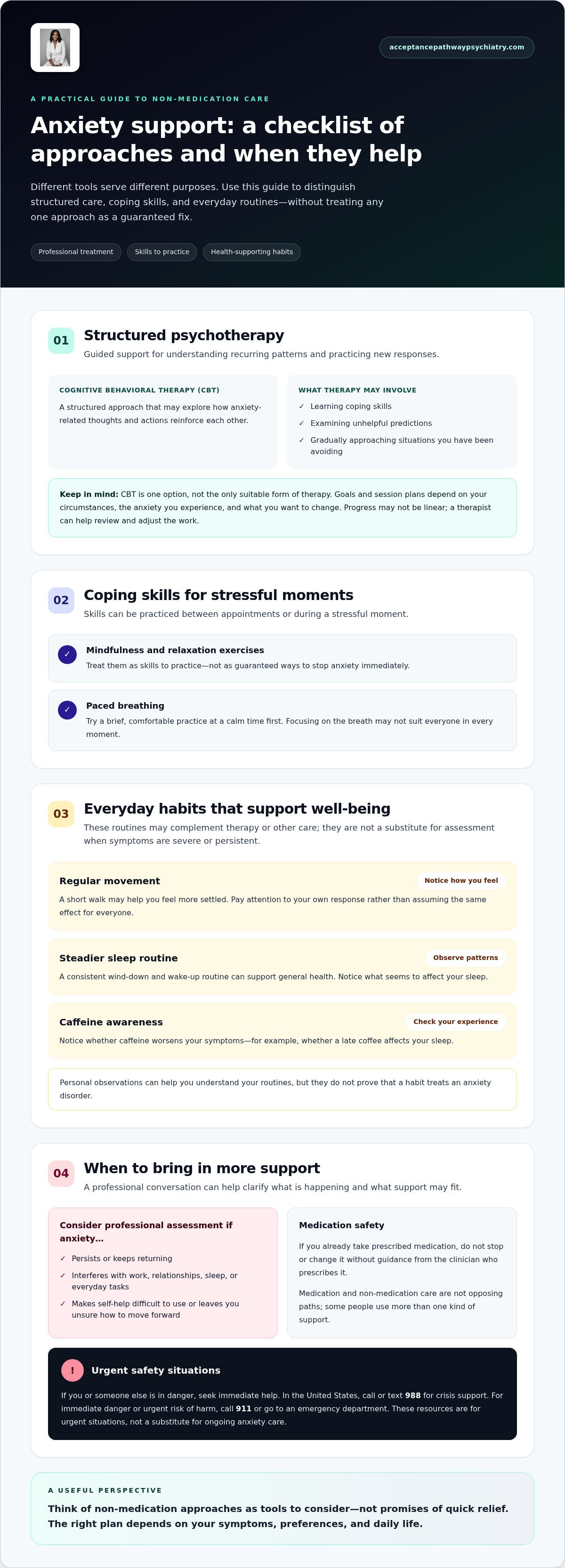
Non-medication approaches aren’t a single treatment. It helps to distinguish structured psychotherapy, skills practiced on your own or with guidance, and everyday habits that support general well-being. Each serves a different purpose. Psychotherapy offers a planned space to understand anxiety and develop responses. A breathing exercise gives you a skill to practice during a stressful moment. Regular movement or a steadier sleep routine supports overall health.
Evidence and usefulness vary by approach and person. Think of these options as tools to consider, not promises of quick relief. Structured care can provide assessment and a way to work toward specific goals. Self-guided practices may be more flexible, but they rely on finding a method you can use consistently. If symptoms are severe or persistent, wellness habits shouldn’t replace professional assessment.
How can psychotherapy support anxiety without medication?
Psychotherapy can help you notice patterns in thoughts, feelings, and behavior, then practice ways to respond differently. Cognitive behavioral therapy (CBT) is a structured approach that may focus on how anxiety-related thoughts and actions reinforce each other. Depending on your concerns, therapy might include learning coping skills, examining unhelpful predictions, or gradually approaching situations you’ve been avoiding. CBT is one option, not the only suitable form of therapy.
Goals and session plans depend on your circumstances, the kind of anxiety you experience, and what you want to change. One person may want to manage worry that disrupts concentration, while another may focus on responding to anxiety in social situations. Progress isn’t always linear. A therapist can help you review what feels useful and adjust the work. If you’re considering psychotherapy for anxiety, you can discuss your preferences and goals without assuming medication is required.
Which everyday practices may support anxiety care?
Health-supporting habits can complement therapy or other care. Regular movement, a consistent wind-down and wake-up routine, and noticing whether caffeine worsens your symptoms are practical places to start. For example, note whether a late coffee affects your sleep or whether a short walk helps you feel more settled. These personal observations don’t prove that a habit treats an anxiety disorder.
Mindfulness, relaxation exercises, and paced breathing are skills to practice, not guaranteed ways to stop anxiety immediately. Try a brief, comfortable practice at a calm time first. If focusing on your breath or closing your eyes feels uncomfortable, choose another grounding activity, such as noticing objects around you or relaxing your shoulders. The aim is to find a manageable practice, not to force yourself through one that increases distress.
Use everyday strategies as supports, not as a test of willpower. If symptoms remain difficult to manage, return often, or interfere with daily life, a mental health professional can help assess what’s happening and discuss care options. A collaborative plan may combine psychotherapy with practical routines, with choices shaped around your needs and preferences.
How to Compare Anxiety Treatment Options for Your Situation
There’s no universal ranking for non-medication anxiety care. Structured therapy, an independently practiced coping skill, and a lifestyle routine serve different purposes, and their evidence and usefulness can vary. Compare how each option works, the effort it takes, and the kind of support it provides. This can help you choose a realistic starting point and prepare focused questions for a mental health professional.
How do therapy, coping skills, and lifestyle supports differ?
Therapy is clinician-guided and can focus directly on anxiety concerns, with goals and sessions shaped around your needs. Coping skills, such as grounding or paced breathing, are practiced independently or between appointments. Lifestyle supports, such as movement or a steadier sleep routine, are broader habits that may support overall well-being rather than target a specific anxiety pattern.
| Option | Purpose and structure | Access and effort | Safety considerations |
|---|---|---|---|
| Psychotherapy | Guided work on anxiety-related concerns, patterns, and coping skills. | Requires appointments and active participation; telehealth may be an access format. | Goals and approach should fit your circumstances and be reviewed with the clinician. |
| Practiced coping skills | Tools such as grounding, relaxation, or breathing exercises for responding to distress. | Often practiced independently; consistency and finding a comfortable method take effort. | A technique may not feel right for everyone. Pause or adapt it if it increases distress. |
| Health-supporting habits | Routines such as regular movement, sleep consistency, or noticing caffeine effects. | Can be built into daily life, though changes need to feel manageable. | These habits support well-being but aren’t a substitute for assessment when symptoms are severe. |
Approaches may complement one another. For instance, someone might discuss recurring worry in therapy, practice a coping skill between sessions, and work toward a steadier bedtime routine. Combining options may feel appropriate, but it doesn’t guarantee a particular result. The value of a plan depends on how well it fits the person using it.
How can you decide which approach feels realistic?
Start with the concern you want to address, then consider your time, comfort level, health history, and practical access to support. If anxiety affects a specific part of daily life, guided therapy may give you space to explore it. If you want a brief tool for stressful moments, you might try one coping skill. If disrupted sleep or caffeine seems connected to how you feel, tracking that pattern may be a manageable first step.
Choose one change rather than overhauling several routines at once. Notice what happens to anxiety and daily functioning, including whether a practice feels sustainable or adds stress. A short record can help you spot patterns, but it isn’t a diagnosis or a measure of personal success. If symptoms persist or interfere with daily life, discuss what you’ve noticed with a mental health professional. A collaborative conversation can help weigh alternatives to medication for anxiety in light of your preferences, needs, and circumstances.
How to Try Non-Medication Anxiety Strategies Safely
A new approach is easier to evaluate when you make one change at a time and know what you hope it will do. A simple plan can help you judge whether a strategy fits your life without expecting anxiety to disappear right away. Take the same care with supplements and prescribed treatment: “natural” doesn’t automatically mean safe, and a non-medication strategy shouldn’t lead you to change medication on your own.
- Choose a modest goal. Make it specific and connected to daily life, such as practicing a relaxation exercise before a stressful task or building a more consistent bedtime routine.
- Select one strategy. Choose an approach that feels manageable and relevant to your goal. Avoid starting several new practices at once, since it can be hard to tell what is affecting you.
- Practice and keep brief notes. Record what you tried, how often, and any changes in anxiety, sleep, daily functioning, or possible triggers. Note whether the strategy felt comfortable.
- Review and adjust. Look for patterns without treating your notes as a diagnosis. If distress persists or functioning worsens, discuss what you’ve observed with a clinician.
What should you know before trying anxiety supplements?
Supplement safety and evidence depend on the specific product and ingredient. Mayo Clinic cautions that evidence for some herbal anxiety remedies is limited and that supplements can have risks, including side effects or interactions. A “natural” label doesn’t establish that something is safe or effective for you. Talk with a qualified clinician before starting a supplement, especially if you take medication, have a health condition, or are receiving other treatment.
Don’t use a supplement as a reason to stop or change prescribed medication. If you’re curious about a particular product, share its name and ingredients with your clinician so you can discuss possible concerns in the context of your health and care.
How can you tell whether a strategy is helping?
Look for a practical shift, not complete relief. For example, your goal might be to use a coping skill before a recurring stressful activity or to notice whether sleep feels more settled after a routine change. Note the practice, how often you used it, and what happened to anxiety and everyday functioning. If the strategy feels uncomfortable, pause and discuss alternatives.
Review your observations over time with curiosity rather than judgment. Anxiety can vary for many reasons, so one difficult day doesn’t necessarily tell you whether a strategy is useful. If distress continues, daily life becomes harder, or you’re unsure what to try next, a clinician can help you revisit the plan. If you’re exploring alternatives to medication for anxiety, read about psychotherapy and care options. Your plan can be collaborative, and you don’t have to make every decision at once.
Build a Collaborative Anxiety Care Plan That Respects Your Preferences
A care plan should begin with your experience, not an assumption about which treatment you must choose. A clinician can listen to what anxiety feels like, how it affects your daily life, what you’ve already tried, and what matters to you in treatment. You can share concerns about medication or express interest in non-medication support without being judged or pressured to make an immediate decision.
What can a collaborative conversation about anxiety care include?
You might describe when symptoms tend to arise, how they affect sleep or relationships, and which strategies have felt helpful or uncomfortable. A clinician can use that context to discuss suitable options, agree on goals, and revisit the plan as you learn what works for you. Progress can include practical changes, such as feeling more able to manage a difficult situation, not only a complete absence of anxiety.
If medication is part of the conversation, it can remain one option rather than an inevitable step or something to dismiss. You can ask about its possible role alongside psychotherapy and other supports, and share what you feel ready to consider. For more context, the guide Psychiatric Medication Management: A Compassionate Guide to Your Healing Journey can help frame questions about medication management.
How can professional support fit a preference for non-medication care?
Psychotherapy provides a professional setting to work on anxiety-related concerns and explore coping approaches. Integrative wellness services can also be part of a broader conversation about mental health and personal well-being. The right mix depends on your needs, health history, preferences, and the changes you hope to make. You can take time to understand your options and discuss how to review the plan together.
If you’re weighing alternatives to medication for anxiety, start by identifying what you want from care. Acceptance Pathway Psychiatry PLLC offers psychotherapy and integrative wellness services, with treatment planning that respects individual preferences. Learn about psychotherapy care as one option to consider.
A plan can evolve. You and your clinician can review whether the chosen approach feels manageable, addresses your concerns, and supports changes in daily functioning. If your needs shift, you can discuss adjustments together. You don’t have to arrive with every answer; a first conversation can begin with what you’re experiencing and what kind of support you want to explore.
Take a Thoughtful Next Step Toward Support
Choosing a direction doesn’t mean deciding everything at once. Let your next step be a conversation about what you hope will change, what feels manageable, and what questions remain. Exploring alternatives to medication for anxiety can be part of a care plan that respects your preferences while leaving room to reconsider as your needs evolve.
At Acceptance Pathway Psychiatry PLLC, psychotherapy and integrative wellness services can be part of that conversation, with appointments available through telehealth. Medication management is also available as part of broader mental health care when it fits a person’s needs and preferences. If you take prescribed medication, keep changes guided by your prescribing clinician.
You deserve support that takes your experience seriously and makes space for your choices. Explore psychotherapy and integrative wellness care and take a collaborative next step.
Frequently Asked Questions
Can anxiety improve without medication?
Yes, anxiety can improve without medication for some people, though the course varies and no single approach works for everyone. Alternatives to medication for anxiety may include psychotherapy or support with coping approaches, depending on what’s contributing to distress. If worry interferes with work, relationships, or sleep, a mental health professional can help assess your situation and discuss options that respect your preferences.
Is therapy effective for anxiety without medication?
Therapy can help people address anxiety without medication, but its usefulness depends on the person, their concerns, and the approach used. A therapist can help you identify goals, reflect on patterns, and choose work that feels relevant to your daily life. It’s reasonable to discuss how you’ll assess whether therapy is helping and whether the plan needs adjusting. Therapy doesn’t require you to commit to medication.
How long does it take for non-medication anxiety strategies to help?
There’s no reliable timeline that applies to everyone. A strategy may feel useful in a particular moment, while broader changes in how anxiety affects daily life can take time to notice. The type of approach, how consistently it’s practiced, and what’s contributing to anxiety all matter. Rather than waiting for a set date, review whether your chosen goal feels more manageable and discuss concerns if symptoms worsen.
Can lifestyle changes replace anxiety treatment?
Not always. Habits such as movement, sleep routines, and noticing caffeine’s effects may support well-being, but they aren’t a guaranteed substitute for professional care. If anxiety repeatedly disrupts daily responsibilities or relationships, lifestyle changes alone may not address the full picture. A clinician can help you consider whether additional support is appropriate, while taking your health history and preferences into account.
Are natural supplements safe to take for anxiety?
Not necessarily. A supplement can cause side effects or interact with medication or a health condition, and evidence varies by ingredient. In the United States, the FDA doesn’t require dietary supplements to receive premarket approval before sale, so don’t assume an “FDA-registered” product has been approved for safety or effectiveness. Discuss a specific supplement with a qualified clinician before using it, especially alongside other care.
What happens if anxiety continues despite trying non-medication approaches?
If anxiety continues, it’s a reason to revisit your care plan, not a sign that you’ve failed. A mental health professional can help review what you tried, what changed, and whether another approach or added support may fit better. Medication can be discussed as one possible option without being assumed. If you already take prescribed medication, don’t stop or change it without guidance from the prescribing clinician.


