

You don’t have to wait until anxiety disrupts your work to seek support. Performance anxiety treatment for professionals may include psychotherapy, such as cognitive behavioral therapy (CBT) or acceptance and commitment therapy (ACT), and medication when appropriate. Feeling nervous before a presentation or important decision is understandable, but ongoing anxiety can affect more than the moment itself.
Performance anxiety, sometimes called stage fright, can arise during workplace presentations, leadership responsibilities, or other situations where you feel evaluated. It may bring physical symptoms, anxious thoughts, avoidance, or over-preparation. Support can help you understand these patterns and work toward making anxiety more manageable.
Here, you’ll learn how performance anxiety can affect your work and well-being, which treatment options may help, and what practical relaxation approaches involve. You’ll also find guidance on when anxiety’s impact on your confidence, work, or daily life may be a reason to speak with a mental health professional.
Key Takeaways
- Recognize how pressure around presentations, leadership, or evaluation can activate anxiety and affect your work.
- Notice when anxious thoughts, physical reactions, avoidance, or over-preparation are becoming difficult to manage.
- Understand how ongoing work stress may affect rest, relationships, well-being, and career opportunities.
- Learn what mindfulness and relaxation techniques may contribute to professional treatment.
- Consider reaching out to a mental health professional when anxiety begins to affect your confidence, work, or daily life.
1. What is Performance Anxiety?
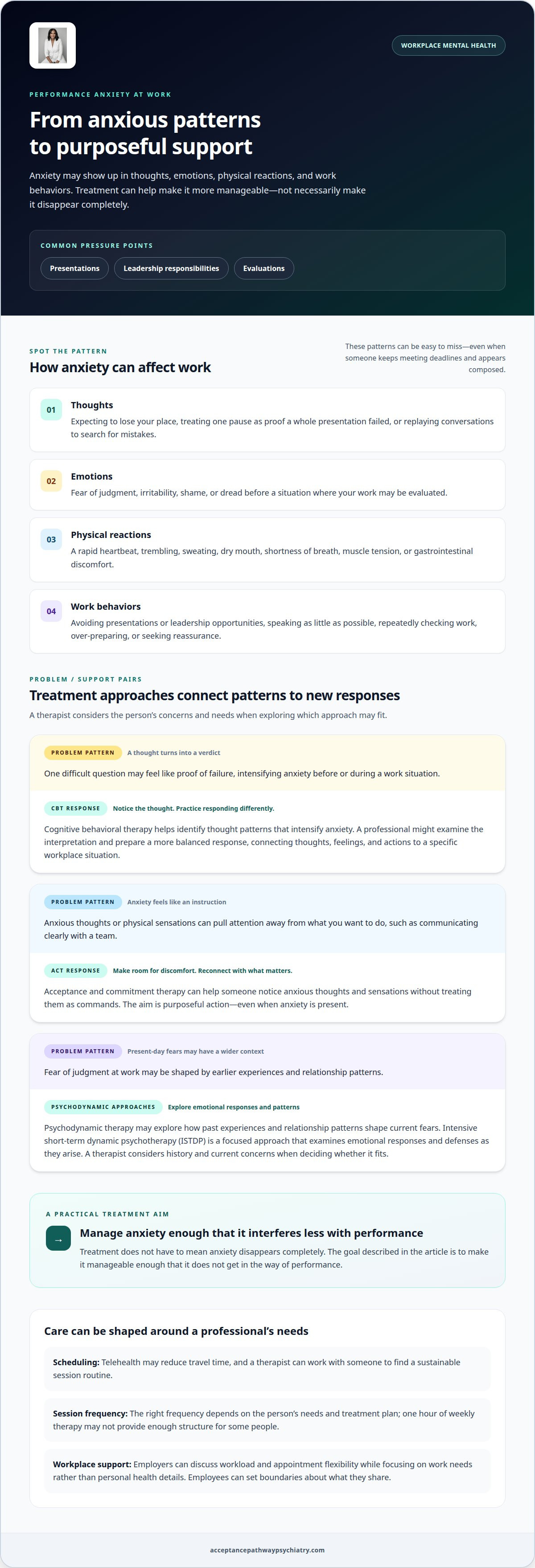
Performance anxiety, sometimes called stage fright, can arise during presentations, leadership duties, or evaluations. The body’s fight-or-flight response may make a demanding situation feel threatening. A racing mind or tense body can interrupt clear thinking. Treatment aims to make anxiety manageable enough that it doesn’t interfere with performance, rather than requiring it to disappear completely.
Cognitive behavioral therapy (CBT) helps people identify thought patterns that intensify anxiety, then practice responding differently. For example, a professional might treat one difficult question as proof of failure. In therapy, they can examine that interpretation and prepare a more balanced response. This approach connects thoughts, feelings, and actions to specific workplace situations.
Acceptance and commitment therapy (ACT) takes another approach. A therapist may help someone notice anxious thoughts and physical sensations without treating them as commands. The person can then make room for discomfort and reconnect with what matters, such as communicating clearly with a team. The aim is purposeful action, even when anxiety is present.
Psychodynamic therapy can explore how earlier experiences and relationship patterns shape present-day fears of judgment. Intensive short-term dynamic psychotherapy (ISTDP) is a focused approach that examines emotional responses and defenses as they arise. A therapist considers the person’s history and current concerns when deciding whether this approach fits their needs.
A busy schedule can make regular care challenging. Telehealth appointments may reduce travel time, while a therapist can work with a professional to find a sustainable session routine. One hour of weekly therapy may not provide enough structure for some people. For someone whose anxiety stays active between appointments, six days between sessions can feel like a long gap. The right frequency depends on the person’s needs and treatment plan.
Insurance coverage for therapy or medication depends on the plan’s benefits and the care involved. Coverage terms can differ, so the plan documents explain applicable benefits and cost-sharing.
Therapy costs in the United States vary by clinician, location, appointment format, and insurance benefits. The cost depends on the case and is given after a quote request; factors include the service and coverage.
Employers can support workers by discussing workload, offering flexibility around appointments, and focusing on work needs rather than personal health details. Employees can set boundaries about what they share. A manager can ask what support would help without requesting a diagnosis.
If anxiety reaches crisis, people in the United States can call or text 988 for the Suicide & Crisis Lifeline, according to the Substance Abuse and Mental Health Services Administration.
Thoughts, emotions, physical symptoms, and behaviors
Performance anxiety can shape a professional’s thoughts, emotions, body, and choices at work. Before a presentation, one person might think, “I’ll lose my place,” then feel dread and rehearse late into the night. During the meeting, that worry may pull attention away from colleagues’ questions. These symptoms can be easy to miss when someone continues meeting deadlines and appearing composed.
High-achieving professionals may respond to pressure by setting stricter standards for themselves. A manager might reread a routine email repeatedly, while an analyst may check a report long after it’s accurate. These patterns can feel helpful because they seem to reduce the chance of criticism. Over time, however, constant checking and over-preparation can consume energy and make ordinary tasks feel risky.
Emotional symptoms can include fear of judgment, irritability, shame, or dread before an evaluative situation. Thoughts may become all-or-nothing: a single pause during a presentation means the entire talk has failed. Some people replay conversations afterward, searching for mistakes. Others struggle to concentrate because their attention keeps returning to possible negative outcomes.
Physical symptoms vary, but may include a rapid heartbeat, trembling, sweating, dry mouth, shortness of breath, muscle tension, and gastrointestinal discomfort. Someone answering questions in a meeting might notice shaking hands or a blank mind, even after careful preparation. These reactions reflect a stress response, not proof that the person lacks skill. If symptoms recur around particular tasks, that pattern can help clarify what situations trigger anxiety.
Behavior can change in less visible ways. A professional might avoid volunteering for a presentation, delay asking a manager for feedback, or decline a leadership opportunity. Another may attend every meeting but speak as little as possible. Chronic anxiety can also encourage repeated reassurance-seeking, such as asking several colleagues to review the same slide deck. These actions may bring brief relief while keeping the feared situation powerful.
“High-functioning anxiety” is not a formal diagnosis. People using that phrase may experience generalized anxiety disorder, social anxiety, perfectionism-related anxiety, or another anxiety disorder. A clinician can consider how symptoms occur across settings, how long they persist, and whether they interfere with daily life. Describing a specific example, such as avoiding client presentations or losing sleep before reviews, gives the conversation a useful starting point. A conversation about anxiety symptoms can help clarify what support may fit.
3. Effects on sleep, relationships, and physical health
Performance anxiety can follow a professional home after a presentation ends. Someone who replays a manager’s questions may struggle to settle at bedtime, then arrive at work tired and less focused. Long work hours can also leave little time to recover from stress or maintain routines. When worry stays active after the workday, rest may feel like another task to get right.
Sleep disruption can affect the next day’s work. A tired employee may find it harder to organize thoughts during a meeting or respond calmly to unexpected feedback. Then a small mistake can prompt more worry about the next evaluation. This cycle can make ordinary work feel increasingly intense, even when the person has the ability and experience to handle it.
Relationships can feel the strain, too. A professional who spends evenings preparing for a review may have less attention for family or friends. Irritability after a demanding day can make a brief conversation feel tense. Someone may also decline social plans to prepare for work or recover from a stressful interaction. These changes can narrow everyday life around work concerns.
Physical well-being may be affected when anxiety-fueled achievement becomes a chronic pattern. For example, a worker who remains nervous before each client meeting may carry muscle tension into the evening. Rapid breathing or a racing heartbeat can make the body feel activated even after the meeting ends. The actual effect varies, but persistent strain can interfere with rest, mood, and well-being.
At work, anxiety may divert attention from the task itself. During a presentation, a professional might focus on how they appear rather than on the information colleagues need. Avoiding higher-visibility assignments can also limit chances to demonstrate skills or pursue career growth. The person may still deliver strong work, yet the effort required to manage fear can reduce their capacity for other responsibilities.
Everyday choices can shift gradually. Someone may over-prepare for a routine discussion, postpone a decision until they feel completely certain, or avoid asking for feedback. These responses can temporarily ease discomfort, but they may also keep the feared situation central. A useful first step is noticing where anxiety changes a routine, such as sleep, conversations, or willingness to take on visible work.
Tracking the pattern can make its effects easier to describe in a professional conversation. Note the situation, your response, and what changed afterward, such as losing sleep before a review or withdrawing from a family conversation. This isn’t about judging performance. It helps distinguish an isolated nervous moment from anxiety that repeatedly affects work, health, relationships, or daily activities.
4. Mindfulness and relaxation techniques used in professional treatment
A mental health professional can help tailor mindfulness and relaxation techniques to your needs. In a therapy session, the clinician may first identify what happens when you feel anxious before a meeting. You can then practice noticing body sensations, thoughts, and surroundings without immediately reacting. This makes the exercise relevant to a real work situation rather than a generic routine.
Breathwork is one option. A therapist may guide the 4-7-8 method: inhale for 4 counts, hold for 7, then exhale for 8. Deep breathing sends signals to the brain that calm the body. The clinician can observe whether the counts feel comfortable and adjust the approach if they feel strained. The purpose is to help the person practice a steady response, not to force a particular feeling.
Another guided exercise uses breath counting. A clinician may invite the person to count each exhale from 1 to 10, then restart at 1 if attention wanders. The practice can take five minutes a day. In therapy, the clinician can discuss what made focus easier or harder, then connect that experience to an upcoming presentation or difficult conversation.
Progressive muscle relaxation helps someone notice physical tension by tensing and releasing muscle groups. A therapist can guide the sequence and help you compare the feeling of tension with the feeling of release. For example, a professional who braces their shoulders before speaking may learn to recognize that pattern earlier. Grounding can also combine breathing, mindfulness, and muscle relaxation to bring attention back to the present moment.
A clinician may also demonstrate the butterfly hug, a common EMDR technique similar to EFT tapping. It involves gently alternating taps below the collarbone for a few minutes. The therapist can guide the exercise and help you notice your response, especially if a particular sensation feels uncomfortable. This makes the technique part of a supported treatment conversation, not a test of whether you can calm down on demand.
Mindfulness practice can also include noticing thoughts without treating them as facts. Before a meeting, a therapist might help someone recognize, “I’m having the thought that I’ll fail,” then return attention to the purpose of the conversation. With repeated practice, the person can explore which techniques feel useful and when they fit best. A brisk 20-minute walk each day may also help reduce anxiety, while therapy can address how movement fits the person’s routine.
5. When to seek help from a mental health professional
Consider professional support when anxiety starts changing how you work, make decisions, or feel about yourself. For example, declining presentations you previously accepted or losing focus during routine meetings can signal meaningful interference. A mental health professional can assess whether symptoms fit an anxiety disorder and discuss evidence-based treatment options, including performance anxiety treatment for professionals.
You don’t need to wait for a crisis or a missed promotion. If worry before a performance review regularly affects sleep, confidence, or relationships, that pattern deserves attention. The same applies when preparing for ordinary tasks takes so much time that other responsibilities suffer. A clinician can help distinguish situational nerves from persistent anxiety affecting daily life.
Notice the impact, not only the intensity of one anxious moment. A useful description includes the situation, what happens, and what changes afterward. For instance, explain that a weekly team presentation leads to repeated preparation and difficulty concentrating the next day. These details help a mental health professional understand how anxiety affects your nervous system and functioning.
Professional assessment can also explore whether anxiety appears only at work or across different settings. A person might feel steady with colleagues but overwhelmed during client pitches, while another experiences worry at home and work. The clinician considers symptoms, patterns, and their effect on daily activities. This broader view helps shape care around the person rather than one isolated event.
Seeking help doesn’t mean you lack ability or commitment. It means the current response is costing more than you want to carry. A professional can discuss psychotherapy approaches, coping strategies, and whether medication is appropriate. Treatment goals can focus on making anxiety manageable enough to participate, communicate, and pursue opportunities with greater flexibility. Exploring performance anxiety treatment for professionals can begin with an honest conversation about what feels difficult.
Some professionals hesitate because they fear workplace judgment or don’t know what to disclose. You can begin by describing the effect on your mental health without sharing workplace details you’d rather keep private. A clinician can focus on your experience, such as avoiding leadership tasks or feeling tense before evaluations. That first conversation can clarify what support may fit.
If anxiety is affecting your confidence, work, or daily life, explore psychotherapy support as a next step. A conversation with a mental health professional can help you understand the pattern and consider care that fits your needs.
Acceptance Pathway Psychiatry PLLC
Acceptance Pathway Psychiatry PLLC offers psychotherapy and medication management for people whose anxiety affects work or daily life. If presentations, evaluations, or leadership responsibilities have become difficult to manage, professional support can help clarify the patterns involved and discuss care options suited to your needs.
Psychotherapy can provide space to explore anxious thoughts and responses, while medication management may be considered as part of care when appropriate. Integrative wellness services are also available. The focus is on understanding your experience and considering a thoughtful next step, not on expecting anxiety to disappear overnight.
If you’re ready to discuss how anxiety is affecting you, contact Acceptance Pathway Psychiatry PLLC.
Choose a next step that fits your needs
Progress can begin with noticing what you want to approach differently, whether that means speaking up in meetings or feeling less governed by evaluation. Finding performance anxiety treatment for professionals isn’t about changing your personality. It’s about exploring support that helps you move toward meaningful work with more flexibility.
Acceptance Pathway Psychiatry PLLC offers psychotherapy, medication management, and Creyos Cognitive Testing. These options can be part of a broader conversation about your mental health and the kind of care that may suit your concerns. You can share what feels difficult, what you hope to change, and what support feels comfortable to consider.
Contact Acceptance Pathway Psychiatry PLLC to discuss a possible next step. Reaching out is a choice, not a commitment to a particular treatment. You deserve support that takes your experience seriously and respects your pace. With thoughtful care, it’s possible to build a steadier relationship with challenges at work and make room for the opportunities that matter to you.
Frequently Asked Questions
What is Performance Anxiety?
Performance anxiety is distress linked to situations where someone feels their abilities are being evaluated. It can arise around a job interview, client pitch, exam, or leadership decision. The concern may be less about the task itself and more about making a mistake or being judged. A clinician can explore when the fear appears and whether it’s limited to specific situations or affects other parts of life.
Anxiety: What are the Best Treatments?
The most helpful treatment depends on the person’s symptoms, goals, and circumstances. Psychotherapy can address patterns behind anxiety, while medication may be considered as part of care when appropriate. For example, someone anxious mainly during client pitches may focus on evaluation fears, while broader anxiety may call for a wider treatment plan. A mental health professional can assess these needs and discuss suitable options.
When Anxiety Drives Success, What Does It Cost?
Anxiety-driven achievement can come with tradeoffs, even when work results look strong. A professional might meet every deadline but feel unable to stop checking, rest, or enjoy time away from work. Over time, that strain may narrow choices, such as turning down a role that involves public speaking. Noticing what success requires emotionally can help someone decide whether the current pace remains sustainable.
When Should Someone Seek Help?
Consider speaking with a mental health professional when anxiety repeatedly changes decisions or limits opportunities. For instance, avoiding a promotion because it includes presentations, or spending excessive time preparing routine updates, may signal that worry is interfering with life. A clinician can assess symptoms, ask how they affect work and relationships, and discuss evidence-based care. Support can be appropriate even before anxiety becomes overwhelming.
What treatments work best for performance anxiety in professionals?
There isn’t one treatment that fits every professional. A plan for performance anxiety treatment for professionals may include psychotherapy to address evaluation-related patterns, with medication considered when clinically appropriate. The approach can account for role-specific pressures, such as frequent presentations or high-stakes decisions. A clinician and patient can agree on goals that support meaningful participation at work, without making complete calmness a requirement for progress.
How does CBT help with performance anxiety, and how long does treatment take?
In performance anxiety treatment for professionals, CBT can help someone examine how interpretations of work situations shape emotions and actions. A therapist might help separate a difficult meeting from the belief that a career is ruined, then practice a more balanced response. Treatment length varies with the person’s goals, symptoms, and progress. The clinician can review what is useful and adjust the plan as needs change.
Can beta blockers help with performance anxiety, and what are the risks?
Beta blockers may provide short-term relief from some physical effects of anxiety, such as a racing heart, and are described as non-sedating and not habit-forming. They don’t address underlying causes or anxious thoughts. Medication decisions require a clinician’s assessment of health history, current medications, and symptoms. Don’t start, stop, or change medication without discussing it with a qualified professional.
How do therapists distinguish performance anxiety from social anxiety or panic disorder?
A therapist considers the situations that trigger anxiety, how broadly it appears, and how it affects daily functioning. Fear limited mainly to evaluative tasks may suggest a performance-related pattern, while anxiety across social situations or sudden episodes of intense fear may need further assessment. These descriptions alone don’t establish a diagnosis. A clinician uses the person’s history and symptoms to understand what support may fit.


