

What if your psychiatric appointment felt less like a clinical interrogation and more like a collaborative conversation between two experts on your life? When you're researching how to choose a psychiatrist in Fayetteville NC, it's natural to feel a sense of hesitation when preparing to share your personal history. You might worry about being rushed through a list of symptoms or feel anxious that your entire treatment plan will begin and end with a prescription pad. These concerns are valid, and finding the right fit is the most important step in your mental health journey.
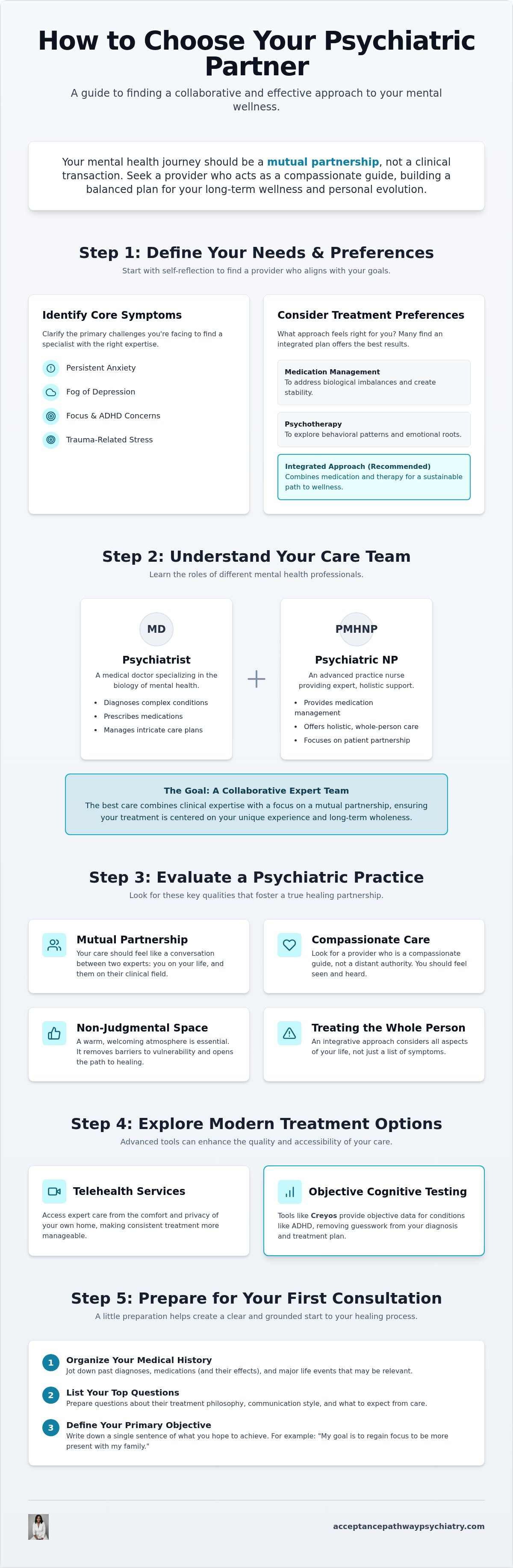
This guide will show you how to identify a psychiatric partner by evaluating their clinical expertise, treatment philosophies, and modern care options. We'll explore how to distinguish between different provider titles and how tools like Creyos cognitive testing can provide objective data for your care. You'll learn how to find a compassionate guide who listens carefully and builds a balanced plan for your long term wellness and personal evolution. You deserve a supportive witness to your journey who treats the relationship as a mutual partnership and respects your unique path to healing.
Key Takeaways
- Reflect on your specific symptoms and treatment preferences to find a provider who aligns with your personal evolution and wellness goals.
- Understanding the differences between medical doctors and nurse practitioners helps you feel confident if you're learning how to choose a psychiatrist in Fayetteville NC.
- Seek an integrative approach that treats you as a whole person, ensuring your care feels like a mutual partnership rather than a distant clinical interaction.
- Explore how modern tools like telehealth and objective cognitive testing can remove the guesswork from your ADHD evaluation and treatment path.
- Organize your medical history and top questions before your first visit to create a clear and grounded start to your healing process.
Defining Your Mental Health Goals and Treatment Needs
Finding the right psychiatric partner begins with a period of quiet reflection. It's about moving beyond general feelings of "not being yourself" toward a clearer understanding of your internal landscape. Before you start looking at specific providers, take a moment to identify the primary challenges you're facing. Are you struggling with persistent anxiety, the heavy fog of depression, or perhaps focus issues that make daily tasks feel insurmountable? You might also be processing trauma-related stress that requires a specialized, trauma-informed lens. Identify these core symptoms. Doing so helps you narrow your search to providers who have deep expertise in those specific areas.
Your preference for treatment is equally vital. Some individuals seek medication management to address biological imbalances, while others prefer psychotherapy to explore behavioral patterns. Many people find that an integrated approach combining both methods offers the most sustainable path to wellness. While you're researching how to choose a psychiatrist in Fayetteville NC, keep in mind that you may also need specialized evaluations. Objective tools like Creyos cognitive testing can be essential if you suspect ADHD, providing the data needed to remove guesswork from your diagnosis.
Assessing the Severity and Impact of Symptoms
Consider how your current mental health state affects your daily work, your relationships, and your ability to practice self-care. It's helpful to write down a single sentence that defines your primary objective. For example: "My goal is to regain the emotional stability and focus necessary to feel present with my family and productive in my career." Recognizing that you need support isn't a sign of failure. It's a profound act of strength and a necessary step in your personal evolution. Understanding the different types of mental health professionals available will help you determine if a psychiatrist or a psychiatric nurse practitioner is the best fit for your specific level of need.
The Role of Compassionate Care in Recovery
The environment where you receive care significantly influences your healing process. A clinical setting that feels cold or detached can create an invisible barrier that makes it harder to be vulnerable. Instead, look for a practice that prioritizes a warm and welcoming atmosphere. This human-centric approach transforms the experience from a standard medical transaction into a supportive partnership. You want a provider who views themselves as a compassionate guide rather than a distant authority figure. When you feel seen and heard in a non-judgmental space, the path toward wholeness becomes much clearer and more accessible. This collaborative bond is the foundation of effective psychiatric care.
Understanding the Role of a Psychiatrist vs. Other Providers
A psychiatrist is a medical doctor who specializes in the intricate relationship between your biology and your mental health. They possess the clinical authority to diagnose complex conditions and prescribe medications that rebalance brain chemistry. However, modern mental healthcare has evolved. You'll often find Psychiatric Mental Health Nurse Practitioners (PMHNPs) working alongside doctors. These advanced practice nurses provide expert medication management and holistic support. Both roles are essential. They act as compassionate guides, using their medical training to help you achieve personal progress and lasting stability.
When you're researching how to choose a psychiatrist in Fayetteville NC, it's helpful to understand that the best care often isn't a choice between one provider or another. Instead, it's about the model of care they use. A collaborative expert views your treatment as a mutual partnership. They don't just see a set of symptoms. They see a whole person. This perspective ensures that your clinical path remains focused on your unique experience and long term wholeness.
Medication Management vs. Psychotherapy
Medication and therapy serve different but complementary purposes. Effective psychiatric medication management provides the biological floor you need to stand on. It reduces the intensity of symptoms like racing thoughts or deep lethargy. This stability creates the mental space necessary for psychotherapy. Therapy then steps in to address the emotional and behavioral roots of your distress. Receiving both services from a single, coordinated practice ensures your providers are always on the same page. It creates a seamless flow that supports your personal evolution without the confusion of conflicting advice.
When to Choose a Specialist over a Generalist
General practitioners are wonderful for many health needs, but complex mental health conditions often require a specialist's touch. Conditions like PTSD or Bipolar Disorder involve layers of biological and psychological factors that benefit from deep expertise. A specialist understands the nuances of trauma-informed care and how to adjust treatments based on your specific history. You can find many tips on finding a mental health provider that emphasize the importance of matching a provider's specialty to your diagnosis. If you're looking for a partner who values your unique journey, exploring integrative wellness services can provide the comprehensive support you deserve. This specialized focus ensures you aren't just another patient on a waitlist, but a partner in a well-defined plan for improvement.
Core Criteria for Evaluating a Psychiatric Practice
When you research how to choose a psychiatrist in Fayetteville NC, you'll find that many directories focus solely on insurance and location. While those logistics matter, the clinical philosophy of a practice often determines your long term success. You want a provider who views you as a partner in a collaborative process. This means looking for a practice that balances clinical authority with deep empathy. A key indicator of this balance is how they use diagnostic tools. Many traditional providers rely entirely on subjective interviews. A modern, data-driven practice will incorporate objective assessments, such as Creyos cognitive testing, to remove the guesswork from your ADHD evaluation or treatment plan.
Responsiveness is another vital factor to consider. Mental health needs don't always follow a set schedule. You should evaluate how a practice handles follow-up questions or medication adjustments between appointments. A practice that uses a steady and predictable communication rhythm provides a sense of stability. It ensures you never feel like you're navigating your recovery alone. Clear, accessible language is better than heavy academic jargon. Your provider should explain your treatment options in a way that feels inclusive and grounding, rather than exclusionary or intimidating.
Prioritizing Empathy and Psychological Safety
The "vibe" of a clinical environment is more than just a preference. It's a fundamental part of your healing. A non-judgmental provider uses active listening to validate your experience, creating an immediate sense of psychological safety. You can find helpful tips on finding a mental health provider that emphasize the importance of this interpersonal connection. If a practice feels transactional or rushed, it might be harder to be vulnerable. Look for signs of warmth and professional humility. These traits indicate a provider who values you as a person, not just a diagnosis.
The Importance of Integrative Wellness
Holistic healing is about more than managing symptoms. It's about pursuing wholeness. An integrative wellness approach considers how lifestyle, nutrition, and mind-body connections influence your mental state. This collaborative model moves away from the cold, detached style of traditional medical institutions. Instead, it focuses on your personal evolution. When your provider looks at the big picture, they can build a treatment plan that supports your entire life. This perspective ensures that every tool, from medication to psychotherapy, works together to help you achieve a sense of balance and well-being.
Evaluating Modern Treatment Options: Telehealth and Integrated Testing
Modern psychiatry has moved beyond the traditional office setting to embrace tools that prioritize both precision and patient comfort. Telehealth offers a level of privacy that was once difficult to achieve. You can now engage in meaningful, therapeutic sessions from the safety and familiarity of your own home. This environment often lowers the emotional barrier to sharing your history, making it easier to build a genuine connection with your provider. When you're researching how to choose a psychiatrist in Fayetteville NC, it's vital to ensure the practice uses secure, HIPAA-compliant platforms. These virtual sessions aren't just a convenience; they're a way to maintain consistent, high-quality care that fits into your actual life.
In addition to virtual accessibility, modern care incorporates objective data to support clinical decisions. Traditional diagnostic interviews are foundational, but ADHD testing removes much of the guesswork from complex evaluations. Tools like Creyos Cognitive Testing allow your provider to map your specific cognitive profile. By identifying your unique strengths and weaknesses in areas like memory, reasoning, and verbal ability, your psychiatric partner can create a more targeted roadmap for your recovery. This blend of high-level technology and human empathy ensures your treatment is as unique as you are.
The Role of Cognitive Assessments in Precision Care
Objective data leads to more accurate medication management and a deeper understanding of your internal experience. When your provider understands the biological markers of your focus or anxiety, they can tailor your prescriptions with greater confidence. Creyos testing is a game-changer for adult ADHD evaluations, providing a clear picture of how your brain processes information in real-time. These assessments also serve as a vital benchmark for your personal evolution. By comparing results over time, you and your provider can see tangible evidence of your progress, allowing you to adjust your treatment plan with clarity and purpose.
Navigating the Telehealth Experience
A virtual psychiatric evaluation mirrors the depth of an in-person visit while offering greater flexibility. You'll discuss your symptoms, goals, and history with a collaborative expert who values your perspective. To get the most out of these sessions, it's helpful to prepare a space that feels steady and grounding. Choose a quiet, private area where you won't be interrupted. This intentionality helps you stay present during the conversation. If you're ready to work with a team that uses these modern tools to support your wholeness, you can easily schedule your telehealth appointments to begin the process of improvement today.
Preparing for Your First Psychiatric Consultation
Stepping into your first consultation can feel like a significant emotional threshold. It's the moment where your research on how to choose a psychiatrist in Fayetteville NC transitions into a tangible partnership. To make this transition as smooth as possible, begin by gathering your medical history. This should include a list of any previous medications, their dosages, and how you responded to them. Having this information ready allows your provider to build a more accurate clinical picture from the start. It also reduces the anxiety of trying to remember specific dates or names while you're in the middle of a conversation.
Beyond the paperwork, take time to reflect on your goals for personal wholeness and evolution. What does a "better" day look like for you? Writing down your top three questions ensures that you address your most pressing concerns regarding your diagnosis and treatment options. This preparation transforms the session into a collaborative evaluation rather than a one-sided interview. You're not just a patient receiving a plan; you're an active participant in defining your path to wellness. This collaborative nature is the foundation of a healthy psychiatric relationship.
Questions to Ask Your Potential Psychiatrist
Your first session is an opportunity to interview your provider as much as it is for them to evaluate your needs. You might ask how they approach medication management for your specific condition. It's also helpful to know if they offer integrated psychotherapy alongside clinical consultations, as this combined model often provides the most comprehensive support. Finally, ask about their philosophy on involving the patient in the decision-making process. A provider who values your input and respects your unique experience is more likely to be a steady, reliable ally in your recovery.
Setting Expectations for the First Session
View the first meeting as a supportive witness to your journey. It isn't an interrogation; it's a calm, methodical process of understanding who you are and what you need. A truly comprehensive evaluation takes time and patience. You won't always have every answer by the end of the first hour, and that's okay. The goal is to establish a grounded starting point. Before the session ends, you'll discuss next steps. This includes how to schedule follow-up care and how your prescriptions will be managed moving forward. When you know what to expect, the process of how to choose a psychiatrist in Fayetteville NC becomes a much less intimidating and more empowering experience. You'll leave the session with a clear sense of order and a predictable plan for your improvement.
Your Path to Personal Evolution
Choosing the right mental health partner is a transformative decision that requires both clinical precision and a genuine human connection. By focusing on a provider's clinical philosophy and their use of modern tools like Creyos Cognitive Testing, you ensure your treatment plan is grounded in objective data and deep empathy. Whether you prefer the convenience of telehealth or the stability of in-person visits, the goal is to find a supportive witness who values your unique experience and respects your personal journey.
If you've been wondering how to choose a psychiatrist in Fayetteville NC, remember that you deserve a collaborative expert who prioritizes compassionate, trauma-informed care and your long term wholeness. You don't have to navigate these challenges alone. A steady and reliable presence is ready to help you build a clearer path toward healing and stability.
Begin your journey toward wholeness with Acceptance Pathway Psychiatry PLLC. You have the strength to take this next step, and your progress is entirely possible.
Frequently Asked Questions
How do I know if I need a psychiatrist or a therapist?
A psychiatrist is a medical professional who specializes in the biological roots of mental health and can provide medication management. If your symptoms feel overwhelming or biological in nature, a psychiatrist is often the best starting point. A therapist focuses on talk-based strategies to navigate emotional and behavioral patterns. Many individuals find that a combined approach offers the most comprehensive support for their personal evolution and long term wellness.
What should I ask during a psychiatric evaluation to ensure a good fit?
Focus on questions that reveal their clinical philosophy and communication style. You might ask how they involve you in the decision-making process or how they handle medication adjustments between visits. It's also helpful to inquire if they offer objective tools like cognitive testing. When you're learning how to choose a psychiatrist in Fayetteville NC, finding a provider who views the relationship as a mutual partnership is essential for your psychological safety.
Does insurance typically cover psychiatric medication management?
Most commercial insurance plans, Medicaid, and Medicare provide coverage for psychiatric evaluations and follow-up care. While specific costs vary by plan, behavioral health is a standard benefit for most families. It's always a good idea to verify your specific coverage with the practice before your first appointment. This ensures you have a clear understanding of any co-pays or deductibles as you begin your healing journey with a collaborative expert who values your progress.
Can I receive a diagnosis and treatment plan through telehealth?
Yes, you can receive a comprehensive diagnosis and a personalized treatment plan through secure, HIPAA-compliant telehealth platforms. These virtual sessions allow for the same depth of clinical evaluation as an in-person visit. You'll discuss your history and goals with your provider from the comfort of your own home. This flexibility makes it easier for busy individuals to maintain a steady and predictable rhythm of care without the added stress of a commute or public waiting room.
What is the difference between a psychiatrist and a psychiatric nurse practitioner?
A psychiatrist is a medical doctor with specialized residency training in mental health. A psychiatric nurse practitioner is an advanced practice nurse with a master’s or doctoral degree focused on psychiatric care. Both professionals are qualified to diagnose conditions and provide medication management. They often work together in a collaborative model to offer human-centric support, ensuring you receive high-level clinical expertise in a warm and welcoming environment that prioritizes your unique needs.
How long does it take to find the right medication for my symptoms?
Finding the right medication balance is a methodical process that requires patience and close communication. While some people feel an initial shift within a few weeks, it often takes several months to fine-tune dosages and assess long term effectiveness. Your provider acts as a compassionate guide during this time, monitoring your progress and making adjustments as needed. This careful approach ensures that your treatment plan remains aligned with your specific biological needs and holistic wellness goals.
What is Creyos cognitive testing and how does it help with ADHD?
Creyos is an objective digital assessment tool that measures various aspects of brain function, such as memory, attention, and reasoning. Unlike subjective interviews alone, this testing provides concrete data to help identify your specific cognitive strengths and weaknesses. It's especially helpful for adult ADHD evaluations because it removes the guesswork from the diagnostic process. Using these objective benchmarks allows your provider to create a more precise and effective plan for your personal progress and cognitive health.
Is it possible to have therapy and medication management at the same practice?
Yes, many modern practices offer an integrated model where you can receive both psychotherapy and medication management in one location. This coordinated approach ensures that your providers are always in sync regarding your care. It creates a seamless experience that supports your wholeness and simplifies the logistics of your treatment. When you're researching how to choose a psychiatrist in Fayetteville NC, look for a practice that values this holistic and collaborative way of healing.


