

What if the heart palpitations and restless nights you've been "powering through" are actually your body's way of asking for a specialized partner in your care? Many people wait years to seek help because they worry their struggles aren't severe enough, even as nearly 20 percent of adults in the U.S. live with these same heavy feelings. Understanding when to see a psychiatrist for anxiety isn't about admitting defeat. It's about choosing a strategic path toward clarity and biological balance. It is common to feel hesitant, but recognizing that your symptoms have a physical basis is the first step toward finding a solution that works.
You likely feel that you should be able to manage your stress solo, but clinical anxiety often requires a different set of tools than everyday worry. This guide will help you recognize the specific signs that your nervous system needs professional support and show you how a psychiatrist can be a vital ally in your healing. We'll look at the differences between therapy and medical management, helping you find a non-judgmental path toward the relief you deserve. By the end, you'll understand how an integrative approach can help you reclaim your sense of wholeness.
Key Takeaways
- Learn how to identify the specific biological and emotional triggers that signal when to see a psychiatrist for anxiety rather than trying to manage persistent stress on your own.
- Recognize how physical manifestations like heart palpitations and chronic insomnia often indicate that your nervous system requires specialized clinical support.
- Understand the unique role of a psychiatrist in balancing brain chemistry through precise medication management and neurobiological expertise.
- Discover how objective tools like Creyos cognitive testing can provide a clearer picture of your mental health and help refine your personalized treatment plan.
- Gain clarity on how an integrative approach combining medication and psychotherapy creates a collaborative, non-judgmental path toward long-term healing.
Understanding Anxiety: When Does Normal Worry Become a Clinical Concern?
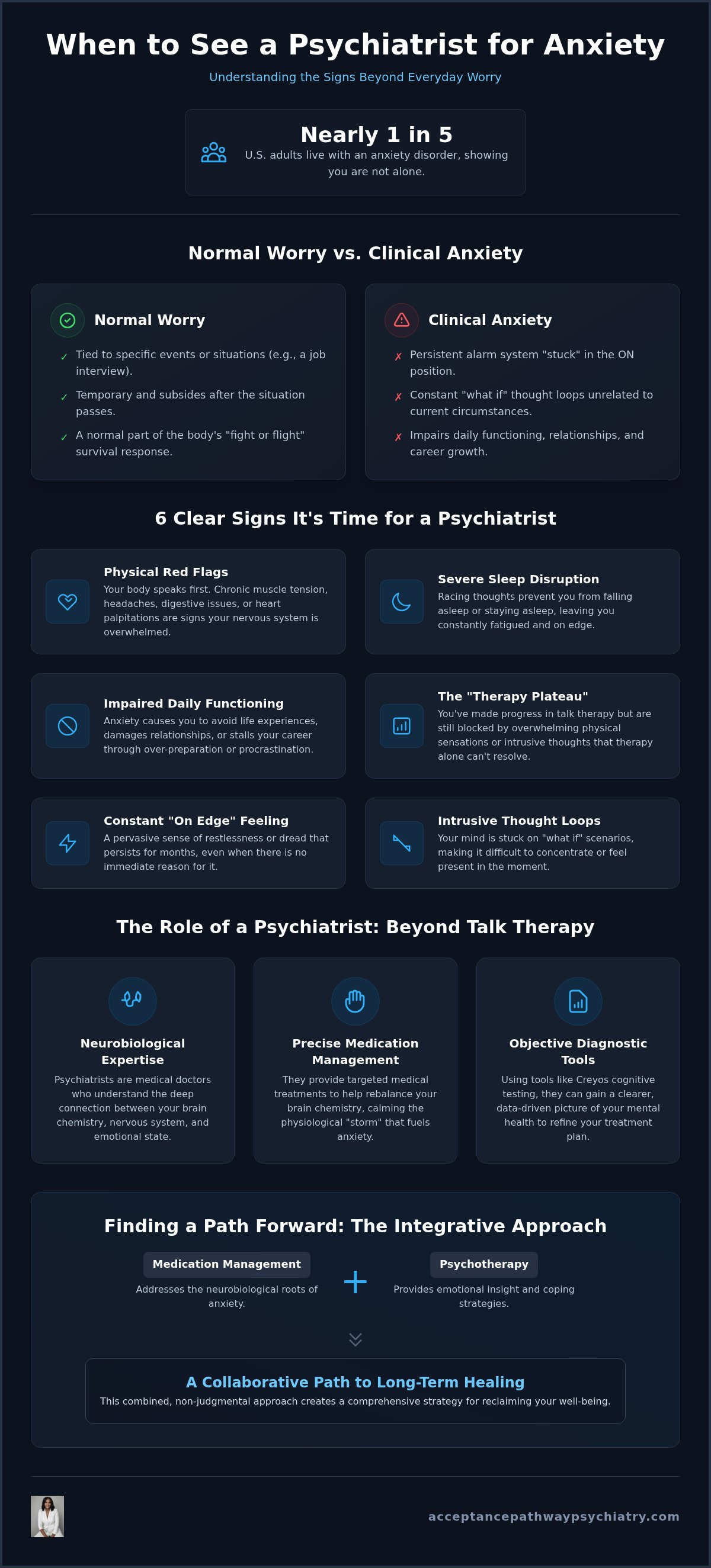
Anxiety is fundamentally a survival mechanism designed to keep us safe from harm. It is the biological "fight or flight" response that helped our ancestors stay alert to environmental threats. In our modern lives, this system might activate during a job interview or before a major life change. Situational stress is common and usually subsides once the specific event has passed. However, an Anxiety disorder occurs when this internal alarm remains stuck in the on position, creating a persistent sense of dread that no longer matches your actual circumstances.
The transition from everyday worry to a clinical concern often happens gradually. You might notice that your thoughts are constantly looping back to "what if" scenarios, even when there is no immediate crisis. This persistent state of high alert is often the first indicator of when to see a psychiatrist for anxiety. A psychiatric evaluation isn't about assigning a restrictive label to your experience. Instead, it serves as a professional tool for clarity, helping you understand the neurobiological factors that are driving your feelings and creating a stable path toward healing.
The Spectrum of Anxiety Disorders
Anxiety manifests in many different ways, often falling along a broad clinical spectrum. Generalized Anxiety Disorder (GAD) involves excessive worry about everyday life, from health to finances, for most days over a six month period. Social Anxiety focuses on an intense fear of judgment in public settings, while Panic Disorder is characterized by sudden, overwhelming physical sensations. Other conditions like PTSD and specific phobias also fit into this landscape. Each of these disorders represents a unique way the nervous system struggles to return to a state of calm after a perceived threat.
The Functional Impact Test
Determining the severity of your symptoms often comes down to a simple test of daily functioning. Consider how your worry affects your professional productivity or your ability to grow in your career. Anxiety can lead to a cycle of over-preparation or complete avoidance, both of which can stall your personal progress. It also places a heavy burden on your social bonds and personal relationships. When your coping mechanisms begin to look more like avoiding life experiences, it's a clear signal that your current strategies aren't enough. Recognizing that your anxiety is impairing your quality of life is a vital step in deciding when to see a psychiatrist for anxiety to explore more specialized support.
6 Clear Signs It Is Time to See a Psychiatrist for Anxiety
Recognizing the specific moments when situational worry transforms into a medical concern is essential for your long-term well-being. While we previously discussed the biological roots of stress, clinical signs often emerge through persistent patterns that stay with you for most days over a six-month period. If you constantly feel on edge or restless despite having no immediate reason to be, your nervous system may be struggling to regulate its baseline. Other hallmark signs include significant disruptions to your sleep patterns, such as racing thoughts that prevent rest, and physical manifestations like chest tightness that can mimic medical emergencies. Identifying these patterns is a key part of determining when to see a psychiatrist for anxiety.
A frequent but often overlooked sign is the "Therapy Plateau." Many individuals find that while talk therapy provides excellent emotional insights, it may not fully quiet the physiological "storm" occurring in their bodies. If you have been working diligently with a therapist but still find your progress blocked by overwhelming physical sensations or intrusive thoughts, it is a strong indicator that your neurobiology requires specialized support. Understanding when to see a psychiatrist for anxiety allows you to introduce medical management as a complementary tool to your existing therapeutic work, creating a more comprehensive path toward stability.
Physical Red Flags You Should Not Ignore
Anxiety often speaks through the body long before we recognize it in our thoughts. Chronic muscle tension, frequent headaches, and digestive issues are common physical indicators that your stress response is overwhelmed. According to the National Institute of Mental Health, these somatic symptoms are core components of anxiety disorders and should be evaluated by a medical professional. Recurrent panic attacks, characterized by a racing heart and shortness of breath, are also clear signals that your biological survival system has become stuck in an active state. These physical red flags are not just "in your head"; they are measurable biological events that deserve clinical attention.
Cognitive and Emotional Indicators
The impact of chronic anxiety on your cognitive health can be just as debilitating as the physical toll. You might experience a persistent difficulty in concentrating or find that your mind frequently "goes blank" during important tasks. Emotionally, you may notice a level of irritability that feels out of character or a constant sense of impending doom that colors your daily experiences. These shifts in your mental state are often symptoms of a neurobiological imbalance rather than personal failings. If these cognitive and emotional signs are affecting your quality of life, the team at Acceptance Pathway Psychiatry PLLC is here to offer a compassionate, expert evaluation to help you find your way back to clarity.
The Role of a Psychiatrist: Beyond Talk Therapy
Psychiatrists bring a specialized medical perspective to mental health care that goes beyond behavioral analysis. As medical doctors, they are trained to understand the intricate neurobiology of the brain and how it interacts with the rest of the body. This expertise is particularly important when you are considering when to see a psychiatrist for anxiety, as many physical conditions can mimic or intensify psychiatric symptoms. A psychiatrist will often begin by ruling out underlying medical issues, such as thyroid dysfunction or vitamin deficiencies, that could be contributing to your feelings of unease. According to the Mayo Clinic, a thorough medical evaluation is a vital step in ensuring that your treatment plan addresses the true root of your symptoms.
The hallmark of psychiatric care is psychiatric medication management. This process involves more than just selecting a prescription; it is a methodical, evidence-based approach to stabilizing the chemical messengers in your brain. By focusing on the biological aspects of your condition, a psychiatrist helps create a reliable foundation for your overall recovery. This medical support is designed to work in harmony with your personal goals, ensuring that every step of the process is collaborative and transparent.
Medication Management for Anxiety
It is common to feel a mix of hope and hesitation when discussing medication for the first time. Many patients worry about potential side effects or fear that a prescription might alter their core personality. In a compassionate partnership, the goal of medication is actually the opposite: it is meant to help you feel more like yourself by quieting the overwhelming noise of chronic worry. Think of medication as providing the biological hardware stability that allows the "software" of therapy to function more effectively. Finding the right balance is a patient process that requires an ally who listens to your feedback and adjusts your care with precision and care.
Integrating Psychotherapy and Wellness
A modern psychiatric treatment plan is rarely limited to a single approach. Research consistently shows that combining medication management with psychotherapy often leads to superior long-term outcomes compared to using either alone. While medication addresses the physiological triggers of your nervous system, therapy provides the space to develop new perspectives and emotional resilience. This integrative view also includes wellness services that support your body's natural ability to heal, such as improving sleep hygiene and nutrition. By treating the mind and body as a unified system, we move toward a state of true wholeness. This comprehensive care model is a primary reason why many choose when to see a psychiatrist for anxiety as the moment they begin their most significant personal evolution.
Navigating the Path: What to Expect During Your Evaluation
Your first visit is a significant step in your healing journey. It's a dedicated time to share your story in a safe, non-judgmental space. We'll look at your history and any previous attempts at relief. Knowing what hasn't worked is just as vital as knowing what has. This deep conversation helps us understand when to see a psychiatrist for anxiety is the right move for your specific needs. It allows us to build a foundation of trust before moving into clinical details. We view ourselves as a supportive witness to your experience, ensuring you feel heard and understood from the very first moment.
The Value of Cognitive Testing
Precision matters in mental health. We use objective tools like ADHD testing and cognitive assessments to get a clear picture of your brain's current state. Creyos Cognitive Testing allows us to measure focus, memory, and reasoning with data rather than just observation. This is particularly helpful for distinguishing between anxiety-driven brain fog and other underlying conditions. When we have objective data, we can make more accurate medication choices that align with your specific neurobiology. Understanding when to see a psychiatrist for anxiety often involves looking for this level of scientific detail to move beyond simple checklists.
The Telehealth Experience
For many, the idea of visiting a new office can trigger more worry. Telehealth appointments reduce this barrier by allowing you to meet with us from a space where you already feel safe. This is especially beneficial for those with social anxiety who might otherwise delay seeking help. To prepare, find a quiet, private spot where you won't be interrupted and ensure your internet connection is stable. Our goal is to make the transition between online and in-person care as seamless as possible. You deserve access to high-quality support without the added stress of a difficult commute or an intimidating waiting room.
Every evaluation concludes with the creation of a personalized care plan. This isn't a one-size-fits-all document; it's a roadmap for your unique evolution. We'll discuss how medication management and psychotherapy can work together to help you reach your goals. If you're ready to start this collaborative process and find a path forward, schedule your initial evaluation with our team today. We're here to help you move toward a life of greater clarity and wholeness.
Finding Your Way Forward with Acceptance Pathway Psychiatry
Choosing a mental health provider is a deeply personal decision. It's about finding a space where your voice is the most important part of the conversation. At Acceptance Pathway Psychiatry, we believe in being a supportive witness to your personal progress. This philosophy means we don't just see a set of symptoms; we see a whole person navigating a challenging chapter. Our approach is rooted in the "Acceptance Pathway," which combines clinical expertise with a warm, non-judgmental environment. This creates a safe harbor where you can explore the biological and emotional roots of your struggle without fear of being misunderstood. We're here to walk alongside you as you move toward a life of greater ease.
Our method focuses on wholeness. We blend medication management with psychotherapy to ensure that both your neurobiology and your emotional landscape receive the attention they deserve. This integrated model allows us to address the "hardware" of your nervous system while giving you the "software" tools to navigate daily stress. When you're deciding when to see a psychiatrist for anxiety, consider the value of a practice that treats you as a complete individual rather than a diagnosis. By combining these services, we help you build a foundation for lasting change that respects your unique pace and goals.
A Collaborative Partnership for Your Mental Health
We treat our relationship with you as a mutual partnership. You're the expert on your lived experience, and we bring high-level clinical knowledge to the table. By empowering you to be an active participant in treatment decisions, we ensure that your care plan feels sustainable and aligned with your values. A steady, reliable psychiatric relationship provides the continuity needed for long-term stability. Whether we're adjusting a prescription or discussing progress in a therapy session, every step is taken together. This collaborative bond is often the missing link for those wondering when to see a psychiatrist for anxiety, as it transforms a medical appointment into a shared journey toward wellness.
Your Personalized Healing Journey Starts Here
Healing is rarely a straight line. It's a process of personal evolution that requires a variety of tools and a lot of patience. Our integrative wellness services support your recovery from multiple angles, ensuring that your body and mind have what they need to thrive. Seeking help is a courageous act of self-care, not a sign of weakness. It's a declaration that you deserve to feel peace and clarity in your daily life. If you've been waiting for the "right time" to reach out, remember that your well-being is worth prioritizing today. We invite you to schedule a consultation to explore your unique path forward. Together, we can discover the strategies that will help you reclaim your sense of wholeness.
Reclaiming Your Peace and Wholeness
You now understand that clinical anxiety is far more than just a reaction to a busy schedule; it's a physiological state where your nervous system remains on high alert. By recognizing persistent physical red flags and the cognitive shifts that disrupt your daily life, you've gained the clarity needed to decide when to see a psychiatrist for anxiety. A psychiatrist serves as a specialized partner who can stabilize your biological foundation through precise medication management while ruling out other medical concerns that might mimic or worsen your symptoms.
Our approach at Acceptance Pathway Psychiatry centers on your unique evolution toward wellness. We combine comprehensive psychiatric evaluations with objective Creyos cognitive testing to ensure your treatment plan is rooted in both data and empathy. By integrating medication and therapy, we help you build a sustainable path toward long term relief. Begin your journey toward a calmer life with Acceptance Pathway Psychiatry. You've shown incredible courage by seeking information today, and we're ready to be the supportive witness to your progress. Peace is possible, and you don't have to find it alone.
Frequently Asked Questions
Is it better to see a therapist or a psychiatrist for anxiety?
Both professionals are valuable, but they serve different roles in your care. A therapist focuses on talk therapy to address behavioral patterns and coping skills. A psychiatrist is a medical doctor who focuses on the neurobiology of your condition. They can rule out physical causes and provide medication management to stabilize your brain chemistry. For many, the most effective path involves an integrated approach where both professionals work together to support your mind and body.
Will I have to stay on anxiety medication forever?
Not necessarily; the duration of medication use is highly individual and depends on your unique needs. Some people use medication to bridge a difficult period while they build coping skills in therapy. Others find that long term support helps maintain their biological balance and prevents symptoms from returning. We view medication as a tool for your personal evolution. We'll regularly review your progress together to determine the best path forward for your ongoing wholeness and stability.
How do I know if my anxiety is "severe" enough for a psychiatrist?
If your anxiety interferes with your ability to work, maintain relationships, or enjoy life, it is time to seek professional support. You don't need to wait for a crisis to decide when to see a psychiatrist for anxiety. If you feel "on edge" for most days or experience physical symptoms like heart palpitations and insomnia, a specialist can provide the clarity you need. Seeking help early is a proactive step toward reclaiming your peace.
What happens if I am nervous about my first psychiatric appointment?
It is completely normal to feel nervous, and we prioritize creating a safe, welcoming environment for every patient. Your first session is a collaborative conversation where you are the expert on your own life. We focus on listening to your story and understanding your goals rather than just checking off symptoms. This non-judgmental space is designed to lower the barrier to care and help you feel like a steady partner in your healing journey.
Can a psychiatrist help with anxiety without using medication?
Yes, psychiatrists offer a range of support beyond prescriptions, including psychotherapy and integrative wellness services. While we have the medical expertise to manage medications, our primary goal is your overall well-being. We might focus on sleep hygiene, stress reduction techniques, or lifestyle adjustments that support a healthy nervous system. We work with you to create a personalized plan that respects your preferences while addressing the biological and emotional roots of your anxiety symptoms.
How long does it take for anxiety medication to start working?
Most anxiety medications require several weeks to reach their full effect, though some physical symptoms may begin to improve sooner. While certain fast acting options work quickly, long term stabilizers often take four to six weeks to fully balance your brain chemistry. We monitor your journey closely during this time to ensure the dosage is right for you. Patience is vital as your body adjusts to the support and begins its process of biological stabilization.
Does insurance typically cover psychiatric evaluations for anxiety?
Many insurance plans do cover psychiatric evaluations, although coverage levels, copays, and deductibles vary significantly by provider. With insurance, most patients pay between $20 and $60 per visit after meeting their requirements. For those without insurance, an initial evaluation in the U.S. typically ranges from $250 to $600. We recommend contacting your insurance carrier directly to verify your specific benefits and understand your out of pocket costs before deciding when to see a psychiatrist for anxiety.
Can telehealth psychiatry be as effective as in-person visits for anxiety?
Research and clinical experience show that telehealth is a highly effective way to receive psychiatric care for anxiety. Virtual appointments offer the same level of clinical expertise and medication management as in-person visits while allowing you to stay in a comfortable, familiar environment. This accessibility is particularly helpful for those who find traveling to an office stressful. Telehealth provides a convenient and confidential connection to your provider, ensuring your care remains steady and reliable.


