

What if your first mental health assessment felt less like a clinical interrogation and more like a supportive conversation with an ally who truly hears you? With over 59 million adults in the U.S. experiencing mental health challenges, you aren't alone in feeling like the system is difficult to navigate. Many people worry about being judged or feel confused by the complex web of different providers. Learning how to get a psychiatric evaluation is the first step toward reclaiming your peace of mind. It's a collaborative process designed to witness your unique journey rather than just label your symptoms.
You deserve a clear roadmap that replaces fear with empowerment. This guide will walk you through the entire process, from selecting a provider who offers integrative telehealth services to understanding how precision tools like Creyos cognitive testing provide objective data. We will explore what happens during your first appointment and how a thorough assessment leads to a personalized treatment plan involving medication management or therapy. You'll gain the confidence to advocate for your own well-being and move toward a future of balance and wholeness.
Key Takeaways
- Learn how to distinguish between temporary life stress and clinical symptoms that benefit from professional psychiatric support.
- Discover how to get a psychiatric evaluation by identifying the different roles of mental health professionals and choosing a provider who aligns with your unique needs.
- Understand the role of objective data collection, such as Creyos cognitive testing, in creating a precise and personalized picture of your mental health.
- Prepare for your first appointment by organizing your medical history and current medications to ensure a smooth, collaborative session.
- See how an evaluation serves as a compassionate entry point to a personalized treatment plan involving medication management and integrated wellness.
Recognizing the Signs: When to Seek a Professional Psychiatric Evaluation
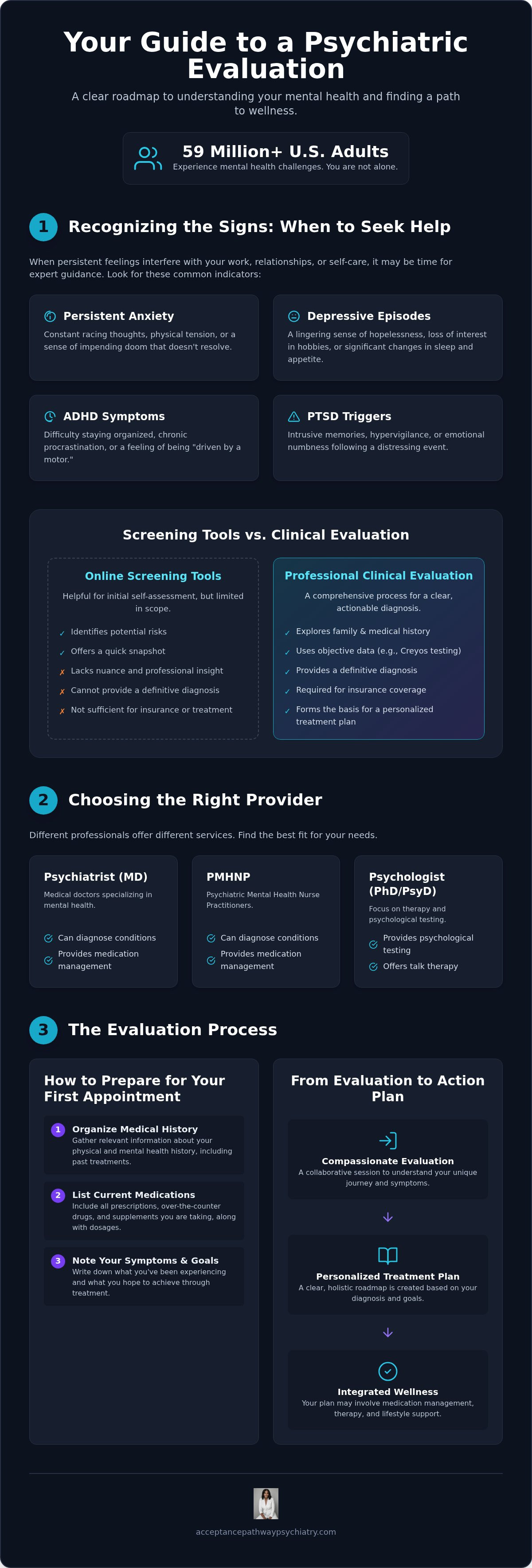
Distinguishing between the normal ebb and flow of life's stressors and a clinical mental health condition can feel overwhelming. Everyone experiences periods of sadness or worry; however, when these feelings become persistent or begin to interfere with your ability to work, maintain relationships, or care for yourself, it may be time for expert guidance. If you're researching how to get a psychiatric evaluation, it's often because your current coping mechanisms no longer feel like enough. Seeking professional help isn't a sign of weakness; it's a proactive step toward understanding your internal landscape.
Certain symptoms frequently indicate that a specialist's perspective is necessary. These may include:
- Persistent Anxiety: Constant racing thoughts, physical tension, or a sense of impending doom that doesn't resolve with rest.
- Depressive Episodes: A lingering sense of hopelessness, loss of interest in hobbies, or significant changes in sleep and appetite.
- ADHD Symptoms: Difficulty staying organized, chronic procrastination, or a feeling of being "driven by a motor" that affects your productivity.
- PTSD Triggers: Intrusive memories, hypervigilance, or emotional numbness following a distressing event.
Screening vs. Clinical Evaluation
In our digital age, many people start their journey with online quizzes or self-tests. While these screening tools are helpful for identifying potential risks, they are limited. They offer a snapshot but lack the nuance of a professional's insight. A comprehensive clinical evaluation goes much deeper, exploring your family history, biological factors, and personal experiences to provide a definitive diagnosis. Understanding what a psychiatric assessment entails is helpful because it clarifies why a simple quiz can't replace a clinical expert. A formal diagnosis is also a standard requirement for insurance coverage and for accessing specialized treatments like medication management.
Common Indicators for Adults
Adults often experience mental health challenges as subtle shifts in daily functioning. You might notice persistent "brain fog," an inability to focus on tasks you once handled easily, or emotional shifts that feel out of character. These aren't just personality quirks; they are often signals from your nervous system that it needs support. A psychiatric evaluation is a diagnostic tool used to create a holistic treatment roadmap. By identifying the root cause of these shifts, you and your provider can move beyond temporary fixes toward lasting, integrative wellness. Learning how to get a psychiatric evaluation ensures that you aren't just guessing about your health but are building a foundation for a better quality of life.
Step 1: Choosing the Right Provider for Your Psychiatric Evaluation
Choosing who will guide you through this process is a deeply personal decision. When you are exploring how to get a psychiatric evaluation, the first hurdle is often understanding the different types of professionals available. Psychiatrists are medical doctors who specialize in mental health, while Psychiatric Mental Health Nurse Practitioners (PMHNPs) also provide advanced clinical care. Both roles are essential because they can diagnose conditions and provide medication management. Psychologists, on the other hand, focus primarily on psychological testing and talk therapy. Selecting a provider who offers a comprehensive psychiatric evaluation ensures that every facet of your well-being, from biology to lifestyle, is considered.
It's also vital to look for specialized expertise. If you suspect you have ADHD or have experienced trauma, finding a provider who is trauma-informed or experienced in neurodivergence can make a significant difference in your comfort level. Before scheduling, verify that the provider is licensed to practice in your state and check their insurance compatibility. Many modern practices now focus on national telehealth access, allowing you to find the best clinical fit regardless of your physical location. If you feel ready to take this step, you can connect with a compassionate expert to discuss your needs.
Finding a Provider Who Listens
The clinical tone of your provider matters just as much as their credentials. A collaborative partnership is the gold standard for care; you should feel like an active participant in your journey rather than a passive recipient of a diagnosis. During your initial inquiry, don't hesitate to ask about their approach to care. Are they open to integrative wellness? How do they handle questions about medication? A provider who welcomes these questions demonstrates a non-judgmental and supportive presence, which is essential for creating psychological safety.
Telehealth vs. In-Person Options
Telehealth has revolutionized how to get a psychiatric evaluation by removing barriers like long commutes or the stress of sitting in a clinical waiting room. Virtual appointments offer a level of privacy and comfort that is often difficult to replicate in a traditional office setting. Modern telehealth platforms use encrypted, secure technology to ensure your health information remains confidential. This flexibility is particularly beneficial for busy professionals or those living in areas with fewer local specialists. If you prefer the convenience of meeting from your own home, exploring online psychiatry can be an excellent way to begin your healing journey on your own terms.
Step 2: Understanding the Clinical Evaluation Process
Once you've selected a provider, the next phase of learning how to get a psychiatric evaluation is understanding the structure of the appointment itself. This process is designed to be a thorough exploration of your well-being, combining your personal narrative with clinical expertise. It isn't a one-sided interrogation; instead, it's a collaborative dialogue where your experiences are the primary focus. By the end of this session, the goal is to move from a place of uncertainty to a clear, actionable path forward.
Clinicians use the Diagnostic and Statistical Manual of Mental Disorders (DSM-5) as a framework to ensure accuracy, but they also prioritize your unique story. Beyond just identifying symptoms, your provider will help you establish clear goals for your care. Whether you want to improve your focus at work, stabilize your mood, or find relief from persistent anxiety, these objectives become the foundation of your personalized treatment roadmap. This clarity ensures that every subsequent step in your journey is intentional and aligned with the life you want to lead.
The Components of a Comprehensive Assessment
A truly holistic evaluation looks at more than just your current mood. Your provider will review your medical history, previous mental health treatments, and any current medications or supplements you're taking. They also consider lifestyle factors like sleep patterns, nutrition, and stress levels, as these biological foundations heavily influence mental wellness. To remove the guesswork from complex conditions like ADHD or anxiety, modern practices often incorporate cognitive testing for mental health. Tools like Creyos provide objective data on your brain's performance, allowing for a higher level of precision in your diagnosis and treatment plan.
What to Expect During the Session
A first psychiatric evaluation typically lasts between 60 and 90 minutes. This extended timeframe allows for a relaxed, methodical pace where you don't feel rushed to summarize your entire life in a few minutes. The clinical interview is conversational, allowing you to share your history and current challenges in a way that feels natural. Throughout the process, the provider acts as a supportive witness to your story, not an interrogator. This environment of psychological safety makes it easier to be open and honest, which is essential for an accurate assessment. Understanding these steps helps demystify how to get a psychiatric evaluation and replaces anxiety with a sense of prepared confidence.
Step 3: Practical Preparation for Your First Appointment
Preparation is a powerful antidote to the anxiety that often accompanies a first mental health visit. When you understand how to get a psychiatric evaluation, you realize that your preparation is the bridge between your daily experience and a clinical diagnosis. Gathering your information ahead of time allows you to focus on the conversation rather than trying to remember dates or dosages during the session. It also ensures that your provider has a clear, comprehensive view of your health history from the very beginning.
Start by listing your current medications, including the exact dosages and any supplements or vitamins you take daily. These details are vital because certain supplements can interact with psychiatric medications or even mimic mental health symptoms. You should also identify a few "anchor" symptoms. These are the most persistent or distressing challenges that led you to seek help. Having these clearly defined helps your provider prioritize the most impactful areas of your care during your time together.
The Patient Preparation Checklist
A structured list helps ensure nothing important is overlooked. Before your appointment, try to document the following details to share with your provider:
- Family History: Note any relatives who have experienced mental health conditions, as genetics often play a role in clinical diagnosis.
- Symptom Timeline: Create a rough timeline of when your current challenges began and if they are constant or episodic.
- Treatment History: List any previous therapies or medications you've tried and whether they were helpful or caused specific side effects.
Preparing for Your Telehealth Session
Since your evaluation will occur via telehealth, your physical environment is an important part of the clinical experience. Choose a private, quiet space where you won't be interrupted by family or coworkers. Ensure your internet connection is stable and your device is fully charged or plugged in. Having a glass of water and a notebook nearby can also make the experience feel more grounded and comfortable. If you're ready to begin this journey, you can schedule your telehealth evaluation to meet with a compassionate specialist.
Questions to Ask Your Psychiatrist
A collaborative partnership requires open communication and mutual trust. Don't hesitate to ask your provider questions to ensure their approach to care aligns with your personal values. Consider asking these questions during your session:
- How do you approach medication management for anxiety or depression?
- What role does psychotherapy or integrative wellness play in your treatment plans?
- How will we measure my progress over time to ensure the treatment is effective?
Asking these questions helps you feel empowered. It confirms that your provider is a steady, reliable ally who values your unique experience and is committed to your personal evolution.
From Evaluation to Action: Starting Your Treatment Plan
The conclusion of your assessment marks a significant milestone in your mental health journey. You've shared your story, provided clinical context, and perhaps completed objective testing. Now, the focus shifts from discovery to action. Reviewing your diagnosis with your provider shouldn't feel like receiving a cold label; it's a collaborative discussion about the root causes of your symptoms. This shared understanding allows you to move forward with a plan that feels authentic to your needs. Knowing how to get a psychiatric evaluation is the first step toward this clarity, but the subsequent 30 to 90 days are where the foundation of healing is actually built.
During this initial phase, it's helpful to set realistic expectations. Most psychiatric treatments, especially those involving medication, require time for your brain chemistry to respond and stabilize. You might not feel a complete shift in the first week, and that's perfectly normal. Your provider will work closely with you to monitor your progress, ensuring that any adjustments are made with care and precision. This period is about building a rhythm of care that supports your long-term evolution.
Developing a Personalized Care Plan
A truly effective roadmap often combines different therapeutic modalities. For many, the transition to ongoing psychiatric medication management provides the biological stability needed to engage more deeply in psychotherapy. These follow-up appointments are essential because they allow your provider to refine your treatment based on your feedback and objective data from tools like Creyos. This iterative process removes the guesswork, ensuring your care remains as unique as you are.
Embracing Integrative Wellness
Healing is a holistic process that extends beyond the clinical session. Your care plan will likely incorporate integrative wellness strategies such as improving sleep hygiene, optimizing nutrition, and developing sustainable stress management techniques. These lifestyle foundations work in harmony with clinical treatments to support your overall wholeness. A steady, supportive relationship with your psychiatric provider ensures you have a reliable guide as you navigate these changes. If you're ready to move from confusion to a clear path of improvement, you can Schedule your comprehensive psychiatric evaluation today and begin the collaborative process of reclaiming your well-being.
Your Path to Mental Wellness and Clarity
Learning how to get a psychiatric evaluation is a brave first step toward understanding your mental health and finding a sustainable path forward. Throughout this guide, we've explored how a comprehensive assessment serves as the foundation for a collaborative partnership between you and your provider. By choosing the right specialist and preparing your history, you transform the experience from an intimidating clinical hurdle into a meaningful dialogue about your well-being. Modern tools like Creyos cognitive testing and the ease of virtual appointments ensure that your care is both precise and accessible from the comfort of your home.
You don't have to navigate these challenges alone. A supportive, non-judgmental environment is waiting to witness your story and help you create a personalized roadmap for healing. Whether you're seeking clarity on a new diagnosis or looking for ongoing medication management, expert guidance is within reach. Your journey toward wholeness is a process of evolution, and having a steady clinical ally makes all the difference.
Begin your journey with a compassionate psychiatric evaluation and take the next step toward a balanced and fulfilling life. Your progress is possible, and we're here to support you every step of the way.
Frequently Asked Questions
How long does a psychiatric evaluation typically take?
Learning how to get a psychiatric evaluation often starts with understanding the timeline, which typically lasts between 60 and 90 minutes. This duration allows for a methodical and patient exploration of your history and current experiences. It's designed to ensure you don't feel rushed while sharing your story. During this time, your provider will discuss your symptoms and may use tools like Creyos cognitive testing to gather objective data for a precise diagnosis.
Is a psychiatric evaluation covered by health insurance?
Many health insurance plans cover psychiatric evaluations as a standard mental health benefit. Under the Mental Health Parity and Addiction Equity Act, insurers are required to provide coverage for mental health services that is comparable to medical and surgical benefits. It's best to contact your insurance provider directly to verify your specific specialist copay or deductible requirements. Most practices also offer assistance with insurance and payment options to make the process more transparent and accessible.
What is the difference between a psychiatric evaluation and a therapy session?
A psychiatric evaluation is a diagnostic assessment focused on identifying clinical conditions and creating a medical treatment roadmap. It often includes a review of biological factors and may lead to medication management. In contrast, a therapy session is an ongoing collaborative process focused on emotional processing and behavioral strategies. While both are essential components of integrative wellness, the evaluation serves as the entry point that determines which specific treatments will be most effective for your journey.
Can I get a psychiatric evaluation through telehealth?
Virtual appointments are a convenient way to learn how to get a psychiatric evaluation with national accessibility. Yes, you can complete a comprehensive assessment through secure telehealth platforms from the privacy of your own home. This approach removes barriers like travel time and waiting rooms, making it easier to prioritize your mental health. Telehealth sessions maintain the same high level of clinical authority and empathy as in-person visits while providing modern security and personal comfort.
What happens if I am diagnosed with multiple conditions?
It is quite common to be diagnosed with overlapping conditions, such as anxiety and ADHD. If this occurs, your provider will develop a holistic care plan that addresses the complexities of your unique experience. Instead of treating symptoms in isolation, a collaborative expert looks at how these conditions interact. This ensures your treatment, whether it involves medication management or psychotherapy, is tailored to your whole self rather than just a single clinical label.
Will I be prescribed medication immediately after my evaluation?
Medication is not always prescribed immediately following an evaluation. The decision to start medication is a mutual partnership between you and your provider based on your clinical needs and personal goals. If medication is recommended, your provider will explain the benefits and potential side effects clearly. They may also suggest integrative wellness services or psychotherapy as part of a balanced approach to your personal evolution and long-term progress toward wholeness.
Do I need a referral from my primary care doctor for a psychiatric evaluation?
Most psychiatric practices don't require a formal referral from a primary care doctor to begin care. You can typically reach out directly to schedule your appointment. However, some insurance plans may require a referral to cover the cost of a specialist visit. Checking with your insurance provider first helps ensure your evaluation is covered. Taking this proactive step empowers you to advocate for your own mental health journey without facing unnecessary administrative delays.
What should I do if I am nervous about my first psychiatric appointment?
Feeling nervous is a natural part of starting any new health journey. You can lower your anxiety by preparing a list of your symptoms and medical history in advance. Remember that your provider is a supportive witness to your story, not a distant figure of authority. Choosing a comfortable, private space for your telehealth session can also help you feel more grounded. This process is about creating a safe, non-judgmental environment for your healing.


