

What if the key to successfully leaving your medication behind wasn't about how fast you could stop, but how gently you could listen to your body? Many people feel a mix of hope and deep anxiety when they think about life without their prescription. You might worry about the jolting sensation of "brain zaps" or fear that the heavy clouds of depression will return the moment you lower your dose. It's completely understandable to feel overwhelmed by the conflicting advice found in online forums. Your journey is unique, and you deserve a plan that respects your pace while keeping you grounded.
This guide provides a clear, clinical roadmap for how to taper off SSRIs safely, blending medical precision with the compassionate support your nervous system needs. We'll explore the latest research on hyperbolic tapering, practical tools for managing physical side effects, and strategies to maintain your emotional stability throughout this collaborative transition. By prioritizing a slow, methodical evolution of care, you can move toward wholeness with confidence and professional guidance at every step of the way.
Key Takeaways
- Understand the science of neuroplasticity and why a gradual transition is essential for your brain's natural recalibration.
- Identify the optimal timing for your taper by evaluating your current life stability and the "6-to-12 month" rule.
- Learn how to taper off SSRIs using the hyperbolic method, which prioritizes smaller dose reductions as you reach lower levels.
- Master the ability to distinguish between short-term withdrawal symptoms and the signs of a potential relapse.
- Discover how to advocate for your needs during medication management sessions to create a truly personalized tapering plan.
Why Tapering Matters: Understanding SSRI Discontinuation Syndrome
When you take an SSRI for an extended period, your brain undergoes a sophisticated process of adaptation. This isn't a sign of weakness; it's a testament to your body's incredible ability to maintain balance. Because your medication provides a steady supply of serotonin, your brain naturally adjusts by reducing the number of active receptors. This process, known as downregulation, means your nervous system has integrated the medication into its daily rhythm. If you stop the medication suddenly, your brain is left without its usual support before it has time to rebuild those receptors. This gap is what causes the physical and emotional distress known as SSRI Discontinuation Syndrome.
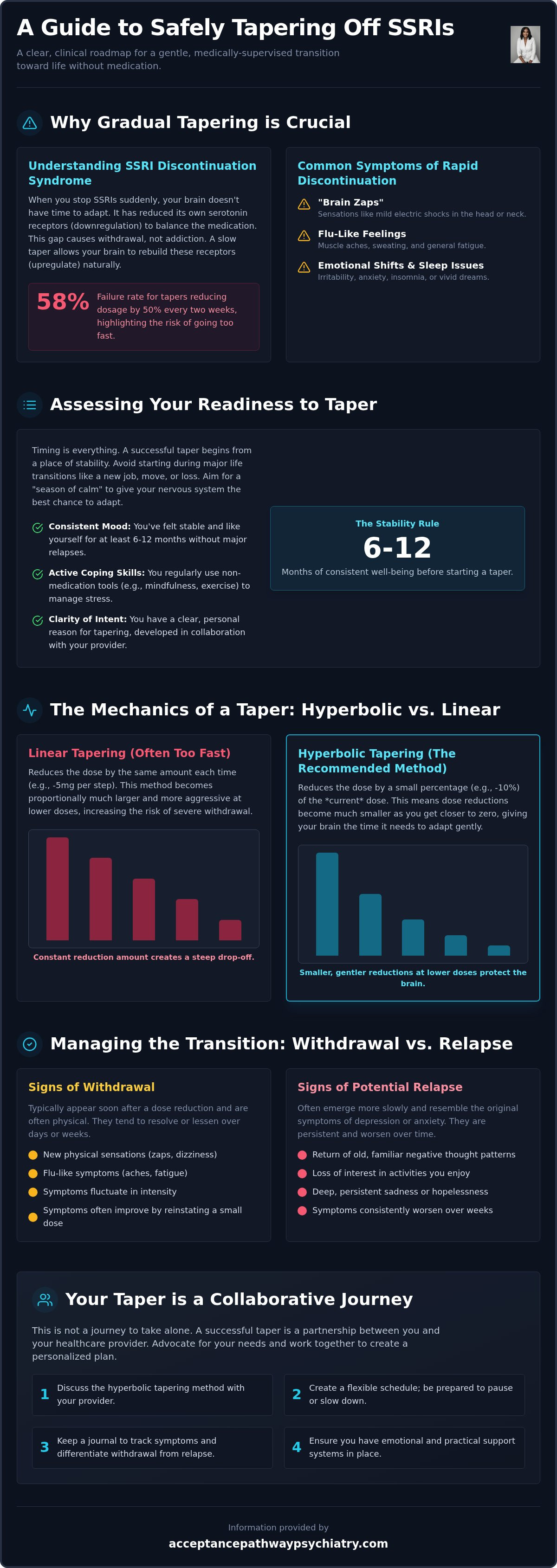
Learning how to taper off SSRIs is about closing that gap safely. Stopping "cold turkey" or even dropping your dose too quickly can trigger a cascade of symptoms that feel overwhelming. Research from 2025 indicates that for those on antidepressants for nine months or more, even a 50% reduction every two weeks resulted in a 58% failure rate. This highlights why a methodical, patient approach is so vital for your long-term stability. Common symptoms of stopping too fast include:
- "Brain zaps": Sensations like mild electric shocks or shivers in the head or neck.
- Flu-like feelings: Muscle aches, sweating, and general fatigue.
- Emotional shifts: Increased irritability, anxiety, or sudden crying spells.
- Sleep disturbances: Insomnia, vivid dreams, or nightmares.
The Biology of SSRI Adjustment
Your nervous system is plastic, meaning it changes based on its environment. During long-term use, your serotonin receptors become less sensitive to compensate for the medication. When you begin to taper, you are essentially asking your brain to "upregulate" or become more sensitive to its own natural serotonin again. This takes time. Some medications, like fluoxetine, have a long "washout period," making them naturally more forgiving during a taper. Others, like paroxetine or venlafaxine, leave the system very quickly. These medications often require a much more gradual schedule to prevent acute distress and ensure your brain can keep up with the changes.
Discontinuation vs. Addiction: Clearing the Confusion
We should distinguish between addiction and physiological dependence. SSRIs don't cause the intense cravings or the "high" that define substance use disorders. Instead, your body has simply adjusted its baseline to include the medication. This is a form of physiological dependence, similar to how your body might react if you suddenly stopped a blood pressure medication. Framing your taper as a natural evolution of your healing journey can help lower the barrier to seeking help. It's not about "quitting" a habit; it's about transitioning into a new phase of wholeness with the right clinical support and a steady, reliable partner in your care.
Is Now the Right Time? Assessing Your Readiness to Taper
Deciding when to begin your journey toward life without medication is a deeply personal choice. While you might feel a strong desire to move forward, it's essential to look at the landscape of your life with honesty and self-compassion. Clinical experts often suggest the "6-to-12 month" rule. This means you should ideally experience a period of consistent stability for at least half a year to a full year before initiating a change. This duration ensures that your brain has not only recovered from the original symptoms but has also built a resilient foundation for the transition.
Learning how to taper off SSRIs requires more than just clinical timing; it requires a look at your external environment. If you're currently navigating a major life transition, such as moving to a new city, starting a challenging job, or grieving a loss, your nervous system is already under significant pressure. Adding the physiological shifts of a taper during these times can increase the risk of relapse. It's often better to wait for a "season of calm" where you can focus entirely on your well-being. Understanding how to taper off SSRIs is a process that benefits from a steady, predictable environment.
Clinical Signs of Stability
Before you take the first step, evaluate your internal state. True readiness often shows up as a quiet confidence in your ability to handle life's ups and downs without the same intensity of previous episodes. Consider these markers of stability:
- Consistent Mood: You've felt like yourself for at least six months without significant "dips" or relapses into old patterns.
- Active Coping: You regularly use non-medication tools, such as mindfulness, exercise, or journaling, to manage daily stress.
- Clarity of Intent: You want to taper because you feel whole and ready, rather than simply wanting to avoid the inconvenience of a daily pill.
Building Your Support Infrastructure
A successful transition isn't a solo mission. It's a collaborative evolution that thrives on connection. You'll need a robust support system in place before you begin. This might include a therapist who can help you navigate the emotional waves or a trusted "support buddy" who understands your goals and can check in on you regularly. Engaging in professional psychiatric medication management ensures that your plan is medically sound and tailored to your specific history. If you feel uncertain about your readiness, our team is here to act as a supportive witness to your journey through personalized telehealth appointments.
The Mechanics of a Taper: Hyperbolic vs. Linear Methods
Understanding the math behind your medication can turn a daunting process into a manageable one. Historically, many clinical guidelines suggested linear tapering, which involves reducing your dose by a fixed amount every few weeks. For example, a person might drop from 20mg to 15mg, then to 10mg, and finally to zero. While this seems logical on paper, it often creates a "cliff" effect at the end of the taper. Many people find the final jump from a low dose to zero is the most difficult part of the journey because the brain's receptors are still heavily influenced even by small amounts of the drug.
Modern research favors a different approach. Hyperbolic tapering is the process of reducing doses by a percentage of the current dose rather than the original dose. This method recognizes that SSRIs have a non-linear relationship with the brain. A small dose of 2mg or 5mg still occupies a significant percentage of serotonin receptors. By using a hyperbolic curve, you ensure that the physiological change remains small and consistent, even as the total milligrams decrease. Learning how to taper off SSRIs using this method often involves the "10% Rule," where you reduce your dose by 10% of your current amount every two to four weeks.
Why 'The Last Mile' is the Hardest
The final stage of a taper is often called "the last mile." This is because dropping from 5mg to zero is a much larger physiological shift than dropping from 40mg to 35mg. To navigate this safely, you may need tools that allow for precision. Your provider might suggest switching to a liquid formulation of your medication, which allows you to measure out very small, specific increments. Alternatively, using a high-quality pill splitter can help you manage micro-tapering. These tools are essential for maintaining stability when you are learning how to taper off SSRIs at these sensitive lower levels.
Sample Tapering Frameworks
Every individual requires a different timeline. A "fast" taper might last four weeks, while a more cautious, patient-led taper could extend over twelve weeks or even several months. The goal isn't to reach zero as quickly as possible; it's to reach zero while feeling like yourself. You can monitor your progress by tracking your mood and physical sensations daily. If you notice symptoms becoming unmanageable, you can utilize the "hold" strategy. This means staying at your current dose for an extra week or two until your nervous system feels grounded again before taking the next step down.
Managing the Transition: Withdrawal Symptoms vs. Relapse
One of the most common anxieties people face is the fear that their original depression or anxiety is returning. However, there is a distinct difference between withdrawal and a relapse. Timing is often the clearest indicator. Withdrawal symptoms, also known as discontinuation syndrome, typically appear within a few days of a dose reduction. In contrast, a relapse of the underlying condition usually develops more slowly, often taking several weeks or months to manifest. Understanding this timeline is a foundational part of learning how to taper off SSRIs with confidence.
Distinguishing between the two is a vital skill. Withdrawal often brings unique physical sensations that weren't part of your original diagnosis. These might include the "brain zaps" mentioned earlier or sudden, flu-like symptoms. Relapse, on the other hand, tends to feel like a familiar return of your previous emotional patterns. If you experience a sudden onset of symptoms shortly after a change, it's likely your nervous system is simply asking for more time to adjust. We often recommend a "wait and see" period of one to two weeks. If symptoms are mild, they may settle as your brain recalibrates. If they are distressing, it's a sign to "hold" your current dose or consult your provider about a smaller reduction.
A Comparison Framework for Patients
To navigate this transition with clarity, it helps to track your daily experience using a mood and physical health log. Withdrawal is often transient; it peaks and then begins to fade as your body finds its new balance. A small increase in your dose usually resolves withdrawal symptoms quickly, whereas a relapse would not respond as immediately to a minor adjustment. By documenting your journey, you provide your clinical team with the data needed to make informed decisions about your care.
- Withdrawal: Physical shocks, dizziness, or irritability that start within one to four days of a change.
- Relapse: Persistent emotional patterns like low mood or intrusive thoughts that emerge after several weeks of stability.
Nervous System Support During the Taper
While the clinical mechanics are important, holistic support can significantly ease the physical burden on your body. Reducing caffeine and alcohol is critical during this time. These substances can mimic or worsen the jitteriness and sleep disturbances often associated with a taper. Integrative wellness strategies, such as maintaining strict sleep hygiene and engaging in gentle movement like walking, provide a grounding influence for your nervous system. This is a time to be exceptionally kind to your body.
Nutritional support also plays a supportive role in neurological health. Many practitioners suggest Omega-3 fatty acids and magnesium to help stabilize brain function during times of chemical transition. If you find yourself struggling with heightened irritability, grounding techniques like deep belly breathing can help soothe immediate distress. If you need a partner to help you monitor these changes and adjust your plan in real-time, you can schedule a telehealth check-in to ensure your taper remains safe and manageable.
Partnering with Your Provider for a Successful Taper
Initiating the conversation about stopping medication is a significant milestone in your mental health journey. It's natural to feel a mix of excitement and hesitation as you look toward the future. At Acceptance Pathway Psychiatry PLLC, we view this transition as a collaborative partnership where your voice is the most important one in the room. When you're ready to discuss how to taper off SSRIs, your next medication management session serves as the foundation for a plan that respects your unique physiology and personal goals.
Collaborative goal setting ensures that your provider understands your specific history and any anxieties you have regarding withdrawal. We don't believe in a one-size-fits-all approach. Instead, we use telehealth appointments to provide a steady and reliable presence throughout your transition. These flexible sessions allow for frequent mini-check-ins, which are vital for adjusting your schedule in real-time. If a specific reduction feels more challenging than expected, we can pause or pivot immediately. This responsive level of care provides the psychological safety needed to move forward with confidence.
Questions to Ask Your Psychiatrist
Coming prepared with specific questions can help you feel more grounded during your appointment. It ensures that every detail of your plan is transparent and manageable. Consider asking these questions to clarify your path:
- "Based on my history, what is the safest tapering speed for me?"
- "What is our specific plan if my original symptoms begin to return?"
- "Are there liquid versions or compounded options for my medication to help with smaller reductions?"
The Path Forward: Life Beyond Medication
Reframing the end of your medication use as an evolution of your journey helps maintain a positive and proactive mindset. It isn't just about stopping a pill; it's about stepping into a new phase of wholeness and self-awareness. You might choose to support this transition with psychotherapy or integrative wellness practices that reinforce the resilience you've built. You are in total control of the pace of your healing. Whether your journey takes weeks or many months, the goal is your long-term well-being and peace of mind.
Your Path Toward Lasting Stability
Moving away from medication is a profound step in your personal evolution. By understanding the mechanics of hyperbolic tapering and learning to distinguish between temporary withdrawal and relapse, you've already taken the first steps toward a successful transition. This journey doesn't have to be a source of fear. When you focus on how to taper off SSRIs with patience and precision, you're giving your nervous system the space it needs to find its natural balance again.
Our team is here to act as a supportive witness to your progress. We provide expert psychiatric medication management and compassionate, non-judgmental care tailored to your unique history. With telehealth appointments available for flexible support, you can access clinical guidance from the comfort of your home. Please schedule a medication management consultation to discuss your safe tapering plan today. You have the strength to navigate this change, and you deserve a partner who respects the pace of your healing.
Frequently Asked Questions
How long does it typically take to taper off an SSRI?
The timeline varies significantly for each person, but most successful tapers last several months or even longer. Current clinical guidelines from the Royal College of Psychiatrists suggest that if you've been on medication for years, a very slow pace is essential. A methodical schedule allows your brain to recalibrate without being overwhelmed by sudden chemical shifts. Your unique history and the specific medication you're taking will ultimately determine the safest speed for your journey.
What are 'brain zaps' and are they dangerous?
Brain zaps are brief, electric shock-like sensations in the head or neck that often occur during a dose reduction. While they can be startling and uncomfortable, they aren't considered medically dangerous or a sign of brain damage. These sensations are simply a byproduct of your nervous system adjusting to new serotonin levels. Many people find that moving their eyes slowly or using grounding techniques can help manage the intensity of these transient episodes.
Can I taper off SSRIs while pregnant or planning to conceive?
It is possible to taper during these times, but it must be done under close medical supervision to balance your mental health with fetal well-being. Decisions regarding medication during pregnancy are highly individualized and involve a collaborative partnership between you, your psychiatrist, and your obstetrician. The goal is always to maintain the highest level of stability for both you and your baby throughout the transition.
What should I do if my anxiety comes back during a taper?
If you experience a return of anxiety, the first step is to pause your taper and stay at your current dose. This "hold" strategy gives your nervous system extra time to stabilize before you attempt another reduction. It's important to discuss these feelings with your provider to determine if you're experiencing a temporary withdrawal symptom or a relapse of your original condition. Adjusting the pace of how to taper off SSRIs is a normal and responsible part of the process.
Is it possible to taper off antidepressants without any withdrawal symptoms?
While many people experience some degree of adjustment, it is possible to have a very smooth transition by using a slow, hyperbolic tapering method. By making progressively smaller reductions as you reach lower doses, you minimize the shock to your serotonin receptors. Everyone's genetic makeup and metabolism are different; some individuals naturally navigate these changes with more ease than others. A patient, clinical approach is your best tool for a comfortable experience.
Can supplements help with SSRI withdrawal?
Some evidence suggests that Omega-3 fatty acids and magnesium can provide valuable support for neurological health during a transition. These supplements may help stabilize the nervous system and reduce the intensity of certain physical symptoms. However, it's critical to consult with your provider before adding supplements to your routine. They can check for potential drug interactions and ensure that your integrative wellness plan safely complements your clinical tapering schedule.
What is the hardest SSRI to come off of?
Medications with a short half-life, such as paroxetine and venlafaxine, are generally considered the most challenging to discontinue. Because these drugs leave your bloodstream quickly, they can trigger withdrawal symptoms more rapidly than medications with a longer washout period. If you're taking one of these, learning how to taper off SSRIs with extreme patience and potentially using liquid formulations can make a significant difference in your comfort and success.
How do I know if I'm having a relapse or just withdrawal?
The most reliable indicator is the timing and nature of your symptoms. Withdrawal usually begins within a few days of a dose change and often includes physical sensations like dizziness or flu-like feelings. Relapse typically takes weeks or months to emerge and mirrors the emotional patterns of your original diagnosis. Tracking these changes in a daily log provides the clarity needed to distinguish between a temporary biological adjustment and a need for renewed emotional support.


