

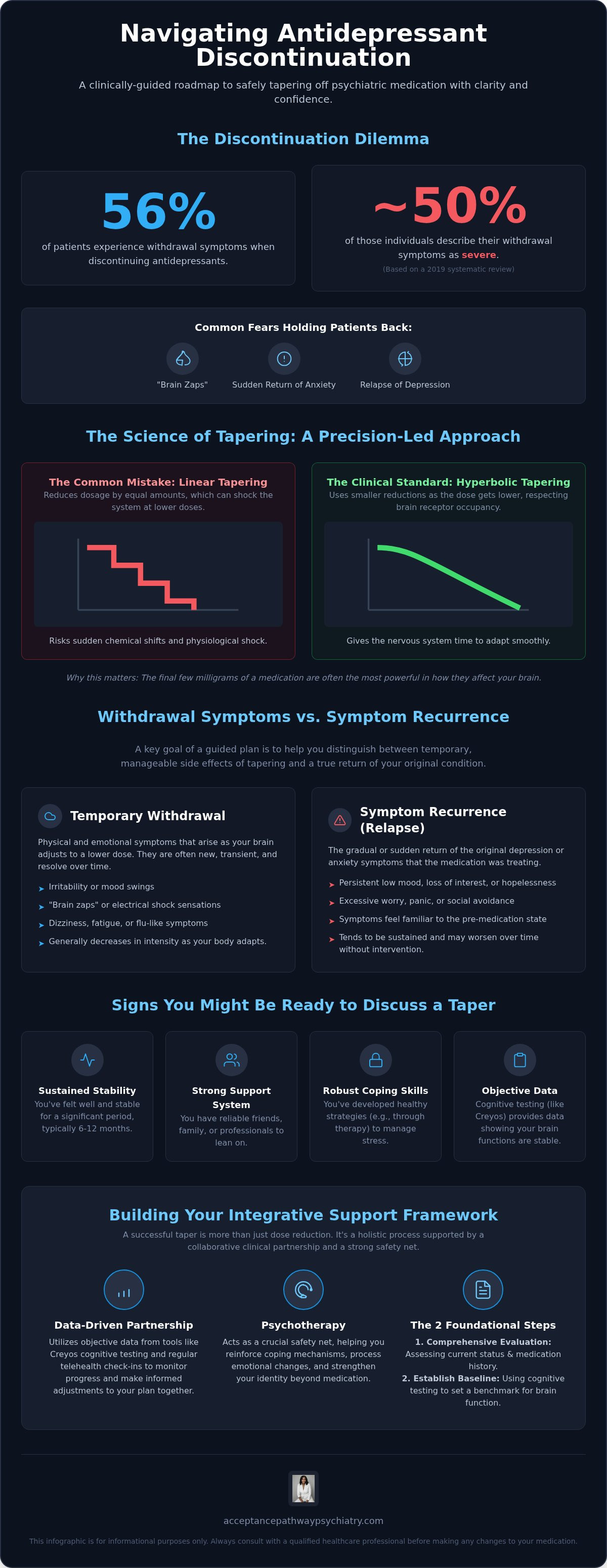
Did you know that a 2019 systematic review found 56% of patients experience withdrawal symptoms when discontinuing antidepressants, with nearly half describing those symptoms as severe? If you've felt stuck on your medication because you're afraid of "brain zaps" or a sudden return of anxiety, you aren't alone. It's completely natural to feel hesitant about making a change. However, with the right psychiatric medication withdrawal plan, you can move forward with clarity rather than fear.
You likely want to feel more like yourself again, but the worry that your original symptoms will come rushing back can feel like a heavy weight. This shift toward "deprescribing" is a recognized clinical path that prioritizes your autonomy and long-term wellness. This guide will provide you with the clinical steps and supportive strategies needed to safely transition off your medication under professional guidance. We'll explore how to distinguish between temporary withdrawal and a true relapse, the importance of a precision-led taper, and how a collaborative clinical partnership ensures your stability every step of the way.
Key Takeaways
- A psychiatric medication withdrawal plan is a clinically supervised, gradual process that protects you from the risks of "cold turkey" discontinuation.
- You'll learn the principles of hyperbolic tapering, which uses smaller dosage reductions as you get closer to your goal to help your brain adjust smoothly.
- Gain the tools to distinguish between temporary withdrawal symptoms, such as irritability or brain zaps, and the actual return of anxiety or depression.
- Discover how integrative wellness and psychotherapy act as a safety net, supporting your emotional identity and physical health during chemical changes.
- Explore how objective data from Creyos cognitive testing and regular telehealth check-ins create a collaborative, data-driven partnership for your success.
The Essential Role of a Psychiatric Medication Withdrawal Plan
A psychiatric medication withdrawal plan is not a sign of failure or a simple exit strategy. It's a medical roadmap designed to protect your well-being. This plan involves a clinically supervised, gradual reduction of your dosage to ensure your brain remains stable during transitions. Many people feel a sense of urgency to be "med-free," but your psychiatrist isn't a gatekeeper standing in your way. Instead, they act as an ally who wants to see you thrive without unnecessary suffering. By treating this as a collaborative partnership, you ensure that every step is taken with your specific biology and history in mind.
When you take psychiatric medication over a long period, your brain adapts by changing its own chemical production. This is a form of neuroplasticity. If you stop "cold turkey," you strip away that chemical support before your brain has time to recalibrate. This sudden absence often leads to discontinuation syndrome, which can feel like a physical and emotional storm. It can also trigger an acute relapse of your original symptoms. A formal plan gives your central nervous system the time it needs to resume its natural functions safely.
Why a Structured Taper is Non-Negotiable
Tapering is a precise science, especially regarding receptor occupancy. In many cases, the final few milligrams of a medication are the most powerful in terms of how they affect your brain's receptors. Reducing your dose too quickly causes sudden chemical shifts that can overwhelm your system. A structured psychiatric medication withdrawal plan reduces this physiological shock and eases the psychological stress that comes with transitions. It's about giving your body the grace it needs to adjust at its own pace rather than forcing a rapid change that might backfire.
Signs You Might Be Ready to Discuss a Taper
Deciding when to begin is a personal choice, but clinical markers can help guide the timing. You might be ready if you've experienced a sustained period of stability, typically between six and twelve months. It's also helpful to have a strong external support system and relatively steady life circumstances. Developing robust coping skills through psychotherapy is another key indicator that you have the tools to manage stress without the same level of chemical support. At Acceptance Pathway Psychiatry PLLC, we often use Creyos cognitive testing to provide objective data on your progress. This helps us determine together if your cognitive functions are stable enough for a change, giving you the confidence to start your psychiatric medication withdrawal plan with clarity and peace of mind.
Designing Your Tapering Schedule: A Precision-Led Approach
Your brain doesn't process chemical changes in a straight line. Because of this, a successful psychiatric medication withdrawal plan must follow a curve rather than a staircase. Many traditional tapering methods suggest dropping the dose by equal amounts every few weeks. However, clinical evidence shows that the impact on your brain's receptors actually increases as the dose gets lower. This is why the final few milligrams are often the most challenging to navigate. If you drop the dose too quickly at the end, the sudden receptor vacancy can trigger the very symptoms you're trying to avoid.
A precision-led approach uses hyperbolic tapering. This method involves making smaller and smaller reductions as you reach the lower end of your dosage range. By slowing down at the finish line, you give your nervous system the necessary time to adapt. A 2025 study found that 20% of participants reported withdrawal symptoms lasting more than three months, which highlights why a rushed timeline rarely works. It's essential to plan your withdrawal with a provider who understands this biological nuance. Every person's timeline is unique, and your schedule should be adjusted based on your physical and emotional feedback in real-time.
The 5-Step Process for a Clinical Taper
At Acceptance Pathway Psychiatry PLLC, we follow a structured method to ensure your safety. This isn't a rigid protocol, but a flexible framework that we build together as partners.
- Step 1: We begin with a comprehensive evaluation of your current mental health status and your history with the medication.
- Step 2: We establish a baseline for your brain function using Creyos cognitive testing.
- Step 3: We calculate your initial reduction, which is often roughly 10% of your current dose to test your sensitivity.
- Step 4: We monitor you during a "washout" period, typically two to four weeks, to ensure you've stabilized at the new level.
- Step 5: We make iterative adjustments based on your clinical check-ins and objective data before moving to the next step.
Monitoring Cognitive Clarity During the Transition
It's common to feel tired or "foggy" during a taper. But how do you know if you're just experiencing tapering fatigue or if your original symptoms are returning? This is where objective data becomes invaluable. Creyos cognitive testing is an objective tool for precision psychiatry that provides measurable data on your mental performance. By comparing your current scores to your baseline, we can identify subtle changes in focus or memory before a full relapse occurs. This data-driven insight allows us to pause or slow down the taper if needed. If you're looking for a partner in this process, we offer expert medication management to guide you through each transition with confidence.
Navigating Withdrawal Symptoms vs. Symptom Recurrence
Distinguishing between your body’s reaction to a chemical change and the return of your original condition is often the most stressful part of a psychiatric medication withdrawal plan. It’s natural to feel a surge of panic when you first notice a headache or a spike in irritability. You might wonder if this means you'll never be able to live without medication. However, most of these experiences are physical signals that your nervous system is working to find a new equilibrium. Learning to expand your "Window of Tolerance," or your ability to sit with temporary discomfort without spiraling into a crisis, is a vital skill during this journey.
Discontinuation symptoms typically include brain zaps, which feel like brief electric shocks in the head, along with dizziness, nausea, and flu-like aches. According to Clinical Guidelines for Withdrawal Management, these sensations are the body's response to the absence of a substance it has grown accustomed to. While they can be unsettling, they are often transient. A 2025 study found that while 20% of people may experience these symptoms for longer than three months, for many, they peak within the first few days and then begin to fade as the brain recalibrates.
Telling the Difference: Withdrawal vs. Relapse
Timing is one of the clearest indicators of what you're experiencing. Withdrawal symptoms usually appear within days of a dose reduction. In contrast, a relapse of anxiety or depression often takes weeks or months to fully manifest. Withdrawal also has distinct physical markers, such as dizziness or electric shock sensations, that aren't typically part of the original mental health condition. Finally, withdrawal symptoms often vanish quickly if the previous dose is reinstated. If the original condition is returning, simply taking a slightly higher dose won't usually provide that immediate, "night and day" relief.
Managing Discontinuation Symptoms Safely
When symptoms become difficult, we use the "Stop, Stabilize, and Stay" method. This means pausing the taper at your current dose until your body reaches a state of comfort again. There's no reward for rushing; staying at a specific level for an extra few weeks can prevent a larger setback. During this time, non-pharmacological interventions like improved sleep hygiene, gentle movement, and proper hydration can help manage physical discomfort. Maintaining consistent medication management with your provider ensures you have a safety net. This collaborative approach to your psychiatric medication withdrawal plan allows you to make adjustments based on how you actually feel, rather than following a rigid, impersonal calendar.
Building an Integrative Support Framework for Success
A successful psychiatric medication withdrawal plan requires more than just a reduction in milligrams. It needs a supportive environment where your brain can heal and adapt. We often refer to this as the "Integrative Buffer." By surrounding your clinical taper with intentional lifestyle choices, you create a safety net that softens the impact of chemical changes. This holistic approach ensures that your nervous system isn't just surviving the transition but is actively building the resilience needed for long-term stability.
Rest is the primary engine for neurological repair. When you sleep, your brain clears out metabolic waste and strengthens the neural pathways that support emotional regulation. During a taper, your brain is working overtime to recalibrate its own chemical production. Prioritizing strict sleep hygiene isn't just a wellness tip; it's a clinical necessity. Similarly, nutritional psychiatry plays a vital role. Fueling your body with anti-inflammatory foods and stable proteins provides the raw materials your brain needs to maintain neuroplasticity during this sensitive time.
The Role of Psychotherapy in Withdrawal
The journey toward being "med-free" often triggers a significant emotional identity shift. It’s common to feel a deep-seated fear that your original symptoms are just waiting to resurface the moment you lower your dose. Cognitive Behavioral Therapy (CBT) is an excellent tool for addressing these fears. In therapy, we help you build a "relapse prevention toolkit" before the taper even begins. This toolkit includes identifying early warning signs, practicing grounding techniques, and establishing clear protocols for when to reach out for extra help. Therapy and medication management work together for holistic healing by addressing both the physiological and emotional layers of the transition.
Lifestyle Adjustments to Support Your Nervous System
Timing is everything when you are initiating a psychiatric medication withdrawal plan. It’s best to choose a "quiet" season of life, avoiding major career changes, moves, or high-stress events during the most active phases of your taper. Reducing external stressors allows your central nervous system to focus its energy on internal stabilization. You can also support your physical comfort through simple adjustments. Maintaining high levels of hydration helps your body process and clear medications efficiently. Many patients also find that magnesium supplementation helps mitigate physical withdrawal symptoms, such as muscle tension or restlessness, though you should always clear new supplements with your provider first.
Gentle movement, such as walking or restorative yoga, also plays a role in regulating serotonin and dopamine naturally without overtaxing your system. If you want to ensure your lifestyle and clinical care are perfectly aligned, our team at Acceptance Pathway Psychiatry PLLC provides Integrative Wellness Services to support every aspect of your journey toward wholeness.
Collaborative Care: Partnering for Long-Term Mental Wellness
The journey toward a medication-free life is a profound personal evolution. At Acceptance Pathway Psychiatry, we believe that you are the expert on your own internal experience. Our role is to serve as a supportive witness and clinical guide. This collaborative expert model is aligned with the HHS MAHA Action Plan launched on May 4, 2026, which emphasizes patient autonomy and shared decision-making in psychiatric care. By working together, we ensure that your psychiatric medication withdrawal plan is a precision-led process that respects your unique biology and personal goals.
Regular communication is the bedrock of a safe transition. We utilize telehealth appointments to maintain frequent check-ins, especially during the more sensitive phases of your taper. These virtual visits allow us to catch subtle issues early without the stress of a commute. Even after you take your final dose, long-term monitoring remains essential. We stay connected to ensure your "new normal" is stable and that your brain continues to thrive in its recalibrated state. Pursuing this path takes immense courage. With approximately 77 million Americans currently prescribed psychiatric drugs, your decision to pursue a supervised taper is a significant step toward personal wholeness.
What to Expect in a Collaborative Withdrawal Consultation
When we sit down to discuss your goals, we start with an open dialogue about your fears and any previous experiences you've had with tapering. We don't believe in a "one size fits all" approach. Instead, we commit to a flexible, patient-paced timeline that adjusts based on how you feel. During these consultations, we regularly review your cognitive data from Creyos testing alongside your emotional well-being. This ensures every step forward is grounded in objective stability rather than guesswork.
Your Next Steps Toward Healing
Initiating the conversation about your psychiatric medication withdrawal plan is the first step toward change. You don't have to wait for a crisis to discuss your options. In fact, CMS guidance issued in May 2026 clarified that medically supervised deprescribing is a billable service under Medicare, recognizing its vital role in chronic care management. This policy shift highlights the growing medical consensus that stopping a medication requires as much professional oversight as starting one.
Before your next medication management appointment, prepare a list of questions about your timeline, potential support strategies, and how we will monitor your progress together. You don't have to walk this path alone. With a compassionate team by your side, you can move toward a future of wholeness and mental clarity with confidence.
Your Path to Lasting Mental Clarity
Transitioning away from medication is a journey that requires patience, clinical precision, and a deep respect for your body's timing. By following a structured psychiatric medication withdrawal plan, you move away from the risks of sudden changes and toward a sustainable future. You now understand how hyperbolic tapering protects your nervous system and how integrative tools, such as sleep hygiene and psychotherapy, act as a necessary buffer. Most importantly, you have the knowledge to tell the difference between temporary physical symptoms and a true return of your original condition.
You don't have to navigate these complexities alone. We provide compassionate, non-judgmental care that puts your unique experience at the center of the process. Through precision monitoring with Creyos testing and the convenience of telehealth appointments, we offer the flexible support you need to feel secure at every stage of your evolution. We are here to act as a steady witness to your progress.
Schedule a consultation to discuss your personalized medication management plan today. Your journey toward wholeness is a collaborative process, and we are honored to be your partner in healing.
Frequently Asked Questions
What are the most common symptoms of psychiatric medication withdrawal?
Common symptoms include physical sensations like "brain zaps," dizziness, nausea, and flu-like aches. You might also experience emotional shifts like increased irritability, anxiety, or tearfulness. These signals indicate your nervous system is working to adjust to chemical changes. While these experiences are unsettling, they are often temporary markers of your brain's recalibration process.
How long does a typical psychiatric medication withdrawal plan take?
A typical psychiatric medication withdrawal plan usually spans several months to over a year, depending on your medication history and dosage. There's no "standard" timeline because every brain recalibrates at a different speed. We prioritize a pace that maintains your stability and comfort, using a hyperbolic taper that slows down as you reach lower doses.
Can I develop a withdrawal plan for antidepressants and anti-anxiety meds at the same time?
It's generally safer and more effective to taper one medication at a time. This sequential approach allows us to clearly identify which medication is responsible for specific withdrawal symptoms if they arise. If you're taking both, we'll collaborate to decide which one to address first based on your current stability and long-term wellness goals.
What should I do if my symptoms return during the tapering process?
If your symptoms return, we use the "Stop, Stabilize, and Stay" method. This means pausing the reduction and remaining at your current dose until you feel comfortable and steady again. It's a signal that your brain needs more time to adjust. We'll review your cognitive data together and adjust the timeline to ensure you feel supported.
Is it possible to stop psychiatric medication without any withdrawal symptoms?
While some people experience minimal discomfort, most long-term users will have some level of adjustment symptoms. However, a precision-led psychiatric medication withdrawal plan significantly reduces the severity of these experiences. By using very small dose reductions and integrative support, we aim to keep you within your "Window of Tolerance" throughout the entire transition.
How does cognitive testing help in the medication withdrawal process?
Cognitive testing through Creyos provides objective data on your focus, memory, and mental speed during the taper. This helps us distinguish between temporary "tapering fog" and a potential relapse of your original condition. Having this measurable data gives you the confidence to make informed decisions about your next steps rather than relying on guesswork.
What is the difference between a "cold turkey" stop and a clinical taper?
A "cold turkey" stop is an abrupt cessation that can shock the central nervous system and cause severe discontinuation syndrome or acute relapse. A clinical taper is a planned, gradual reduction supervised by a medical professional. This structured approach gives your brain the necessary time to resume its own natural chemical production safely and sustainably.
Can integrative wellness strategies really reduce withdrawal symptoms?
Integrative wellness strategies provide a vital "buffer" for your nervous system during chemical shifts. Prioritizing sleep hygiene, anti-inflammatory nutrition, and gentle movement supports neuroplasticity and emotional regulation. These lifestyle factors don't just reduce physical discomfort; they create a stable foundation that helps your brain heal more effectively while you are transitioning off medication.


