

What if your depression isn't just a chemical imbalance in your brain, but a signal from your entire body that something is out of alignment? It's deeply frustrating to feel like a checklist of symptoms rather than a whole person, especially when antidepressants alone haven't delivered the clarity you hoped for. You might feel caught between the clinical precision of traditional psychiatry and the gentle promise of natural therapies. Many people find themselves in this middle ground, searching for integrative medicine for depression that honors their unique experience while remaining grounded in science.
You deserve a path to healing that values your intuition as much as your biology. We believe that true wellness comes from a collaborative partnership where you're a participant in your own evolution, not just a patient receiving a diagnosis. This guide explores how combining traditional medication management and psychotherapy with evidence-based holistic strategies can address the underlying causes of your distress. We'll look at the whole-body approach to mental health, including practical steps for nutrition and lifestyle, to help you foster lasting emotional wellness and find a provider who acts as a supportive partner in your journey.
Key Takeaways
- Learn how integrative medicine for depression bridges the gap between traditional psychiatry and holistic wellness to treat your mind and body as an interconnected system.
- Understand the biological influences on your mood, including how the gut-brain axis and chronic inflammation can act as physiological drivers of depressive symptoms.
- Discover the powerful synergy between medication management and psychotherapy when they are used together to address both biological and emotional needs.
- Identify the essential lifestyle foundations, such as sleep hygiene and stress resilience, that help build a personalized toolkit for lasting mental health.
- Explore the benefits of a collaborative partnership with a provider who acts as a supportive witness to your personal growth and evolution.
Exploring Integrative Medicine for Depression: Beyond the Conventional
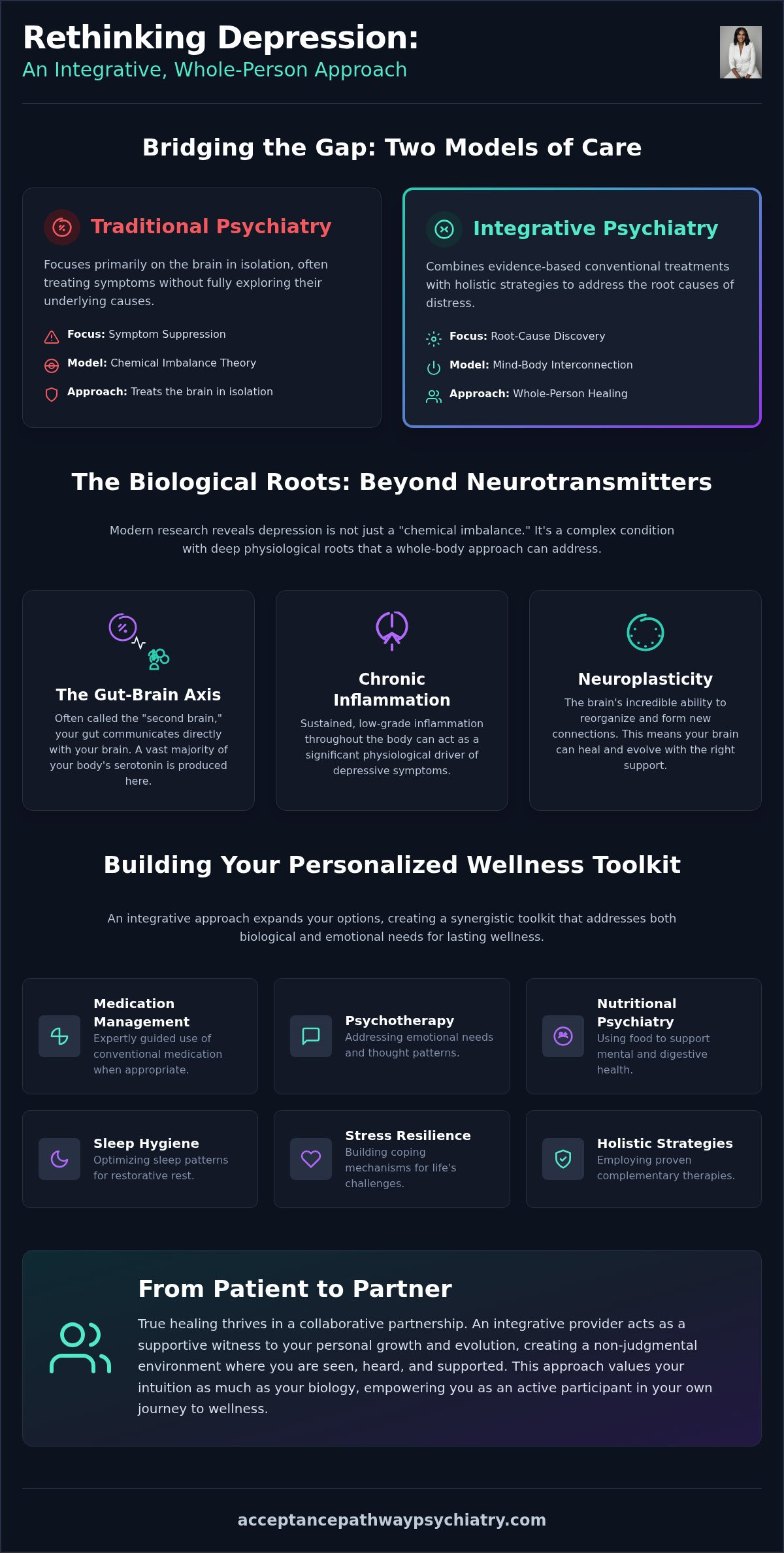
Healing isn't a linear process, and it certainly isn't one-dimensional. For many, the standard approach to mental health feels incomplete because it treats the brain in isolation from the rest of the body. Integrative medicine for depression changes this narrative by blending the clinical rigor of traditional psychiatry with the nurturing principles of holistic wellness. This isn't about rejecting modern medicine; it's about expanding your options to include every tool that can foster lasting emotional wellness.
The traditional symptom-suppression model often prioritizes quick relief over long-term understanding. While reducing immediate distress is important, it can sometimes leave the underlying triggers unaddressed. An integrative approach shifts the focus toward a root-cause discovery model. By viewing the mind, body, and spirit as an interconnected system, we can begin to see how various aspects of your life contribute to your well-being. This process requires a non-judgmental clinical environment where you feel safe to share the full scope of your experience.
To better understand how these natural and clinical strategies work together, watch this helpful video:
Defining the Integrative Model in Modern Psychiatry
Integrative medicine is an evidence-based, collaborative framework that combines conventional psychiatric treatments with complementary therapies to promote whole-person healing. Understanding Integrative Medicine is the first step in moving beyond labels and looking at the person behind the symptoms. Instead of just identifying a diagnosis, we look for the physiological and emotional drivers of your mood. Professional psychiatric evaluations and integrative medicine for depression provide the necessary foundation, ensuring that every holistic strategy is safely anchored in clinical expertise and precision.
Why a Whole-Person Perspective is Essential for Healing
A one-size-fits-all approach rarely works because depression is deeply personal and multifaceted. Your physical health markers, such as your sleep patterns, daily energy fluctuations, and even your digestion, often act as direct mirrors of your internal mental state. When a provider looks at your complete human experience, it creates a sense of psychological safety that is often missing in cold, institutional settings. This perspective allows us to move beyond the limitations of traditional care, treating you as a unique individual rather than a collection of symptoms. It's about being seen, heard, and supported as you evolve toward a state of wholeness.
The Biological Roots of Depression: Looking Beyond Neurotransmitters
Depression often feels like a heavy cloud that settles over the mind, but its roots frequently reach deep into the body's physiological systems. While the traditional "chemical imbalance" theory focuses on neurotransmitters like serotonin, modern research suggests a much broader biological landscape. According to late 2025 CDC data, 13.1% of adolescents and adults in the US experience depression, making it essential to look at the physical drivers behind these numbers. One of the most hopeful concepts in integrative medicine for depression is neuroplasticity, which is the brain's remarkable ability to reorganize itself and form new neural connections. This means your brain isn't static; it has an inherent capacity to heal and evolve when given the right support.
The Gut-Brain Connection and Nutritional Psychiatry
Your digestive system is home to the enteric nervous system, often called the "second brain." This complex network communicates constantly with your head through the vagus nerve. A healthy microbiome is essential for this dialogue because the majority of the body's serotonin is produced in the gut. When digestive health is compromised, it can lead to emotional instability and a lack of cognitive clarity. Dietary patterns are a foundational part of Creating a Personalized Wellness Plan that supports your mental state. Specific nutrients, particularly Vitamin D and B12, are vital for brain function. Deficiencies in these areas can mimic or worsen depressive symptoms, making nutritional precision a key component of a whole-body approach.
Addressing Inflammation and Hormonal Imbalances
Chronic stress triggers the release of cortisol, a hormone that can disrupt your mental equilibrium if it remains elevated for too long. Over time, this stress response can lead to systemic inflammation, which researchers now link to the "brain fog" and lethargy often associated with depression. This physiological state makes it harder for the brain to maintain its usual resilience. Comprehensive evaluations must consider endocrine health and inflammatory markers to provide a complete picture of your wellness. By integrating these biological insights into integrative medicine for depression, we move away from just managing symptoms and toward a truly collaborative partnership. If you're ready to explore how your physical health impacts your mood, our team is here to provide Integrative Wellness Services that honor your unique journey.
Integrative vs. Traditional Psychiatry: Bridging the Gap
Many people feel they must choose between a prescription and a "natural" lifestyle. This is a false choice. In the context of integrative medicine for depression, these two paths don't just coexist; they enhance one another. Choosing psychiatric medication management isn't a sign of failure or a lack of commitment to holistic health. It's often the very foundation that allows you to engage with other wellness practices more effectively. When your biological symptoms are stabilized, the work of psychotherapy becomes more accessible. You're no longer just trying to survive the day. You're able to reflect on your experiences and build new emotional patterns. This synergy is the heart of a modern psychiatric practice that values your agency.
The role of the psychiatrist is also evolving. Instead of a distant authority figure, your provider acts as a collaborative expert. They serve as a supportive witness to your personal evolution. This partnership recognizes that you're the foremost expert on your own life. By combining your lived experience with clinical knowledge, we create a plan that feels both safe and empowering. This approach addresses the frustration many feel when they are treated like a diagnosis rather than a person. It honors your unique journey while providing the steady, professional guidance needed for lasting change.
Why Medication and Holistic Care are Not Mutually Exclusive
Medication often serves as a necessary stabilizer. It quiets the intense physiological noise of depression, creating the mental space needed for holistic work to take root. For the 31% of patients who experience treatment resistance, adding integrative strategies can be life-changing. These methods can help manage or even reduce common medication side effects. Through personalized titration and careful monitoring, we ensure your treatment plan respects your body's unique sensitivity. This careful balance allows you to pursue lifestyle changes with more energy and focus.
Debunking Common Myths About Alternative Mental Health Care
A common misconception is that "natural" means "unscientific." In reality, integrative medicine for depression relies on rigorous clinical testing and lifestyle architecture. It isn't just about suggesting supplements. It involves precise diagnostics, such as Creyos Cognitive Testing, to understand your brain's current state. Every strategy we recommend is evidence-based and professionally supervised. We move away from guesswork and toward data-driven care. This ensures that your path to wellness is both safe and effective, bridging the gap between traditional psychiatry and the wholeness you're seeking.
Building Your Personalized Wellness Toolkit
Creating a sustainable path to wellness requires more than just a single intervention. It involves building a toolkit that supports your growth from every angle. When we practice integrative medicine for depression, we look at the specific habits and tools that empower you to take charge of your mental health. This process is often made easier through telehealth. Removing the stress of a commute allows you to maintain consistent care from the comfort of your own home, which is vital for long-term progress. By integrating psychotherapy into this framework, we address the emotional narratives and past experiences that shape your current outlook, ensuring that your healing is as deep as it is broad.
Lifestyle Foundations: Sleep, Movement, and Mindfulness
Regulating your circadian rhythm through consistent light exposure and sleep timing provides the biological stability your brain needs to maintain a steady mood. This foundation allows other treatments to work more effectively. Movement also plays a vital role, but it doesn't have to be intense to be beneficial. Finding joyful, consistent movement has significant antidepressant effects by naturally boosting your energy and resilience. Additionally, mindfulness serves as a practical tool for emotional regulation. It encourages neuroplasticity, helping your brain move out of rigid depressive patterns and into a more flexible, present state of being.
The Role of Cognitive Testing in Precision Psychiatry
Subjective questions like "how do you feel?" are important, but they don't always tell the full story. To gain a clearer picture of your internal experience, we use Creyos cognitive testing to gather objective data on your brain health. This assessment measures core functions like memory, attention, and processing speed. By using these measurable insights, we can track your progress over time and adjust your integrative strategies with precision. This data-driven approach ensures your treatment plan is targeted to your specific needs, moving beyond guesswork to provide clarity and confidence in your care. If you're ready to build a toolkit that's tailored to your unique cognitive profile, you can schedule a telehealth appointment to begin your journey with us.
Partnering for Progress: The Acceptance Pathway Approach
At the heart of our practice is the belief that you are more than a set of symptoms. We strive to provide a warm, non-judgmental environment where you feel safe to explore every aspect of your well-being. This commitment to compassionate care is what defines our approach to integrative medicine for depression. At Acceptance Pathway Psychiatry PLLC, we view the relationship between patient and provider as a mutual partnership. Instead of a distant authority figure, your provider acts as a supportive witness to your personal evolution. This collaborative model ensures that your voice is always heard and your unique lived experience is valued throughout the healing process.
Collaborative Care Plans for Long-Term Stability
Stability isn't a destination; it's a continuous process that requires regular attention and refinement. Our collaborative care plans are designed to integrate Medication Management with our Integrative Wellness Services. This combined approach addresses the biological and lifestyle factors we have discussed, such as inflammatory markers and nutrient balance. We believe in empowering you to be an active participant in your own recovery. By blending Psychotherapy with clinical wellness, we address both the narrative and physiological aspects of your health. Regular check-ins allow us to refine your holistic strategy based on your progress, ensuring your treatment remains as dynamic as you are.
Accessing high-quality care shouldn't be a source of stress. Our telehealth-first approach allows you to attend virtual wellness and Telehealth Appointments from the safety and convenience of your own home. This national-level accessibility removes the barriers of travel and waiting rooms, making it easier to maintain the consistency needed for lasting change. Virtual appointments offer a unique level of comfort, allowing you to engage in deep, transformative work in an environment where you already feel secure.
Starting Your Journey Toward Holistic Recovery
Your path starts with a comprehensive virtual psychiatric evaluation. During this initial meeting, we take the time to understand your unique history and the specific biological and emotional needs that have shaped your journey. We look at the 'why' behind your symptoms, identifying the root causes that need attention. This is the first step in creating a roadmap that honors your individual goals. By choosing integrative medicine for depression, you're choosing a path that values your intuition and your biology equally. It's natural to feel a mix of hope and hesitation, but please know that you aren't alone. Acceptance Pathway Psychiatry PLLC is here to walk alongside you, offering the clinical expertise and deep empathy you need to foster a life of lasting emotional wellness.
Embracing Your Path to Emotional Wholeness
Depression isn't just a diagnosis to manage; it's an invitation to understand your body's interconnected systems more deeply. Throughout this guide, we've explored how integrative medicine for depression bridges the gap between traditional psychiatry and evidence-based holistic strategies. By addressing root causes while using precision tools like cognitive testing, you can build a personalized toolkit that supports your unique evolution. This whole-person approach ensures that you're treated as a human being with a story, not just a list of symptoms on a clinical chart.
You deserve a collaborative partner who views your journey with both empathy and clinical authority. Our evidence-based wellness services and compassionate, telehealth-accessible care allow you to prioritize your mental health without the added stress of a commute. We are here to act as a supportive witness to your progress, providing the steady guidance you need to thrive. Begin your journey to wholeness with a comprehensive evaluation at Acceptance Pathway Psychiatry PLLC. You aren't alone in this process. Every small step you take is a meaningful part of your progress toward a more vibrant, balanced, and fulfilling life.
Frequently Asked Questions
Can integrative medicine for depression replace my current medications?
Integrative care is not necessarily a replacement for medication, but rather a way to enhance your overall treatment. For many, medication management provides the stability needed to engage effectively with holistic strategies. Any changes to your current prescriptions must be a collaborative decision made with a professional provider. Our goal is to find the right balance that supports your unique biology, whether that includes medication, wellness services, or a combination of both.
What is the difference between functional psychiatry and integrative medicine?
Integrative medicine is a broad framework that synthesizes traditional psychiatric treatments with evidence-based holistic wellness. Functional psychiatry is a specific branch that focuses on identifying metabolic and physiological root causes, such as hormonal imbalances. Both approaches move away from a one-size-fits-all model. We use these principles to create a collaborative partnership, ensuring that your unique lived experience and biological markers are both respected as we build your personalized path toward emotional wellness.
How do nutritional deficiencies specifically affect my mood?
Nutrients like Vitamin D and B12 are essential for neurotransmitter production and overall brain health. Deficiencies in these areas can lead to symptoms that mimic or worsen depression, such as chronic fatigue and cognitive fog. Nutritional psychiatry explores how the gut-brain axis influences these states. By addressing these physiological gaps through integrative medicine for depression, we can support your brain’s natural resilience and its inherent ability to heal through the process of neuroplasticity.
Is integrative mental health care supported by scientific research?
Yes, many components of integrative care are supported by rigorous clinical studies. Recent federal actions in 2026 to accelerate research into new therapies, alongside established data on exercise and nutrition, demonstrate the field's scientific growth. We prioritize evidence-based strategies, ensuring that every recommendation is safe and effective. This scientific foundation allows us to move beyond guesswork, providing you with a reliable and professional environment that encourages your personal evolution and long-term stability.
What role does psychotherapy play in an integrative treatment plan?
Psychotherapy addresses the emotional and narrative aspects of your experience that biological treatments alone cannot reach. It helps you explore past patterns and build the psychological resilience needed for lasting change. In an integrative model, therapy works in synergy with wellness services and medication. This combination ensures that we are supporting both your mind and your body, creating a compassionate environment where you are treated as a whole person rather than just a diagnosis.
Can cognitive testing help in treating my depression?
Cognitive testing provides objective data on brain functions like memory and processing speed, which are often impacted by mood disorders. We use Creyos Cognitive Testing to move beyond subjective "how do you feel" questions. This data allows us to track your progress with precision and adjust your treatment plan based on measurable cognitive insights. It is a vital tool for precision psychiatry, helping us tailor your care to your specific needs and cognitive profile.
Is telehealth effective for integrative wellness services?
Telehealth is highly effective and offers a unique level of psychological safety by allowing you to receive care in your own home. Virtual appointments remove the stress of commuting, which can be a significant barrier for those struggling with depression. We provide national-level virtual care, ensuring that you have consistent access to medication management and psychotherapy. This telehealth-first approach maintains a steady and professional pace of care that respects your time and energy.
How long does it typically take to see results from a holistic approach?
Healing is an intentional and patient process, so the timeline varies for every individual. Some people notice improvements in energy or sleep within a few weeks of starting integrative medicine for depression, while deeper emotional shifts may take several months. Because this approach focuses on addressing root causes rather than just suppressing symptoms, the results are often more sustainable. We remain a supportive witness to your journey, allowing you to evolve at your own manageable speed.


