

What if the constant hyper-vigilance and racing thoughts you experience aren't signs that you're broken, but simply signals from a nervous system that's stuck in survival mode? It's incredibly frustrating when talk therapy alone doesn't seem to quiet the noise, or when you worry that medication might change the core of who you are. You're not alone in these feelings. It's completely natural to want to feel like yourself again while also finding relief from the heavy exhaustion of trauma. You deserve to feel safe in your own body.
This is where professional medication management for PTSD becomes a vital bridge to your recovery. We're here to help you understand how a personalized plan can calm your physiological responses and support your journey toward long-term wholeness. In this guide, we'll explore how FDA-approved options like sertraline and paroxetine work to stabilize your system. We'll also discuss the role of new neuromodulation technology and how a collaborative partnership with your provider can help you reduce night terrors, improve emotional regulation, and finally rediscover a sense of peace.
Key Takeaways
- Learn how professional medication management for PTSD serves as a physiological stabilizer to lower your daily distress and support your recovery.
- Understand the science of the "Trauma Brain" and how medication helps regulate neurotransmitters to restore a sense of internal safety.
- Explore first-line treatment options like SSRIs and SNRIs that help manage hyper-arousal and improve your emotional regulation.
- Discover the collaborative nature of a trauma-informed evaluation, where your unique history and goals guide every step of the process.
- See why the combination of psychiatric care, psychotherapy, and wellness practices offers the most comprehensive path toward long-term wholeness.
What is Medication Management for PTSD?
Medication management for PTSD is a specialized psychiatric service that focuses on the careful selection, monitoring, and adjustment of medications to help treat the physiological symptoms of Post-traumatic stress disorder. It isn't just about receiving a prescription and walking away. Instead, it's a supportive, professional relationship designed to help you regain control over a nervous system that feels stuck in survival mode. By working with a psychiatric provider, you can find a balance that addresses the biological roots of your distress.
The core goal of this service is to lower your internal "baseline" of distress. When you're constantly living with high levels of cortisol and adrenaline, your body stays in a state of hyper-arousal that makes daily life feel like an uphill battle. Professional medication management for PTSD aims to quiet this physical noise. When your body feels safer, you gain the mental and emotional capacity to engage more fully in your relationships, your work, and the deep work of psychotherapy.
Beyond the Prescription: The Collaborative Process
A medication management appointment feels very different from a standard visit to a primary care doctor. While a general practitioner might offer a basic prescription for anxiety or sleep, a psychiatric provider acts as a collaborative expert and a supportive witness to your specific journey. We prioritize a mutual partnership where your voice is the most important part of the conversation. We don't just look at a checklist of symptoms; we look at how you're experiencing your life. Medication management is a dynamic, ongoing dialogue between provider and patient. This process allows us to monitor your progress closely and make precise adjustments to dosages or types of medication as your needs evolve over time.
Who Can Benefit from PTSD Pharmacotherapy?
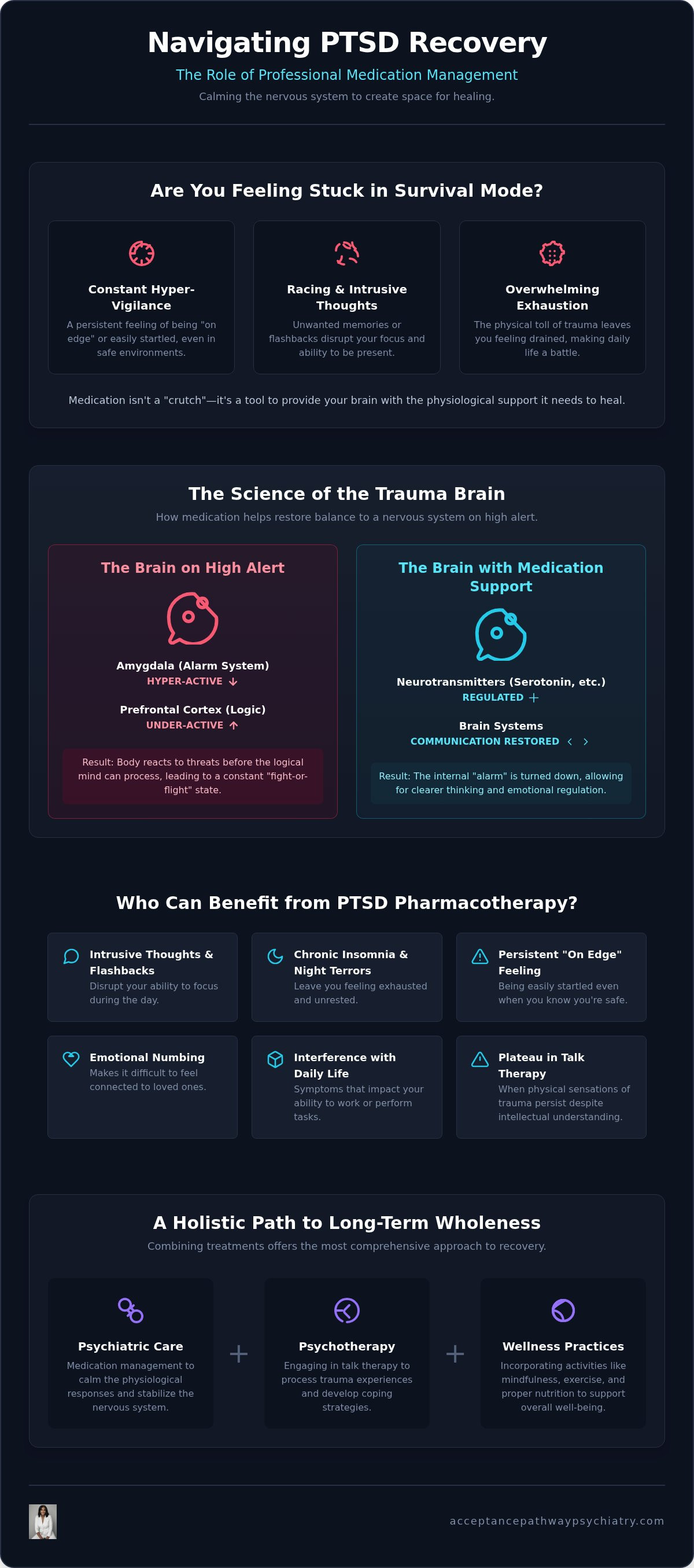
Many individuals find that they reach a plateau in their recovery where talk therapy alone doesn't seem to reach the physical sensations of trauma. You might understand your triggers intellectually, but your body still reacts with a racing heart or a sense of "numbing out" that you can't talk your way through. In these cases, medication is often the missing piece that allows healing to continue. You may benefit from this approach if you experience the following:
- Intrusive thoughts or flashbacks that disrupt your ability to focus during the day.
- Chronic insomnia or frequent night terrors that leave you feeling exhausted.
- A persistent sense of being "on edge" or easily startled even when you know you're safe.
- Emotional numbing that makes it difficult to feel connected to your loved ones.
- Symptoms that interfere with your ability to maintain a job or perform daily tasks.
Choosing to explore medication isn't a sign of weakness or a "crutch." It's a proactive step toward reclaiming your well-being. It provides your brain with the physiological support it needs to process trauma without being overwhelmed by a constant fight-or-flight response.
The Science of Healing: How Medication Supports the PTSD Brain
When you experience trauma, your brain undergoes physical changes designed to keep you safe. The amygdala, which acts as your brain’s emotional alarm system, becomes hyper-active. It stays on high alert, scanning your environment for threats even when you're in a safe space. At the same time, the prefrontal cortex, the area responsible for logic and emotional regulation, often becomes under-active. This biological disconnect is why it's so difficult to "talk yourself out" of a panic attack or a flashback. Your body is reacting to a perceived threat before your logical mind can even process the situation.
Professional medication management for PTSD helps bridge this gap by regulating key neurotransmitters. Serotonin helps stabilize your mood and sleep, while norepinephrine influences how your body responds to stress. By utilizing evidence-based Medications for PTSD, we can help restore balance to these chemical messengers. This process isn't about changing your personality or numbing your emotions. Instead, it's about providing the biological stability your brain needs to move out of a constant state of survival. When the "alarm" in your brain is turned down, your prefrontal cortex can come back online, allowing you to process experiences with greater clarity.
Calming the Nervous System
Your autonomic nervous system is the biological basis for the "fight or flight" response. In PTSD, this system stays stuck in the "on" position, leading to chronic hyper-vigilance and exhaustion. Medication reduces the intensity of this internal alarm. When your physical body feels calmer, your heart rate slows and your muscles relax, which directly improves your ability to regulate emotions. This physiological peace is the foundation for neuroplasticity. A calm brain is a learning brain, and by stabilizing your system, you create the space for your brain to form new, healthier neural pathways that aren't rooted in fear.
Addressing Specific PTSD Clusters
Symptoms of trauma often fall into specific clusters, and medication management for PTSD allows us to target these areas with precision. We look at your unique symptom profile to determine which tools will be most effective for your daily life. This targeted approach helps manage various aspects of the trauma experience:
- Re-experiencing: Reducing the frequency and overwhelming intensity of intrusive memories, flashbacks, and night terrors.
- Avoidance: Helping to balance the brain's reward and safety systems so you feel capable of engaging with people and places again.
- Hyper-arousal: Managing the irritability, difficulty concentrating, and sleep disturbances that often follow trauma.
If you feel like your body is constantly working against you, our team is here to act as an ally in your recovery. We offer comprehensive medication management that respects your individual journey and focuses on your long-term wholeness.
Exploring Treatment Options: Common Medications for PTSD
Choosing the right medication is a collaborative process that respects your body's unique chemistry and your personal history. While there isn't a one size fits all solution, several classes of medication have proven effective in helping individuals move from a state of survival back into a state of living. Effective medication management for PTSD often begins with identifying which symptom clusters, such as intrusive memories or hyper-arousal, are impacting your daily quality of life the most. We look at the full range of PTSD treatment options to find the combination that helps you feel most like yourself.
First-Line Medications: SSRIs and SNRIs
Selective Serotonin Reuptake Inhibitors (SSRIs) are generally considered the first line of defense in stabilizing the trauma brain. As of 2026, the only medications specifically FDA-approved for the treatment of PTSD are sertraline and paroxetine. These medications work by increasing the availability of serotonin, a neurotransmitter that plays a vital role in regulating mood, sleep, and anxiety. By balancing these levels, SSRIs can help reduce the frequency of intrusive thoughts and the intensity of emotional numbing.
Serotonin-Norepinephrine Reuptake Inhibitors (SNRIs), such as venlafaxine, are also frequently suggested, especially when there is a significant overlap with depression or generalized anxiety. It's helpful to remember that these medications aren't an immediate fix. They typically require a 4 to 6 week period of consistent use to reach their full therapeutic effect. During this window, your provider acts as a steady partner, monitoring your response and ensuring you feel safe and supported as your system adjusts.
Off-Label and Supportive Options
Beyond the primary options, medication management for PTSD often involves looking at supportive tools to address specific challenges like sleep disturbances. Prazosin is a unique and effective tool frequently used to calm the night-time hyper-arousal that leads to trauma-related nightmares. Although it was originally developed to treat high blood pressure, its ability to block the brain's response to norepinephrine makes it highly effective for reducing the "fight or flight" response during sleep.
In psychiatric practice, "off-label" simply means a medication is being used for a purpose other than its original FDA indication based on strong clinical evidence and professional expertise. We may also discuss the following as secondary support:
- Mood Stabilizers: These can help manage irritability or intense emotional shifts.
- Anti-Anxiety Medications: Used carefully to provide short-term relief during periods of high distress.
- Sleep Supports: Non-habit-forming options to help restore a healthy circadian rhythm.
Each of these options is considered within the context of your whole health. Our goal is to provide a comprehensive safety net that allows you to move through your day with a greater sense of ease and predictability.
Your Medication Management Journey: What to Expect
The journey toward healing begins with a comprehensive initial evaluation. This isn't a cold, clinical interrogation; it's a deep, non-judgmental dive into your history, your current challenges, and your personal goals for recovery. We take the time to understand the nuances of your experience, ensuring you feel seen and heard from the very first moment. This foundational meeting allows us to build a roadmap for your medication management for PTSD that respects your unique pace and needs.
Follow-up appointments serve as vital touchpoints to monitor your progress and refine your care. We discuss how your symptoms are shifting, any side effects you might notice, and how your life is changing as your nervous system begins to settle. Every decision regarding dosage adjustments or changes in treatment is made through collaborative decision-making. You are the expert on your own body, and we are here to provide the clinical guidance and support needed to navigate the path forward together.
We recognize that for those living with trauma, simply leaving the house or sitting in a waiting room can feel overwhelming. To lower the barrier to seeking help, we offer telehealth appointments. This allows you to engage in your care from the safety and familiarity of your own home, maintaining a sense of psychological safety while you work toward recovery. Accessing professional support shouldn't have to be a source of additional hyper-vigilance or stress.
Preparing for Your First Appointment
Preparation can help you feel more empowered during your visit. Consider keeping a brief journal of your symptoms for a week prior to the appointment. Note specific times of day when you feel most anxious or any triggers that lead to flashbacks. Prepare a list of questions about how medication might impact your daily routine or what to expect in the first few weeks. To help you feel fully prepared, we've created a resource on What to Expect During Your First Medication Management Appointment that covers everything from paperwork to the initial conversation.
Managing Side Effects and Expectations
It's common to worry about how medication might affect your personality or daily energy levels. While some side effects can occur, they are often mild and temporary as your body adjusts to the new chemical balance. We emphasize the importance of open, honest communication; we want to know how you're feeling every step of the way. A "trial and adjustment" period is a normal and expected part of the process. It's a methodical way to ensure we find the exact right fit for your system, rather than rushing toward a solution that doesn't feel right.
If you're ready to partner with a provider who values your unique journey, you can book a telehealth consultation to begin your healing process today.
A Holistic Approach: Integrating Medication, Therapy, and Wellness
Healing from trauma is rarely a linear path. It's a journey of personal evolution that requires a look at the whole person, not just a list of symptoms. While medication management for PTSD provides the physiological foundation for stability, its true value shines when it's part of a broader, integrative strategy. We believe in treating the person, not just the diagnosis, by ensuring every interaction is rooted in a trauma-informed care philosophy. This approach prioritizes your emotional safety and recognizes that your path to wholeness is unique.
True healing involves moving beyond mere survival. It's about rediscovering a sense of agency and connection to yourself and the world around you. By addressing the biological, psychological, and lifestyle factors that influence your well-being, we help you build a resilient foundation for long-term health. This integrated perspective ensures that you aren't just managing symptoms, but actively cultivating a life that feels safe and meaningful.
The Synergy of Therapy and Medication
Many people find that their symptoms are so intense that sitting in a therapy session feels overwhelming. Professional medication management for PTSD creates the "emotional bandwidth" necessary to engage in deep trauma work. When your nervous system isn't constantly screaming for survival, you can finally process past experiences without being flooded by fear. We've seen how Combining Therapy and Medication for Holistic Healing allows patients to make breakthroughs that previously felt impossible. Our providers act as supportive witnesses, working in a collaborative relationship with your therapist to ensure your care is seamless and aligned with your goals.
Embracing Integrative Wellness
Supporting your body through nutrition, restorative sleep, and mindfulness practices isn't a set of "extra" tasks; these are essential components of your recovery. Lifestyle factors have a profound impact on how your brain processes stress and maintains chemical balance. Our focus on integrative wellness services ensures that we're supporting your long-term stability from every angle. Whether it's improving sleep hygiene to reduce night terrors or using mindfulness to stay grounded, these tools empower you to take an active role in your own healing. This comprehensive care model helps you move from a state of constant alert to a place of steady resilience.
You don't have to navigate this complex journey alone. If you're ready to explore a partnership that values your unique experience and prioritizes your wholeness, you can Schedule a consultation for personalized care today. Taking this first step is a powerful act of self-compassion and a commitment to your long-term well-being.
Reclaiming Your Life Through Collaborative Care
Healing from trauma is a profound journey of personal evolution, and you don't have to walk that path alone. Professional medication management for PTSD offers a vital bridge to stability by quieting a hyper-active nervous system and restoring biological balance. When your body finally feels safe, you gain the emotional bandwidth to engage fully in psychotherapy and the integrative wellness practices that lead to long-term wholeness. This isn't about changing your personality; it's about providing the physiological support your brain needs to move out of survival mode.
Our practice is committed to providing trauma-informed, non-judgmental support that treats you as a whole person rather than a diagnosis. We integrate clinical expertise with deep empathy to ensure your treatment is a true partnership. With accessible telehealth appointments, you can begin this transformative process from the safety and comfort of your own home. You deserve a life that isn't defined by constant alert, but by peace, connection, and new possibilities.
Take the first step toward stability—schedule your psychiatric evaluation today.
Common Questions About PTSD Care
Is medication for PTSD permanent, or can I eventually stop taking it?
Medication for PTSD is not necessarily a lifelong commitment. Many individuals use it as a physiological bridge to find stability during intensive therapy. Once your symptoms have been well-controlled for six to twelve months, you and your provider can discuss a slow, supervised tapering process. The goal is to provide your brain with the support it needs until you feel ready to maintain your progress through other wellness tools.
What are the most common side effects of PTSD medications?
Common side effects often depend on the specific class of medication, but many people experience mild nausea, dry mouth, or temporary changes in sleep patterns when starting. These sensations usually peak within the first week or two as your body adjusts. We monitor your response closely during medication management for PTSD to ensure any discomfort is manageable. If a side effect persists, we work together to adjust the dosage or explore a different option.
How long does it take for PTSD medication to start working?
You can expect to feel the full therapeutic benefits of most PTSD medications within four to six weeks. While some people notice a slight improvement in sleep or physical anxiety within the first few days, the brain needs time to reach a steady chemical balance. We schedule regular follow-up appointments during this initial window. This allows us to provide reassurance and track the subtle shifts in your mood and reactivity as the medication takes hold.
Can medication change my personality or make me feel like a different person?
Medication is designed to reduce the intensity of your symptoms, not to alter the core of who you are. The goal is to quiet the hyper-vigilance and emotional numbing so your true personality can re-emerge from behind the trauma. If you ever feel "flat" or unlike yourself, it's a sign that we need to adjust your plan. We prioritize your sense of wholeness and ensure the treatment supports your personal evolution.
Is it safe to combine PTSD medication with other treatments like therapy?
Combining medication with psychotherapy is considered the gold standard for treating trauma. Medication helps stabilize your nervous system, which creates the emotional safety needed to process difficult memories in therapy. This integrated approach addresses both the biological and psychological aspects of your experience. We maintain a collaborative relationship with your therapist to ensure that your medication management for PTSD is perfectly aligned with the work you're doing in your sessions.
Will I need to take multiple medications to manage my PTSD symptoms?
Not everyone requires multiple medications, but some individuals benefit from a combination that targets different symptom clusters. For example, you might use an SSRI to manage daily anxiety while adding a specific medication like Prazosin to address trauma-related nightmares. We take a methodical approach to your care, starting with the most effective first-line option. We only add supportive medications if they're necessary to help you achieve your specific goals for healing and daily functioning.
Can telehealth really provide effective medication management for trauma?
Telehealth is an incredibly effective and evidence-based way to manage trauma care. Virtual appointments allow you to stay in a space where you already feel safe, which can significantly reduce the anxiety often associated with medical visits. We use secure, high-quality platforms to conduct deep, non-judgmental evaluations and follow-up care. This flexible access ensures you receive consistent support without the added stress of travel or unfamiliar waiting rooms, making your recovery more sustainable.
What happens if the first medication I try doesn't work for me?
If the first medication doesn't provide the relief you need, it's a normal part of the psychiatric process. Everyone's brain chemistry is unique, and "trial and adjustment" helps us find the most effective fit for your system. We listen to your feedback without judgment and use that information to refine your treatment plan. Finding the right medication is a collaborative journey, and we stay by your side as a supportive witness until we find what works.


