

What if your treatment plan felt less like a clinical experiment and more like a conversation between two people who deeply value your sense of self? For many, the journey toward stability feels like a trade-off between managing symptoms and losing the vibrancy that makes them who they are. You might have experienced the frustration of "zombie-like" side effects or felt unheard by providers who focus only on a checklist of symptoms. It's common to feel anxious about the long-term impacts of medications, especially when the process feels like endless trial and error.
Finding the right medication management for bipolar disorder doesn't have to be a lonely or intimidating process. You deserve a partnership where your voice is the most important part of the equation. This article explores how a collaborative psychiatric relationship, combined with integrative wellness and precise tools like Creyos cognitive testing, can help you achieve lasting emotional balance. We'll look at how to move beyond just "getting by" and toward a life of genuine wholeness. By the end of this guide, you'll understand how a personalized, patient-centered approach can bring the stability you've been searching for in 2026.
Key Takeaways
- Understand why a personalized plan serves as the essential anchor for stability and how a collaborative partnership ensures your treatment aligns with your personal goals.
- Learn about the different options available for medication management for bipolar disorder, including how mood stabilizers and modern antipsychotics help prevent emotional cycle swings.
- Discover how to address concerns about side effects like cognitive fog or weight changes so you don't have to choose between stability and your quality of life.
- Explore the step-by-step process of starting a new regimen, from the initial deep-dive evaluation to a safely supervised induction phase.
- Identify the lifestyle pillars, such as sleep hygiene and psychotherapy, that work alongside your clinical care to support lasting mental wellness.
The Essential Role of Medication Management in Bipolar Care
Think of medication management for bipolar disorder as the anchor of your treatment plan. While therapy and lifestyle changes provide the sails and the rudder, medication offers the weight needed to keep your ship steady in turbulent seas. Bipolar disorder is a complex, biological condition that requires a different pharmacological approach than unipolar depression. In unipolar depression, the goal is often to lift the mood. However, in bipolar care, we must manage both the peaks and the valleys. Using antidepressants alone can sometimes trigger manic episodes or rapid cycling, making a specialized mood-stabilizing regimen essential for your safety and long-term health.
Consistent care does more than just stop the swings; it protects your long-term well-being. Each time the brain undergoes a severe manic or depressive episode, it experiences significant stress. Over time, these "crashes" can lead to subtle cognitive changes or a decline in executive function. Engaging in regular medication management for bipolar disorder helps prevent these episodes from occurring in the first place. This proactive approach reduces the trauma of hospitalization and allows your nervous system to remain in a state of rest and repair rather than constant crisis.
Bipolar I vs. Bipolar II: Tailoring the Approach
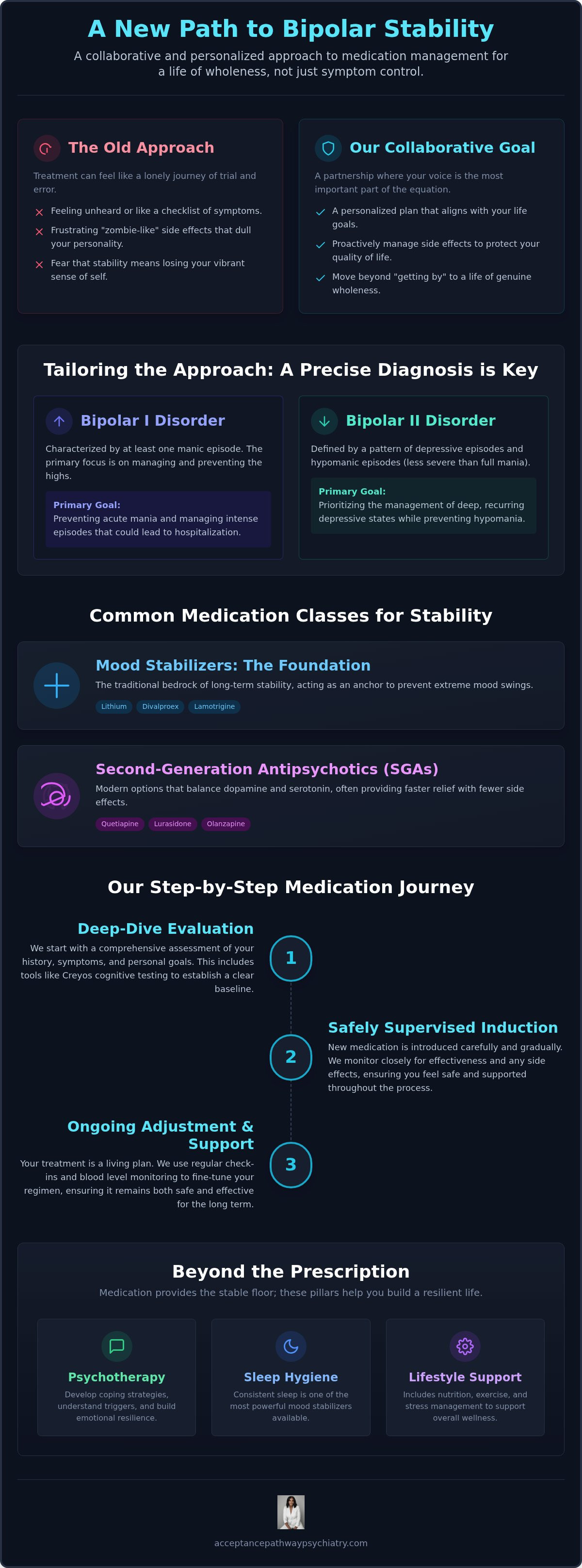
Your unique experience with bipolar disorder dictates the strategy we take. Because the two primary types of the disorder present differently, the medication priorities must shift accordingly:
- Bipolar I: Focuses heavily on preventing acute mania and managing intense episodes that may require immediate stabilization.
- Bipolar II: Prioritizes the management of hypomania and the prevention of deep, recurring depressive states.
A precise diagnosis is the first step in this journey. Tools like Creyos cognitive testing can help us understand your baseline, ensuring that we aren't just treating a label, but your specific biological needs. This precision allows us to tailor your care to your life in 2026 and ensures that your treatment plan is as unique as your own journey.
The Goal: Moving Beyond "Normal" to Wholeness
We don't just want you to feel "not depressed" or "not manic." The true goal is functional recovery and wholeness. When your brain chemistry is balanced, you gain the mental space needed to engage deeply in psychotherapy and integrative wellness services. This is often called the "therapeutic window." It's the sweet spot where medication isn't numbing your emotions, but rather providing a stable floor. From this foundation, you can build a life that feels authentic, vibrant, and entirely your own, without the constant fear of the next emotional shift.
Common Medication Classes for Bipolar Disorder Stability
Effective medication management for bipolar disorder involves selecting the right tools for a very specific job. We don't view treatment as a one-size-fits-all prescription. Instead, we look at your symptoms as a map. Some medications are designed to pull you up from a depressive valley, while others act as a ceiling to prevent a manic peak. By understanding how these different classes work, you can feel more empowered and less like a passive observer in your own care.
Mood Stabilizers: The Foundation of Care
Lithium and anticonvulsants are the traditional bedrock of long-term stability. Lithium, a naturally occurring mineral, has been used for decades because of its unique ability to reduce the risk of both mania and suicide. Anticonvulsants like lamotrigine or divalproex work by modulating neurotransmitters like glutamate and GABA, essentially calming the overactive electrical signaling that leads to mood swings. Because these medications can impact organ function over time, we use regular blood level monitoring to ensure your dose is both safe and effective. Mood stabilizers act as the steady hand in bipolar treatment.
Second-Generation Antipsychotics (SGAs)
Atypical antipsychotics are increasingly used as first-line treatments, especially for bipolar depression. Unlike older versions of these drugs, second-generation options like quetiapine or lurasidone help balance dopamine and serotonin with fewer neurological side effects. One of their greatest strengths is a faster onset of action compared to traditional stabilizers. They can provide relief in days rather than weeks, which is vital during an acute crisis. We always balance this speed with a focus on your metabolic health. We monitor your weight, blood pressure, and blood sugar to ensure the treatment supports your whole body. If you're looking for a provider who prioritizes this level of detail, our team offers personalized medication management through telehealth and in-person visits.
The use of antidepressants remains a point of careful clinical debate. While they can help lift a heavy depressive episode, using them without a mood stabilizer carries a risk of "switching" a patient into mania or causing rapid cycling. We use them cautiously and typically for short durations. We also consider adjunctive medications to treat specific challenges like anxiety or sleep disturbances. Since a lack of rest is often the primary trigger for a new mood episode, protecting your sleep is a non-negotiable part of maintaining your emotional wholeness.
The Medication Management Process: What to Expect
Understanding the "how" of your treatment is just as vital as knowing which medications you take. Effective medication management for bipolar disorder isn't a single event, but a continuous cycle of care designed to evolve alongside your life. This process ensures that your treatment remains effective while minimizing the burden of side effects. By breaking the journey into clear phases, we remove the mystery and replace it with a structured, predictable path toward stability.
The journey typically moves through four distinct stages:
- Initial Evaluation: A comprehensive look at your biological history, past treatment experiences, and personal goals for the future.
- Induction Phase: The period where we safely introduce a new regimen under close clinical supervision to monitor your body's immediate response.
- Optimization Phase: A collaborative fine-tuning process where we adjust dosages to find your ideal "therapeutic window," maximizing benefits while reducing unwanted effects.
- Maintenance Phase: Long-term, steady-state monitoring that focuses on preventing relapses and protecting your overall quality of life.
Your First Appointment: A Collaborative Dialogue
Your first visit is much more than a clinical checklist. It's a space where we build a foundation of trust. To prepare, it's helpful to track your mood patterns or bring notes about how previous medications made you feel. We want to know about your lifestyle, your sleep habits, and what "wellness" looks like to you personally. During this time, we also establish a "safety plan." This plan outlines exactly what to do if you notice a significant mood shift during a transition, ensuring you never feel alone or unsupported as we begin medication management for bipolar disorder.
Ongoing Monitoring and Telehealth Flexibility
Stability requires a steady hand and regular check-ins. These follow-ups prevent "medication drift," a situation where a regimen that once worked begins to lose its effectiveness or causes new challenges. We understand that life is busy, which is why telehealth psychiatry offers a convenient way to maintain this consistency from the comfort of your own home. During these sessions, we may discuss the need for occasional lab work to check organ function or utilize Creyos cognitive screenings to ensure your thinking remains sharp. This proactive monitoring allows us to make small, gentle adjustments before minor issues become major disruptions to your peace of mind.
Navigating Side Effects and Prioritizing Quality of Life
Many individuals worry that achieving stability means sacrificing their personality or physical health. We believe medication management for bipolar disorder should never feel like a choice between wellness and your sense of self. While some physical changes can occur, you shouldn't have to "just live with" a side effect that diminishes your joy or daily functionality. We listen to your concerns with empathy and take them seriously, ensuring your treatment plan supports your whole life, not just your diagnosis.
Your subjective experience is objective data in our clinical partnership. If a medication makes you feel sluggish in the morning or restless at night, that information is vital for our shared journey. Often, we can find relief through the "art of adjustment." This might involve a small change in dosage or simply shifting the timing of when you take your medication. These minor tweaks can make a significant difference in how you feel throughout the day. Our goal is to find the most effective dose that provides the maximum benefit with the fewest possible disruptions to your daily flow.
Managing Metabolic and Physical Health
Proactive care is the best way to protect your physical wellness while managing your mental health. Some medications used in bipolar care can impact your metabolism, which is why we emphasize regular health screenings as part of your medication management for bipolar disorder. We monitor your lipids, glucose levels, and thyroid function to ensure your body remains in balance. This holistic safety approach often involves collaborating with your primary care physician to provide a seamless circle of care. By working together as a team, we can address physical health markers early and implement lifestyle strategies that support your overall vitality. If you're ready for a provider who views your health through this comprehensive lens, you can schedule a medication management consultation to begin your journey.
Cognitive Clarity and Emotional Vitality
Feeling "flat" or experiencing a cognitive "fog" shouldn't be the price you pay for stability. Sometimes, it's difficult to tell if a lack of focus is a side effect of medication, a lingering symptom of bipolar depression, or a separate issue entirely. In these cases, we may use specialized tools like a cognitive assessment for ADHD to gain a clearer picture of your cognitive function. This precision allows us to differentiate between various conditions and adjust your plan accordingly. The goal of medication is to reveal your true self, not hide it. We want you to feel steady, sharp, and fully present in your own life as you move through 2026.
Beyond the Prescription: An Integrative Approach to Bipolar Wellness
While medication management for bipolar disorder provides the biological foundation, a prescription alone rarely captures the full picture of health. True stability comes when we look at the whole person. We combine clinical care with integrative wellness services to build resilience from the inside out. This approach recognizes that your environment, habits, and emotional skills all play a role in how well your treatment works. By addressing these factors together, we create a more robust safety net for your emotional well-being.
One of the most powerful tools in our shared toolkit is sleep hygiene. For those living with bipolar disorder, rest is a non-negotiable pillar of health. A single night of disrupted sleep can sometimes trigger a mood shift or increase vulnerability to stress. We often discuss Social Rhythm Therapy, which focuses on regulating your biological clock. By keeping consistent times for waking, eating, and sleeping, you help your brain maintain the stability that medication management for bipolar disorder initiates. Consistency in these daily rhythms acts as a natural stabilizer for your nervous system.
The Synergy of Medication and Psychotherapy
Medication provides the stability, but psychotherapy provides the skills. Think of medication as the floor that stops you from falling, while therapy is the ladder that helps you climb. We utilize evidence-based approaches like Cognitive Behavioral Therapy (CBT) or Dialectical Behavior Therapy (DBT) to help you manage emotional triggers. These individualized sessions honor your personal evolution. They give you a safe space to process the challenges of the disorder while developing practical strategies for daily life. When these two paths meet, you aren't just managing a diagnosis; you're cultivating a life of meaning and purpose.
Building a Sustainable Lifestyle for 2026 and Beyond
A sustainable lifestyle involves more than just "healthy habits." It's about creating a daily flow that supports your neuroplasticity. Mindfulness and stress reduction techniques help lower the cortisol levels that can interfere with your emotional balance. We also look at the impact of nutrition and movement on your brain's ability to heal and adapt. This integrated care for adults ensures that every part of your well-being is addressed. By taking a whole-person perspective, we help you move toward a future in 2026 where you feel empowered, vibrant, and whole. You deserve a plan that evolves with you, supporting your journey every step of the way.
Embracing Your Path to Lasting Wholeness
Achieving emotional balance is a journey that requires both clinical expertise and deep personal understanding. We've explored how medication management for bipolar disorder serves as a steady anchor, allowing you to engage fully in life without the constant fear of the next emotional shift. By prioritizing a collaborative relationship, you ensure that your treatment plan respects your unique history and protects your daily vitality. True stability isn't just about the absence of symptoms; it's about the presence of a meaningful, vibrant life where you feel like yourself again.
Our team is here to act as your steady ally, offering the tools and support needed for your personal progress. We provide comprehensive psychiatric evaluations and evidence-based medication management through convenient telehealth appointments available across the US. You don't have to settle for a life that feels managed but not lived. Begin your journey toward stability with a compassionate psychiatric evaluation. Your path to a more grounded and peaceful future starts today, and we're honored to witness your evolution.
Frequently Asked Questions
Is medication always necessary for managing bipolar disorder?
Medication is almost always a necessary component of treatment because bipolar disorder is fundamentally a biological condition of the brain. While psychotherapy and lifestyle changes are powerful allies, they cannot regulate the chemical shifts that drive manic and depressive episodes on their own. Medication provides the essential neurological floor that allows other wellness strategies to be effective and sustainable.
How long does it take for bipolar medications to start working?
The timeline for relief depends on the specific class of medication being used for your care. Atypical antipsychotics may begin to reduce acute symptoms within a few days. However, traditional mood stabilizers often require two to four weeks to reach therapeutic levels in your system. We monitor your progress closely during this induction phase to ensure the medication management for bipolar disorder is moving at a safe and effective pace.
Can I stop taking my medication if I feel better?
You should not stop your medication without consulting your provider, even if you feel completely stable. Feeling "better" is usually a sign that your current regimen is working exactly as intended. Abruptly discontinuing treatment can trigger a severe rebound episode or rapid cycling. If you have concerns about your plan, we'll work together to make adjustments safely and thoughtfully to protect your progress.
What happens if I miss a dose of my bipolar medication?
If you miss a dose, take it as soon as you remember, unless it's nearly time for your next scheduled dose. Never double your dose to "catch up," as this can increase the risk of side effects. We recommend using a pill organizer or a phone alarm to stay consistent. Regular dosing is the key to maintaining a steady therapeutic window and preventing unexpected mood shifts.
Are there natural alternatives to bipolar medication?
There are no natural supplements that can replace the efficacy of clinical medications, but integrative wellness services can certainly enhance your stability. Strategies like omega-3 fatty acids, consistent sleep, and mindfulness support your brain's resilience. These aren't "alternatives" but rather vital components of a whole-person approach that works in harmony with your personalized medication management for bipolar disorder.
Can bipolar medication cause long-term personality changes?
Bipolar medication is designed to stabilize your mood, not change who you are as a person. While some people experience a sense of emotional "flatness" if a dose is too high, the ultimate goal is to remove the interference of extreme cycles. When your treatment is optimized, it should reveal your true personality and allow your authentic self to shine through without the constant burden of symptoms.
How often will I need follow-up appointments for medication management?
You'll typically meet with your provider every two to four weeks when starting or changing a regimen. Once you've reached a period of sustained stability, these follow-ups usually transition to every three to six months. We offer telehealth appointments to make these check-ins as easy as possible, ensuring you have a consistent space to discuss your progress and any necessary adjustments to your care.


