

What if the most effective path to mental wellness didn't involve stepping away from your life, but rather, integrating healing into the very heart of it? Many people hesitate to seek help because they fear losing their autonomy or struggle to balance treatment with professional duties. Understanding the benefits of outpatient psychiatric care can change this perspective, as it offers a way to receive high-level clinical support while remaining connected to your daily world. It's common to feel overwhelmed by these choices, especially when 23.1% of U.S. adults live with a mental illness and face similar hurdles in finding accessible care.
This guide will show you how flexible, expert-led treatment provides the tools you need to thrive in your own environment. We'll explore how a collaborative partnership with a compassionate psychiatrist helps you find a sustainable treatment plan, clarify the roles of various professionals, and ensure you feel truly understood. By the end of this article, you'll see how modern psychiatry acts as a supportive witness to your personal evolution, allowing you to maintain your responsibilities while achieving a sense of lasting wholeness.
Key Takeaways
- Understand how to access expert clinical support without the need for a hospital stay, preserving your autonomy and daily routines.
- Discover the benefits of outpatient psychiatric care, specifically the ability to practice and refine healing tools within the context of your actual life.
- Learn about the collaborative synergy between medication management and therapy, which provides both the stability and the insight needed for progress.
- Gain clarity on how precision tools like Creyos cognitive testing assist in creating a data-driven, highly individualized path toward wellness.
- Explore how telehealth appointments offer a flexible and private way to stay consistent with your treatment plan regardless of your location.
What is Outpatient Psychiatric Care and Who is it For?
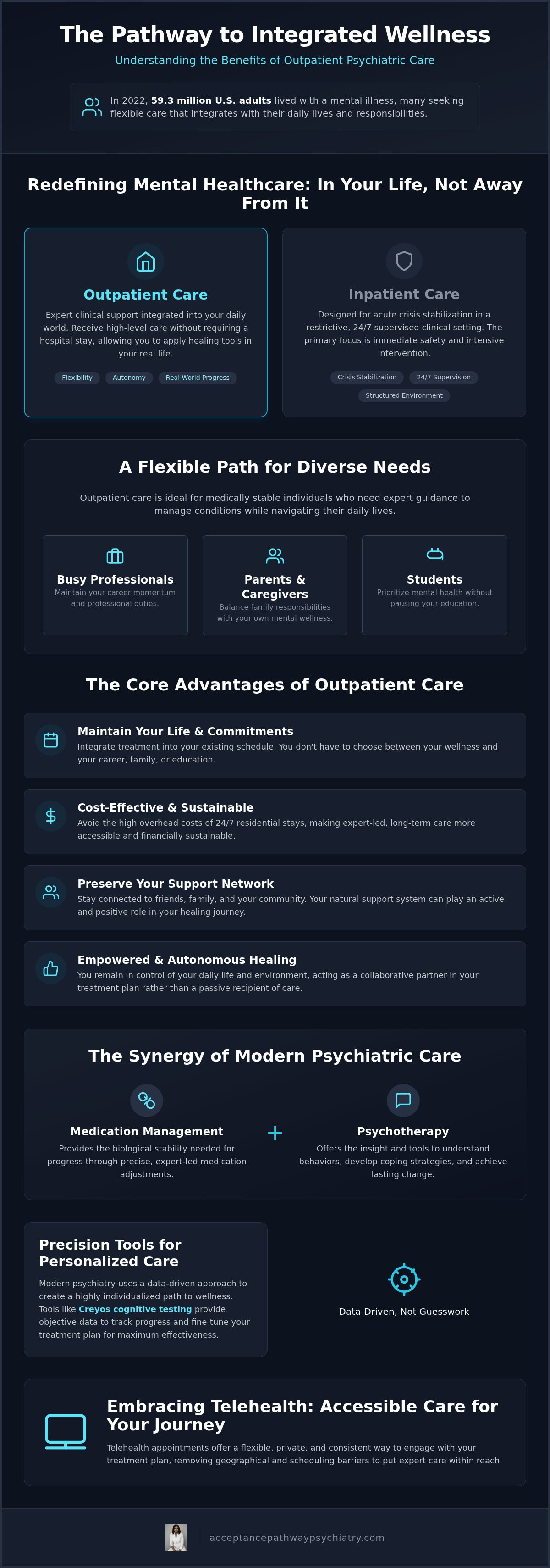
Outpatient psychiatric care provides professional mental health services without the requirement of a hospital stay. It is an ideal solution for individuals across the US who are medically stable but need expert clinical guidance to manage conditions like depression, anxiety, ADHD, or PTSD. One of the primary benefits of outpatient psychiatric care is that it allows you to remain in your familiar environment while receiving high-level support. This approach addresses the common fear of being "institutionalized" or losing autonomy, offering instead a partnership that values your independence and personal evolution. By choosing this path, you work with a provider like Acceptance Pathway Psychiatry PLLC to create a plan that respects your unique journey.
This level of care serves as a vital resource for those who need more than occasional support but don't require the restrictive supervision of a clinical ward. While inpatient services focus on crisis stabilization, outpatient care is centered on long-term progress and real-world application. It's a fit for the busy professional, the dedicated parent, or the student who wants to prioritize their mental health without pausing their life. By working with a compassionate expert, you can develop a sustainable plan that addresses your needs while you maintain your community connections and daily routines.
To better understand the different levels of support available, watch this helpful video:
The Spectrum of Outpatient Support
Mental health care is not a one-size-fits-all experience. Standard outpatient care typically involves regular appointments for medication management and psychotherapy, often scheduled on a weekly or monthly basis. This level of care is designed for those who can navigate their daily responsibilities but need professional support to maintain stability. For individuals in transitional periods who require more frequent check-ins, Intensive Outpatient Programs (IOP) provide a higher level of structure and frequency. Determining which level of care matches your current internal experience is a collaborative process between you and your provider.
Recognizing the Signs You Might Benefit from a Psychiatrist
You might consider the benefits of outpatient psychiatric care if persistent symptoms begin to disrupt your work, school, or relationships. While many people start with traditional counseling, a psychiatrist offers a deeper diagnostic evaluation to identify biological factors that may be influencing your health. If you feel like you're "just getting by" or if talk therapy alone hasn't provided the stability you need, professional psychiatric guidance can offer the integrative tools necessary for progress. Common signs include feeling stuck in your current treatment, needing precise medication adjustments, or wanting a data-driven approach to your mental wellness.
The Primary Benefits of Outpatient Psychiatric Care
Choosing to prioritize your mental health is a significant step toward personal evolution, and understanding the benefits of outpatient psychiatric care can help you move forward with confidence. One of the most immediate advantages is the ability to maintain your professional and family commitments. You don't have to choose between your career and your wellness; instead, you can integrate healing into your existing schedule. This flexibility is vital for the 59.3 million U.S. adults who lived with a mental illness in 2022, many of whom navigate high-pressure responsibilities while seeking a path toward wholeness.
Beyond scheduling, outpatient care offers several practical and emotional advantages that support long-term stability:
- Cost-Effectiveness: By avoiding the high overhead costs of 24/7 residential or hospital stays, outpatient services make high-quality, expert-led care more sustainable over time.
- Preserving Support Networks: You remain connected to your family, friends, and community, allowing your natural support system to play an active role in your recovery.
- Empowered Agency: You retain full control over your daily environment and decisions, which fosters a sense of autonomy and self-reliance throughout the treatment process.
Healing in Your Own Environment
Recovery is most effective when it happens within the context of your real life. One of the core benefits of outpatient psychiatric care is the opportunity to practice new coping skills in your actual environment immediately. When you learn a strategy to manage anxiety or improve focus, you can apply it to your specific stressors that same day. Sleeping in your own bed and maintaining a familiar routine provides a sense of grounding that is difficult to replicate in a clinical ward. This "healing in place" approach ensures that the progress you make is deeply rooted in your daily experience, leading to more sustainable outcomes.
A Collaborative Partnership for Progress
In an outpatient setting, the relationship between you and your provider is a mutual partnership. You aren't just a patient receiving a diagnosis; you are an active participant in your own growth. We view our role as a supportive witness to your journey, providing the clinical expertise you need to find clarity and wholeness. If you are ready to begin this process, exploring the integrative options at Acceptance Pathway Psychiatry PLLC can help you build a foundation for lasting change. This collaborative approach empowers you to take ownership of your mental health, transforming the treatment process into a shared path toward wellness.
Integrating Medication Management and Psychotherapy
Many individuals view mental health treatment as a choice between a prescription and a conversation. However, the most effective path to wellness often involves a "both/and" approach rather than "either/or." When we integrate clinical medication management with individual psychotherapy, we create a comprehensive foundation for healing. Medication often provides the biological stability needed to quiet the noise of symptoms, which then allows you to engage more deeply and effectively in the therapeutic process. This dual approach is one of the primary benefits of outpatient psychiatric care, ensuring that both your brain chemistry and your emotional patterns receive the specific attention they deserve.
By combining these modalities, we address the person as a whole. While one aspect focuses on the physiological needs of the brain, the other addresses the psychological and behavioral patterns that shape your daily life. This synergy reduces the time spent in the "trial and error" phase and moves you more quickly toward a state of balance and clarity.
Finding Balance Through Psychiatric Medication Management
Finding the right biological support is a deeply personal and collaborative effort. A psychiatrist acts as a compassionate guide to help identify which medications might best support your unique brain. For many, consistent psychiatric medication management is the cornerstone of managing complex conditions like Bipolar disorder, PTSD, or chronic anxiety. We move away from the frustration of old-fashioned trial and error toward a goal of clinical precision. This involves active listening, where your concerns about side effects or daily function are prioritized. A medication follow-up is about much more than a refill; it's a dedicated time to assess your internal experience and adjust the plan to match your personal evolution.
The Role of Psychotherapy in Outpatient Care
While medication addresses the biological foundations, psychotherapy focuses on the lived experience of your life. It provides a safe, non-judgmental space to explore the root causes of distress and develop a practical toolkit of cognitive and behavioral strategies. In an outpatient setting, the benefits of outpatient psychiatric care become clear as you immediately test these strategies in your real-world environment. Therapy acts as a supportive witness, helping you process the internal experience of change as you move toward wholeness. Whether you're managing the focus challenges of ADHD or navigating the weight of depression, having a professional ally to guide your growth ensures your progress is both steady and sustainable.
Advanced Tools: Cognitive Testing and Integrative Wellness
Modern mental health care has evolved to include sophisticated diagnostic tools that were once only available in research settings. One of the most impactful benefits of outpatient psychiatric care is the ability to move beyond subjective symptom checklists and utilize objective data to guide your treatment. By incorporating Creyos cognitive testing, we can assess your brain's performance in real-time, providing a clear picture of how your internal experience aligns with clinical observations. This data-driven approach removes much of the uncertainty from the diagnostic process, ensuring that your path toward wholeness is built on a foundation of scientific clarity.
These advanced assessments allow for a level of personalization that traditional psychiatry often lacks. When we understand exactly how your brain processes information, manages focus, or responds to stress, we can tailor interventions with much greater precision. This scientific bridge between clinical science and holistic health ensures that every aspect of your care is intentional, measurable, and focused on your specific cognitive profile.
Precision Diagnosis with ADHD Testing
For many adults, the struggle with focus, memory, or executive function has often been dismissed or misdiagnosed. We believe that ADHD testing is a cornerstone of a modern outpatient plan because it replaces clinical "guessing" with validated cognitive assessments. By using objective performance data, we can differentiate between ADHD and other conditions with similar symptoms, such as anxiety or sleep deprivation. This level of precision is vital for creating an effective medication management strategy and developing behavioral tools that actually work for your specific brain structure.
A Holistic Approach to Mental Wholeness
True healing requires looking at the person as a whole, rather than just a collection of symptoms. The benefits of outpatient psychiatric care at a modern practice include access to integrative wellness services that consider the vital connection between your mind and body. We explore how lifestyle factors like nutrition, sleep hygiene, and physical activity influence your mental stability and overall mood. By creating a wellness plan that feels authentic to your personal values, we address the root causes of distress rather than just masking them. If you are ready to experience a more comprehensive and data-driven approach to your health, you can learn more about the services offered at Acceptance Pathway Psychiatry PLLC. This holistic perspective ensures that your journey toward wellness is both deeply personal and clinically sound.
Embracing Telehealth: Accessible Care for Your Journey
Telehealth has fundamentally redefined accessibility in modern mental health. It removes the physical friction of travel and the social anxiety that sometimes accompanies sitting in a public waiting room. For the 33.7% of young adults living with a mental illness, or the busy professionals balancing career and family in countless communities, this convenience is life-changing. Currently, telehealth accounts for two-thirds of behavioral health visits, proving it's a permanent and trusted fixture in modern care. One of the primary benefits of outpatient psychiatric care today is the ability to maintain your healing journey wherever you feel most secure.
The landscape of mental health is shifting toward more flexible models. Recent policy updates have extended telehealth rules through December 31, 2027, ensuring that patients can continue receiving care in their homes. This stability allows you to focus on your progress without worrying about changing regulations. It reinforces the idea that your wellness should fit into your life, not the other way around. Virtual appointments also ensure continuity of care. Life often involves travel, work trips, or family emergencies that can disrupt a traditional treatment schedule. With telehealth, your support system travels with you. This consistency is essential for long-term progress, as it prevents the stop-and-start pattern that can hinder recovery.
What to Expect in a Virtual Psychiatric Evaluation
Virtual care is just as effective as in-person visits for most psychiatric needs, including medication management and psychotherapy. It provides a unique level of privacy that traditional offices sometimes lack, allowing you to discuss sensitive topics from the comfort of your own home. Preparing your space is simple; you only need a quiet, private area and a stable internet connection. Trust is built through a collaborative, expert approach where the provider acts as a supportive witness to your experience. We ensure that the digital connection never diminishes the human connection required for genuine healing. This modern approach allows us to focus entirely on your internal experience without the distractions of a clinical office environment.
Starting Your Pathway to Acceptance
Reaching out is a profound sign of strength and the first step toward reclaiming your wellness. It marks the moment you decide to prioritize your personal evolution over the weight of your symptoms. A comprehensive psychiatric evaluation serves as the foundation for your journey, helping us understand your unique biology and history. Whether you are managing ADHD, Bipolar disorder, or PTSD, this first step is vital for creating a sustainable path to wholeness. If you are ready to begin, you can schedule your consultation today with Acceptance Pathway Psychiatry PLLC. We are here to support your growth and provide the clinical expertise you need to thrive.
Your Path Toward Lasting Wholeness
Embracing mental wellness shouldn't mean pausing your life. The benefits of outpatient psychiatric care lie in the ability to blend high-level clinical expertise with the comfort of your own environment. By utilizing precision tools like Creyos cognitive testing and integrating medication management with compassionate psychotherapy, you can address the biological and emotional aspects of your health simultaneously. This collaborative approach ensures that your treatment plan is as unique as your own story. Whether you prefer the convenience of telehealth or the connection of in-person visits, professional support is more accessible than ever. You don't have to navigate these challenges alone; a supportive ally can help you find the stability and clarity you deserve.
Begin your journey toward mental wholeness with Acceptance Pathway Psychiatry PLLC
Your personal evolution is possible. Taking this first step is a profound act of self-compassion that sets the stage for a healthier, more balanced future.
Frequently Asked Questions
Is outpatient psychiatric care as effective as inpatient treatment?
Outpatient care is highly effective for individuals who are medically stable and don't require 24-hour supervision. While inpatient care focuses on crisis stabilization, one of the primary benefits of outpatient psychiatric care is the ability to sustain progress in your actual environment. It allows you to apply therapeutic tools to real-world stressors immediately. This creates a foundation for long-term healing that hospital stays often cannot replicate.
How often will I need to see my psychiatrist in an outpatient setting?
The frequency of your visits depends on your unique needs and where you are in your journey. You might meet more often during the initial evaluation and stabilization phase to ensure your treatment plan is working well. Once you achieve a sense of balance, follow-up visits for medication management or psychotherapy may shift to monthly or quarterly check-ins. Your provider acts as a collaborative partner to determine a schedule that supports your personal evolution.
Can I work full-time while receiving outpatient mental health care?
Yes, maintaining your professional and personal responsibilities is one of the core benefits of outpatient psychiatric care. Outpatient programs are designed with flexibility in mind, offering appointments that fit into your existing schedule. This allows you to prioritize your mental wellness without the stress of taking an extended leave from work. Staying connected to your career and routine often provides a helpful sense of grounding during the healing process.
What is the difference between an outpatient psychiatrist and a therapist?
A psychiatrist is a medical doctor who specializes in the biological aspects of mental health, including diagnosis and medication management. A therapist focuses on talk therapy and behavioral strategies to address emotional distress. Our approach integrates both modalities, ensuring you receive clinical expertise for your brain chemistry alongside compassionate support for your psychological experiences. This combination is essential for achieving a sense of lasting wholeness.
Does outpatient care include medication management for anxiety and depression?
Medication management is a central component of outpatient psychiatric services for conditions like anxiety, depression, and PTSD. A psychiatrist works with you to identify the right biological support to quiet your symptoms and provide stability. This process involves careful monitoring and adjustments based on your feedback. By focusing on precision rather than trial and error, we help you find the balance needed to engage more fully in your daily life.
Is Creyos cognitive testing covered in standard outpatient visits?
Creyos cognitive testing is an advanced diagnostic tool we use to provide objective data on your brain's functioning. It's typically scheduled as part of a comprehensive evaluation or when a more precise look at cognitive challenges like ADHD is needed. While it's an integrative wellness service, it provides data-driven insights that go beyond a standard talk session. We use these results to tailor your treatment plan with a high level of clinical accuracy.
How do I know if I'm a good candidate for telehealth psychiatry?
Most people who are medically stable and have a private space for sessions are excellent candidates for telehealth. It's particularly helpful for busy professionals or those who find commutes and waiting rooms stressful. If you have a stable internet connection and feel comfortable discussing your internal experience through a screen, virtual care offers the same clinical quality as in-person visits. It provides a convenient and private way to maintain consistency in your care.
What happens if my condition requires more intensive support than outpatient care?
If your needs exceed standard outpatient support, we work with you to find the appropriate level of care. This might involve a referral to an Intensive Outpatient Program or a specialized facility for stabilization. While we don't offer 24/7 emergency crisis intervention or inpatient residential treatment, we act as a supportive witness and guide. Our goal is to ensure you are safely transitioned to the resources that match your current internal experience.


