

Medication management for depression is not a one-time decision. It can involve reviewing symptoms, treatment history, preferences, and how you respond over time. You may have questions about whether medication is right for you, what side effects could feel like, or what happens if your needs change.
Those questions belong in the conversation. Depression care is personal, and medication is one possible part of an individualized plan. You do not need to arrive with every answer or decide before you are ready. Sharing what you are experiencing and what matters to you helps your clinician discuss options and next steps with you.
This guide explains how clinician-guided medication care may work, what to bring up when discussing treatment, and how follow-up conversations can support informed decisions. You will also find practical ways to track symptoms, side effects, and day-to-day changes so you can describe what you notice during appointments.
Key Takeaways
- Medication management for depression is an ongoing, clinician-guided process that considers your symptoms, priorities, and treatment experience.
- Your health history, current medicines, and daily life can help inform a discussion about medication options.
- Noting changes in symptoms, functioning, and side effects can make follow-up conversations more useful.
- A short list of concerns, treatment history, goals, and questions can help you prepare for an appointment.
- Acceptance Pathway Psychiatry offers medication management and psychotherapy as part of individualized mental health care.
What Does Medication Management for Depression Involve?
Medication management for depression is an ongoing, clinician-guided process of evaluating symptoms, discussing treatment choices, and following up to understand how a plan is working. It involves more than receiving a prescription. You and your clinician can review how depression affects daily life, what matters to you, and any benefits or concerns that arise during care.
There is no single formula for choosing or reviewing treatment. A clinician considers your health and treatment history, current medicines, preferences, and clinical needs. You can raise questions or uncertainty as part of the discussion. You do not have to be sure medication is right for you before exploring options.
For a video overview of depression medications, watch this educational resource from Level Up RN:
What happens during ongoing medication management?
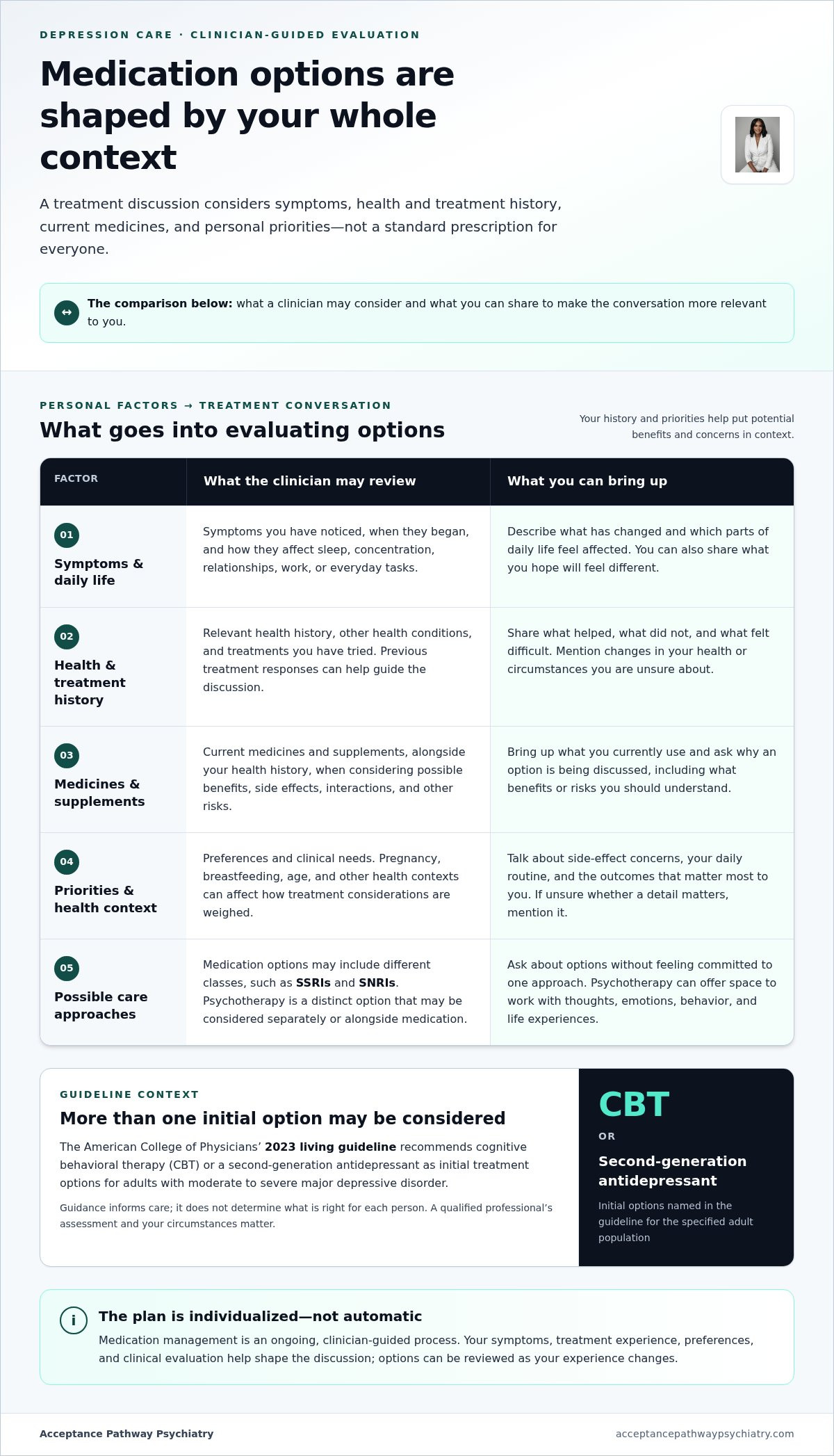
At an appointment, a clinician may ask about your symptoms, when you first noticed them, and how they affect sleep, work, relationships, or everyday tasks. They will also review relevant health history, current medicines, previous treatment experiences, and your goals. These details help put potential options and concerns in the context of your life.
Follow-up appointments give you and your clinician time to review what has changed since your last conversation. You might describe shifts in mood or routine, whether a concern is interfering with daily life, and what you hope will feel different. The clinician can consider your experience alongside the treatment plan and discuss appropriate next steps. Timing and response differ from person to person, so decisions are based on your situation rather than a universal schedule.
Can medication management be part of broader depression care?
Yes. Medication and psychotherapy are distinct options that may be considered separately or together, depending on your needs, preferences, and clinical evaluation. Medication management focuses on evaluating and reviewing medication as part of care. Psychotherapy offers a space to work with thoughts, emotions, behavior, and life experiences. Discussing these options does not commit you to a particular approach.
Depression care can include different treatment approaches, as outlined in Management of depression. At Acceptance Pathway Psychiatry, medication management and psychotherapy are offered as part of broader mental health care. For more on the clinician-guided process and questions that can support it, explore this compassionate guide to psychiatric medication management.
How a Clinician Evaluates Depression Medication Options
A medication discussion starts with understanding your experience, not matching you to a standard prescription. A clinician may ask which symptoms you have noticed, how long they have been present, and how they affect sleep, concentration, relationships, work, or other parts of daily life. They will also discuss your health history and any treatments you have tried, including what helped, what did not, and what felt difficult.
The same medication plan may not fit every person because health history, symptoms, treatment experience, and personal priorities differ. A diagnosis and treatment plan require assessment by a qualified professional. The discussion helps your clinician understand your circumstances and consider possible benefits, side effects, interactions, and other risks before reviewing options with you.
Which personal factors may shape a treatment discussion?
Previous responses to treatment can help guide the conversation, as can other health conditions and medicines or supplements you use. Your priorities matter, too. You might want to discuss concerns about side effects, your daily routine, or the outcomes that feel most meaningful to you. Sharing these details makes the discussion more relevant, but a list of factors cannot replace a full clinical evaluation.
Pregnancy, breastfeeding, age, and other health contexts can affect how a clinician weighs treatment considerations. Mention these circumstances and any changes in your health so the clinician can discuss options in context. If you are unsure whether a detail matters, bring it up. Questions about antidepressant selection and potential concerns are also covered by Mayo Clinic’s antidepressant overview.
Antidepressants include different classes, such as selective serotonin reuptake inhibitors (SSRIs) and serotonin-norepinephrine reuptake inhibitors (SNRIs). These are examples of options a clinician may consider, not recommendations for any one person. The choice depends on an individual assessment, including your history, current health, other medicines, and preferences. You can ask why an option is being discussed and what benefits or risks you should understand.
How do medication and psychotherapy fit into treatment choices?
Medication is not the only path to care. Psychotherapy is a distinct treatment option, and a clinician may discuss it alone or alongside medication depending on your symptoms, circumstances, and preferences. The American College of Physicians’ 2023 living guideline recommends cognitive behavioral therapy (CBT) or a second-generation antidepressant as initial treatment options for adults with moderate to severe major depressive disorder. That guidance informs care, but it does not determine what is right for each person.
Collaborative medication management for depression means you can weigh options with a clinician rather than feel pushed toward a particular choice. To explore a clinician-guided discussion, learn about Acceptance Pathway Psychiatry’s medication management care.
How to Discuss Depression Medication Response and Side Effects
Medication response is assessed over time, and the pace and degree of change differ from person to person. A follow-up conversation can cover possible benefits, unwanted effects, and changes in symptoms or daily functioning. You do not need to decide on your own what those changes mean. Your observations help the prescribing clinician understand your experience and discuss next steps with you.
Benefits and adverse effects are separate parts of that conversation. You might notice a positive change in one area while still having a concern in another, or you may be unsure what you are experiencing. Report what you notice, even if it feels small or difficult to describe. Your clinician can review it in context rather than expecting you to identify the cause yourself.
What information can help a follow-up conversation?
A few brief notes can make it easier to describe patterns. Record changes in your own words, including when you noticed them and how they affect everyday life. For example, note whether sleep, energy, concentration, or routines feel different. You do not have to decide whether medication caused the change.
- Write down shifts in symptoms and when you first noticed them.
- Describe effects on sleep, energy, focus, relationships, or daily tasks.
- Note medication-taking concerns, possible side effects, or missed doses.
- Bring questions about other medicines, possible interactions, or new health changes.
Your notes do not need to be detailed or perfectly organized. A few words on your phone or paper can help you remember what you wanted to discuss. The goal is to give the clinician a clearer picture, not to diagnose a side effect or prove that a treatment is or is not working.
What if side effects or symptoms feel difficult to manage?
Tell your prescribing clinician if side effects are distressing, symptoms are getting worse, or taking the medication feels difficult. Your concerns deserve a respectful conversation. The clinician can consider what you report alongside your health history and treatment needs, then discuss possible options. If you are unsure how soon to raise a concern, explain what is happening and ask for guidance.
Do not change your dose or stop medication on your own; discuss any medication change with your prescribing clinician. This gives the clinician a chance to consider your circumstances and guide the next step. If you have already missed doses or made a change, share that openly. The information can help inform the conversation.
If you are in the United States and face immediate danger or thoughts of self-harm, call or text 988 for crisis support. If there is immediate danger, call 911. These resources are separate from routine follow-up care.
Consistent, open check-ins are a practical part of medication management for depression. Your observations do not need to be conclusive to matter. Sharing what has changed, what feels manageable, and what worries you can make each follow-up a more informed discussion.
How to Prepare for a Depression Medication Management Appointment
A little preparation can help you use appointment time for what matters most. You do not need a complete record or a polished explanation. A few notes can help you remember changes, describe concerns, and ask questions, especially if it is hard to gather your thoughts during the conversation.
Try this simple sequence:
- Start with what feels most important. Write down your main concern, goal, or worry about treatment.
- Gather relevant history. Note past or current depression treatment and any health changes you think the clinician should know about.
- List medicines and supplements. Include what you take and any medication-taking concerns, such as missed doses or questions about combining treatments.
- Choose a few questions. Prioritize what you most want to understand in case you cannot cover everything in one visit.
This is not a test. If you arrive with only one question or no written notes, you can still explain what is going on. In-person and virtual appointments both provide an opportunity to raise questions and discuss your care. Useful preparation is simply whatever helps you feel more able to share your experience.
What information should you bring to the conversation?
Consider bringing a current list of medicines and supplements, along with relevant health and treatment history. You might also note recent changes in mood, sleep, energy, concentration, or daily activities. Use language that feels natural rather than trying to find clinical terms: “I’m having trouble getting started in the morning” or “I lose focus during routine tasks.”
Include concerns about possible side effects, treatment preferences, and what progress would mean to you personally. For one person, progress might mean returning to a daily routine; for another, it may mean feeling more able to connect with others. Your priorities help make the discussion specific to your life. Notes can be brief, informal, and incomplete. They are a prompt, not a substitute for the conversation.
Which questions can make the plan clearer?
Questions can help you understand what the clinician is considering and how you will keep communicating. Choose the ones that address your main concerns, or add your own:
- What changes or concerns should we monitor, and when should we plan to follow up?
- How should I share new concerns between appointments, and what should I do if symptoms worsen?
- What should I do if I miss a dose or have questions about another medicine?
- How might medication decisions relate to psychotherapy or other parts of my care plan?
- What should I expect as we review whether the plan fits my needs?
You do not need to leave with every answer. The goal of medication management for depression is an informed, ongoing discussion shaped by your experience and clinical assessment. If you are ready to talk through your concerns and goals with a clinician, explore medication management care at Acceptance Pathway Psychiatry.
Medication Management at Acceptance Pathway Psychiatry
Acceptance Pathway Psychiatry PLLC provides medication management for depression as part of its mental health care. The process supports a thoughtful conversation about your needs and treatment rather than assuming one approach suits everyone. Bring questions, describe what you hope to address, and share concerns that may affect your comfort with treatment.
Care may also include psychotherapy. Medication management and psychotherapy are distinct services that can be considered in light of your circumstances and preferences. You do not need to arrive knowing which option is right for you. A conversation with a clinician can help you explore what you are experiencing and discuss possible directions for care.
A collaborative approach to medication management
Good treatment conversations make room for your perspective. Talk about personal goals, preferences, past experiences, or worries about side effects and other concerns. These details provide context for clinical discussion. You do not need to have a complete explanation or a specific treatment request.
Medication care is ongoing, so what you notice over time can inform future conversations. Acceptance Pathway Psychiatry provides individualized psychiatric care, with treatment decisions discussed in relation to your circumstances. Your questions and feedback remain valuable as care is considered and reviewed.
Taking a next step toward care
Acceptance Pathway Psychiatry offers in-person and virtual appointments. Both formats provide a way to discuss mental health care, including medication management and psychotherapy. Virtual appointments offer another way to meet with a clinician, with care guided by applicable eligibility and clinician requirements.
If cost or coverage is on your mind, the practice offers assistance with insurance and payment options. Bring questions about payment alongside questions about your care so both are part of the conversation.
Taking a next step does not mean you have committed to medication. It can simply mean exploring whether clinician-guided support fits your needs and learning more about the care available to you. Explore medication management support with Acceptance Pathway Psychiatry.
Take a Thoughtful Next Step at Your Own Pace
You do not have to know exactly what kind of care you want before starting a conversation. You can begin with a question, a concern, or simply a sense that you would like support. Exploring medication management for depression can help you understand options that may fit your needs without requiring you to commit to a particular path before you are ready.
At Acceptance Pathway Psychiatry, medication management and psychotherapy are available as part of mental health care. In-person and virtual appointments offer different ways to access that care. A conversation can be a place to share what matters to you and consider possible next steps with a clinician.
If you feel ready to explore care, learn about medication management support. Moving forward can start with one honest conversation, at a pace that feels right for you.
Frequently Asked Questions
How does medication management for depression work?
Medication management for depression involves clinical assessment, shared treatment decisions, and ongoing review with a clinician. At a visit, you might discuss a change in mood, a new health condition, or difficulty following a routine, then consider whether it affects the care plan. The clinician helps weigh relevant information and explain options. You can ask for clarification or more time to consider a decision.
How long does it take for depression medication to work?
The timeline varies by medication and person, so there is no timeframe that applies to everyone. You may not notice the changes you hope for right away, and early experiences can differ from later ones. Ask the prescribing clinician what changes to watch for and when to review them. If you are concerned that nothing is changing, share that rather than changing the dose yourself.
Can I stop taking depression medication when I feel better?
Talk with your prescribing clinician before stopping, even if you are feeling better. Improvement is useful information, but it does not by itself establish whether stopping is appropriate or how to do it safely. Your clinician can review your history, current wellbeing, and treatment goals with you, then discuss a plan if a change is being considered. If you have already stopped or missed doses, explain what happened so they can advise you.
What should I do if depression medication causes side effects?
Tell your prescribing clinician about side effects, including when they began, how often they happen, and whether they disrupt sleep, work, or daily activities. You do not need to identify the cause yourself. The clinician can review your experience and discuss options based on your circumstances. Do not stop or change the dose without guidance. If symptoms feel severe or you are in immediate danger, seek urgent help.
Is medication management for depression the same as therapy?
No. Medication management involves clinical conversations about medication, its effects, and care decisions. Psychotherapy is a separate treatment in which you work with a therapist on emotional, behavioral, or life concerns. A person may consider one approach or both, depending on their needs and preferences. For example, you might want to discuss therapy as an option even if you are uncertain about medication.
Can depression medication be managed through telehealth?
Yes, medication care may be discussed through telehealth when appropriate. Acceptance Pathway Psychiatry offers virtual as well as in-person appointments. Whether a virtual appointment is suitable can depend on your needs and applicable clinician licensure or other requirements. You can use an appointment to raise questions, describe changes, and discuss care. Telehealth is not a substitute for emergency help when immediate safety is at risk.
What if I have thoughts of suicide while receiving depression treatment?
If you are in the United States and having thoughts of suicide, call or text 988 for immediate crisis support. If you or someone else is in immediate danger, call 911 or go to an emergency department. If possible, tell a trusted person what is happening and ask them to stay with you while you seek help. You deserve support, and you do not have to manage this alone.


