

Finding an attentive, available psychiatrist within an insurance directory often feels nearly impossible. Between outdated provider lists, months-long waiting periods, and rushed visits, the search itself can quickly become exhausting when you're already carrying the weight of mental health symptoms. You shouldn't have to compromise on specialized, unhurried support just to stay in-network. In reality, using out-of-network benefits for psychiatry offers a clear, empowering bridge to the personalized care you deserve.
Insurance terminology like deductibles, coinsurance, and superbills often creates understandable dread, especially when you fear surprise medical bills or claim rejections. The administrative process, however, is far more manageable than it looks. This guide will show you how to navigate your policy with confidence so you can partner with the provider who best fits your clinical needs. We'll walk through verifying your mental health coverage, collecting itemized superbills, and submitting your claims step-by-step to help you secure meaningful reimbursement while prioritizing your well-being.
Key Takeaways
- Understand how using out-of-network benefits for psychiatry allows you to access specialized clinical care while recovering a significant portion of session costs.
- Learn the exact questions to ask your insurance representative so you can verify deductibles, coinsurance rates, and allowable amounts before your first appointment.
- Discover the essential billing codes and clinical details required on a psychiatric superbill to ensure seamless claim submission and avoid costly delays.
- Explore how unhurried evaluations and individualized treatment plans free from insurance constraints create superior long-term clinical outcomes.
- Leverage practical financial tools like Health Savings Accounts (HSAs) and Flexible Spending Accounts (FSAs) to cover upfront costs with pre-tax dollars.
Demystifying Out-of-Network Psychiatric Benefits: How Reimbursement Works
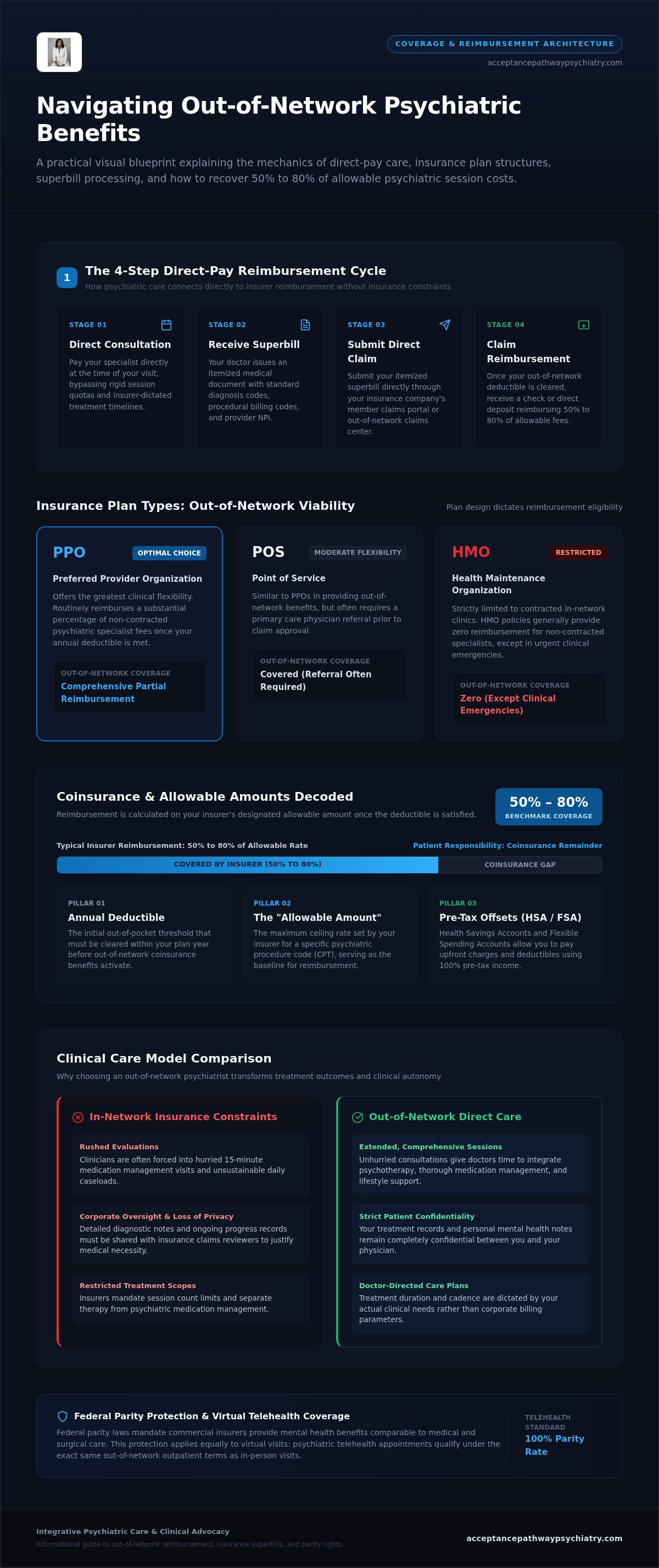
Choosing an out-of-network provider means selecting a clinician who doesn't maintain a direct billing contract with your health insurance company. In this direct-pay framework, you pay the specialist directly at the time of your visit and then request partial reimbursement from your insurer. Understanding these fundamental health insurance basics helps demystify the entire administrative cycle, transforming what feels like an obstacle into an accessible pathway to private clinical support.
To better understand how these claims function in everyday practice, watch this helpful video walkthrough:
When using out-of-network benefits for psychiatry, your insurer doesn't dictate your clinical timeline. Instead of being restricted to arbitrary session limits or hurried 15-minute medication reviews, you receive comprehensive, unhurried care. Your doctor provides an itemized medical document called a superbill, which you submit directly to your payer to receive reimbursement sent back to you.
The Mechanics of Out-of-Network Mental Health Coverage
Your ability to claim these expenses depends heavily on your plan structure:
- PPO (Preferred Provider Organization): These plans offer the greatest flexibility, routinely reimbursing a percentage of non-contracted specialist fees once your deductible is met.
- POS (Point of Service): Similar to PPOs, POS plans allow out-of-network access, though they often require a referral from a primary physician.
- HMO (Health Maintenance Organization): Generally, HMOs provide zero reimbursement outside their contracted network, except in urgent clinical emergencies.
Before reimbursement kicks in, you must satisfy your annual out-of-network deductible. Once cleared, your plan's coinsurance applies. Insurers calculate reimbursement based on what they determine to be the "allowable amount" for a specific billing code, typically covering 50% to 80% of that benchmark figure.
In-Network vs. Out-of-Network: Understanding the Differences
Many psychiatric specialists deliberately practice outside insurance networks to protect patient privacy and clinical quality. In-network claims require providers to share detailed diagnostic notes and progress documentation with corporate reviewers to justify continuing care. By contrast, using out-of-network benefits for psychiatry keeps your clinical record strictly between you and your provider.
This autonomy allows clinicians to spend extended time during diagnostic evaluations and follow-up consultations. Rather than managing unsustainable caseloads, an out-of-network provider can integrate medication management, psychotherapy, and lifestyle support into a single, cohesive treatment plan.
How to Verify Your Out-of-Network Mental Health Coverage: A Step-by-Step Guide
Calling an insurance company can feel daunting, but gathering clear information ahead of time makes the conversation straightforward. Before dialing the member services number on the back of your card, have a notebook ready alongside your member ID and date of birth. Knowing what to ask protects you from unexpected expenses and gives you total transparency before scheduling an evaluation.
Federal parity regulations require most commercial insurers to provide behavioral healthcare benefits comparable to medical and surgical coverage. This framework extends to virtual visits as well, ensuring that psychiatric telehealth appointments are treated with the same standards as in-person care. If you are exploring integrative psychiatric care through virtual visits, your remote appointments generally qualify under the same out-of-network outpatient mental health terms.
Essential Questions to Ask Your Insurance Representative
To avoid vague answers, use this structured call script during your conversation:
- "Does my policy include out-of-network mental health benefits for outpatient office or telehealth visits?"
- "What is my individual out-of-network deductible, and how much has been satisfied so far this plan year?"
- "What percentage of the allowed amount is reimbursed once my deductible is met?"
- "Do I need pre-authorization or a referral from a primary care provider before starting treatment?"
- "What is the timely filing limit for submitting a claim after my date of service?"
Always write down the representative's name, the date, and a reference number for the call. Having this paper trail ensures you hold the payer accountable if a claim is processed incorrectly later.
Decoding Deductibles, Coinsurance, and Allowable Amounts
When using out-of-network benefits for psychiatry, reimbursement rates are based on your insurer's established "allowable amount" rather than the clinician's total fee. Insurers determine this customary rate based on regional geographic data and standard billing codes. For instance, if an insurer caps the allowable amount for a consultation code below your provider's fee, their coinsurance percentage applies strictly to that lower ceiling.
Your annual out-of-pocket maximum provides a vital financial safeguard. Once your total deductible and coinsurance contributions reach this threshold within a calendar year, your health plan covers 100% of the allowable amount for remaining eligible services. Successfully using out-of-network benefits for psychiatry relies on understanding these exact caps so you can budget your wellness journey with complete confidence.
Submitting a Psychiatric Superbill: Step-by-Step Process for Faster Payouts
A medical superbill serves as an itemized receipt tailored specifically for insurance processing. Unlike a simple credit card slip, it bridges the administrative divide between your private psychiatric visits and your insurance company's claims department. For successful claim processing, a valid superbill must clearly document the provider's National Provider Identifier (NPI), Tax Identification Number (TIN), office address, exact dates of service, and clear fee breakdowns.
When using out-of-network benefits for psychiatry, keeping organized digital records is essential. Save PDF copies of every clinical statement alongside your proof of payment in a dedicated folder. Submitting clean, complete documentation significantly reduces administrative friction and protects you against unnecessary processing stalls.
Anatomy of a Superbill: Codes You Need to Recognize
Every psychiatric claim relies on two standardized coding systems to communicate medical necessity:
- ICD-10 Diagnostic Codes: Alphanumeric designations (such as F32.1 for major depressive disorder or F41.1 for generalized anxiety disorder) that validate the clinical necessity of your care.
- Evaluation CPT Codes: Procedure codes like 99204 or 99205, reflecting comprehensive initial psychiatric evaluations based on clinical complexity and duration.
- Management and Therapy Add-Ons: Established follow-ups generally use 99213 or 99214 for medical management, frequently paired with add-on psychotherapy codes like +90833 (30 minutes) or +90836 (45 minutes).
Submitting Your Claim and Tracking Your Reimbursement
Most commercial health plans let you upload claims directly through their secure member portals under "Submit an Out-of-Network Claim." If your insurer still relies on physical paperwork, mail the superbill along with a completed CMS-1500 or standard member claim form via certified mail. Specialized digital tools and mobile apps can also automate this workflow by reading your superbill and transmitting claims electronically on your behalf.
Standard insurance adjudication generally takes between two and six weeks. Once processed, your insurer will issue an Explanation of Benefits (EOB) detailing what portion went toward your deductible and release a reimbursement check or direct deposit directly to you.
How to Resolve Delayed or Denied Insurance Claims
Claim denials often stem from straightforward clerical missteps rather than coverage refusals. Common issues include transposed provider NPI numbers, missing telehealth location modifiers (such as 02 or 10), or unlinked diagnostic codes. If a claim gets rejected, call member services immediately to request an exact denial explanation code.
Working with a responsive clinical practice makes resolving these discrepancies simple. Transparent psychiatric practices promptly issue corrected documentation or updated service statements upon request. Once corrected, you can file a quick reconsideration request, ensuring that using out-of-network benefits for psychiatry remains an accessible, sustainable investment in your mental health.
Why Choosing an Out-of-Network Psychiatrist Delivers Superior Long-Term Value
Facing upfront medical costs can feel intimidating at first glance. Many people assume direct-pay psychiatric care is out of reach, yet this perspective overlooks the true long-term value of thorough clinical attention. Rushed visits and fragmented care often lead to lingering symptoms, trial-and-error prescribing, and recurrent health setbacks. By using out-of-network benefits for psychiatry, you reclaim substantial insurance reimbursement while securing the attentive, uncompromised support necessary for lasting recovery.
Investing in thoughtful psychiatric guidance reduces hidden healthcare costs down the road. Unhurried diagnostic evaluations allow clinicians to identify root causes early, preventing unnecessary prescription adjustments and hospitalizations. Quality psychiatric care is not an expense to cut; it is the cornerstone of your daily functioning and overall wellness.
Personalized Care Free from Insurance Bureaucracy
Contracted network providers face heavy structural constraints. High administrative burdens and low payer reimbursements frequently force in-network clinicians to manage bloated caseloads, reducing appointments to brief, 15-minute check-ins. These time pressures leave little room to understand your story, lifestyle stressors, or nuanced psychological symptoms.
Independent providers operate without corporate interference. Because your doctor doesn't answer to insurance adjusters, your appointments can be as long and comprehensive as your healing demands. Third-party reviewers never dictate how many visits you are allowed or require your private session notes to justify continuing treatment, keeping your mental healthcare entirely confidential.
Comprehensive Healing: Blending Therapy and Medication
True mental wellness rarely comes from a prescription pad alone. Effective healing requires combining mindful psychiatric medication management with dedicated psychotherapy. When your psychiatrist integrates both modalities within unhurried sessions, you don't have to coordinate fragmented plans between two different clinicians who rarely speak to each other.
An out-of-network model gives practitioners room to deploy specialized clinical tools that insurance-driven clinics often skip:
- Objective Cognitive Assessments: Incorporating Creyos cognitive testing helps objectively measure memory, concentration, and executive function to guide accurate diagnosis.
- Integrative Wellness Strategies: Combining medication reviews with sleep hygiene, nutrition, and nervous system regulation supports whole-person recovery.
- Collaborative Treatment Pacing: Adjusting medications gradually alongside psychotherapeutic support minimizes side effects and reduces relapse rates.
When you prioritize clinical depth over network convenience, using out-of-network benefits for psychiatry turns into an empowering choice for your health. To begin your journey toward focused, unhurried mental health support, schedule a virtual consultation today.
Maximizing Your Mental Health Investment: Practical Financial Strategies
Pairing tax-advantaged medical accounts with insurance reimbursement is one of the most effective ways to lower your out-of-pocket costs. When using out-of-network benefits for psychiatry, you don't have to fund every visit entirely with after-tax earnings. By combining pre-tax health funds with regular superbill submissions, you create a sustainable financial rhythm that protects both your budget and your mental well-being.
This dual approach works simply. You pay for your clinical visits using dedicated pre-tax dollars, then submit your itemized documentation to your insurer. When your insurer issues a reimbursement check for eligible covered amounts, those funds return directly to your personal bank account. This cycle significantly offsets your total net expenditure over time.
Leveraging HSA and FSA Pre-Tax Dollars
Health Savings Accounts (HSAs) and Flexible Spending Accounts (FSAs) let you set aside gross income before federal and state taxes are withheld. Using these accounts yields an immediate, effective discount equivalent to your personal income tax bracket. A broad range of specialized behavioral healthcare services qualifies for tax-free spending:
- Comprehensive psychiatric diagnostic evaluations and routine follow-up consultations.
- Integrated psychotherapy delivered in tandem with medical appointments.
- Advanced neurocognitive assessments, including Creyos cognitive testing.
- Prescribed psychiatric medications and related clinical laboratory orders.
To keep your records compliant with internal revenue guidelines, save both the clinical superbill and your HSA or FSA card debit receipt. If your plan administrator requests documentation to substantiate a charge, your provider's itemized statement serves as definitive proof of an eligible medical expense.
Partnering with Acceptance Pathway Psychiatry
At Acceptance Pathway Psychiatry, we believe high-quality clinical guidance should be paired with administrative clarity. Our collaborative practice provides compassionate, patient-centered psychiatric care, integrating evidence-based psychotherapy, thoughtful medication management, and holistic wellness support. We view our clinical work as a shared partnership, ensuring you always feel heard, respected, and fully supported throughout your healing journey.
Navigating the administrative side of healthcare shouldn't drain your emotional energy. Our practice provides clear, prompt, and thoroughly itemized superbills containing all necessary diagnostic and procedure codes, making using out-of-network benefits for psychiatry as effortless as possible. Through secure, nationwide virtual telehealth appointments, you can access attentive clinical support from the comfort of your home, allowing you to prioritize your wellness without compromise.
Empowering Your Path to Attentive Mental Health Care
Navigating the healthcare system shouldn't stand between you and the deep, individualized support you deserve. Choosing an out-of-network clinician allows you to move beyond crowded directories and partner with a specialist who genuinely prioritizes your recovery. By using out-of-network benefits for psychiatry, you can readily access comprehensive, unhurried care while recovering meaningful reimbursement through itemized superbills.
At Acceptance Pathway Psychiatry, we believe clinical care should always remain collaborative, transparent, and centered around your unique life experience. We offer patient-first psychiatric evaluations and tailored medication management through flexible virtual consultations available nationwide from the comfort of home. Our team supplies detailed superbills promptly after every visit so you can submit your claims with total confidence. When you're ready to take the next step toward holistic wellness, schedule your compassionate psychiatric evaluation with Acceptance Pathway Psychiatry. A steady, supportive path forward is well within reach.
Frequently Asked Questions
Can I use out-of-network benefits for virtual telehealth psychiatry appointments?
Yes, most commercial health insurance plans cover virtual psychiatric telehealth appointments under the same out-of-network terms as office visits. Parity guidelines ensure telehealth services receive comparable reimbursement rates when delivered by licensed clinicians using secure platforms. As long as your plan provides out-of-network coverage, using out-of-network benefits for psychiatry applies seamlessly to virtual appointments. Check with your insurer to confirm if specific telehealth billing modifiers are needed.
How much money will my insurance company reimburse for an out-of-network visit?
Reimbursement amounts depend on your plan's specific coinsurance percentage and its designated allowable amount for each billing code. Once you meet your annual out-of-network deductible, many PPO plans reimburse a significant portion of that allowable rate. Because allowable rates vary across regional benchmarks, the payout is calculated against what the insurer considers customary rather than your provider's full out-of-pocket fee. Your insurer's member portal can confirm your exact coinsurance breakdown.
What is the difference between a standard medical receipt and a psychiatric superbill?
A standard receipt merely confirms that a transaction occurred, while a psychiatric superbill is a comprehensive clinical document required for insurance reimbursement. Superbills detail critical medical billing information, including formal diagnostic ICD-10 codes, CPT procedure codes, provider NPI numbers, and licensing credentials. Insurance claims departments cannot process a reimbursement request from a standard payment receipt alone. Your psychiatric practice must provide this itemized medical statement to ensure valid processing.
How long do insurance companies take to process mental health superbill claims?
Insurance payers typically process out-of-network mental health claims within two to six weeks after submission. Electronic submissions through your insurer's online portal generally resolve faster than claims sent by physical mail. Once the review is complete, the carrier issues an Explanation of Benefits showing how the visit was credited toward your deductible or sending a reimbursement check directly to your home. Tracking your claim online helps ensure prompt resolution.
What happens if my insurance carrier denies my out-of-network psychiatry claim?
If your claim gets denied, don't panic; most initial rejections stem from missing administrative details like misplaced modifier codes or clerical errors. Contact member services to determine the precise denial reason code. You have a legal right to request an internal review or file a formal appeal within your plan's designated deadline. A supportive psychiatric practice can quickly reissue an updated superbill with the required documentation to overturn the decision.
Do I need a referral from a primary care physician to see an out-of-network psychiatrist?
Preferred Provider Organization (PPO) plans rarely require a primary care physician referral to see an out-of-network psychiatric specialist. However, Point of Service (POS) plans may still mandate a formal referral or prior authorization before processing reimbursement benefits. Health Maintenance Organizations (HMOs) generally restrict non-emergency care outside their network entirely. Reviewing your summary of benefits or asking a representative directly ensures you meet any pre-visit administrative requirements before scheduling care.
Can I pay for out-of-network psychiatric services using my HSA or FSA card?
Yes, Health Savings Accounts and Flexible Spending Accounts can directly cover your out-of-pocket costs for clinical visits. Qualified medical expenses include comprehensive psychiatric evaluations, medication management, psychotherapy, and specialized assessments like Creyos cognitive testing. When using out-of-network benefits for psychiatry, paying with pre-tax HSA or FSA funds provides immediate tax savings. Retain your detailed superbills and transaction receipts in case your account administrator requests documentation.


