

What if your upcoming psychiatric appointment isn't an interrogation or an exam to pass, but the start of a genuine partnership? Walking into an initial consultation can trigger intense worry. You might fear being quickly labeled, misunderstood, or pressured into taking medications without anyone truly hearing your story. Wondering how to prepare for psychiatric evaluation appointments is completely natural when you are already feeling overwhelmed by years of complex personal history.
You probably assume that you need an encyclopedic memory of every symptom and past prescription just to be taken seriously. That pressure is real, but preparation is simply a roadmap to clarify your story, not a clinical test. In this guide, you will discover exactly what documents and logs to gather, what questions clinicians actually ask, and how to advocate for a personalized, collaborative plan that respects your individual needs. We will walk through a step-by-step checklist to help you enter your evaluation feeling calm, organized, and fully in control of your care.
Key Takeaways
- Understand the core purpose of a comprehensive evaluation as an empathetic assessment designed to bring clarity, not assign permanent labels.
- Discover how to prepare for psychiatric evaluation appointments by assembling an organized record of physical health history, current medications, and past treatments.
- Learn a simple framework to map out your symptom timeline and daily triggers so you can present your experiences clearly without feeling put on the spot.
- Master practical logistical and emotional grounding steps to ensure your appointment day feels calm, whether you attend in person or connect via telehealth.
- Gain actionable strategies and thoughtful questions to help you advocate for a collaborative, whole-person treatment plan tailored to your personal goals.
What Is a Comprehensive Psychiatric Evaluation?
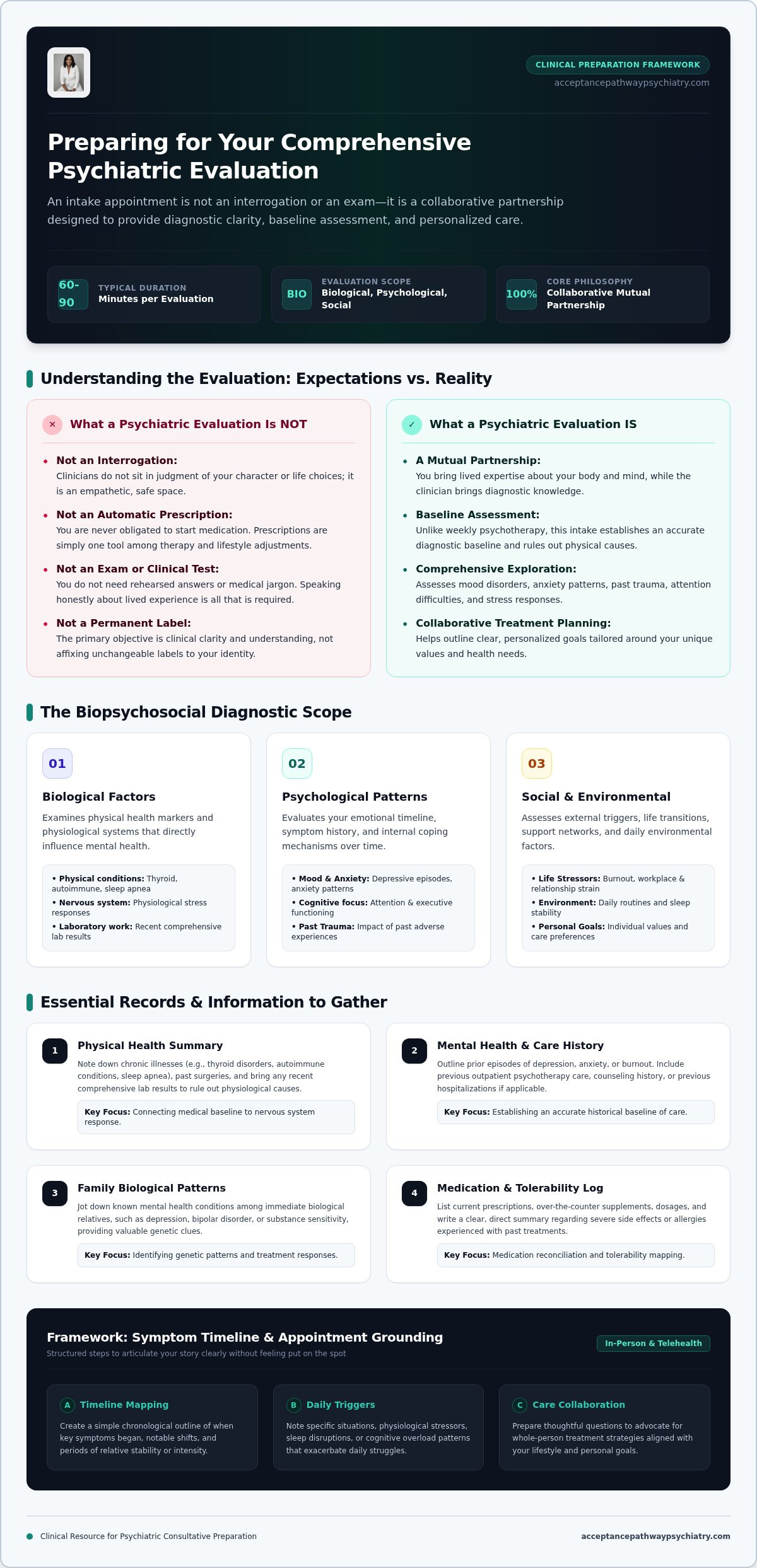
A comprehensive psychiatric assessment is a specialized diagnostic consultation designed to explore how biological, psychological, and social factors influence your mental health. Rather than reducing your experiences to a quick checklist, this evaluation provides an in-depth view of your daily life, medical history, and emotional well-being. A formal psychiatric assessment typically lasts between 60 and 90 minutes. This gives you and the clinician enough time to build an accurate picture of your symptoms without feeling rushed.
The primary aim of this initial meeting is clinical clarity, not affixing permanent labels to your identity. Knowing how to prepare for psychiatric evaluation appointments helps demystify the visit, turning what might feel like an intimidating medical appointment into a calm, focused dialogue.
To better understand what to expect and how providers structure these diagnostic meetings, watch this helpful walkthrough:
The Clinical Purpose: Diagnosis, Clarity, and Collaboration
During the consultation, providers evaluate mood disorders, anxiety patterns, past trauma, and attention difficulties. Unlike ongoing psychotherapy, which focuses on weekly emotional processing, an intake evaluation establishes an accurate baseline. Clinicians gather diagnostic clues to rule out underlying physical conditions and understand how your nervous system responds to stress.
Crucially, this intake serves as a mutual partnership. You bring lived expertise about your body and mind, while the clinician contributes diagnostic knowledge. Together, you outline clear goals for your care, ensuring your values shape every clinical recommendation.
What a Psychiatric Evaluation Is Not
Understanding what will not happen can significantly ease appointment day anxiety:
- It is not an interrogation: Clinicians do not sit in judgment of your character or life choices. The environment is designed to be an empathetic, safe space.
- It is not an automatic prescription: Scheduling an evaluation does not obligate you to start medication. Prescriptions are simply one potential tool among many, including psychotherapy and integrative lifestyle adjustments.
- It is not an exam: You do not need rehearsed answers or flawless medical terminology. Speaking honestly about your lived experience is all that is required.
Approaching your intake as a constructive conversation helps you learn how to prepare for psychiatric evaluation sessions with confidence, patience, and realistic expectations.
Essential Records and Information to Gather in Advance
Walking into your initial appointment with organized documentation immediately relieves mental pressure. Instead of trying to recall dates and dosages from memory while sitting in an office or on a video call, having a clear folder ready allows you to focus on the conversation. Learning how to prepare for psychiatric evaluation sessions effectively starts with assembling a factual medical baseline. As clinical guidelines from Johns Hopkins Medicine emphasize, a comprehensive psychiatric evaluation must look closely at physical, genetic, and environmental factors to form an accurate diagnosis.
Medical and Psychiatric History Documentation
Your physical and mental health are deeply connected. Before your appointment, write down a brief summary covering:
- Physical health conditions: Note chronic illnesses like thyroid disorders, autoimmune issues, sleep apnea, or past surgeries, along with any recent comprehensive lab results.
- Mental health history: Outline prior episodes of depression, anxiety, or burnout, including previous outpatient psychotherapy care or hospitalizations.
- Family biological patterns: Jot down known mental health conditions among immediate relatives, such as depression, bipolar disorder, or substance sensitivity, which provide helpful biological clues.
- Medication tolerability: Include a single, direct sentence regarding severe side effects or allergies you experienced with past medications.
Current Medications and Supplement Reconciliation
Psychiatric providers need an exact accounting of everything currently entering your system. Even non-prescription compounds can alter mood, sleep architecture, and neurotransmitter balance.
Draft a table that includes prescription names, precise daily milligram amounts, how long you have taken them, and the prescribing clinician. Make sure to list over-the-counter vitamins, herbal remedies, sleep aids, and nootropic supplements. Highlight any recent dosage changes or emerging side effects you noticed over recent weeks so your provider can identify potential interactions right away.
Prior Assessments and Cognitive Screening Reports
If you previously underwent testing for learning differences, processing speed, or executive dysfunction, locate those records. These documents provide valuable historical context that prevents you from having to restart the diagnostic process from scratch. Reviewing prior notes is especially helpful when understanding cognitive assessment for ADHD, as earlier testing clarifies whether attention hurdles began in childhood or developed alongside adult stressors.
Keep these materials together in an accessible folder or secure digital file. If you are seeking thoughtful diagnostic support, partnering with the team at Acceptance Pathway Psychiatry PLLC offers an organized, patient-centered approach to whole-person care. Gathering your background details ahead of time remains the most practical way to master how to prepare for psychiatric evaluation appointments without feeling overwhelmed.
Organizing Your Symptoms and Personal Timeline
Memory can feel unreliable when you are coping with chronic stress, depression, or brain fog. Trying to explain months of shifting emotions on the spot often leaves people feeling misunderstood. When figuring out how to prepare for psychiatric evaluation discussions, structuring your lived experience into a clear timeline helps both you and your provider. Clinical experts at the Mayo Clinic suggest that taking time to prepare for your appointment by logging specific symptoms and life changes ensures no critical details get overlooked.
Building a Functional Symptom Log
Rather than simply noting that you feel anxious or depleted, record the functional disruptions you experience during an average week. Rate the intensity on a simple 1-to-10 scale and note how long recovery takes when distress peaks.
- Physical sensations: Track recurring tension headaches, heart palpitations, muscle tightness, or digestive changes.
- Daily biological rhythms: Document fragmented sleep cycles, morning lethargy, afternoon slumps, and sudden shifts in appetite.
- Practical daily impact: Note specific instances where cognitive fatigue or focus disruption caused missed deadlines at work, household disorganization, or strained relationships.
Highlighting Major Life Events and Stressors
Your mental health does not exist in isolation from your environment. Map out a rough chronology that contrasts your baseline personality with acute stress periods. Note major events such as job transitions, relationship breakups, grief, moving homes, or financial pressures.
Did low energy set in after an illness, or has it lingered for years? Identifying whether difficulties emerged suddenly during a crisis or developed slowly helps clinicians differentiate between situational adjustments and underlying neurobiological conditions. This gives your provider the context needed to understand your whole story.
Clarifying Your Personal Goals for Treatment
Clinical care works best when aligned with outcomes that matter directly to you. Move beyond general terms like "feeling better" and identify concrete functional milestones. You might want to sleep six uninterrupted hours, stop feeling paralyzed by daily emails, or feel present with your family after work.
Setting specific goals provides a clear direction for collaborative interventions, including psychotherapy, daily lifestyle adjustments, or psychiatric medication management designed to support sustainable healing. Knowing your personal markers of recovery transforms the evaluation from a passive interview into an active, empowering first step. This clarity remains essential as you learn how to prepare for psychiatric evaluation appointments with purpose and peace of mind.
Preparing Mentally and Logistically for Appointment Day
Seeking mental healthcare requires genuine courage. It is completely normal to feel a surge of nervous anticipation as your intake approaches. You are preparing to share vulnerable aspects of your inner life, often with a professional you have never met before. Understanding how to prepare for psychiatric evaluation logistics and emotional needs will help you protect your peace of mind throughout the entire process.
Overcoming Anticipatory Anxiety and Vulnerability
Remind yourself that psychiatric providers operate within strict ethical standards of non-judgment and confidentiality. They hear complex personal histories every single day, so there is nothing shameful about what you are bringing to the room. Give yourself permission to refer directly to your notes when emotions run high. Pausing to take a deep breath or reading straight from your journal is entirely welcome.
Setting Up Your Space for Telehealth Appointments
Attending your consultation virtually offers comfort, but technical friction can add unnecessary tension. Set up your environment thoughtfully about twenty minutes prior to your session:
- Ensure technical stability: Check your internet connection, test your camera, and plug in your device so you don't risk battery failure mid-session.
- Secure absolute privacy: Choose a dedicated room where closed doors prevent household members or coworkers from overhearing your conversation. A white noise machine outside the door adds extra peace of mind.
- Gather grounding essentials: Keep a full glass of water, tissues, comfortable seating, and your printed preparation notes within easy arm reach.
Deciding on a Personal Support Advocate
Having a supportive presence can provide immense emotional grounding, particularly if you struggle with brain fog or heightened anxiety. If you invite a trusted partner or family member to attend, establish clear boundaries beforehand. Decide which portions of your developmental or personal history you want them present for, and when you prefer one-on-one dialogue with the provider. Your lived experience must remain the central focal point of the appointment.
Plan for gentle downtime immediately following your evaluation. Revisiting personal hardships takes physical and emotional energy, so avoid scheduling high-pressure work meetings directly afterward. When you are ready for a compassionate clinical environment that honors your unique journey, you can schedule a virtual consultation to begin your partnership. Taking control of these practical details ensures you know exactly how to prepare for psychiatric evaluation day with calm confidence.
What to Expect During and After the Evaluation Session
Walking into your initial consultation feels far less daunting when you know the cadence of the meeting. Rather than a rigid interrogation, the appointment follows an organic flow that moves from open-ended storytelling to structured diagnostic clarification. Approaching this meeting collaboratively reinforces how to prepare for psychiatric evaluation discussions as an empowered participant rather than a passive observer.
The Structure of the Intake Interview
The session generally opens with your primary concerns. Your clinician will invite you to share what prompted you to seek support today. They will explore your daily routines, support systems, work environment, and family background.
Standardized diagnostic screeners and baseline tools often follow this conversation. For individuals navigating complex focus, memory, or processing challenges, providers may utilize objective digital cognitive assessments like Creyos testing. These clinical measures evaluate core cognitive domains, offering measurable data that complements your self-reported symptoms without relying solely on subjective impressions.
Essential Questions to Ask Your Psychiatric Provider
A reputable clinician welcomes an active, two-way dialogue throughout your diagnostic review. Consider bringing these questions to guide your discussion:
- Diagnostic clarity: "What working diagnoses are you considering, and what physiological or lifestyle patterns might be driving these symptoms?"
- Treatment synergy: "How will medication management, targeted psychotherapy, and integrative lifestyle practices work together to support my recovery?"
- Expectations and access: "What is the expected timeframe to notice meaningful shifts in my energy or focus, and how does your practice manage non-urgent questions between visits?"
Formulating a Collaborative Next-Steps Plan
By the end of your evaluation, you and your provider will outline a personalized road map. If you mutually agree to begin medication, follow-up visits are typically scheduled every two to four weeks initially. These check-ins assess tolerability, fine-tune dosing, and evaluate subtle changes in your daily functioning.
True healing rarely relies on a single intervention. Sustainable progress occurs when clinical treatments integrate psychotherapy, nervous system regulation, restorative sleep, and nutritional wellness. If you are ready for a compassionate clinical partnership, you can schedule your comprehensive psychiatric evaluation today. Knowing how to prepare for psychiatric evaluation next steps gives you the confidence to co-create a treatment plan tailored entirely to your personal goals.
Stepping Forward into Collaborative Mental Healthcare
Approaching your first psychiatric appointment doesn't have to feel like navigating the unknown. By gathering your physical health history, organizing your symptom timeline, and establishing clear logistical boundaries, you turn nervous anticipation into grounded confidence. Knowing how to prepare for psychiatric evaluation appointments ensures your voice, lived experiences, and personal wellness goals remain at the center of your care.
True healing happens within a supportive, mutual partnership. You deserve a clinical environment that blends clinical expertise with deep empathy, providing objective clarity through advanced Creyos cognitive testing alongside personalized care plans that unite medication management, psychotherapy, and integrative wellness. You don't have to carry the weight of uncertainty alone any longer.
Take the next step toward reclaiming your balance and focus. Begin your journey toward clarity and balance by scheduling an evaluation with our compassionate team today, and experience psychiatric care designed around your wholeness.
Frequently Asked Questions
How long does an initial psychiatric evaluation usually take?
An initial evaluation typically lasts between 60 and 90 minutes. This extended time allows your clinician to explore your complete biological, psychological, and medical history without rushing. Ongoing follow-up appointments for medication management or therapy are shorter, usually scheduled for 15 to 45 minutes depending on your treatment plan.
What questions will a psychiatric provider ask me during my intake?
Your provider will ask about your primary symptoms, sleep patterns, physical health, daily stressors, and personal relationships. They will review past counseling, prior medication reactions, and biological family mental health history. Learning how to prepare for psychiatric evaluation questions by jotting down your timeline keeps you from feeling put on the spot during this discussion.
Do I have to start taking medication after a psychiatric evaluation?
No, an evaluation never obligates you to take medication. Prescriptions are simply one clinical tool discussed collaboratively between you and your provider. Your personalized plan might focus primarily on targeted psychotherapy, integrative wellness practices, cognitive tracking, or lifestyle modifications rather than pharmaceutical options.
What is the difference between a psychiatric evaluation and a psychological assessment?
A psychiatric evaluation focuses on diagnosing mental health conditions through a medical lens, assessing biological factors, physical symptoms, and potential medication needs. A psychological assessment often involves formal psychometric testing, extensive IQ batteries, or personality inventories administered by a psychologist. Many psychiatric practices also integrate objective digital tools like Creyos cognitive testing to assess memory and focus.
Can I bring a family member or close friend to my evaluation?
Yes, you can bring a trusted support person if their presence helps you feel safe and grounded. An advocate can offer collateral observations about daily routines and help you remember clinician feedback. You maintain full control over the session and can ask your advocate to wait outside whenever you desire one-on-one privacy.
How should I prepare my space if my evaluation is conducted via telehealth?
Set up a private, well-lit room where closed doors keep your conversation completely confidential from roommates or coworkers. Knowing how to prepare for psychiatric evaluation virtual appointments involves testing your device, checking your internet connection, and plugging in your charger beforehand. Keep a water glass, tissues, and written symptom notes within comfortable reach.
What happens if I get emotional, cry, or freeze up during the appointment?
Clinicians expect tears, pauses, and emotional overwhelm during an intake. Showing vulnerability is entirely welcome and helps providers understand what you are carrying. If your thoughts scatter or you freeze, your clinician will gently guide you with straightforward questions, or you can take a moment to read directly from your prepared notes.


