

What if a psychiatric evaluation isn’t a test you need to pass or a single appointment that decides your diagnosis and treatment? A psychiatric evaluation for adults is a collaborative conversation designed to help a clinician understand what you’re experiencing and what may be contributing to it.
It’s understandable to feel unsure about the questions, especially if they touch on personal or difficult experiences. You can share at a pace that feels manageable. The clinician considers your symptoms, personal history, and how they affect daily life to build a fuller picture. One appointment may be only the beginning of that process.
This article explains what an adult evaluation may involve, how clinicians make sense of the information you share, and what next steps may be discussed. You’ll also learn how findings can inform care options, such as psychotherapy or medication management when clinically appropriate and aligned with your preferences. The goal is a clearer understanding and practical next steps, developed together.
Key Takeaways
- A psychiatric evaluation for adults considers symptoms, personal history, daily functioning, and goals to help create a fuller clinical picture.
- The conversation may cover current concerns and relevant history, but its structure can vary based on your needs and the purpose of the evaluation.
- An evaluation isn’t a test you can fail, and a diagnosis or medication plan isn’t automatic.
- A few notes about your concerns, symptom examples, and questions can help you prepare without needing perfect records.
- Next steps may include a shared care plan, further assessment, or a discussion about therapy or follow-up, depending on your needs and preferences.
Adult Psychiatric Evaluation: Purpose and Goals
It’s natural to feel uncertain about what an evaluation involves, especially if you’re sharing personal experiences or aren’t sure what the clinician may conclude. A psychiatric evaluation for adults is a clinical conversation and assessment, not a test you have to pass. The aim is to understand your concerns and consider what support may be helpful.
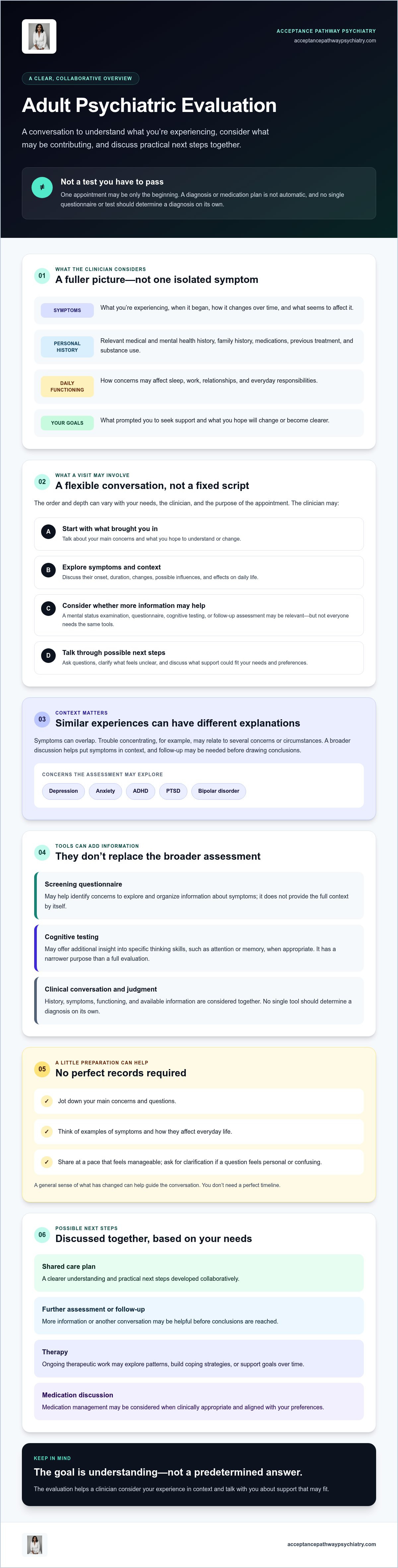
A clinician may ask about symptoms, personal and medical history, daily functioning, and your goals for care. These details help put your experience in context. The psychiatric assessment process may also include a mental status examination, which involves observing aspects of your current emotional and thinking patterns. An evaluation can inform clinical impressions and care planning, but it doesn’t guarantee a diagnosis or a particular treatment.
A brief screening questionnaire may help identify concerns to explore, but it doesn’t provide the full context of an evaluation. A cognitive test has a narrower purpose, such as looking at specific thinking skills. Neither alone should be treated as a complete picture of someone’s mental health. The scope of an assessment depends on why you’re seeking care and what information is available.
What questions can an adult psychiatric evaluation help answer?
The clinician may explore what prompted you to seek support, when symptoms began, how they change over time, and how they affect sleep, work, relationships, or everyday responsibilities. They’ll also want to understand what you hope will change. Depending on your concerns, the assessment may consider depression, anxiety, ADHD, PTSD, or bipolar disorder.
Symptoms can overlap, and similar experiences may have different explanations. For example, trouble concentrating could relate to several concerns or circumstances. A thoughtful assessment considers the wider context, and follow-up may be needed before drawing conclusions.
How is an evaluation different from therapy or medication management?
An evaluation focuses on understanding concerns and discussing possible next steps. Therapy is ongoing therapeutic work, where you and a therapist may explore patterns, build coping strategies, or work toward goals over time. Medication management is a separate or subsequent service that may be considered when clinically appropriate and something you want to discuss. Learn more about psychiatric medication management and how it can fit into care.
What Happens During a Psychiatric Evaluation for Adults?
A psychiatric evaluation for adults usually follows a thoughtful conversation rather than a fixed script. The clinician may begin by asking what brought you in and what you hope to understand or change. From there, they may explore your history, review current symptoms and daily functioning, and discuss whether more information would be helpful. The order and depth of these steps depend on your needs, the clinician, and the purpose of the appointment.
A comprehensive psychiatric evaluation can draw on several kinds of information, but it doesn’t mean every person will complete the same tests. You’ll usually have time to ask questions, clarify anything that feels unclear, and talk through possible next steps. A questionnaire or test may contribute useful details, but no single tool should determine a diagnosis on its own.
What information might the clinician ask about?
Questions may cover when your concerns began, how long they’ve been present, whether they’ve changed, and what seems to affect them. A clinician may also ask how symptoms influence sleep, relationships, work, or everyday responsibilities. Relevant context can include medical and mental health history, family history, current or past medications, previous treatment, and substance use.
It’s okay to answer honestly and at a pace that feels manageable. If a question feels personal or confusing, you can ask why it’s relevant or request clarification. You don’t need to arrive with a perfect timeline. Even a general sense of what’s changed and how it affects you can help guide the conversation.
Can questionnaires or cognitive tests be part of the evaluation?
Sometimes. A questionnaire can help organize information about symptoms, while cognitive testing may offer additional insight into areas such as attention or memory when appropriate. These tools support, but don’t replace, a clinician’s judgment and the broader discussion of history and functioning. For readers exploring attention concerns, an adult ADHD cognitive assessment guide can offer more context about the role and limits of testing.
Acceptance Pathway Psychiatry PLLC offers Creyos cognitive testing as well as psychiatric care. Testing may provide additional information when relevant, but it doesn’t replace a clinician’s broader assessment. After considering the information together, the clinician may explain what seems clear, what remains uncertain, and whether follow-up or additional assessment could help. You can learn more about psychiatric services and evaluation options.
Will a Psychiatric Evaluation Mean a Diagnosis or Medication?
No. An evaluation isn’t a test you can fail, and attending one doesn’t automatically mean you’ll receive a diagnosis or be advised to take medication. The purpose is to understand your concerns and consider possible next steps with you. A psychiatric evaluation for adults may lead to a clearer clinical impression, identify questions that need more exploration, or suggest that follow-up would be helpful.
Diagnosis involves clinical judgment, the information available, and relevant diagnostic criteria. A clinician considers how symptoms show up in your life and whether other context may help explain them. If the picture isn’t clear yet, saying so and gathering more information can be a responsible part of care, not a sign that you’ve done anything wrong.
Can a clinician diagnose a condition in one appointment?
Sometimes an evaluation provides enough information for a clinician to identify a likely diagnosis. In other cases, symptoms may overlap or important details may still be unclear. A clinician might want to understand how symptoms have changed over time, consider other relevant factors, or speak with you again before reaching a conclusion. There’s no guaranteed number of appointments or timeline for that decision. You can ask what the clinician understands so far and what questions remain.
What if I do not want medication?
Share your preferences and concerns openly. You can talk about past experiences with medication, questions you have, or what kinds of support you’re comfortable considering. An evaluation doesn’t obligate you to start medication. If medication is discussed, ask about its intended purpose and any concerns you’d like to weigh together before deciding what feels right for you.
Treatment planning can be a conversation about appropriate options, which may include psychotherapy or medication management when clinically appropriate and aligned with your preferences. You can also ask whether there are other reasonable next steps or whether more assessment would help before making a plan.
If you feel unsure about what to bring up, writing down your questions and preferences ahead of time may make the conversation easier. This guide to How to Prepare for a Psychiatric Evaluation offers additional preparation ideas. You don’t need to have everything figured out before the appointment. Your perspective is part of the discussion, and a thoughtful next step should take it into account.
How to Prepare for an Adult Psychiatric Evaluation
Preparing for a psychiatric evaluation for adults doesn’t mean gathering a perfect medical history or knowing exactly what to say. A few notes can help you organize your thoughts, especially if you feel nervous or worry you’ll forget something. Bring what you have, and remember that the appointment is a conversation, not an exam.
What should I write down before the appointment?
Consider making a short list you can refer to during the visit. You might include:
- Your main concern: What prompted you to seek support, and what would you like to be different?
- Symptom examples: Note what you’ve experienced, when it tends to happen, how long it’s been going on, and anything that seems to affect it.
- Everyday impact: Jot down how your concerns affect sleep, work, relationships, or routine tasks.
- Health and care history: Bring an up-to-date medication list and relevant details about past treatment or health concerns, if available.
- Your questions: Ask about the assessment, possible care options, follow-up, or how to communicate with the practice between appointments.
These notes don’t need to be complete. Even one or two specific examples can make it easier to explain what’s been happening and what matters most to you.
What if I feel nervous or forget what I wanted to say?
Feeling anxious before discussing personal concerns is understandable. Keep your notes nearby and let the clinician know if you need a moment, want a question explained differently, or find a topic difficult to discuss. You can share what feels possible. If you’re unsure why a subject is relevant, ask the clinician to explain how that context may help inform the assessment.
If your appointment is by telehealth, check in advance that you can access the appointment and have a private place to talk. Confirm with the practice whether your location and appointment type are eligible for telehealth. You can also ask how to handle technical difficulties before the visit.
A little preparation can help you feel more grounded, but there’s no need to get everything right before the appointment. You can review psychiatric evaluation services and ask the practice about appointment eligibility and next steps.
What Happens After an Adult Psychiatric Evaluation?
After an adult psychiatric evaluation, next steps depend on what the clinician learned, what matters to you, and whether more information is needed. You might leave with a clearer understanding of your concerns and a proposed care plan. In other cases, the clinician may recommend additional assessment or a follow-up conversation before making recommendations. There isn’t one path that fits everyone.
Before the appointment ends, ask what the clinician concluded, what remains uncertain, and when or how to reconnect. You can also clarify what to expect next, who to contact with questions, and whether a follow-up appointment is being recommended. Understanding the plan can help you decide how you’d like to proceed.
What might a collaborative care plan include?
A care plan should reflect your concerns, needs, and preferences. Depending on the evaluation, it may include discussing psychotherapy, medication management, or further assessment. These are possibilities, not automatic requirements. You can ask how a recommendation relates to your goals, what alternatives may be appropriate, and what questions are still open. A plan can also be revisited as your needs or understanding change.
How can I continue care after an evaluation?
If follow-up is suggested, confirm the next step and how to prepare for it. Ask how to share new questions or changes in your concerns between appointments, and clarify any communication arrangements that are important to you. If you’re unsure whether you want ongoing care, you can take time to consider the recommendations and ask the clinician to explain them in plain language.
Acceptance Pathway Psychiatry PLLC offers psychiatric evaluations, psychotherapy, and medication management. These services may be considered as part of care when appropriate and aligned with your preferences. An evaluation can be a starting point for understanding your options, without obligating you to choose a particular service.
For more information, review evaluation and care options. You can ask the practice about the evaluation process, available services, and whether an appointment is appropriate for your needs.
Take the Next Step at Your Own Pace
A psychiatric evaluation for adults is a chance to explore what you’re experiencing, share what matters to you, and discuss possible next steps. It isn’t a test you can fail, and the outcome doesn’t have to be a diagnosis or medication. Sometimes the next step is gathering more information; any care plan should reflect your needs and preferences.
Preparing a few notes about your concerns, daily life, and questions can help you feel more grounded. During the appointment, you can ask what the clinician understands, what remains uncertain, and how follow-up may work. You’re part of the conversation.
Acceptance Pathway Psychiatry PLLC offers comprehensive psychiatric evaluations, with psychotherapy and medication management among the care options that may be discussed when appropriate. In-person and telehealth appointments are offered; check with the practice to confirm current availability and telehealth eligibility.
Explore evaluation and care options and learn what may fit your situation. Taking a first step can begin with a question, and you can move forward at a pace that feels manageable.
Frequently Asked Questions
What is included in a psychiatric evaluation for adults?
A psychiatric evaluation for adults typically includes a conversation about your concerns, symptoms, personal and health history, daily functioning, and goals. The clinician may ask when symptoms began, how they’ve changed, and how they affect areas such as sleep, work, or relationships. Questionnaires or cognitive tests may be used when relevant, but they support the broader assessment rather than determining a diagnosis by themselves.
How long does a psychiatric evaluation for adults take?
The length can vary depending on the appointment format, your needs, and the purpose of the evaluation. Some assessments may need more time to explore your history and current concerns, or may involve follow-up to gather additional information. Ask the practice how much time to set aside when scheduling, and whether there are forms or records you should complete or bring beforehand. Don’t assume every evaluation follows the same schedule.
Can a psychiatrist diagnose me during the first evaluation?
A psychiatrist may be able to make a diagnosis during an initial evaluation if there’s enough information to support it. Sometimes, symptoms overlap or important context needs further exploration, so the clinician may explain what’s clear and what remains uncertain. There’s no guaranteed timeline for a diagnostic decision. You can ask what the clinician is considering, what information would help, and whether a follow-up assessment is recommended.
Will I have to take medication after a psychiatric evaluation?
No. Having an evaluation doesn’t mean you must take medication or agree to a particular treatment. If medication management is discussed, you can ask about its purpose, potential benefits, concerns, and other appropriate options. Your preferences and past experiences matter in planning care. Depending on your needs, psychotherapy or further assessment may also be discussed, and you can ask questions before deciding how you’d like to proceed.
What should I bring to a psychiatric evaluation?
Bring a current list of medications, relevant health or mental health history, and information about past treatment if you have it. It can also help to write down your main concerns, a few examples of symptoms, how they affect daily life, and questions you want to ask. You don’t need complete records or perfectly organized notes. Sharing what’s available can help the clinician understand your situation and identify useful next steps.
Can I have a psychiatric evaluation through telehealth?
Telehealth psychiatric evaluations may be available, but eligibility depends on the practice’s requirements and your circumstances. Acceptance Pathway Psychiatry PLLC offers telehealth appointments, though availability and eligibility should be confirmed with the practice before scheduling. Ask whether your appointment type and location are eligible, how to access the visit, and what you’ll need for a private conversation. If telehealth isn’t an option for you, ask about other available appointment arrangements.
What happens if the evaluation does not give me a clear answer?
An unclear result doesn’t mean the evaluation failed or that your concerns aren’t real. Symptoms can have overlapping explanations, and a clinician may need more context or time to understand the full picture. Ask what the evaluation has clarified, what questions remain, and whether follow-up or further assessment could help. You can also discuss practical next steps based on your current concerns while the clinician continues to build a clearer understanding.


