

What if the reason your progress has stalled isn't a lack of effort, but a missing piece in your biological foundation? It's common to feel frustrated when weekly therapy sessions don't provide the relief you expected. You might even worry that considering psychiatric medication means you've given up on your personal growth. In reality, millions of adults across the country face mental health challenges that often require a more comprehensive strategy to overcome. Finding the right balance of psychotherapy and medication management can feel overwhelming when you're already drained by persistent anxiety or low mood, but you don't have to navigate this path alone.
We understand that the stigma surrounding medication or the confusion between various types of providers can create unnecessary barriers to care. This guide will help you discover how combining therapeutic support with professional medication management creates a synergistic path toward lasting emotional stability and mental wellness. We'll clarify the differences between provider roles, address common concerns about side effects, and show you how a collaborative partnership with your care team can finally lead to the improved daily functioning you deserve.
Key Takeaways
- Understand why an integrated biopsychosocial approach is more effective than treating symptoms in isolation by addressing the needs of the whole person.
- Learn how medication management provides biological stability, creating a calm environment in the brain where deep emotional work can truly begin.
- Discover how psychotherapy builds the behavioral architecture for a transformed life through practical skill-building and psychological insight.
- See how the synergy of psychotherapy and medication management Fayetteville NC allows for faster symptom relief and more resilient long-term mental wellness.
- Explore the role of objective data and Creyos cognitive testing in developing a collaborative, precise plan tailored to your unique brain health.
The Foundations of Integrated Psychotherapy and Medication Management
True mental wellness isn't a one-dimensional achievement. It requires looking at the complex interplay between your brain's chemistry and your lived experiences. Integrated care represents a biopsychosocial approach that honors this complexity. By utilizing both biological and behavioral tools, we can address the root causes of distress rather than just managing the surface symptoms. This model relies heavily on a strong therapeutic alliance, where you and your provider act as partners in your healing journey. Psychotherapy provides the space to explore behavioral patterns, while medication offers the biological stability to do so effectively.
To better understand how these two modalities work in harmony, watch this helpful video:
Defining Integrated Mental Health Care
Integrated care is the strategic coordination of pharmacological and psychological interventions designed to treat the mind and body simultaneously. In many traditional settings, care is siloed. A therapist and a prescriber might never speak, leaving you to bridge the gap between two different philosophies or conflicting advice. Integrated psychotherapy and medication management Fayetteville NC removes this burden by ensuring that every aspect of your treatment plan is in conversation with the others. Our goal isn't temporary symptom suppression but a sustainable path toward long-term recovery and personal evolution. This collaborative framework ensures that your biological needs and your psychological insights are working toward the same destination.
Who Benefits Most from a Combined Approach?
Many individuals find that while talk therapy is helpful, they eventually hit a wall where progress feels stagnant. This often happens when biological symptoms, such as severe lethargy, chronic insomnia, or overwhelming panic, make it difficult to engage in the reflective work therapy requires. Conditions like Depression, Anxiety, and PTSD often respond best to this dual-layered support. Additionally, ADHD treatment for adults in our practice focuses on balancing focus and emotional regulation, ensuring that cognitive clarity is supported by behavioral strategies. By stabilizing the brain's environment, we create the psychological safety necessary for you to apply the skills you learn in session to your daily life.
How Psychiatric Medication Management Supports Biological Stability
Our brains rely on a delicate chemical balance to function optimally. Neurotransmitters, the chemical messengers in the brain, regulate everything from your mood and focus to how you respond to stress. When these systems are disrupted by trauma, genetics, or chronic stress, it can feel like your brain is working against you. Medication management provides a biological platform that stabilizes this internal environment. It doesn't change your personality; instead, it clears the fog so your true self can emerge. This stabilization is often what makes the work of What is Psychotherapy? possible and productive.
It's natural to feel anxious about starting psychiatric medication. Many people worry about side effects or feel there's a stigma attached to needing pharmacological support. We view medication as a temporary or long-term bridge to wellness, depending on your unique needs. By addressing the biological roots of your symptoms, we help lower the intensity of your emotional distress. This creates the psychological space needed to develop new coping mechanisms and achieve lasting stability. If you're ready to explore how this balance can work for you, our team is here to guide you through every step.
Targeted Symptom Relief Through Psychiatry
Different classes of medication target specific pathways in the brain to provide relief. SSRIs might be used to help regulate serotonin levels for those struggling with anxiety or depression, while stimulants can improve focus for those with ADHD. We follow a "start low, go slow" philosophy to minimize discomfort and ensure your body adjusts gently. Every psychotherapy and medication management Fayetteville NC plan we create is rooted in a psychiatric medication management strategy tailored specifically to your individual biology and lifestyle goals.
The Importance of Ongoing Clinical Monitoring
Medication management is never a "set it and forget it" process. It's an ongoing clinical partnership that requires regular communication. Follow-up appointments are crucial for dose optimization and for monitoring how your body responds over time. As you evolve and your life circumstances change, your medication needs may change too. Regular check-ins allow us to track your progress, manage any potential side effects, and adjust your treatment plan to prevent relapse. This collaborative approach ensures that your biological support remains as dynamic and responsive as you are, providing a steady foundation for your continued growth.
The Role of Psychotherapy in Cultivating Lasting Behavioral Change
While medication provides the biological quiet, psychotherapy is where the active construction of a new life happens. It's the skill-building side of mental health. Through regular sessions, you address the psychological and social roots of your distress. This isn't just "venting." It's a process of neuroplasticity. Research shows that consistent talk therapy can actually change brain patterns, strengthening the neural pathways responsible for emotional regulation and resilient thinking. This is why combined psychotherapy and medication management Fayetteville NC is so potent. You're treating the hardware and the software at the same time.
Therapy allows you to explore the "why" behind your reactions. It provides a dedicated space to unpack the beliefs that might be holding you back. When your brain is biologically supported, you're better able to engage with these deep, often challenging topics. This dual approach ensures that the insights you gain in session don't just stay in the room. They become part of how you move through the world every day.
Beyond Symptom Management: Developing Coping Skills
Cognitive Behavioral Therapy (CBT) is a cornerstone of this work. It helps you identify those automatic negative thought cycles that keep you stuck. Once you see them, you can reframe them. This isn't about "positive thinking"; it's about realistic, balanced thinking. You develop emotional regulation tools for daily life, like grounding techniques or assertive communication. In this space, your therapist acts as a collaborative partner. While we provide clinical expertise on Mental Health Medications and therapeutic modalities, you remain the expert on your own life experiences.
Creating a Safe Space for Self-Discovery
True progress requires psychological safety. We position ourselves as a supportive witness to your journey, providing a non-judgmental environment to process trauma or difficult life transitions. Our approach is rooted in trauma-informed care, recognizing that your past experiences deeply shape your present reactions. Therapy helps you integrate these experiences into a cohesive sense of self. When you feel safe, you can explore the parts of your story that felt too heavy to carry alone. This integration is the key to moving from surviving to thriving, ensuring that the stability you find today lasts for years to come.
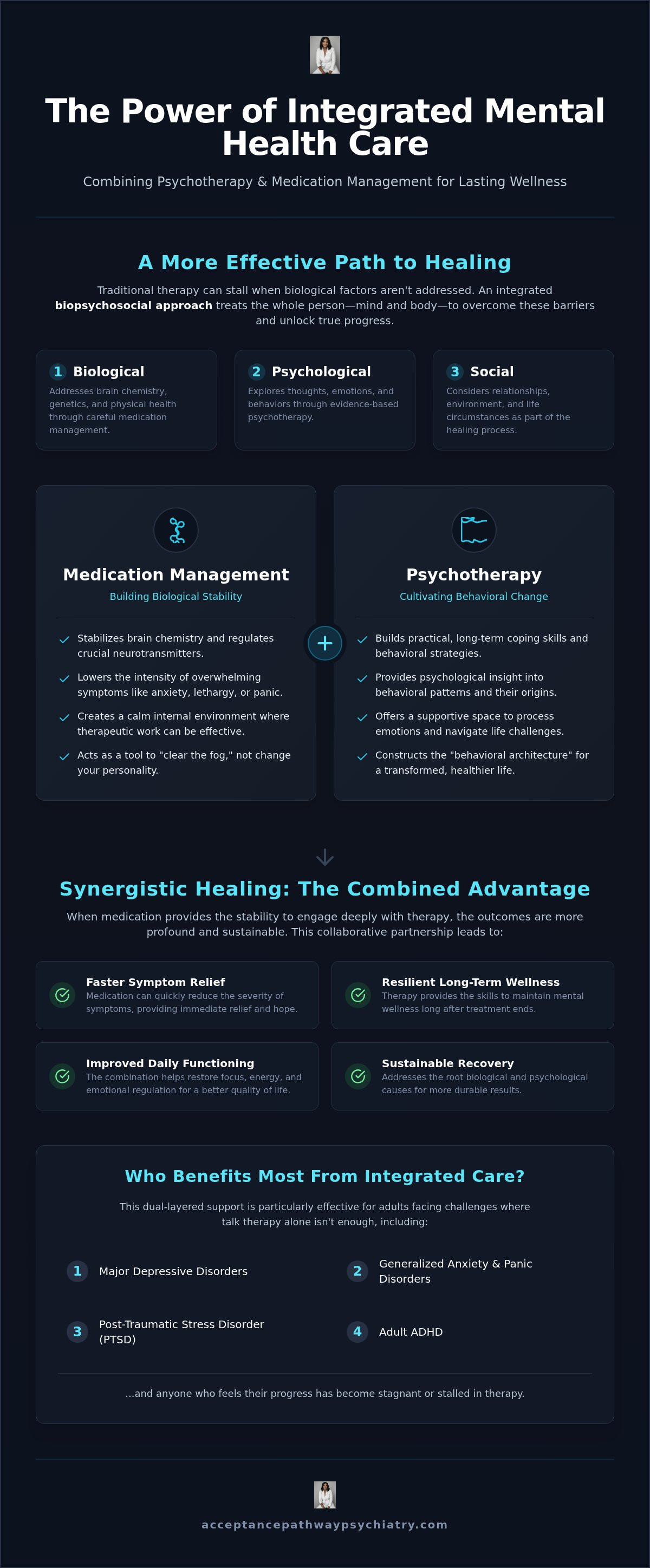
Synergistic Healing: Comparing Integrated Care to Standalone Treatment
Integrated care isn't just about doing two things at once; it's about how those two things amplify each other. We often describe this as a dual approach to healing. Psychotherapy acts as a "top-down" intervention, where cognitive shifts and behavioral changes eventually reshape neural pathways. Medication management serves as a "bottom-up" foundation, stabilizing the biological systems that drive your emotional state. When you choose integrated psychotherapy and medication management Fayetteville NC, you aren't choosing a shortcut. You're choosing a comprehensive strategy that respects the full scope of your humanity.
One common misconception is that medication is an "easy way out." In reality, medication acts as an enabler for the deep work of therapy. If your brain is constantly stuck in a high-intensity survival mode, it's nearly impossible to practice the complex emotional regulation skills taught in therapy. By lowering the baseline intensity of your symptoms, medication provides the clarity needed to actually use the tools your therapist provides. It keeps your head above water so you can focus on learning how to swim.
The Biological and Behavioral Synergy
Synergy occurs when the total healing effect of a combined treatment is significantly greater than the sum of its individual parts. Imagine medication as a way to reduce the "static" or "noise" of a loud, crowded room. When that noise level drops, you can finally hear the therapist's voice and your own inner wisdom clearly. This biological quiet allows you to engage more deeply in your sessions, moving past surface-level survival and into meaningful self-discovery. The clarity provided by a stable biological platform makes every minute spent in therapy more effective.
Evidence-Based Outcomes for Combined Modalities
Clinical research consistently favors integrated care for chronic conditions. While standalone therapy or medication can be effective for some, the combination offers a more resilient defense against symptom return. Consider the following comparison:
- Standalone Treatment: May provide relief but often leaves biological or behavioral "blind spots" that can lead to plateaued progress or recurring symptoms.
- Integrated Care: Addresses the biological hardware and the behavioral software simultaneously, leading to more sustainable, long-term stability and personal growth.
This approach is vital for ADHD treatment, as it tackles both the biological need for focus and the psychological need for self-compassion and organizational skills. If you're ready to see how this integrated approach can transform your daily life, schedule an evaluation with us today to start your journey.
Beginning Your Path to Wellness with Collaborative Mental Health Care
Starting a mental health journey is a brave step. It shouldn't feel like a clinical transaction. We prioritize a partnership where you feel heard and understood from the very first interaction. By combining clinical expertise with a warm, human-centric approach, we ensure that your psychotherapy and medication management Fayetteville NC experience is grounded in safety and mutual respect. Our role is to act as a steady guide as you navigate the complexities of healing and personal evolution.
We understand that the traditional medical model can sometimes feel cold or detached. Our practice intentionally moves away from that. We view every patient as a whole person with a unique story, not just a set of symptoms to be managed. This collaborative spirit is the cornerstone of our practice, ensuring that you remain the primary driver of your own wellness journey while we provide the clinical support and tools you need to succeed.
What to Expect During Your Initial Evaluation
The intake process is designed to be a comprehensive look at your life, not just your current distress. During this initial session, we'll discuss your personal history, previous treatment experiences, and long-term goals. It's a mutual conversation rather than a clinical interrogation. Being transparent about what hasn't worked in the past is just as important as identifying what you hope to achieve now. This honesty allows us to build a foundation of trust that supports every future step of your care, from the first prescription to your latest breakthrough in therapy.
Integrating Wellness and Cognitive Testing
We believe that subjective experiences should be supported by objective data. This is why we utilize Creyos cognitive testing to get a precise baseline of your brain's current functioning. These assessments measure focus, memory, and attention, providing a clear picture of your cognitive strengths and challenges. This data doesn't just inform medication choices; it helps us tailor your psychotherapy strategies to match how your brain actually processes information. By combining these results with an focus on integrative wellness factors like sleep and nutrition, we create a truly personalized plan.
Accessibility is a vital part of consistent care. We offer telehealth appointments to ensure that your path to wellness isn't interrupted by a busy schedule or transportation barriers. Whether you're connecting from home or another private space, you'll receive the same compassionate, non-judgmental support that defines our practice. We are here to be a supportive witness to your journey, providing the professional humility and clinical knowledge required to help you achieve lasting emotional stability.
Embracing Your Journey Toward Integrated Wellness
Choosing to seek help is the first step toward a more stable and fulfilling life. By integrating biological support with behavioral insights, you create a powerful framework for lasting change. Medication provides the necessary neurological platform, while therapy builds the skills needed to navigate life's challenges. Our approach to psychotherapy and medication management Fayetteville NC ensures that you don't have to choose between treating your symptoms and understanding your story. You're treating the whole person, not just a diagnosis.
We combine comprehensive psychiatric evaluations with objective tools like Creyos cognitive testing to ensure your care is as precise as it is compassionate. This data-driven yet deeply human approach allows us to act as a supportive witness to your personal evolution. You don't have to navigate these complexities alone. You deserve a partner who values your unique experience and provides a safe, non-judgmental environment for healing. Begin your journey toward integrated wellness with Acceptance Pathway Psychiatry PLLC today. True mental wellness is possible, and we're here to help you find the steady ground you've been seeking.
Frequently Asked Questions
Is it better to do therapy or take medication for depression and anxiety?
Neither is universally better because they address different aspects of your well-being. Medication helps stabilize the biological foundation of your brain chemistry, while therapy builds the behavioral skills needed for long-term resilience. For many people, a combined approach provides the most effective relief. This synergy allows you to feel stable enough to engage deeply in the therapeutic process, leading to more sustainable mental wellness.
How long does it typically take for psychiatric medication to start working?
Most psychiatric medications, such as SSRIs, take about four to six weeks to reach their full therapeutic effect. You might notice subtle improvements in your sleep or energy levels within the first two weeks. It's important to maintain consistent communication with your provider during this period. We monitor your progress closely to ensure the medication is supporting your journey without causing unnecessary discomfort.
Can one provider handle both my therapy and my medication management?
Yes, our practice is designed to offer integrated care where your provider manages both modalities. This collaborative model ensures that your treatment is cohesive and your progress is tracked holistically. You won't have to worry about miscommunication between different offices. Instead, you'll experience a streamlined partnership where your biological and psychological needs are addressed in a single, supportive environment.
Do I have to stay on medication forever if I start an integrated treatment plan?
Not necessarily, as medication is often used as a bridge to help you reach a place of stability. Many patients find that once they've developed strong coping mechanisms through therapy, they can eventually taper off their medication under clinical supervision. This is always a collaborative decision based on your unique history and current functioning. Our goal is to support your evolution toward independence and health.
What should I expect during my first medication management appointment?
Your first appointment is a comprehensive conversation about your life, history, and goals. We'll review your symptoms and discuss past treatment experiences to understand what has or hasn't worked for you. It isn't a clinical interrogation; it's a mutual partnership focused on safety and clarity. We'll work together to decide if medication is the right next step for your specific path to wellness.
How do I know if my current combination of therapy and medication is working?
You'll notice that your symptoms feel less overwhelming and your daily functioning starts to improve. Success often looks like having the emotional space to use your therapy skills when stress arises. We use a mix of your personal feedback and objective clinical observations to track these changes. Over time, you should feel more like yourself and more capable of navigating life's ups and downs.
Are telehealth appointments as effective as in-person visits for psychiatry?
Telehealth is a highly effective and evidence-based way to receive psychiatric care and therapy. It offers the same level of clinical expertise and compassionate support while removing barriers like travel time or scheduling conflicts. Many patients feel more relaxed and open when speaking from the comfort of their own homes. This accessibility ensures you can maintain the consistency needed for lasting progress and emotional stability.
What is the role of cognitive testing in my mental health treatment plan?
Cognitive testing provides objective data on brain functions like memory, focus, and attention. By using tools like Creyos, we can move beyond subjective descriptions to see exactly how your brain is processing information. This data is invaluable for tailoring your psychotherapy and medication management Fayetteville NC plan. It ensures that every intervention is precisely matched to your cognitive profile, making your treatment more efficient and effective.


