

Post-traumatic stress disorder (PTSD) affects millions, often leaving individuals feeling isolated and overwhelmed. The weight of past trauma can feel like an invisible, heavy anchor, making it difficult to move forward. When you're searching for effective PTSD treatment Fayetteville NC offers, it's natural to feel stuck in a cycle of hypervigilance or fear that you'll never truly feel like yourself again. It's common to feel confused about whether you need therapy, medication, or a combination of both to find lasting relief.
We believe that healing isn't about a quick fix, but a steady, collaborative evolution toward safety and peace. This guide explores how evidence-based medication management and psychotherapy work together to reduce the intensity of flashbacks and triggers. You'll learn how a trauma-informed partnership with a psychiatric provider can help you quiet the noise of the past, improve your daily relationships, and finally reclaim the life you deserve.
Key Takeaways
- Learn how trauma impacts the nervous system and why your symptoms represent a natural, survival-based response to extraordinary stress.
- Explore how a dual-track approach to PTSD treatment Fayetteville NC integrates medication management and psychotherapy to create a comprehensive path to healing.
- Understand the importance of specialized medication management as a collaborative, ongoing process designed to provide stability and support your therapeutic work.
- Discover how integrative wellness practices, such as improved sleep and nutrition, can help regulate your nervous system and enhance clinical outcomes.
- Find out how flexible options like telehealth can make starting your recovery journey feel safer and more accessible from the comfort of your own home.
Understanding PTSD: The Impact of Trauma on the Mind and Body
Living through a traumatic event can leave you feeling like the world is no longer a safe place. It's essential to understand that Post-Traumatic Stress Disorder is a natural, albeit overwhelming, response to extraordinary stress. It isn't a sign of weakness or a permanent state of being "broken." Instead, trauma essentially rewires the nervous system to prioritize survival over peace. This biological shift is why finding specialized PTSD treatment Fayetteville NC is so vital for reclaiming your sense of self and your future.
When we look at the clinical foundation of Understanding Post-Traumatic Stress Disorder, we see that the brain's priority shifts toward constant scanning for danger. This survival mode is helpful during a crisis, but it becomes exhausting when the crisis has passed. The brain stays on high alert, making it difficult to relax even in safe environments.
To better understand how these symptoms manifest and the options available for recovery, watch this helpful video:
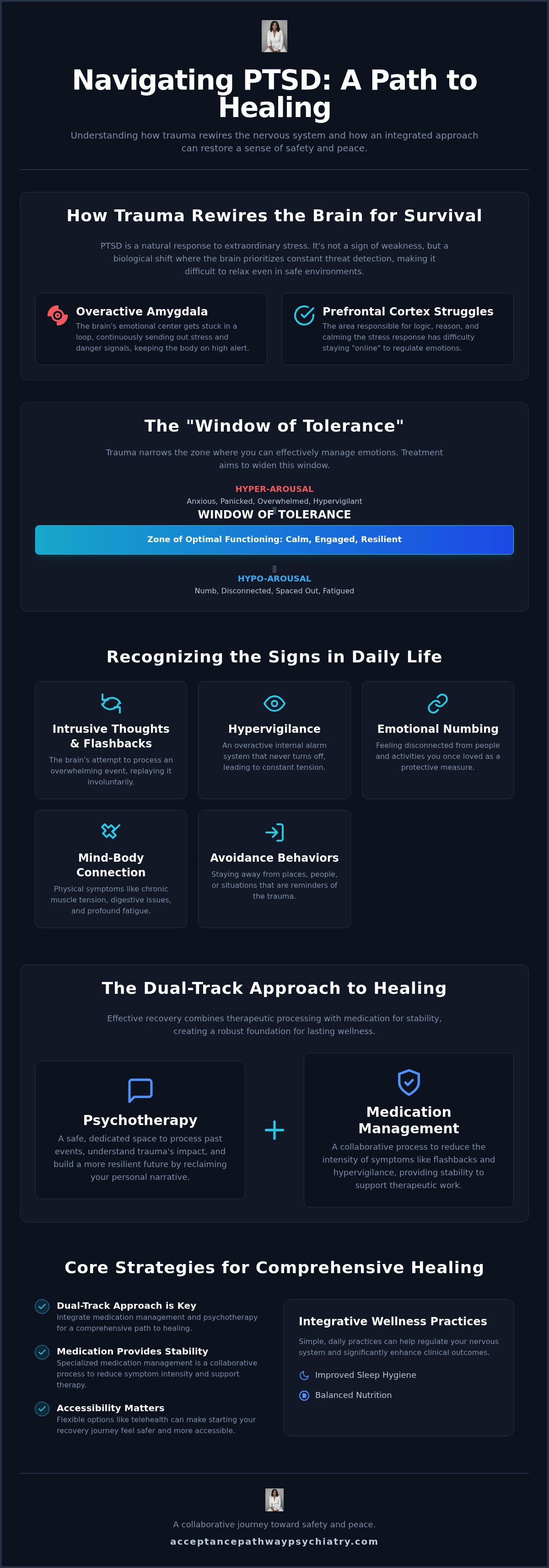
Recovery often begins by acknowledging symptoms that might feel confusing or even shameful. Many people experience emotional numbing, a state where you feel disconnected from the people and activities you once loved. This happens because your "window of tolerance," the zone where you can effectively manage your emotions, has narrowed significantly. When you're outside this window, you might feel either hyper-aroused (anxious and panicked) or hypo-aroused (spaced out and numb).
Recognizing the Signs: How Trauma Manifests in Daily Life
Trauma often shows up in ways that disrupt your ability to function. Intrusive thoughts and flashbacks are not just bad memories; they are your brain's attempt to process an event that was too large to digest at the time. You might also experience hypervigilance, which feels like an overactive alarm system that never turns off. This constant state of high alert often leads to avoidance behaviors. You might stop going to certain places or seeing certain people, which can eventually shrink your social and professional world until it feels quite small.
The Mind-Body Connection in Trauma
The impact of trauma isn't just in your head; it lives in your body too. You might notice chronic muscle tension, digestive issues, or profound fatigue. These occur because the amygdala, the brain's emotional center, is stuck in a loop of sending out stress signals. Meanwhile, the prefrontal cortex, which helps with logic and calm, struggles to stay online. Professional PTSD treatment Fayetteville NC is necessary to help reset this internal alarm system. By bridging the gap between the mind and body, you can begin the journey toward lasting stability and wholeness.
Evidence-Based PTSD Treatment Options: Therapy and Medication
Effective healing from trauma rarely relies on a single method. Instead, a multi-modal approach provides a more robust foundation for recovery. By combining different strategies, we can address the various ways trauma disrupts your life. This comprehensive strategy ensures that we treat the intrusive thoughts, the physical tension, and the emotional numbing simultaneously. When seeking PTSD treatment Fayetteville NC, it is vital to find a provider who understands how these different treatments target specific symptom clusters. A tailored plan doesn't just manage symptoms; it seeks to restore your overall quality of life.
Every journey begins with a detailed clinical evaluation. This initial step acts as a roadmap, helping us understand your unique history and current challenges. We prioritize trauma-informed care, which means we move at a pace that feels safe for you. Our goal is to provide relief without causing re-traumatization. As noted by the NIMH on PTSD Treatment, evidence-based care is the gold standard for achieving long-term wellness and reducing the heavy burden of trauma symptoms.
Psychotherapy: Reclaiming Your Narrative
Psychotherapy offers a dedicated space to process past events and build a more resilient future. When looking for PTSD treatment Fayetteville NC, finding a safe environment is the first priority. In individual psychotherapy sessions, you work one-on-one with a compassionate expert to explore your experiences. Modalities like Cognitive Behavioral Therapy (CBT) or supportive talk therapy help you identify and shift negative thought patterns. These sessions focus on developing practical coping mechanisms for daily triggers, allowing you to move through the world with a greater sense of agency.
Medication Management: Stabilizing the Biological Foundation
While therapy addresses the narrative of your trauma, medication management focuses on the biological "volume" of your symptoms. The primary goal is to achieve enough internal stability so you can engage fully in the therapeutic process. Medications, such as SSRIs or specialized sleep aids, can help regulate the overactive alarm system we discussed earlier. These tools are particularly effective for reducing the intensity of hypervigilance and severe anxiety. This stabilization makes it easier to focus on your personal growth and relationship goals. If you are ready to explore these options, you can connect with a supportive provider to discuss a personalized plan.
The Critical Role of Specialized Medication Management
Medication management is often misunderstood as a static event, like getting a one-time prescription for an infection. In reality, it's a rhythmic, ongoing cycle of evaluation and refinement. When you seek PTSD treatment Fayetteville NC, you aren't just looking for a bottle of pills; you're looking for a partner to help you navigate the biological complexities of trauma. This process is deeply collaborative, ensuring that every adjustment is made with your specific feedback and comfort in mind. It's about finding the right tools to calm your nervous system so you can focus on the deeper work of recovery.
A common fear for many people is that medication might change their personality or make them feel like a different person. We view medication as a way to clear the "fog" of trauma, not to dull who you are. By working with a specialist, you ensure that your treatment is precise. Resources like the National Center for PTSD highlight that the right pharmacological support can reduce the "trial and error" feel that often frustrates patients. Expert monitoring allows us to target symptoms like insomnia or panic attacks with clinical accuracy, bringing the real "you" back to the surface.
What to Expect During a Psychiatric Evaluation
Your journey begins with a thorough psychiatric evaluation for adults. This isn't a cold, clinical interrogation; it's a warm and non-judgmental consultation where your lived experience takes center stage. We take the time to understand your history, your triggers, and your goals for the future. This evaluation is a collaborative partnership designed to identify the best path forward for your unique needs. We prioritize your psychological safety from the very first moment, ensuring you feel heard and respected as we build your treatment roadmap together.
Precision and Safety in Medication Monitoring
Consistency is the key to maintaining long-term stability. Regular follow-up appointments allow us to monitor how you're responding to treatment and manage any side effects proactively rather than reactively. If a specific medication isn't providing the relief you need, we work together to adjust the plan. This steady rhythm of care helps you transition from acute symptom relief, where you're simply trying to survive the day, to long-term wellness. Over time, these check-ins become a space to celebrate your progress and fine-tune your support system as you reclaim your life from the weight of the past.
Integrative Wellness and Holistic Support for Trauma
Healing from trauma requires more than just addressing symptoms in a clinical setting. It involves looking at your entire life as an ecosystem. Integrative wellness serves as a vital bridge between your clinical treatment plan and your daily lived experience. When we talk about PTSD treatment Fayetteville NC, we often focus on the mind, but the body carries the weight of the past as well. Regulation of the nervous system depends heavily on the biological foundations of sleep, nutrition, and movement. These aren't just "good habits"; they are essential tools for recovery.
By adopting a holistic perspective, you move away from seeing yourself as a collection of symptoms and start seeing yourself as a whole person capable of evolution. This approach makes recovery more sustainable. It ensures that the progress you make in therapy is supported by a body that feels safe and nourished. When your physical foundation is stable, your mind has the space it needs to process difficult emotions without becoming overwhelmed.
Complementary Strategies for Anxiety and Stress
Daily life with PTSD often involves managing sudden spikes in anxiety or unexpected triggers. Mindfulness and grounding techniques offer immediate ways to anchor yourself in the present moment. Instead of being swept away by a flashback, you can learn to use your senses to find safety in the "now." Self-compassion is equally critical. Many survivors carry a heavy burden of self-blame; however, treating yourself with the same kindness you'd offer a friend is a powerful clinical tool. Our approach to integrative wellness mental health ensures that these daily practices are woven into your overall care strategy.
Addressing Cognitive Fog and Focus
Many people seeking PTSD treatment Fayetteville NC report feeling "scattered" or unable to complete simple tasks. This cognitive fog is a common side effect of a brain that is constantly scanning for danger. Sometimes, these focus issues are so severe that they mimic other conditions. In some cases, specialized ADHD testing Fayetteville NC can help clarify whether your symptoms are purely trauma-based or if there is a co-occurring attention disorder. Clarifying these complexities allows for a much more precise and effective treatment plan. Improving mental clarity involves a mix of clinical support and practical strategies, such as breaking tasks into smaller, manageable steps.
If you're ready to embrace a whole-person approach to your healing, you can schedule a consultation with our team today.
Taking the First Step: Finding Your Path to Recovery
Deciding to reach out for professional support is perhaps the most courageous step in the recovery process. It's a powerful admission that you deserve more than a life defined by past events. We recognize that for many in our community, the search for PTSD treatment Fayetteville NC can feel daunting. Our role is to serve as a supportive witness to your journey, providing a steady, non-judgmental presence as you navigate the path toward wholeness. You don't have to carry the burden of complex logistics to get started. We've designed our intake process to be as gentle and accessible as possible, ensuring the focus remains on your well-being.
The Benefits of Telehealth for PTSD Patients
For those living with hypervigilance or social anxiety, simply leaving the house can sometimes feel like a monumental task. The environment of a traditional clinic, with its bright lights and unfamiliar faces, can inadvertently trigger the very stress responses you're trying to heal. This is why the flexibility of virtual appointments is such a powerful resource. By choosing online psychiatry, you can remain in a space where you already feel safe and in control.
Telehealth offers several unique advantages for trauma recovery:
- Reduced Anxiety: You don't have to navigate traffic or sit in a crowded waiting room, which are often high-stress environments.
- Environmental Control: You can choose a quiet corner of your home, have a supportive pet nearby, or sit in your favorite chair during your session.
- Consistency: It's easier to maintain your appointment schedule even on days when your symptoms feel particularly heavy or overwhelming.
This seamless approach ensures that your energy is spent on healing rather than on the logistics of getting to an office. It creates a low-pressure entry point for those who might otherwise hesitate to seek care.
Your First Appointment: A Collaborative Beginning
Your first session is not about forced disclosure or being pressured to relive your trauma immediately. Instead, it's a collaborative beginning focused entirely on building trust. We understand that trust is earned, not given, especially after what you've been through. You're always in control of the pace of treatment. We start by listening to your immediate concerns and identifying what your goals for recovery look like.
The focus of this initial meeting is to establish a sense of safety and to begin drafting your personalized roadmap. We look at the mind-body connections we've discussed throughout this guide, considering how medication and therapy might best serve your unique needs. Recovery is not a distant, unreachable dream. With the right allies and a compassionate approach to PTSD treatment Fayetteville NC, you can move from a state of survival into a life of genuine peace and connection.
Embracing Your Future with Compassionate Care
Healing from trauma is a journey of personal evolution that requires a steady, reliable ally by your side. By combining trauma-informed medication management with the deep work of psychotherapy, you can address both the biological and emotional roots of your experience. We've explored how an integrative wellness focus supports your nervous system, while virtual appointments provide a safe, low-pressure way to access high-quality care nationwide. Reclaiming your life from the heavy weight of the past is entirely possible when you have a clinical plan tailored to your unique needs and lived experience.
Finding effective PTSD treatment Fayetteville NC is the essential first step toward moving out of constant survival mode and finally stepping into a life of inner peace and safety. Your resilience has brought you this far, and with the right clinical support and a collaborative partnership, your future can be defined by growth rather than trauma. You don't have to navigate this path alone; we're here to walk beside you as a supportive witness to every step of your progress.
Begin your journey to healing with a compassionate psychiatric evaluation
Frequently Asked Questions
Is PTSD treatment permanent, or will I always have symptoms?
PTSD treatment isn't necessarily a "cure" in the traditional sense, but many individuals achieve significant remission where symptoms no longer dictate their daily choices. The goal is to move from a state of survival to one of thriving. While some may experience occasional triggers, the tools gained through treatment allow you to manage them effectively. You can reach a point where trauma is a part of your history rather than a constant, active presence in your mind.
Can medication really help with PTSD, or does it just mask the pain?
Medication serves as a stabilization tool rather than a way to mask emotions. By regulating the brain's overactive alarm system, it lowers the "volume" of hypervigilance and anxiety. This biological calm creates the necessary mental space for you to engage deeply in psychotherapy. It isn't a permanent "fix" on its own, but it provides the steady foundation required to process trauma and build lasting coping mechanisms for the future.
What is the difference between a therapist and a psychiatrist for PTSD?
A therapist focuses on the psychological aspects of trauma, using talk-based modalities like CBT to help you process past events. A psychiatrist or psychiatric provider focuses on the biological and medical side of recovery, primarily through medication management. For the most effective PTSD treatment Fayetteville NC offers, many people choose a dual-track approach. This ensures both the narrative of the trauma and the physical stress response are addressed simultaneously in a collaborative way.
How long does it typically take to see progress in PTSD treatment?
Progress is a highly individual experience, but many people begin to feel a sense of stabilization within the first few weeks of starting medication or therapy. Deep, transformative healing often takes several months of consistent work. Remember that recovery isn't a linear path; there will be periods of rapid growth and moments of quiet reflection. We move at a pace that respects your unique history and ensures you always feel safe.
Is telehealth effective for treating severe trauma or PTSD?
Telehealth is a highly effective and evidence-based option for treating PTSD. For many, the ability to attend sessions from a safe, familiar environment reduces the initial anxiety associated with seeking help. Research shows that clinical outcomes for virtual trauma care are comparable to traditional in-person visits. This low-pressure format allows you to maintain consistency in your care, which is a critical factor in achieving long-term stability and healing from severe trauma.
What should I do if I am afraid that talking about trauma will trigger me?
Feeling afraid of being triggered is a completely valid response to trauma. In a trauma-informed setting, we never dive into deep memories before you are ready. The initial focus is always on building your "window of tolerance" and developing grounding techniques to manage stress. We treat the relationship as a mutual partnership where you are in control of the pace. This ensures you have the tools to stay safe while we slowly work toward healing.
Can I receive medication management and therapy in the same practice?
Yes, receiving both medication management and psychotherapy within the same practice is often the most effective path to wellness. This integrated approach allows your providers to communicate directly, ensuring your treatment plan is cohesive and responsive to your needs. When your biological support and psychological processing are aligned, you experience a more seamless journey. This collaborative model reduces the stress of managing multiple appointments and provides a unified support system for your recovery.
What if I have already tried medication for PTSD and it didn't work?
It's common for individuals to feel discouraged if a previous medication didn't provide relief, but this doesn't mean you're out of options. Modern PTSD treatment Fayetteville NC utilizes precision psychiatry to better understand why certain approaches might have failed in the past. We take a fresh look at your history and symptom clusters to identify more targeted options. Often, a different class of medication or a more integrated approach with therapy can make a significant difference in your outcomes.


