

You wake up at 3:00 AM with a racing heart, your mind already spinning through a dozen "what-if" scenarios that feel impossible to quiet. It's an exhausting cycle that leaves you feeling physically drained and emotionally isolated. If you've been searching for psychotherapy for anxiety Fayetteville NC, you're likely looking for more than just a clinical label. You're looking for a safe space to unpack the weight you've been carrying without the fear of being judged by a provider.
It's understandable to feel overwhelmed by the physical symptoms of stress or confused about whether you need therapy, medication, or both. Your experience is valid, and you aren't alone in this struggle. This article provides a compassionate, evidence-based pathway to managing these feelings and reclaiming your sense of peace. We'll explore how professional support works, the differences between treatment modalities, and how to prepare for an initial evaluation that honors your unique path toward healing.
Key Takeaways
- Discover how evidence-based therapy works with your nervous system to encourage neuroplasticity and build lasting emotional regulation.
- Learn the distinct roles of medication and psychotherapy, and how they can work together to lower the barrier to your healing.
- Understand the step-by-step process of starting care to help ease the uncertainty or fear often associated with a first appointment.
- Explore the "Acceptance Pathway" philosophy, where clinical expertise and deep empathy meet to support your personal evolution.
- Identify how specialized psychotherapy for anxiety Fayetteville NC creates a secure, trauma-informed space for you to reclaim your peace.
Understanding Psychotherapy for Anxiety: A Compassionate Overview
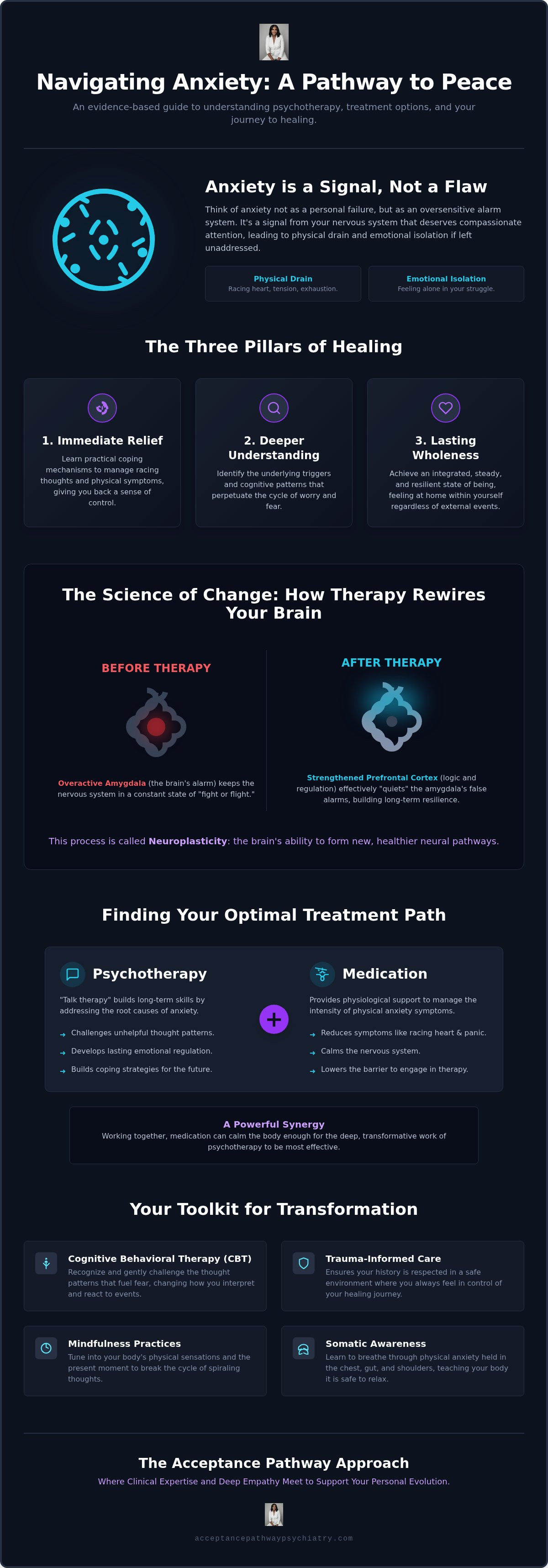
Anxiety often feels like a persistent, heavy weight that colors every interaction and decision. It isn't a character flaw or a sign that you're failing at life. Instead, think of it as a sophisticated alarm system that has become oversensitive. It's a signal from your nervous system that deserves attention and compassion rather than judgment. Understanding Psychotherapy as a structured, evidence-based process allows you to see it as a tool for emotional healing rather than an intimidating medical mystery.
The foundation of this work is the therapeutic alliance. This is a collaborative partnership where you and your provider work as equals. You bring the expertise on your own life, and the therapist brings clinical tools to help you find your way back to balance. Seeking psychotherapy for anxiety Fayetteville NC means entering a space where your evolution is witnessed and supported without the pressure to be perfect. You're not just a patient; you're an active participant in your own progress.
The Goals of Anxiety-Focused Therapy
The primary aim is to provide you with immediate, practical coping mechanisms. These tools help you manage a racing heart or spiraling thoughts in real-time, giving you back a sense of control over your day. Once the noise of daily anxiety is quieter, we work together to identify the deeper triggers and cognitive patterns that keep the cycle of worry moving. Wholeness is the ultimate goal; it's the state of feeling integrated, steady, and at home within yourself, regardless of external circumstances.
Common Modalities: Beyond Just "Talk Therapy"
Modern treatment uses several evidence-based paths to help you heal. Cognitive Behavioral Therapy (CBT) is a cornerstone, helping you recognize and gently challenge the thought patterns that fuel fear. By changing how you interpret events, you can change how you feel about them. However, we also prioritize trauma-informed care. This approach ensures that your history is respected and that you always feel safe and in control during our sessions.
We also incorporate mindfulness and somatic awareness into clinical practice. These practices help you tune into your body's physical sensations. Since anxiety often lives in the chest, gut, and shoulders, learning to breathe through these sensations can be more effective than logic alone. It's about teaching your body that it's safe to relax and let go of the tension it's been holding.
The Science and Mechanism of Therapeutic Healing
Healing from anxiety is often described as an emotional journey, but it's also a deeply biological one. When you engage in psychotherapy for anxiety Fayetteville NC, you're doing more than sharing your story; you're participating in the intentional rewiring of your brain. This process, known as neuroplasticity, allows the brain to form new, healthier neural pathways. It helps shift your baseline from a state of constant high alert to one of sustainable calm. Professional guidance acts as a compass, helping you navigate complex internal landscapes that often feel too overwhelming to face alone.
Your nervous system plays a critical role in how you experience worry. Chronic anxiety keeps the body in a "fight or flight" state, where the amygdala, the brain's alarm center, is perpetually overactive. Through consistent therapeutic work, you learn to regulate these physical responses. This isn't about just "thinking positive." It's about using clinical techniques to signal safety to your body. Research into Complementary and Integrative Approaches shows that combining evidence-based therapy with wellness practices creates a more robust foundation for this biological shift.
How Therapy Changes the Brain
The goal of therapy is to strengthen the prefrontal cortex, which is the part of the brain responsible for logic and emotional regulation. When this area is strong, it can effectively "quiet" the amygdala's false alarms. Consistent sessions build long-term mental resilience by turning these new, calmer responses into your brain's default setting. You move from merely reacting to your environment to responding with intention and clarity.
The Role of Cognitive Assessment in Treatment
Understanding your internal landscape becomes much clearer when we use objective data. We incorporate Creyos cognitive testing to gain insights into how your brain processes information, manages tasks, and responds to stress. This isn't about finding what's "wrong" with you. Instead, we use this data to tailor your psychotherapy for anxiety Fayetteville NC to your specific cognitive profile.
Identifying specific mental blocks allows us to bypass guesswork and focus on the strategies that will actually work for your unique mind. This precision psychiatry approach ensures that your treatment plan is as unique as your own experience. If you're curious about how your cognitive profile influences your daily life, exploring integrative wellness services can be a vital first step in your evolution toward wholeness.
Psychotherapy vs. Medication: Finding Your Optimal Treatment Path
One of the most frequent questions people ask is whether they should pursue medication or talk therapy. It's a valid concern, especially when you're feeling stuck in a cycle of worry. Instead of viewing these as competing options, it's more helpful to see them as different tools in a single toolkit. When considering psychotherapy for anxiety Fayetteville NC, you'll find that the most effective path often involves a combination of both biological and psychological support.
Think of medication as a way to "lower the floor" of your anxiety. When your nervous system is constantly in a state of high alert, it can be nearly impossible to concentrate on the cognitive shifts required in therapy. Medication can quiet that background noise, providing the stability you need to actually engage with the work. Once the physical intensity is manageable, therapy provides the long-term skills to "raise the ceiling" of your resilience.
When to Consider Medication Management
Medication becomes a vital consideration when physical symptoms begin to interfere with your daily functioning. If you find that panic attacks, chronic insomnia, or a racing heart are preventing you from even starting a conversation about your mental health, it may be time to seek a psychiatric medication management expert. These professionals act as partners in your care. They monitor your response to treatment, ensure safety, and adjust dosages to match your body's specific needs. This clinical monitoring is essential for finding the right balance without feeling disconnected from your emotions.
The Synergistic Effect of Integrated Care
Integrated care treats the whole person rather than just a set of symptoms. While medication offers biological stability, psychotherapy for anxiety Fayetteville NC provides the cognitive and emotional tools for lasting change. This synergy is particularly powerful for moderate to severe cases where one modality alone might not be enough. A provider who understands both the psychological and biological drivers of anxiety can create a truly holistic wellness plan. This approach ensures that you aren't just managing your anxiety, but actively evolving toward a state of wholeness and peace. We work together to decide which path feels right for you, ensuring you remain the primary driver of your own healing journey.
Preparing for Your Journey: What to Expect in Psychotherapy
Deciding to start therapy often feels like the most difficult step in the entire process. The uncertainty of what happens during that first session can trigger a new wave of "what-if" thoughts. When you seek out psychotherapy for anxiety Fayetteville NC, you're choosing a space specifically designed for your psychological safety. It's a private, non-judgmental environment where your experiences are treated with clinical authority and deep empathy. You should view this initial meeting as a mutual partnership evaluation. It's a time for you to see if the provider's approach feels like the right fit for your personal evolution and healing.
The goal of our first few interactions is to lower the barrier to care. We move at a pace that feels comfortable for you, ensuring that you never feel rushed or pressured to share more than you're ready to. By creating a steady, predictable rhythm, we establish the grounding you need to begin exploring the roots of your worry. This collaborative expert model ensures that you remain the primary driver of your journey while having a steady, reliable ally by your side.
The Initial Evaluation Process
During a comprehensive psychiatric evaluation, we don't just look at a list of symptoms; we listen to your whole story. You can expect questions about your history, your current daily challenges, and what you hope to reclaim in your life. It isn't an interrogation. Instead, it's a supportive dialogue where your provider listens intently to your unique history to build a personalized roadmap for your care. This roadmap might include a mix of psychotherapy for anxiety Fayetteville NC and other integrative wellness services. We use this time to understand your specific cognitive profile and how your nervous system responds to stress, ensuring every recommendation is based on your actual needs.
Telehealth: Care from the Comfort of Home
For many individuals struggling with anxiety, the logistics of travel and sitting in a public waiting room can add unnecessary friction to the healing process. Telehealth appointments offer a compassionate, flexible solution that makes care accessible from the comfort of your own home. Virtual psychotherapy is just as effective as in-person sessions, allowing you to stay in an environment where you already feel secure. To prepare your space, find a quiet area where you won't be interrupted and use headphones to ensure total privacy. This modern approach reduces the stress of "getting there," allowing you to focus entirely on your progress. If you're ready to begin, you can schedule a telehealth appointment to start your collaborative journey toward peace.
Integrated Wellness: The Acceptance Pathway Approach to Anxiety
The philosophy of acceptance is the cornerstone of our practice. It isn't about resignation or simply living with your symptoms. Instead, acceptance is a proactive step toward change. It's about acknowledging where you are right now so you can move forward with clarity. This approach allows us to act as a supportive witness to your personal evolution, providing a steady and reliable presence as you navigate the complexities of your mental health journey.
Integrative wellness services are designed to complement clinical psychotherapy for anxiety Fayetteville NC. By looking at the whole person, we address the biological, psychological, and social factors that contribute to your distress. This might include using data from cognitive testing to understand your brain's unique patterns or integrating medication management when a physical baseline of stability is needed. Our goal is to create a seamless environment where every aspect of your care is aligned with your ultimate aim of wholeness and peace.
A Collaborative Expert Partnership
Recovery from anxiety requires a provider who truly listens. You aren't just a collection of symptoms or a diagnosis; you're an individual with a unique history and specific goals. We balance high-level clinical knowledge with deep empathy to ensure you feel heard and understood at every stage of the process. This partnership is built on mutual respect and professional humility. We invite you to see yourself not as a passive recipient of care, but as a vital and active ally in your own healing process. When you feel empowered in your treatment, the path toward lasting change becomes much clearer.
Starting Your Path to Peace
Taking the first step toward professional support can feel daunting, but it's often the most significant move you'll ever make. We've designed our process to be as smooth as possible to reduce the friction of seeking help. Whether you prefer in-person sessions or the flexibility of telehealth, the focus remains on your comfort and progress. We offer straightforward scheduling and assistance with insurance to ensure that logistical hurdles don't stand in the way of your well-being.
Healing is possible. You don't have to carry the weight of "what-if" thoughts or physical stress on your own. By choosing psychotherapy for anxiety Fayetteville NC, you're choosing a path of collaborative evolution. We're here to walk alongside you, offering the clinical expertise and compassionate care you deserve as you reclaim your sense of peace.
Embracing Your Personal Evolution toward Wholeness
Anxiety doesn't have to be the defining feature of your life. Through the intentional process of psychotherapy for anxiety Fayetteville NC, you can move from a state of constant high alert to a place of sustainable calm. We've explored how evidence-based care helps rewire the brain, how medication can stabilize your progress, and why a collaborative partnership is the foundation of lasting change. This journey isn't just about managing symptoms; it's about reclaiming your sense of self and moving forward with confidence.
At Acceptance Pathway Psychiatry, we provide the steady, reliable presence you need to explore your history and build a resilient future. Our comprehensive psychiatric evaluations and trauma-informed psychotherapy are designed to honor your unique experience. Whether you prefer the convenience of telehealth or the connection of in-person appointments, we're here to act as a supportive witness to your growth. You don't have to navigate this internal landscape alone. Begin your journey toward peace with Acceptance Pathway Psychiatry today. Healing is a collaborative process, and you're ready for the next step.
Frequently Asked Questions
How long does psychotherapy for anxiety typically take to see results?
Most people begin to notice a shift in their symptom intensity within 8 to 12 weekly sessions. However, the timeline for psychotherapy for anxiety Fayetteville NC depends on your unique history and goals. While immediate coping skills are often the focus of early sessions, deeper cognitive restructuring and emotional regulation can take longer to solidify. We move at your pace, ensuring that progress feels sustainable and integrated into your daily life.
Is medication always necessary when starting psychotherapy for anxiety?
Medication is not always necessary and is a personal choice made in collaboration with your provider. For some, psychotherapy alone is highly effective for managing worry. For others, medication management acts as a supportive tool to lower the baseline of physical stress, making it easier to engage in the therapeutic process. We evaluate your needs holistically to determine if a combined approach or therapy alone is the most appropriate path for your healing.
What happens during the very first therapy session?
Your first session is a comprehensive psychiatric evaluation where the focus is on understanding your story. We'll discuss your history, current challenges, and what you hope to achieve through treatment. It's a time for us to build a collaborative roadmap together in a safe, non-judgmental space. You'll have the opportunity to ask questions and see if our partnership feels like the right fit for your personal evolution and wholeness.
Can telehealth psychotherapy be as effective as meeting in person?
Research consistently shows that telehealth psychotherapy is just as effective as in-person care for managing anxiety. Virtual appointments offer the added benefit of receiving support from the comfort of your own home, which can significantly reduce the anticipatory stress of traveling to an office. This flexibility ensures that professional help is accessible whenever you need it. We use secure, private platforms to maintain the same level of safety and confidentiality found in physical clinics.
How do I know if my anxiety is "bad enough" to seek professional help?
If your worry interferes with your sleep, work, or relationships, it's "bad enough" to seek support. You don't need to reach a point of crisis before your experience is considered valid. If you are considering psychotherapy for anxiety Fayetteville NC, starting early can prevent symptoms from becoming more entrenched. Professional help is a proactive step toward reclaiming your peace, whether you're dealing with occasional racing thoughts or persistent physical symptoms of stress.
What is the difference between a psychiatrist and a therapist for anxiety?
A psychiatrist or psychiatric provider primarily focuses on the biological aspects of mental health, including the diagnosis and medication management of conditions. A therapist typically focuses on talk-based modalities like CBT to address thought patterns and behaviors. Our practice offers a dual focus, integrating both clinical psychotherapy and medication management. This ensures that your treatment plan addresses both the psychological and physiological drivers of your anxiety in one cohesive environment.
How does integrative wellness fit into a traditional psychotherapy plan?
Integrative wellness complements traditional therapy by addressing the whole person rather than just a set of symptoms. This might include using Creyos cognitive testing to map your brain's unique processing patterns or incorporating mindfulness practices to soothe the nervous system. By combining evidence-based clinical tools with holistic strategies, we create a more robust foundation for long-term resilience. This approach ensures that your healing journey is as unique and multifaceted as your own life.


