

What if the path to healing from trauma isn't about "getting over" the past, but about integrating your experiences into a stronger, more whole version of yourself? Many people feel stuck in a cycle of painful memories, wondering if they'll ever feel like themselves again. It's common to feel overwhelmed by the choice between therapy and medication, or to fear that clinical care will feel cold and detached. When you're looking for supportive PTSD treatment Fayetteville NC, you deserve more than just a standard medical procedure; you need a collaborative partner who honors your unique internal landscape.
In 2026, recovery is more accessible and personalized than ever. This guide will help you discover evidence-based PTSD treatment options and a collaborative path toward healing that prioritizes your specific needs. We'll explore how modern modalities like psychotherapy, medication management, and cognitive testing work together to create a safe, non-judgmental environment for your evolution. By understanding these practical steps, you can move from a place of survival to a life of genuine wholeness and peace.
Key Takeaways
- Understand that PTSD isn't a personal failing but a natural response to extraordinary stress, making recovery a collaborative evolution toward wholeness.
- Learn how combining psychotherapy with medication management provides the stability you need to process traumatic memories effectively and reclaim your daily life.
- Explore how telehealth in 2026 offers a safe, accessible way to receive compassionate care from the comfort and security of your own home.
- Discover evidence-based options for PTSD treatment Fayetteville NC that prioritize your unique journey within a supportive and non-judgmental partnership.
- Use Creyos cognitive testing to gain objective insights into your mental health, allowing for a personalized recovery plan that addresses your specific needs.
Understanding the Impact of PTSD on Your Mental Health
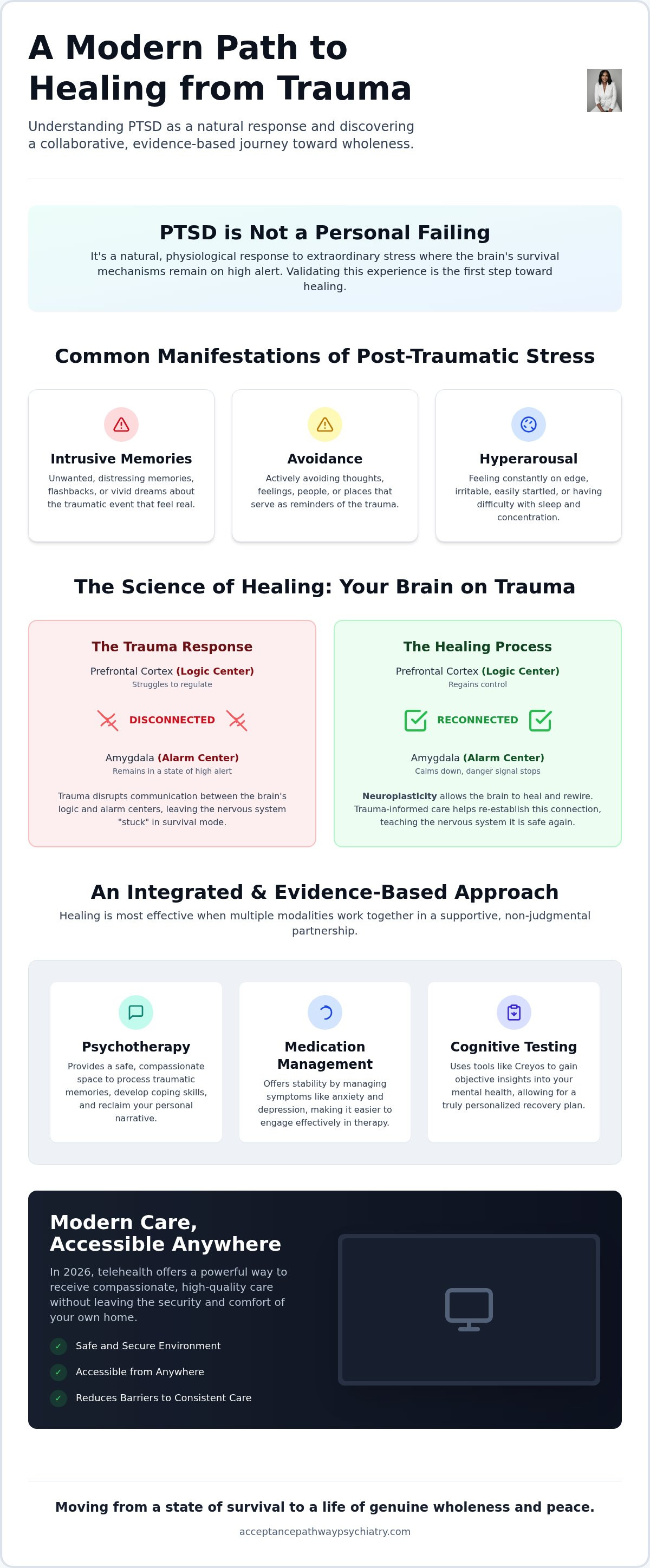
Living with the aftermath of a traumatic event can feel like carrying an invisible weight that never lightens. It's essential to understand that Post-Traumatic Stress Disorder isn't a personal failing, a lack of willpower, or a sign of weakness. It is a natural, physiological response to extraordinary stress where the brain's survival mechanisms remain stuck in a state of high alert. Validating this experience is the first step toward reclaiming your life and moving toward wholeness.
In 2026, we recognize that trauma manifests in complex ways that affect every aspect of a person's existence. Seeking professional help early is the most effective way to ensure long-term stability and prevent symptoms from becoming more deeply rooted. By engaging with evidence-based PTSD treatment, you can begin a collaborative journey that respects your boundaries and proceeds at a pace that feels safe for you. Gaining a deeper perspective through resources like Understanding Post-Traumatic Stress Disorder can help you see that your symptoms are documented, understood, and treatable.
To better understand this concept, watch this helpful video:
Common Symptoms and the Silent Struggle
The struggle of living with trauma is often silent, but its impact is loud. Symptoms usually fall into three main categories: intrusive thoughts, avoidance, and hyperarousal. You might experience vivid flashbacks, or you may find yourself going to great lengths to avoid people or places that trigger painful memories. This constant state of "fight or flight" can erode your self-perception and make it difficult to maintain healthy relationships or a steady career.
- Intrusive Memories: Unwanted, distressing memories or dreams about the event.
- Avoidance: Trying to avoid thinking about the trauma or avoiding external reminders like people and activities.
- Hyperarousal: Feeling constantly guarded, irritable, or easily startled.
It's important to distinguish between acute stress and chronic PTSD. While many people experience temporary distress after a crisis, chronic PTSD involves symptoms that last for months or years, significantly impairing daily function and requiring specialized clinical support.
The Biology of Trauma in the Brain
Trauma isn't just "in your head"; it's in your nervous system. When you experience a threat, the amygdala, the brain's alarm center, takes over to keep you safe. In a healthy response, the prefrontal cortex eventually calms the amygdala down once the danger has passed. However, trauma can disrupt this communication, leaving the amygdala in a state of permanent alarm while the logical prefrontal cortex struggles to bring the system back to baseline. This biological disconnect explains why you can't simply "think" your way out of a panic attack or a flashback.
Healing is possible because the brain is remarkably adaptable. Neuroplasticity is the brain's ability to heal and rewire after trauma. Through consistent, trauma-informed care, you can help your nervous system learn that it is safe again, allowing you to move from survival mode back into a life of connection and growth.
Evidence-Based Modalities for Lasting Recovery
Recovery from trauma is a journey of reclaiming your narrative and finding safety within your own body. At the heart of this process is trauma-informed care, a philosophy that prioritizes your psychological security and treats you with the dignity you deserve. Unlike traditional medical models that might focus solely on a diagnosis, trauma-informed care recognizes the profound impact that life events have on your brain and behavior. When seeking PTSD treatment Fayetteville NC, it's vital to find a provider who acts as a supportive witness to your progress rather than an intimidating authority figure.
A non-judgmental environment is the cornerstone of therapeutic success. When you feel truly heard and accepted, the barrier to sharing painful experiences begins to lower. This safety allows for the deep work of processing traumatic memories without the fear of being misunderstood or shamed. Modern psychiatric practices are shifting toward this integrative model, recognizing that mental health is deeply connected to your physical and emotional well-being. By learning about Evidence-Based PTSD Treatments, you can better understand how specific protocols are designed to help you move forward.
Trauma-Informed Psychotherapy
Individual psychotherapy sessions offer a dedicated space for narrative reconstruction. This isn't just about talking; it's about making sense of what happened in a way that allows you to integrate the past into the present. The therapeutic alliance, or the bond of mutual trust between you and your provider, is the most consistent predictor of a positive outcome. Within this partnership, you'll develop practical grounding techniques to manage emotional regulation. These tools help you stay present when triggers arise, ensuring that you remain in control of your reactions rather than being at the mercy of your history.
Holistic Wellness and Mind-Body Connection
Healing from PTSD requires more than just addressing thoughts; it involves listening to the body. Somatic awareness and mindfulness are increasingly integrated into clinical care to help individuals reconnect with their physical sensations in a safe way. Trauma often leaves the body in a state of chronic tension, and learning to release that stress is a vital part of recovery. Lifestyle factors, including sleep hygiene and balanced nutrition, provide the physiological foundation necessary for your brain to heal. A collaborative approach to mental wholeness ensures that every part of your lifestyle supports your clinical goals, creating a sustainable path toward lasting peace.
Integrating Medication Management and Cognitive Testing
Healing from trauma requires a delicate balance of emotional processing and biological stabilization. While psychotherapy addresses the narrative of your experience, medication management often provides the quiet ground needed to engage in that deep work. When your nervous system is trapped in a state of high alert, it's difficult to focus on the insights gained during a session. By integrating clinical tools with compassionate care, we can create a more predictable and supportive path toward wholeness. If you're seeking effective PTSD treatment Fayetteville NC, understanding how these modalities work together is a vital step in your recovery.
This integrated approach moves away from traditional trial-and-error methods. Instead, it favors "precision psychiatry," which uses objective data to inform every decision. By looking at the intersection of your symptoms and your brain's current functioning, we can develop a plan that is as unique as your journey. This level of personalization ensures that your care is not just a standard protocol, but a tailored evolution toward health. You can find more details on these combined approaches in this guide to Comprehensive PTSD Diagnosis and Treatment.
The Role of Medication in PTSD Care
Many people feel hesitant about using medication for trauma-related symptoms, often due to misconceptions about "numbing" emotions. It's helpful to view psychiatric medication management as a way to lower the volume of hyperarousal and anxiety. When symptom severity is reduced, your brain's ability to process therapy actually increases. This isn't about changing who you are; it's about providing the stability you need to reclaim your life. This process requires ongoing monitoring and collaborative adjustments, ensuring that your treatment remains aligned with your personal goals and comfort levels.
Precision Testing with Creyos
Trauma often leaves a visible mark on how we process information, leading to what many describe as "brain fog." You might struggle with memory gaps or find it impossible to concentrate on daily tasks. By using ADHD testing and cognitive assessments through the Creyos platform, we gain an objective baseline of your mental health. These assessments identify exactly how trauma is impacting your focus and executive function. With this data, we can move beyond guesswork and tailor your treatment plan to your unique brain profile, helping you regain the mental clarity and confidence you deserve.
Navigating Your Journey Through Telehealth and In-Person Care
In 2026, the way we access mental health support has evolved into a seamless blend of digital and physical spaces. For many, the choice between virtual and in-person care isn't just about convenience; it's about finding the environment where they feel most secure. Virtual mental health care has become a sophisticated standard of practice, offering a level of intimacy and safety that was previously difficult to achieve in traditional settings. When you're searching for PTSD treatment Fayetteville NC, the ability to connect with a compassionate provider from your own sanctuary can be the deciding factor in beginning your recovery.
Telehealth is particularly transformative for those living with severe avoidance symptoms. One of the hallmarks of trauma is the desire to stay within safe, known boundaries to avoid external triggers. The act of commuting to a clinical office, navigating traffic, sitting in a public waiting room, or being in an unfamiliar environment can inadvertently spike anxiety before a session even begins. Remote care removes these barriers, allowing you to focus your energy entirely on your healing process rather than the logistics of the appointment.
The Benefits of Telehealth for Trauma Survivors
Healing from the safety and comfort of your own home provides a unique psychological advantage. You're in control of your surroundings, which can significantly lower your nervous system's baseline stress. This sense of agency is vital for anyone working through traumatic memories. Additionally, the flexibility of virtual care supports consistent attendance. When you don't have to account for travel time, it's easier to integrate regular appointments into a busy schedule, ensuring that your progress remains steady and uninterrupted.
Preparing for Your First Evaluation
Taking the first step toward a psychiatric evaluation is a courageous act of self-care. To make the most of your remote session, it's helpful to prepare your environment and your thoughts ahead of time. Ensuring privacy and comfort during your remote sessions helps establish the psychological safety needed for a productive conversation.
- Secure Your Space: Find a quiet, private room where you won't be interrupted. Using headphones can further enhance your privacy and focus.
- Gather Your History: Have a brief list of your medical history and any current symptoms or triggers you've noticed lately.
- Prepare Your Questions: Think about what you want to achieve in treatment and any concerns you have about medication or therapy.
The first evaluation is a collaborative dialogue, not an interrogation. It's a time for us to listen to your story and for you to decide if this partnership feels right for you. If you're ready to explore a path toward recovery that respects your comfort and your pace, you can schedule a telehealth appointment to begin your journey.
Finding Support with Acceptance Pathway Psychiatry
Choosing a provider is a deeply personal decision, especially when you're carrying the weight of past trauma. At Acceptance Pathway Psychiatry, we believe that your journey toward recovery is a collaborative evolution. We don't view ourselves as distant authorities. Instead, we act as supportive witnesses to your progress. Our philosophy is rooted in the idea that you're the expert on your own life. Our role is to provide the clinical expertise and compassionate guidance needed to help you find your way back to wholeness. If you've been searching for PTSD treatment Fayetteville NC, you deserve a practice that prioritizes your psychological safety and honors your unique pace.
Our integrated model brings together the precision of medication management, the depth of psychotherapy, and the objective insights of Creyos cognitive testing. By combining these tools, we ensure that every aspect of your mental health is addressed. We don't just treat symptoms; we support the person behind them. This holistic approach creates a steady foundation for long-term stability. It allows you to move beyond survival mode and into a life of purpose and connection. We're here to help you navigate this process with clinical authority and deep empathy.
A Collaborative Partnership for Healing
We treat the patient-provider relationship as a mutual partnership. This means we listen, truly listen, to your experiences, your fears, and your goals. Our focus isn't just on clinical outcomes. We care about your personal evolution and long-term wholeness. Having an expert guide who values your voice makes all the difference in the therapeutic process. We're here to walk alongside you, offering a steady, reliable presence as you navigate the complexities of healing. This partnership ensures that your treatment plan remains flexible and responsive to your needs as you grow.
Taking the First Step Toward Wholeness
Reaching out for help is often the hardest part of the journey. We've designed our intake process to be as warm and welcoming as possible to lower that barrier. When you schedule your initial clinical consultation, you'll find an environment that is intentionally non-judgmental and supportive. We'll discuss your history, your current challenges, and your hopes for the future to create a plan that feels right for you. Remember, your past doesn't have to define your future. Progress is possible, and you don't have to walk this path alone. Together, we can build a future defined by wholeness, resilience, and peace.
Reclaiming Your Future and Wholeness
Healing from trauma is a profound evolution that requires both clinical expertise and deep empathy. We've explored how evidence-based recovery integrates the stability of medication management with the narrative reconstruction found in psychotherapy. By using objective cognitive testing, we move beyond guesswork to create a plan that honors your unique brain profile. Finding the right PTSD treatment Fayetteville NC is about more than just managing symptoms; it's about finding a safe space where you can finally move from survival back into a life of genuine connection.
At Acceptance Pathway Psychiatry, we provide compassionate, trauma-informed care through integrated medication and therapy plans. Our goal is to offer expert clinical guidance with a human touch, acting as a supportive witness to your personal progress. You don't have to carry the weight of the past alone any longer. Begin your healing journey with Acceptance Pathway Psychiatry today. Your past does not define your potential, and a future of peace and wholeness is well within your reach.
Frequently Asked Questions
What is the most effective treatment for PTSD in 2026?
In 2026, the most effective approach is an integrated model that combines trauma-informed psychotherapy with psychiatric medication management. This dual path addresses both the emotional narrative and the biological stress response. Adding Creyos cognitive testing allows for a personalized plan that targets specific areas like memory or focus. This comprehensive strategy ensures that you aren't just managing symptoms but are moving toward long-term wholeness and functional recovery.
Can PTSD be treated without the use of medication?
Yes, many individuals find success using psychotherapy alone, such as Cognitive Behavioral Therapy or Acceptance and Commitment Therapy. These modalities provide the tools needed to process traumatic memories and develop healthy grounding techniques. While medication is a valuable tool for reducing symptom severity and providing stability, it's not a requirement for everyone. We work with you to determine the best path for your unique journey and comfort level.
How long does a typical PTSD treatment plan last?
Recovery is a personal evolution, so there isn't a fixed timeline. Many people begin to notice significant improvements within three to six months of consistent psychotherapy and medication management. However, long-term healing often requires ongoing support to maintain stability and integrate new coping skills. Your treatment plan is regularly reviewed and adjusted to ensure it aligns with your progress and your personal goals for wholeness.
What happens during a psychiatric evaluation for trauma?
A psychiatric evaluation for trauma is a collaborative dialogue designed to understand your unique experience. Your provider will listen to your history, review your current symptoms, and discuss how trauma impacts your daily life. This session may include Creyos cognitive testing to establish a baseline for your mental health. It's a non-judgmental space where you can share your story safely and begin building a partnership for your recovery journey.
Is telehealth as effective as in-person therapy for PTSD?
Research confirms that telehealth is just as effective as in-person care for trauma recovery. For many survivors, virtual sessions are actually preferable because they allow for treatment within the safety of their own homes. This reduces the stress of commuting and limits exposure to external triggers. When seeking PTSD treatment Fayetteville NC, telehealth offers a convenient and secure way to access expert clinical care without compromising on quality or connection.
What is the difference between PTSD and Complex PTSD (C-PTSD)?
While both involve trauma, PTSD usually stems from a single terrifying event. Complex PTSD, or C-PTSD, typically results from prolonged or repeated trauma, such as ongoing childhood neglect or domestic abuse. In addition to standard PTSD symptoms, C-PTSD often includes difficulties with emotional regulation, persistent feelings of worthlessness, and challenges in maintaining relationships. Both conditions respond well to an integrated approach that combines specialized psychotherapy with supportive medication management.
How do I know if my symptoms are severe enough to require professional help?
If your symptoms interfere with your ability to work, maintain relationships, or enjoy daily life, it's time to seek professional help. You don't have to wait for a crisis to begin your healing journey. Signs like persistent "brain fog," intense avoidance, or feeling constantly on edge are valid reasons to reach out. Early intervention through a psychiatric evaluation can provide the clarity and support needed to prevent symptoms from worsening over time.
Does insurance typically cover integrated medication management and therapy?
Most major insurance plans in 2026 provide coverage for both medication management and psychotherapy as part of mental health benefits. Telehealth services are also widely covered on par with in-person visits. Since every plan is different, it's helpful to verify your specific benefits regarding integrated care and cognitive assessments. Our team can assist you in navigating these payment options to ensure your path to recovery is as smooth as possible.


