

Imagine a morning where the weight of depression makes the front door feel miles away, or anxiety makes the thought of a crowded waiting room feel completely unbearable. You aren't alone in feeling that the traditional path to mental health care sometimes creates more stress than it relieves. It's exhausting to navigate traffic and public spaces when you're already struggling to find your footing. That's why telehealth for depression and anxiety has become a vital bridge for so many, offering a way to connect with a compassionate professional without leaving your safe space.
You deserve a path to healing that meets you exactly where you are. Recent 2025 research confirms that virtual treatment is just as effective as sitting in a physical office, and it often provides a more personal, focused environment for your recovery. This guide will walk through how virtual medication management and psychotherapy work together to create a manageable plan for your wellness. You'll learn what to expect during your appointments and how this collaborative partnership helps you feel truly seen and heard from the comfort of your own home.
Key Takeaways
- Understand how secure, HIPAA-compliant platforms make telehealth for depression and anxiety a safe and private alternative to traditional office visits.
- Learn how virtual psychiatric care combines medication management and psychotherapy to address both your physical symptoms and emotional well-being.
- Discover why receiving care from your own home can actually deepen your therapeutic connection while removing the stress of travel and waiting rooms.
- Get practical steps for preparing your "sacred space" and technology to ensure your first virtual evaluation is calm and productive.
- See how integrative wellness factors like sleep and nutrition are woven into a personalized virtual care plan that supports your whole self.
What is Telehealth for Depression and Anxiety?
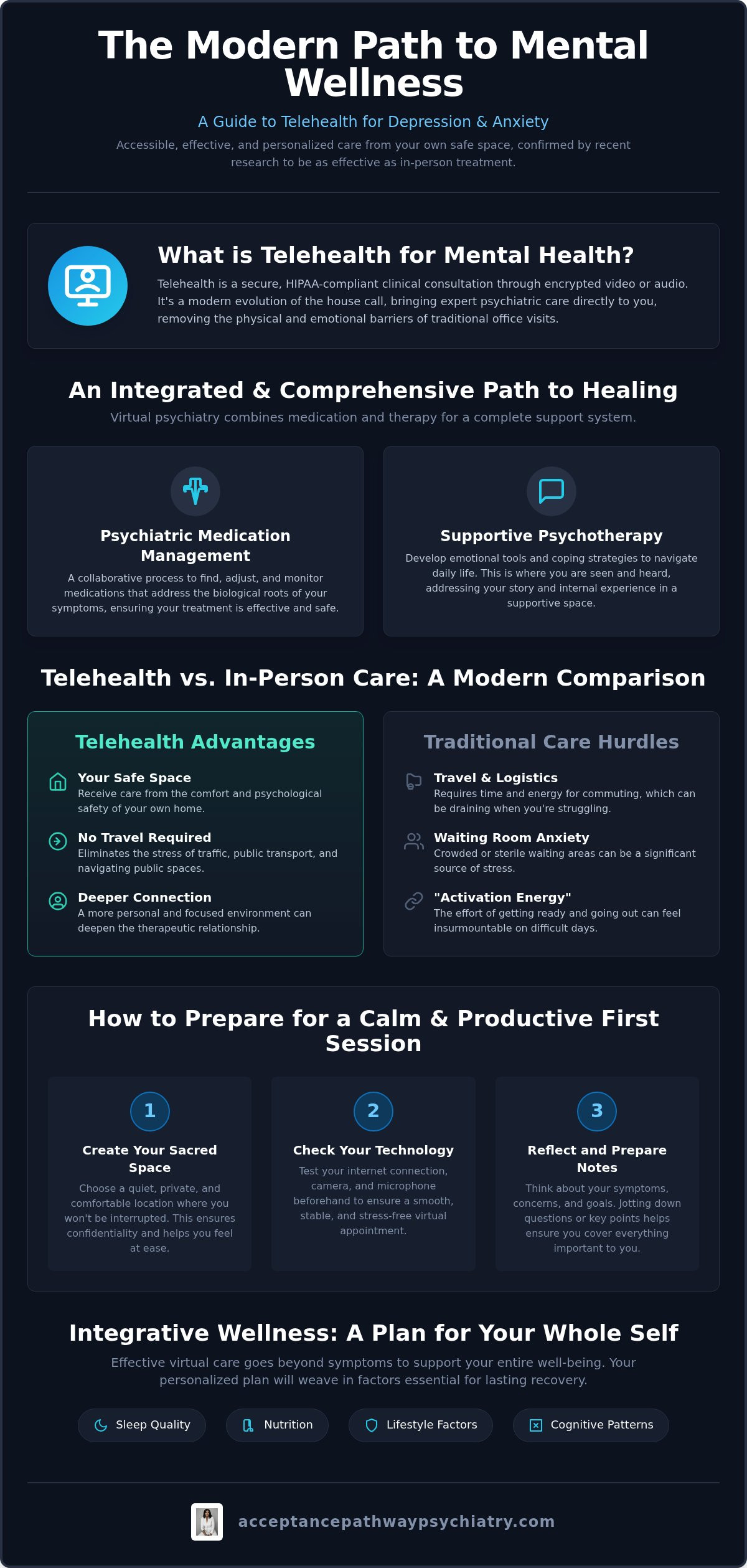
Telehealth for depression and anxiety is a secure, HIPAA-compliant clinical consultation conducted through encrypted video or audio platforms. It serves as a vital bridge between a provider and a person seeking help, designed specifically to remove the physical barriers that often prevent someone from accessing high-quality mental health care. This approach isn't just a temporary fix or a simplified version of care; it's a robust clinical environment where you can receive the same level of attention you would in a physical office. We can define telehealth psychiatry as a modern evolution of the traditional house call, bringing expert care directly into your living space through a digital screen.
This model of care is comprehensive. It includes everything from your very first diagnostic evaluation to the creation and maintenance of ongoing treatment plans. Whether you're discussing new symptoms or adjusting a long-term strategy, the virtual setting provides a private, stable foundation for your recovery. By utilizing these tools, providers can offer a consistent presence in your life, ensuring that your path toward wellness isn't interrupted by the logistics of travel or the stress of public spaces.
The Evolution of Virtual Mental Health Care
For many years, remote care was viewed as a secondary option or an "emergency-only" measure for those in remote areas. However, technology has finally caught up to our clinical needs. With high-definition video and specialized platforms, Telepsychiatry has matured into a primary method for delivering comprehensive care. According to research from early 2026, mental health conditions have become the top telehealth diagnostic category across all age groups in the U.S., showing that the shift toward virtual care is both permanent and deeply trusted. This evolution has made it possible for those with limited mobility or social anxiety to access a level of support that was previously out of reach.
Who Can Benefit from Virtual Psychiatric Care?
If you're living with major depressive disorder (MDD), the simplest tasks can feel like climbing a mountain. Telehealth lowers the "activation energy" required to start your healing journey. You don't have to worry about getting dressed for a public outing, navigating traffic, or sitting in a sterile waiting room. For those struggling with severe anxiety, your home environment offers a sense of psychological safety that makes it much easier to be open and vulnerable with a provider. This accessibility is equally beneficial for new patients seeking an initial diagnosis and established patients who need reliable, ongoing medication management. It creates a steady, predictable rhythm of care that respects your energy levels and your unique internal experience.
How Virtual Psychiatry Works: Medications and Therapy Together
Healing rarely happens in a vacuum. Effective treatment often requires a dual approach that addresses the biological roots of your distress while providing the emotional tools needed to navigate daily life. By integrating psychiatric medication management with psychotherapy, providers create a comprehensive safety net. This collaborative partnership ensures you aren't just a diagnosis on a chart, but a whole person whose unique internal experience is the guiding force of the treatment plan.
Recent research on telehealth for depression and anxiety has shown that this combined virtual approach is highly effective. It allows for a fluid conversation where medication adjustments and therapeutic breakthroughs happen in tandem. Instead of visiting two different offices, you can address your symptoms and your story in one supportive, digital environment. This synergy helps you feel seen and heard on multiple levels, which is essential for long-term stability.
The Assessment: Beyond the Screen
A common worry is that a provider might miss something if they aren't in the same room. However, clinical expertise translates remarkably well to video. Providers are trained to observe subtle cues, such as your speech patterns, eye contact, and facial expressions, to understand your current state. To add an extra layer of precision, many practitioners now use cognitive testing for mental health. These objective tools provide data on memory, focus, and processing speed that supplement the clinical interview, ensuring your treatment plan is built on a foundation of clear, measurable insights.
Consistent Care and Medication Monitoring
Once a plan is in place, the process remains seamless. Prescriptions are handled through secure e-prescribing, sending your medication directly to your local pharmacy. Regular check-ins are vital. These brief but meaningful sessions allow your provider to monitor side effects and make dose adjustments as your body responds to treatment. You can rest assured knowing that the regulatory environment supports this care. The DEA has extended flexibilities for remote prescribing of controlled substances through the end of 2026, allowing for stable, uninterrupted access to the medications you need. This continuity is essential for maintaining the progress you've made. If you're ready to begin this journey, you can explore virtual psychiatric care to find a plan that fits your life.
Telehealth vs. In-Person Care: Addressing Common Concerns
One of the most persistent myths about virtual care is that a digital screen creates a cold, detached barrier between you and your provider. In reality, the opposite is often true. When you engage in telehealth for depression and anxiety, you're inviting a compassionate guide into your personal environment. This shift often deepens the sense of intimacy and openness. You aren't "performing" as a patient in a sterile, clinical setting; instead, you're speaking from a place where you feel most like yourself. This inherent psychological safety allows for more profound breakthroughs and a more authentic clinical partnership.
The logistical advantages also play a significant role in your mental well-being. Traditional office visits often come with a hidden "stress tax" that can be overwhelming when you're already struggling. Consider the following benefits of the virtual model:
- Zero Travel Stress: You don't have to navigate traffic, find parking, or worry about being late due to external factors.
- No Waiting Rooms: You can skip the anxiety of sitting in a public space with strangers, which is often a major barrier for those with social anxiety.
- Time Efficiency: It's much easier to fit a session into a busy workday or around childcare when you don't have to account for a two-hour round trip.
Clinical outcomes reflect this success. A 2025 meta-analysis of randomized trials confirmed there's no significant statistical difference in effectiveness between remote and in-person treatment for depression. In fact, some studies suggested that telehealth for depression and anxiety can be even more effective for specific anxiety disorders because it removes the environmental stressors that might otherwise trigger a patient before their session even begins.
Privacy and Confidentiality in a Digital World
It's natural to wonder if your data is safe when it's transmitted online. We use HIPAA-compliant platforms that utilize high-level encryption to ensure your sessions remain private. Your health information is just as secure as it would be in a physical file cabinet. To protect your own privacy at home, we recommend using headphones and finding a quiet, dedicated space where you won't be interrupted. This creates a virtual "vault" for your thoughts and feelings, allowing you to speak freely without fear of being overheard.
Is Virtual Care Right for Everyone?
While virtual care is a powerful tool, it's a collaborative decision to determine if it's the right fit for your current needs. It's generally suitable for most people, but those experiencing a high-risk crisis or requiring medical detoxification may benefit more from in-person, intensive settings. Your "telehealth readiness" also depends on your comfort with technology. If you have a stable internet connection and a device with a camera, you're likely ready to begin. The beauty of this model is its flexibility. It allows you to choose the environment that best supports your healing journey, ensuring you always feel in control of your care.
How to Prepare for Your First Telehealth Psychiatric Evaluation
Starting a new journey can feel overwhelming, especially when you're already managing heavy emotions. Preparation is a powerful way to reclaim a sense of agency before your appointment begins. By taking a few intentional steps, you can ensure that your experience with telehealth for depression and anxiety is as calm and productive as possible. This preparation helps bridge the gap between your home environment and the clinical expertise of your provider.
- Step 1: Create a "Sacred Space." Find a quiet, private area where you feel safe to speak openly. This could be a home office, a bedroom, or even a parked car. The goal is to eliminate the fear of being overheard, allowing you to be completely vulnerable.
- Step 2: Perform a Technical Check. A few minutes before your call, ensure your internet connection is stable. Check that your camera and microphone are functioning properly so the session can flow without the distraction of tech issues.
- Step 3: Gather Your History. Keep a list of current symptoms and any previous medications you've tried. Having these details ready prevents the stress of trying to remember them in the moment.
- Step 4: Set Your Intentions. Reflect on what you hope to achieve. Whether it's better sleep or a reduction in panic attacks, knowing your goals helps your provider act as a more effective guide.
What to Expect During the First 60 Minutes
The initial evaluation is a foundational intake session. It's a "get to know you" phase rather than a rush toward a rapid diagnosis. Your provider will ask about your personal history, your daily challenges, and the specific events that brought you to seek care. This is a collaborative dialogue where your voice is the most important one in the room. Many patients describe a profound sense of relief after the first session, finally feeling that their internal burden has been witnessed by a professional ally. You'll leave the call with a clearer understanding of the next steps and a sense of shared purpose.
Managing Expectations and Future Appointments
Healing is a methodical process that requires consistency. Initially, follow-up appointments for medication monitoring or therapy often occur every 2 to 4 weeks. This frequency allows for close observation of how you're responding to the care plan. Between sessions, you can stay connected through secure patient portals to ask questions or report changes. You are an active participant in this process, and your feedback is essential for making precise adjustments to your treatment. If you're ready to take this first step, you can schedule your virtual psychiatric evaluation today.
Integrative Wellness: A Holistic Path to Healing via Telehealth
True recovery often involves looking far beyond the clinical symptoms of a mood disorder. It requires a lens that views you as a complete human being with unique physical, emotional, and environmental needs. When you engage in telehealth for depression and anxiety, we don't just check off a list of diagnostic criteria. Instead, we embrace an integrative wellness model that weaves together your biological health with your daily habits and internal experiences. This trauma-informed approach ensures that every step of your care respects your history and your current capacity for growth. Acceptance Pathway Psychiatry PLLC acts as a steady, reliable partner in your personal evolution, helping you move toward a state of genuine wholeness.
Lifestyle factors play a massive role in how you feel each day. We look closely at your sleep patterns, nutritional habits, and stress management techniques to see how they interact with your mood. By addressing these pillars alongside clinical treatment, we create a more resilient foundation for your recovery. You're more than a diagnosis; you're a person in progress, and your care plan should reflect that complexity. This approach ensures that we aren't just treating a condition, but supporting a person.
Beyond the Prescription: Holistic Strategies
Progress often involves tools that go beyond the medication management mentioned in earlier sections. During virtual sessions, your provider can teach mindfulness and grounding techniques that help you regulate your nervous system in real time. One unique advantage of virtual care is the window it provides into your actual living environment. Because we can see where you spend your time, we can offer practical wellness improvements tailored specifically to your space. Whether it's discussing how your environment affects your anxiety or identifying ways to optimize your sleep hygiene, these holistic strategies are built into your daily life. We focus on wholeness, ensuring you have the skills to manage your internal experience long after the session ends.
Building Your Support Network
Your journey to wellness shouldn't happen in isolation. A wraparound approach to mental health means your telehealth provider acts as a collaborative expert who can coordinate with other members of your care team. Whether you're working with a primary care doctor or a local specialist, this integrated communication ensures everyone is moving in the same direction. This level of coordination creates a stable environment where you feel fully supported from all angles. Utilizing telehealth for depression and anxiety allows for this seamless communication between providers, keeping your progress on track. You aren't just another patient on a schedule; you're a partner in a mutual relationship built on trust and professional humility. On this pathway, you'll never have to walk alone.
Your Path to Wholeness Starts at Home
Choosing a new way to heal is a significant step toward reclaiming your life. By opting for telehealth for depression and anxiety, you're prioritizing your mental well-being while respecting your need for a safe, familiar environment. You've discovered that virtual care offers far more than simple convenience; it provides a deeply personal clinical partnership that seamlessly integrates medication management with supportive psychotherapy. This holistic approach ensures that every aspect of your internal experience is honored, witnessed, and addressed.
With nationwide access to trauma-informed care and non-judgmental support, you can move forward at a pace that feels right for you. We're here to act as a steady guide in your personal evolution, helping you navigate the weight of low energy or the static of high anxiety. You don't have to manage these burdens alone. It's time to establish a manageable plan that helps you feel truly seen and heard from the comfort of your own living space.
Begin your journey toward healing with a compassionate telehealth consultation.
You deserve to feel whole again, and we're ready to walk this pathway alongside you.
Frequently Asked Questions
Is telehealth for depression and anxiety as effective as in-person visits?
Yes, clinical research consistently shows that telehealth for depression and anxiety is just as effective as traditional in-person care. Many patients find that the comfort of their own home actually improves their ability to engage with therapy. A 2025 analysis even indicated that for certain anxiety disorders, virtual care might lead to better outcomes by reducing the stress associated with travel. This stable, digital environment provides a reliable foundation for long-term healing and progress.
Can a psychiatrist prescribe medication for anxiety or depression during a virtual appointment?
A psychiatrist can evaluate your symptoms and prescribe appropriate medications during a virtual session. Through secure e-prescribing, your provider sends prescriptions directly to your local pharmacy for easy pickup. Current DEA regulations have extended the flexibilities for remote prescribing through the end of 2026. This ensures that your treatment remains consistent and uninterrupted. Your provider will work closely with you to monitor side effects and adjust dosages as your healing journey evolves.
What equipment do I need for a telehealth psychiatric session?
You only need a few basic tools to get started with your session. A smartphone, tablet, or computer equipped with a working camera and microphone is essential. You'll also need a stable internet connection to ensure the video and audio remain clear throughout the appointment. Most providers use a secure, web-based platform, so you won't usually need to download complex software. Finding a quiet, private space where you feel safe is the most important preparation you can make.
Will my insurance cover virtual psychiatry and medication management?
Most commercial insurance plans, along with Medicare and many Medicaid programs, provide coverage for telehealth for depression and anxiety as of 2026. Certain Medicare provisions for behavioral health have been extended through December 31, 2027, allowing patients to receive services in their homes without geographic restrictions. It's always wise to verify your specific plan details, including co-pays and in-network provider status. Our team can help you understand how to navigate these benefits to ensure your care is affordable.
How do I ensure my privacy during a telehealth session if I live with others?
Maintaining your privacy is a top priority, especially in a shared living space. We recommend using headphones with a built-in microphone to ensure that only you hear your provider's voice. You might also consider using a white noise machine or a fan outside your door to muffle your conversation. Scheduling your appointments during times when others are out or occupied can also help. Creating this virtual "sacred space" allows you to speak freely and authentically with your clinician.
What happens if I have a technical glitch during my appointment?
Technical issues are rare but manageable. If your video connection drops, your provider will typically have a backup plan in place, such as calling you directly on your phone to continue the session via audio. Most platforms also offer simple troubleshooting steps if your microphone or camera isn't responding. We recommend logging in a few minutes early to test your equipment. This proactive approach helps minimize disruptions so you can focus entirely on your healing process.
Can I receive both therapy and medication management from the same virtual provider?
Receiving integrated care from a single provider is one of the primary benefits of our model. This approach allows your provider to act as a supportive witness to your entire journey, addressing both the biological and emotional aspects of your well-being. By combining medication management with psychotherapy, we can ensure that your treatment plan is cohesive and responsive. This collaborative partnership simplifies your care and helps you build a deeper, more trusting relationship with your clinician.
How do I know if my symptoms are severe enough to need a psychiatrist?
If your symptoms are interfering with your ability to work, maintain relationships, or enjoy daily life, it's a good time to seek professional support. You don't need to wait for a crisis to reach out. A psychiatrist can provide a higher level of diagnostic clarity and offer medication options that a general therapist cannot. Whether you're feeling a persistent "heaviness" or overwhelming panic, seeking help is a courageous step toward reclaiming your sense of wholeness and personal evolution.


