

Imagine the relief of starting your healing journey without the weight of a long commute or the cold, sterile atmosphere of a traditional waiting room. For many living with trauma, the simple act of leaving the house can feel like an insurmountable hurdle. It's completely understandable to feel anxious about unfamiliar clinical environments that might trigger a sense of vulnerability. This is where telehealth for PTSD changes the narrative, bringing specialized, compassionate care directly into the safety of your own living room.
You deserve a treatment plan that adapts to your life, rather than forcing you to work around rigid schedules and travel stress. We believe that your environment plays a vital role in your recovery process. This article explores how virtual psychiatry provides a safe, effective, and accessible pathway to healing from trauma. You'll discover how a collaborative approach involving medication management, psychotherapy, and advanced tools like Creyos cognitive testing can help you reclaim your sense of wholeness on your own terms.
Key Takeaways
- Learn how telehealth for PTSD offers a flexible, safe alternative to traditional clinical settings by bringing expert trauma care directly into your home.
- Understand the benefits of an integrated treatment plan that combines medication management and psychotherapy for a more holistic recovery process.
- Discover why virtual appointments can help reduce symptoms of avoidance and give you greater control over your immediate healing environment.
- See how precision care tools like Creyos cognitive testing allow for a more personalized and accurate understanding of your unique recovery needs.
- Get practical guidance on setting up a physically and emotionally safe space to ensure your virtual sessions are as effective and grounding as possible.
Understanding Telehealth for PTSD: A Modern Approach to Healing
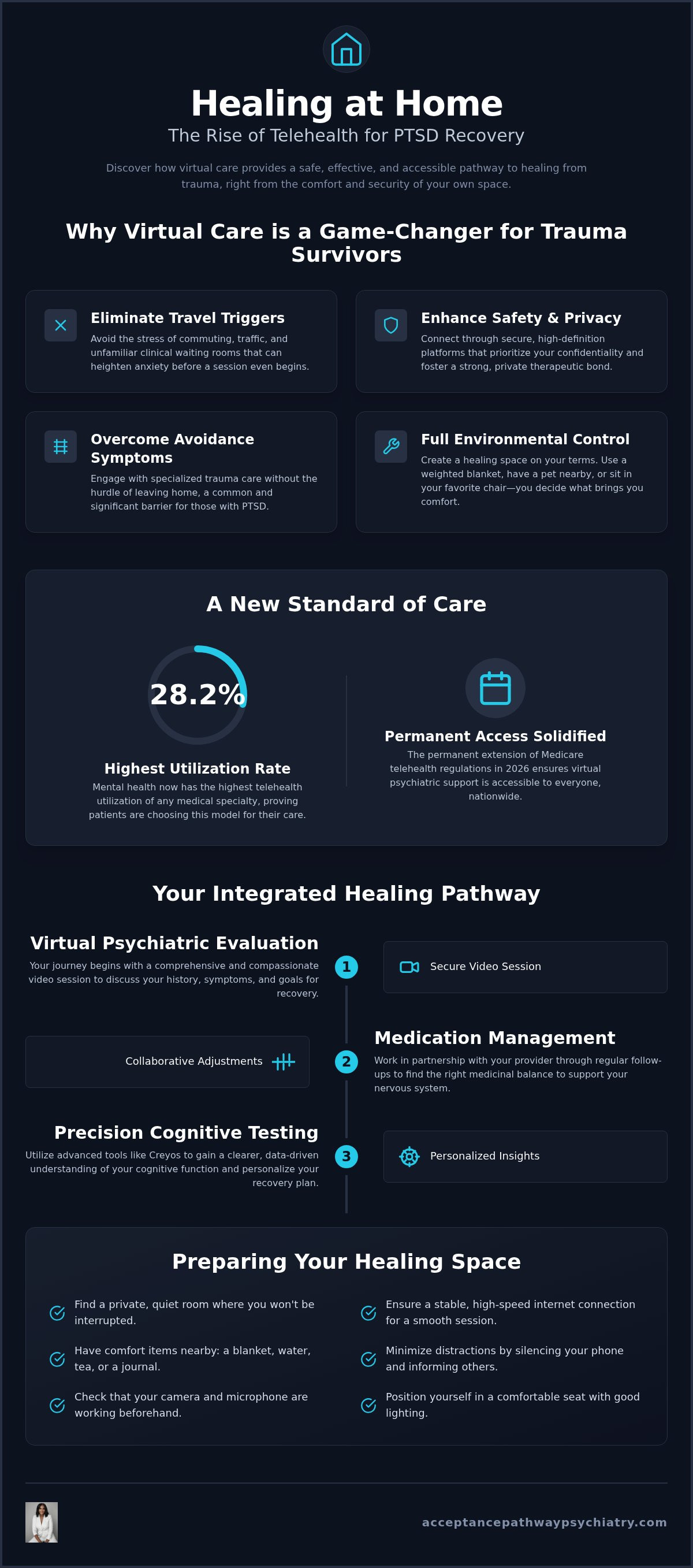
In 2026, the landscape of trauma recovery has fundamentally shifted. Telehealth for PTSD has moved from a secondary option to a gold standard of care. It's a comprehensive virtual psychiatric service that brings the full weight of clinical expertise into the safety of your home. This evolution isn't just about convenience; it's about clinical efficacy. By removing the physical barriers to entry, we allow the healing process to begin in the environment where you feel most secure. The permanent extension of Medicare telehealth regulations in early 2026 has solidified this path, ensuring that virtual psychiatric evaluations and ongoing support are accessible to everyone across the country.
What is Virtual Trauma-Informed Care?
Trauma-informed care is a commitment to seeing the whole person, not just a set of symptoms. In a digital context, this means your provider prioritizes your sense of safety and control from the very first click. It involves using secure, high-definition platforms that protect your privacy while allowing for a deep, human connection. Clinical studies and resources regarding Internet-based treatments for trauma confirm that virtual delivery doesn't diminish the quality of the therapeutic bond. Instead, it fosters a unique partnership. We act as collaborative experts, walking alongside you as you explore tools like medication management and Creyos cognitive testing to better understand your brain's path to recovery.
Why Telehealth is a Game-Changer for PTSD
For many survivors, the hallmark symptom of avoidance makes traditional office visits a source of intense stress. The thought of driving through heavy traffic or sitting in a crowded waiting room can trigger a "freeze" response before the session even begins. Telehealth for PTSD removes these travel-induced triggers entirely. It offers a vital middle ground where you can engage with specialized trauma care from a grounded space. You have total control over your immediate environment, whether that's sitting with a weighted blanket, having a pet nearby, or simply being in a room where you know you're safe. This level of comfort often leads to more open communication and faster progress. Statistics from late 2025 show that mental health now has the highest telehealth utilization rate of any medical specialty at 28.2%, proving that patients are choosing this intentional, patient-centered model for their most sensitive needs.
The Modalities of Virtual Care: Psychotherapy and Medication
Recovery from complex trauma isn't a one-size-fits-all process. It often requires a multi-layered approach that addresses both the emotional and biological aspects of the condition. By combining psychotherapy with medication management, we create a sturdier foundation for healing. This integrated care model ensures that your treatment isn't fragmented. Instead, it's a cohesive journey where every tool works in harmony to support your nervous system. We believe in a partnership where your voice is the most important one in the room. Our role is to provide the clinical expertise while you provide the expertise on your own lived experience.
Virtual Psychiatric Medication Management
Virtual psychiatric evaluations are the primary starting point for many. During these video sessions, we discuss your history and symptoms to see if medication might help stabilize your symptoms. This psychiatric medication management process continues through regular video follow-ups. We monitor how you're feeling and check for side effects from the comfort of your home. Research from the U.S. Department of Veterans Affairs on PTSD and Telemental Health confirms that video conferencing is a highly effective way to deliver these evidence-based treatments. We take a non-judgmental approach to finding the right balance. If a medication doesn't feel right, we work together to adjust the plan until you feel grounded and supported.
Precision Psychiatry and Cognitive Testing
To make your treatment even more effective, we use precision tools like Creyos cognitive testing. Trauma can often cloud your thinking. It makes it hard to focus, remember details, or manage daily tasks. Sometimes, these symptoms overlap with other conditions, which can be confusing. Our ADHD testing and cognitive assessments provide objective data about your brain's current functioning. This isn't about labels; it's about clarity. We use these data-driven insights to tailor your recovery plan to your specific needs. When we know exactly how PTSD is affecting your cognitive health, we can choose the most effective therapeutic interventions for you. This precision ensures your time in telehealth for PTSD sessions is used as effectively as possible. If you're ready to explore a personalized plan, our team is here to support your telehealth for PTSD journey.
Why Virtual Appointments Benefit Trauma Survivors Specifically
Many people view virtual care as a secondary choice made for convenience. For those living with trauma, however, telehealth for PTSD is often a primary clinical tool that addresses specific symptoms. Avoidance is a core feature of PTSD. The prospect of navigating traffic, finding parking, and sitting in a public waiting room can be enough to prevent someone from seeking help entirely. By removing these external stressors, we lower the barrier to entry. You aren't just saving time; you're preserving your emotional energy for the actual work of healing.
Meeting You Where You Are: Overcoming Avoidance
A traditional clinic can feel unpredictable and threatening. In contrast, your home is your base of safety. When you engage in sessions from your own living room, you remain in control of your sensory environment. You can adjust the lighting, sit in your favorite chair, or have a support animal nearby. This sense of agency is vital for recovery. It allows for a gradual transition into therapy without the "white coat anxiety" that often accompanies medical offices. Sessions become a collaborative dialogue in a space where you already feel grounded. This "home-base" therapeutic setting provides a unique opportunity to practice grounding techniques in the very environment where you live your daily life.
Maintaining a Human Connection Through the Screen
Some worry that a screen creates a sense of detachment. We've found the opposite to be true. The focus on the screen often encourages deeper eye contact and more intentional listening. Because you're in a comfortable space, you may find it easier to be vulnerable and honest about your experiences. Our practice adheres to the APA Guidelines for Telepsychology to ensure that every virtual interaction meets the highest professional and ethical standards. This framework ensures that the human element remains at the center of our digital connection. We treat the video call as a steady, reliable partnership, providing a supportive witness to your journey. This consistent presence helps build the trust necessary for deep trauma work.
Privacy is another significant benefit. There's no risk of running into an acquaintance in a physical office or having to explain your whereabouts to colleagues or family. You can schedule sessions during a lunch break or a quiet hour at home, maintaining total confidentiality. This increased privacy helps reduce the stigma sometimes associated with mental health care. It allows you to focus entirely on your personal evolution and wholeness without the fear of judgment from the outside world. This level of discretion is often the deciding factor for those who have hesitated to seek telehealth for PTSD in the past.
Creating Your Safe Space: How to Prepare for a Session
Transitioning from the demands of your daily routine into a therapeutic space requires intentionality. When you choose telehealth for PTSD, you're essentially co-creating the clinical environment with your provider. This preparation isn't just about logistics; it's about building a container for your healing. By setting up your surroundings thoughtfully, you signal to your nervous system that it's safe to lower its guard and engage in the process of personal evolution. You aren't just attending an appointment; you're cultivating a sanctuary for your recovery.
Technical and Physical Preparation
Your physical environment should feel like a sanctuary. Choose a private room where you can close the door and speak freely without the fear of being overheard. If you live with others, consider using a white noise machine outside the door or wearing a headset to enhance your sense of privacy. Lighting is also a clinical factor. Ensure your face is well-lit so your provider can observe subtle changes in your expression, which helps maintain a deep sense of connection. Before you begin, check your internet connection to avoid any technical disruptions that might break your focus. Our team uses secure, high-definition platforms that meet the rigorous security standards of 2026, so you can feel confident that your session remains confidential.
Emotional Grounding and Post-Session Care
Emotional preparation is just as vital as technical setup. We recommend implementing "buffer time" before and after your appointment. Spending ten minutes in quiet reflection before a session helps your mind transition away from the stressors of the day. This is a great time to gather comfort items that ground you. Many of our patients find the following tools helpful during their journey:
- A weighted blanket to provide a sense of physical security and calm.
- A warm cup of herbal tea to soothe the senses and provide warmth.
- Grounding objects like a smooth stone, a favorite photograph, or a fidget tool.
After your session concludes, avoid the temptation to jump immediately back into work or family responsibilities. Trauma work can be taxing, and your brain needs time to integrate the conversation. Spend a few moments practicing a grounding exercise, such as focusing on five things you can see and four things you can touch. This helps you stay present and prevents you from feeling overwhelmed as you return to your day. If you're ready to start this journey in a space where you feel most secure, you can schedule your telehealth for PTSD appointment today. We're here to act as a supportive witness to your progress, ensuring every step feels manageable and safe.
Acceptance Pathway Psychiatry: Your Partner in Trauma Recovery
At Acceptance Pathway Psychiatry, we believe that healing is a collaborative journey that requires both clinical expertise and deep, human empathy. We don't just see a set of symptoms or a diagnosis; we see a person with a unique history and the potential for profound personal evolution. Our role is to act as a supportive witness to your progress, providing a steady and non-judgmental presence as you navigate the complexities of recovery. We understand that seeking help is a courageous act. That's why we've designed our practice to be a safe, welcoming space where you feel heard and valued from your very first interaction.
Our Collaborative Approach to PTSD
Our philosophy is rooted in the idea of a mutual partnership. We treat the whole person by integrating several pillars of care, including medication management, psychotherapy, and integrative wellness services. This holistic view ensures that every aspect of your well-being is considered. We also utilize precision tools like Creyos cognitive testing to gain objective data about your brain health, allowing us to tailor our interventions with high accuracy. This data-driven approach doesn't replace the human connection; it strengthens it by providing a clearer map for your journey. We remain committed to a steady, reliable presence, ensuring you never feel like you're walking this path alone. Our focus is always on your sense of wholeness and the quiet strength you bring to the process.
Taking the First Step Toward Healing
Beginning your recovery shouldn't be a source of further stress. We've streamlined our process to ensure that accessing telehealth for PTSD is as simple and grounding as possible. Your journey starts with a comprehensive virtual psychiatric evaluation. During this initial session, we'll discuss your history, your current challenges, and your goals for the future. It's a time for us to get to know you and for you to feel out the partnership. We provide national telehealth appointments, making specialized trauma care accessible to survivors across the United States without the barriers of travel or local provider shortages.
We understand that navigating the logistics of care can feel overwhelming. Our team is here to assist you with understanding your insurance coverage and payment options, ensuring that the focus remains on your healing rather than paperwork. We accept a variety of major insurance plans and offer clear guidance on the next steps. This commitment to accessibility is part of our broader mission to lower the barriers to mental health support. We invite you to begin this process of transformation in a space where you are truly seen. If you're ready to explore how telehealth for PTSD can support your unique path to recovery, we're here to welcome you with open arms and a commitment to your long-term well-being.
Embracing a New Path to Wholeness
Choosing to seek support for trauma is a profound act of courage. As we've explored, telehealth for PTSD offers a unique opportunity to engage in deep healing while remaining in the space where you feel most secure. By removing the stress of clinical environments, you can focus your energy on recovery and personal evolution. Our approach combines compassionate, non-judgmental trauma-informed care with the latest advancements in precision psychiatry, including Creyos cognitive testing.
Whether you need integrated medication management or supportive psychotherapy, our team acts as a steady partner in your journey. We're here to provide the clinical expertise and empathetic witness you deserve as you reclaim your life. You don't have to navigate this process alone; a flexible and accessible path to healing is within reach. Begin your journey toward healing with a virtual psychiatric evaluation today. Your future is waiting, and we're honored to help you walk toward it with confidence and peace.
Frequently Asked Questions
Is telehealth for PTSD as effective as in-person therapy?
Clinical evidence confirms that virtual trauma recovery is just as effective as traditional in-person care. As mentioned earlier, a meta-analysis from July 2025 found no significant differences in efficacy between video teleconferencing and office visits. Many patients actually find that they can be more vulnerable and honest when they're in a familiar, safe environment. This comfort often leads to more consistent attendance and a stronger therapeutic bond with your provider.
Can a psychiatrist prescribe PTSD medication through a telehealth appointment?
Yes, our psychiatrists provide comprehensive medication management through secure video appointments. During your virtual psychiatric evaluation, we'll discuss your symptoms and history to determine if medication is a helpful tool for your recovery. If it is, we'll send prescriptions directly to your local pharmacy. We continue to monitor your progress and adjust your treatment plan through regular follow-up sessions, ensuring a non-judgmental and steady partnership throughout your healing process from the comfort of home.
How do I know if my telehealth sessions are private and secure?
We use high-definition, encrypted platforms that meet the rigorous federal security standards established for 2026. These systems are specifically designed for healthcare to ensure your personal information remains confidential. Your sessions are never recorded, and the connection is peer-to-peer to prevent unauthorized access. We prioritize your psychological safety by maintaining a digital environment that is as private and protected as a traditional clinical office. This ensures your journey remains your own and stays completely secure.
What should I do if I have a panic attack during a virtual session?
Your provider is a trained expert who will remain a calm, steady presence if you experience a panic attack. We'll guide you through immediate grounding techniques, such as deep breathing or sensory awareness exercises, to help you return to the present moment. Because you're at home, you also have access to your own comfort items like weighted blankets. We treat every session as a mutual partnership where your safety is our highest priority.
Do I need any special software or equipment for a telehealth psychiatric visit?
You don't need any specialized equipment to access our services. A reliable internet connection and a device with a camera and microphone, such as a smartphone, tablet, or laptop, are all that's required. Most sessions take place through a secure link in your web browser, so there's no need to download complex software. We recommend using a headset to enhance your privacy and ensure clear audio during our conversation. This simple setup helps maintain focus.
Can telehealth help with the 'avoidance' symptoms of PTSD?
Telehealth for PTSD specifically addresses avoidance by providing a safe middle ground for treatment. For many, the anxiety of commuting to a clinic or sitting in a waiting room can be a major barrier to care. By starting therapy from your home, you can gradually build a sense of safety and trust with your provider. This approach allows you to confront trauma at a manageable pace without the added stress of travel-induced triggers.
How long does a typical virtual PTSD evaluation take?
A comprehensive initial psychiatric evaluation usually takes between 60 and 90 minutes. This time allows us to conduct a thorough review of your history, current symptoms, and goals for recovery. We may also integrate tools like Creyos cognitive testing to gain a precise understanding of your brain health. This methodical pace ensures we have a clear map for your treatment plan, moving from broad values to specific clinical details for your unique journey.
Will my insurance cover telehealth for PTSD in 2026?
Most insurance providers, including Medicare and major private carriers, now offer permanent coverage for virtual mental health services. The Consolidated Appropriations Act signed in February 2026 solidified these flexibilities, ensuring that virtual trauma care is treated with the same reimbursement standards as in-person visits. Our team assists with insurance and payment options to help you understand your specific benefits. This regulatory stability provides a solid foundation for your long-term, accessible psychiatric care.


