

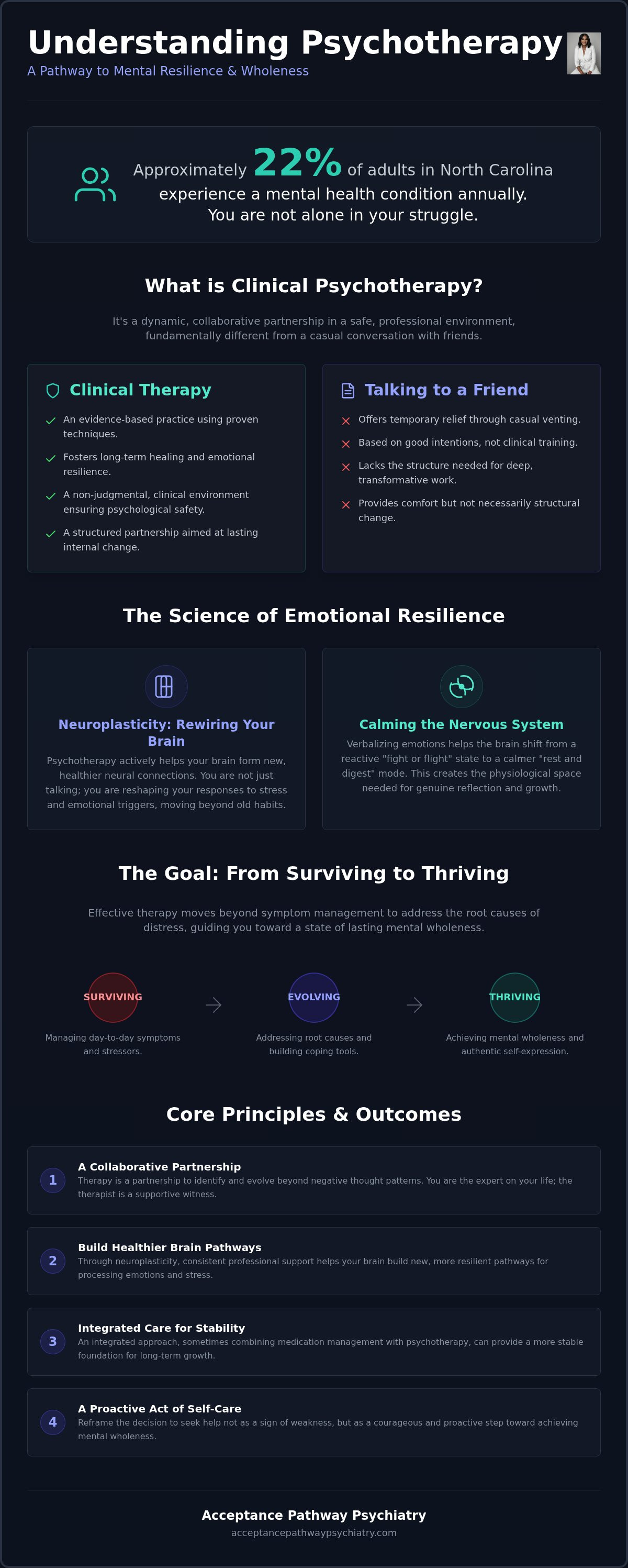
Did you know that approximately 22% of adults in North Carolina experience a mental health condition in any given year, yet many feel they must carry that weight in silence? If you feel stuck in negative thought patterns or worry that your struggles might be judged, you aren't alone. Finding the right psychotherapy Fayetteville NC offers is a courageous step toward breaking those cycles. It's completely normal to feel hesitant or even confused about how different types of mental health support actually work.
This guide is here to offer clarity and a sense of emotional safety as you explore your options. We'll show you how professional psychotherapy provides a safe, evidence-based pathway to emotional resilience and true mental wholeness. You'll learn about the practical coping tools available to you and how a collaborative, trauma-informed approach can help you move from simply surviving to truly evolving. We will walk through the different therapeutic methods, what a typical session looks like, and how to find a provider who acts as a supportive witness to your personal journey.
Key Takeaways
- Understand that therapy is a collaborative partnership designed to help you identify and evolve beyond negative thought patterns.
- Discover how the science of neuroplasticity allows your brain to build new, healthier pathways through consistent professional support.
- Learn why an integrated approach combining medication management with psychotherapy Fayetteville NC can provide a more stable foundation for long-term growth.
- Reframe the decision to seek help as a proactive act of self-care and a courageous step toward achieving mental wholeness.
- Gain clarity on how to start your journey with flexible options, including telehealth and in-person appointments tailored to your unique needs.
What is Psychotherapy? Defining the Path to Mental Wellness
Psychotherapy is often misunderstood as a passive activity where one person talks and the other simply listens. In reality, it's a dynamic, collaborative partnership between you and a trained professional. This relationship creates a structured, intentional space to explore the internal patterns that shape your daily life. For those seeking psychotherapy Fayetteville NC, the primary goal is to identify and gently shift the thought and behavior patterns that might be hindering your growth. You can find a comprehensive overview of psychotherapy to see the many evidence-based modalities used to facilitate this change.
While sharing your feelings with a close friend can provide temporary relief, clinical therapy is fundamentally different. It's an evidence-based practice that relies on specific techniques to foster long-term healing and emotional resilience. Unlike casual venting, therapy takes place in a strictly non-judgmental, clinical environment where your psychological safety is the highest priority. This professional setting allows for deep, transformative work that friends or family, despite their best intentions, are not trained to facilitate. It's the difference between temporary comfort and lasting structural change in how you process the world.
To see how this compassionate approach works in a clinical setting, watch this introduction:
The Core Principles of a Collaborative Partnership
A therapist acts as a supportive witness to your journey. They aren't there to "fix" you or dictate your choices. Instead, they offer a steady, reliable presence that honors your unique experience. Mutual trust serves as the foundation for all clinical progress. While your therapist brings clinical expertise and trauma-informed perspectives to the table, you remain the expert on your own life. This balance ensures that the treatment plan feels like a mutual partnership rather than an intimidating hierarchy. It's a shared effort toward your well-being, built on the belief that you have the internal resources to heal.
How Therapy Supports Personal Evolution
Effective care looks far beyond simple symptom management. It's about looking at the whole person and moving toward a state of mental wholeness. This means addressing the root causes of distress rather than just the surface-level effects. When you engage with psychotherapy Fayetteville NC, the focus shifts from merely surviving each day to truly thriving. You learn to integrate different parts of your experience, leading to a sense of internal evolution. This process doesn't just stop at "feeling better"; it aims for a lasting state of mental resilience and clarity. It's about evolving into the most authentic version of yourself.
How Psychotherapy Works: The Science of Emotional Resilience
The effectiveness of psychotherapy isn't just a matter of opinion; it's rooted in the biological reality of how our brains function. Neuroplasticity is the brain's remarkable ability to reorganize itself by forming new neural connections throughout life. When you engage in psychotherapy Fayetteville NC, you aren't just talking. You're actively rewiring your brain to respond differently to stress and emotional triggers. This process allows you to move beyond old, stagnant habits and build a more flexible mindset.
While the experience of distress often feels overwhelming, the act of verbalizing emotions has a grounding effect on the nervous system. It helps the brain move out of a reactive "fight or flight" state, governed by the amygdala, and into a "rest and digest" mode. This physiological shift is essential for processing difficult memories and making logical decisions. By calming the body's alarm system, therapy creates the space needed for genuine reflection and growth. Emotional resilience is the capacity to recover quickly from difficulties.
Building Tools for the Modern World
In our fast-paced society, the tools we develop in therapy are essential for maintaining balance. One of the most powerful techniques is cognitive reframing. This involves identifying and challenging unhelpful thought patterns to change how we interpret daily stressors. Through different types of therapy, individuals can build healthy coping mechanisms for anxiety and depression. These skills foster long-term self-awareness and emotional intelligence. Instead of being overwhelmed by a setback, you learn to see it as a manageable challenge that you have the internal resources to meet.
The Role of Trauma-Informed Support
A trauma-informed approach is vital for safe healing. This means your provider recognizes the pervasive impact of trauma and integrates this understanding into every aspect of care. It's about creating an environment that prioritizes your sense of control and safety to prevent re-traumatization during the healing process. We understand that past experiences can leave deep imprints on the psyche.
This approach requires a steady, patient pace. Processing deep-seated trauma can't be rushed; it must be handled with professional humility and care. By honoring your timing, therapy becomes a restorative process rather than an intimidating one. If you're ready to explore these evidence-based methods, you can learn more about our integrative wellness services and how they support your evolution.
Addressing Common Misconceptions About Starting Therapy
Many people hesitate to seek support because they believe they should be able to fix their own emotional challenges. This is perhaps the most common barrier to mental wellness. In 2024, approximately 20% of adults in North Carolina experienced a mental health challenge, yet many still feel that asking for help is a sign of weakness. In reality, seeking psychotherapy Fayetteville NC isn't an admission of defeat. It's a proactive choice to prioritize your long-term health. Just as you'd consult a specialist for a physical injury, working with a mental health professional provides you with expert tools you might not have access to on your own. It's a sign of immense personal strength to acknowledge when a collaborative approach will lead to better results.
It's also helpful to understand the different roles in mental health care. A psychiatrist is a medical doctor who often focuses on medication management. A therapist or counselor typically focuses on the talk therapy aspect, helping you navigate emotional and behavioral patterns. While the terms are sometimes used differently, the core goal remains the same: supporting your evolution toward wholeness. We prioritize your individual progress over any clinical label. A diagnosis is simply a tool for clarity, not a permanent identity.
Myth vs. Reality: What to Expect
You don't need to be in the middle of a life-altering crisis to benefit from professional support. Many people use therapy to manage daily stress, improve relationships, or gain a deeper understanding of themselves. It's a methodical, steady process where progress isn't always a straight line. Some weeks feel like major breakthroughs; others are about quiet reflection. Modern therapy is highly goal-oriented. We work together to set practical objectives, ensuring that our time is results-focused and aligned with the life you want to build.
The Privacy and Safety of Clinical Care
Your privacy is the cornerstone of the therapeutic relationship. Clinical care is bound by strict confidentiality laws and ethical guidelines. This creates a unique environment where you can speak freely without the fear of judgment or social repercussions. The professional boundaries we maintain aren't meant to be cold. Instead, they provide the structure necessary for you to feel completely safe. This psychological safety allows you to explore sensitive topics at your own pace, knowing you have a reliable ally who is solely focused on your well-being.
The Power of Integrated Care: Therapy Meets Psychiatry
Many individuals view mental health care as a choice between medication and talk therapy. In reality, the most transformative outcomes often occur through a dual approach where these two modalities work in harmony. This integrative model recognizes that mental wellness has both biological and behavioral components. While talk therapy addresses the narrative of your life and your coping strategies, medication can play a vital role in stabilizing the biological "floor." When your neurochemistry is balanced, the work you do during psychotherapy Fayetteville NC becomes more accessible and effective. It's much easier to build new habits when you aren't fighting against a constant tide of overwhelming biological symptoms.
Choosing a practice that manages both aspects of care offers a significant advantage. It ensures that your providers are in constant communication, creating a seamless experience where every part of your treatment plan is aligned. You don't have to worry about acting as a messenger between different offices. Instead, you can focus entirely on your healing while a unified team of experts acts as a supportive witness to your progress. This collaborative environment fosters a deep sense of psychological safety, knowing that your care is cohesive and comprehensive.
Synergy Between Medication and Talk Therapy
Precision psychiatry is about more than just matching a symptom to a pill. It's about using a data-informed approach to understand your unique brain chemistry. Medication can manage the intense physiological aspects of conditions like ADHD or Bipolar disorder, providing the stability needed for long-term growth. Once these biological barriers are lowered, therapy can address the underlying behavioral patterns and emotional triggers. This synergy allows you to move beyond simple symptom management and toward a state of true mental wholeness. It's a balanced way to support your personal evolution.
Using Cognitive Testing to Guide Growth
To ensure your treatment is as accurate as possible, we utilize Creyos cognitive testing. This advanced tool measures core brain functions such as memory, focus, and attention through simple, non-invasive tasks. By establishing these baseline metrics, we can remove the guesswork from your evaluations. These results provide clear data to refine your treatment plan and track your cognitive progress over time. It's a practical way to see how your brain is responding to care, giving you tangible proof of your evolution. If you're ready to see how this data-driven approach can support your journey, you can schedule an appointment for medication management and integrated care today.
Taking the First Step: How to Begin Your Pathway
Deciding to reach out for support is a significant milestone in your journey toward mental wellness. It's natural to feel a mix of hope and apprehension during this time. When you begin your search for psychotherapy Fayetteville NC, you aren't just looking for a clinical service; you're looking for a dedicated ally. The initial outreach is the first moment where you begin to reclaim your narrative. This process is a collaborative partnership from the very start, and we want you to know that you are always in control of the pace. There's no pressure to have everything figured out before our first conversation.
We treat the beginning of our relationship with the same professional humility and care that we bring to every session. Our goal is to provide a steady, reliable presence that lowers the barrier to seeking help. Whether you're dealing with long-standing patterns or recent stressors, the first step is simply about creating a connection. You don't have to carry your burdens alone anymore. We are here to act as a supportive witness to your experience and help you map out a clear, evidence-based route toward wholeness.
Preparing for Your First Appointment
The first session, often called an "intake" appointment, is essentially a structured conversation. It's a dedicated time for us to get to know you and for you to determine if our environment feels safe and supportive. It is completely okay to feel nervous or uncertain. Many people find it helpful to spend a few minutes reflecting on what they hope to achieve before they arrive. You might consider the following as you prepare:
- Write down a few specific goals or "desired outcomes" you have for your mental health.
- Prepare a list of questions about our therapeutic approach or how we manage integrated care.
- Think about any specific thought patterns or behaviors that feel like they're hindering your growth.
- Have a list of any current medications or previous treatments ready to share.
The Flexibility of Modern Care
We understand that life in Fayetteville is busy, and logistical barriers shouldn't stand in the way of your evolution. That's why we offer both in-person visits and Telehealth Appointments to fit your schedule. Virtual sessions provide a convenient way to access high-quality care from the comfort of your own home, which can often reduce the anxiety associated with a new environment. Our telehealth platform is secure and designed to maintain the same level of compassionate, trauma-informed care that you would receive in our office.
This flexibility ensures that you can remain consistent with your sessions, which is essential for long-term progress. Whether we meet in person or through a screen, our commitment to your psychological safety remains the same. Every step you take is a move toward a more resilient, whole version of yourself. Your personal evolution is a methodical process, and we are honored to walk beside you as you discover your pathway to healing.
Your Pathway to Personal Evolution
Healing is rarely a linear process, but it's a journey you don't have to navigate alone. By understanding that therapy is a collaborative partnership, you can move past the misconceptions that often hinder growth. Whether you're seeking to rewire your brain through neuroplasticity or looking for the stability that comes from integrated medication management, the tools for your evolution are within reach. Choosing the right psychotherapy Fayetteville NC offers means finding a supportive witness who values your unique experience and respects your pace. You deserve a space where your mental wellness is prioritized with both clinical expertise and deep empathy.
At Acceptance Pathway Psychiatry PLLC, we provide a compassionate, trauma-informed environment where your mental wholeness is our primary focus. Our integrative approach combines evidence-based talk therapy with precise data from Creyos cognitive testing to ensure your treatment plan is as unique as you are. We're here to help you move from simply surviving to truly thriving in every aspect of your life. Begin your journey to wholeness with Acceptance Pathway Psychiatry PLLC and discover the resilience that comes from professional, empathetic support. You have the strength to evolve, and we're honored to walk beside you.
Frequently Asked Questions
How long does a typical psychotherapy session last?
A typical session lasts approximately 45 to 60 minutes. This timeframe is designed to provide enough depth for meaningful work without becoming overwhelming. For those starting psychotherapy Fayetteville NC, the first intake session might be slightly longer to allow for a thorough review of your history and goals. Consistency within these sessions helps create a steady rhythm for your personal evolution and long-term growth.
Will I need to take medication if I start psychotherapy?
No, medication is not a requirement for everyone who begins therapy. The decision depends entirely on your unique needs and the goals you set with your provider. While some benefit from an integrative approach that combines talk therapy with medication management, others find that therapy alone provides the tools they need. We treat this as a collaborative partnership, and you are always in control of your treatment path.
How do I know if I need a psychiatrist or a therapist?
You generally see a psychiatrist for medication management and a therapist for talk therapy. Psychiatrists are medical doctors who specialize in the biological aspects of mental health, while therapists focus on behavioral patterns and emotional processing. Since we offer both services, we can help you determine which path, or combination of paths, is most appropriate for your specific situation after an initial evaluation and consultation.
Is psychotherapy covered by my insurance?
Many insurance plans provide coverage for mental health services, though the specific details vary by provider. It's best to contact your insurance company directly to verify your benefits, including any co-pays or deductibles. We can also assist you in understanding how your coverage applies to psychotherapy Fayetteville NC. Accessing care should be as transparent as possible so you can focus entirely on your healing journey.
What is the difference between CBT and other types of therapy?
Cognitive Behavioral Therapy (CBT) is a goal-oriented approach that focuses on the relationship between your thoughts, feelings, and behaviors. Other types of therapy, such as psychodynamic or trauma-informed care, might focus more on the root causes of distress or past experiences. We select the modality that best fits your needs, often integrating different techniques to support your move toward mental wholeness and long-term resilience.
Can I do therapy entirely through telehealth?
Yes, you can receive high-quality care entirely through our secure telehealth platform. Virtual appointments offer the same level of compassionate support and clinical expertise as in-person visits, but with the added flexibility of meeting from your own home. This is an excellent option for those with busy schedules or those who feel more comfortable in a familiar environment. Telehealth ensures that your care remains consistent and accessible.
How many sessions will it take before I start feeling better?
The timeline for improvement is unique to every individual and depends on the complexity of your goals. Some people notice a sense of relief after just a few sessions, while others engage in a longer, more methodical process for deep-seated change. Progress isn't always linear, but consistent attendance helps build the momentum needed for evolution. We will regularly review your progress to ensure the treatment stays aligned with your needs.
What should I do if I don't feel a connection with my therapist?
It's important to have an open conversation with your provider if you don't feel a strong therapeutic connection. The relationship is the foundation of clinical progress, and your comfort is our priority. If the fit doesn't feel right, we can help you transition to another professional who might better suit your personality and needs. This is a normal part of the process, and we honor your right to feel safe and heard.


