

Adult ADHD and relationship problems can be connected through differences in attention, organization, impulse control, and emotional regulation. These patterns may lead to misunderstandings or unevenly shared responsibilities, even when both partners care deeply about each other. ADHD can also bring strengths such as creativity, humor, spontaneity, passion, and adaptability to a partnership.
If forgetfulness, distraction, or strong reactions have caused tension, it makes sense to want more than blame or a list of frustrations. Understanding how ADHD affects each partner can make these moments easier to discuss with care.
This article explains how ADHD may shape communication, household responsibilities, and sensitivity to perceived criticism, while recognizing what adults with ADHD can contribute to a relationship. It explores ways couples can understand recurring patterns and build on their strengths together.
Key Takeaways
- Talk about specific moments and their effects rather than making broad accusations, and choose a calm time to discuss recurring concerns.
- Agree on shared tools and expectations for plans, reminders, and household responsibilities so one partner doesn’t have to manage everything.
- Recognize that perceived criticism may feel especially painful; empathy and clear, non-blaming language can help keep conversations connected.
- ADHD-related patterns can affect relationship satisfaction, but they don’t define a person’s care or commitment. Understanding how symptoms show up is a useful starting point.
- Creativity, spontaneity, humor, passion, and adaptability can be meaningful relationship strengths when both partners make room for each other’s needs.
Communication challenges and misunderstandings
ADHD can affect attention, impulse control, and emotional regulation, creating misunderstandings even when both partners care. One partner, for example, may interpret a forgotten plan as indifference, while the other sees it as an attention challenge rather than a choice.
To see how these patterns can affect a partnership, watch this video from Dr. Rege:
Conflict can intensify when one person reacts before fully processing what was said and the other pushes harder to be heard. Research involving college students with clinically elevated ADHD symptoms found more hostile conflict behavior than among students without elevated symptoms. This finding describes a pattern, not an individual partner’s care or intentions.
Emotional Regulation and Communication
Emotional regulation means noticing and managing feelings before responding. ADHD can make emotions feel intense, and impulsive reactions may interrupt listening or turn a tense exchange into anger. A partner might hear “You’re late again” as a judgment about their character, then respond defensively before understanding the concern. Naming the feeling and pausing before replying can create space to address the actual issue.
Reminders and Communication Strategies
Communication strategies can make important plans easier to remember and less dependent on repeated verbal reminders. Couples can use a shared calendar, visible or audible phone alerts, and a brief message summarizing an appointment or deadline when they agree on it. For example, “Dentist appointment, Tuesday at two” gives both partners the same reference point. Regular check-ins and active listening also help each person clarify what they heard and need.
Conflict Resolution and Couples Therapy
Conflict resolution means addressing a specific problem together rather than assigning blame. Couples therapy approaches that help when one partner has ADHD can include psychoeducation about ADHD, structured communication practice, and collaborative problem-solving around recurring disagreements. A pragmatic trial of PEGASUS psychoeducation enrolled 179 participants, while a review found only three studies of integrative interventions for couples affected by adult ADHD. This is a developing area, so therapy can focus on the couple’s actual patterns and needs.
Blame-Free Discussions of Boundaries
A blame-free discussion describes a behavior, its effect, and a clear request without labeling either partner. To discuss ADHD, boundaries, and expectations, choose a calm moment and agree on what each person will handle, which reminders are welcome, and what support feels intrusive. For example: “When plans change without a message, I feel unsettled. Please text me when you know you’ll be late.” Acknowledging each other’s feelings helps keep the conversation empathetic and specific.
Breaking free of the parent-child dynamic
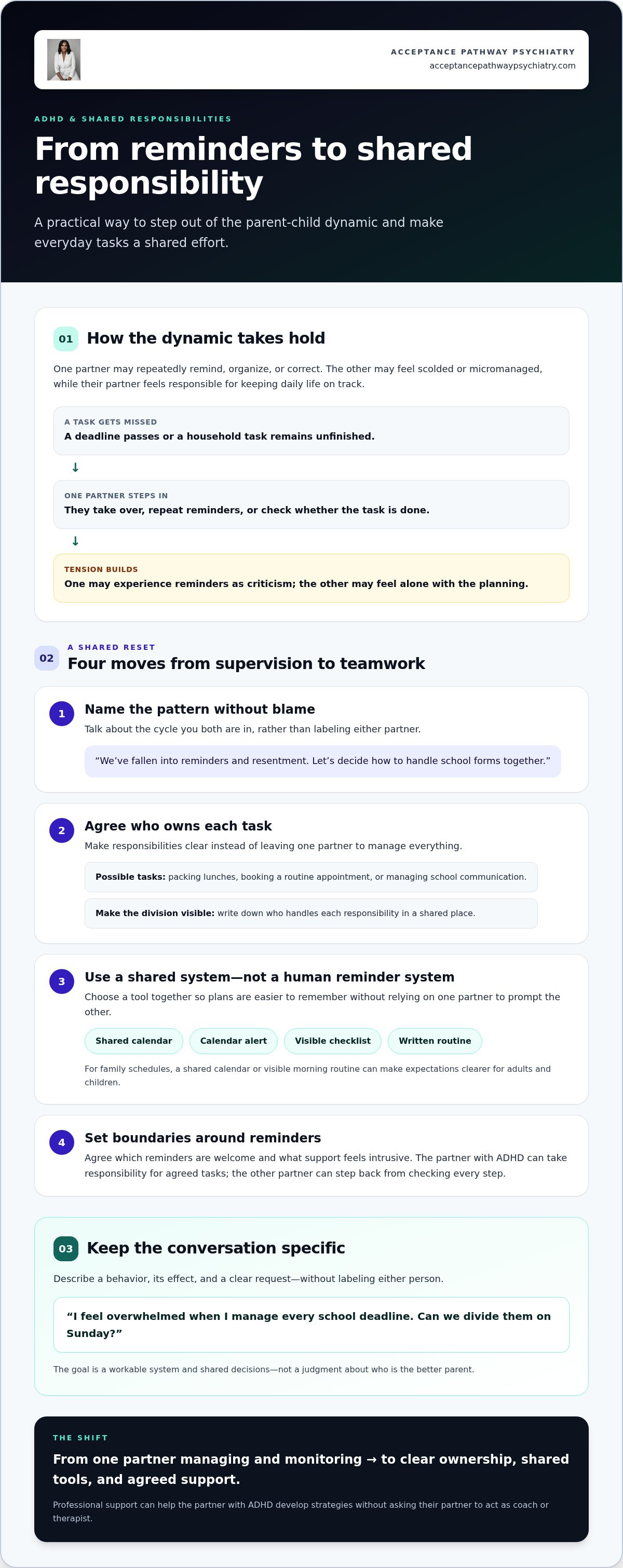
A parent-child dynamic can develop when one partner repeatedly reminds, organizes, or corrects the other instead of relating as an equal. In couples affected by ADHD, the partner without ADHD may take over bills, appointments, or household tasks after missed deadlines. The ADHD partner may feel scolded or micromanaged, while the other feels responsible for keeping daily life on track. Neither role leaves much room for mutual respect or shared decisions.
Repeated reminders may start with care and become a source of tension. For example, a partner might ask several times whether a permission slip is signed, then complete it themselves when it remains unfinished. The ADHD partner may experience the reminders as criticism, even when the intention is practical. Both partners can name the pattern without assigning blame: “We’ve fallen into reminders and resentment. Let’s decide how to handle school forms together.”
To change the pattern, separate support from supervision. First, agree on who owns each task, such as packing lunches or booking a routine appointment. Then choose a shared system, such as a calendar alert, rather than relying on one partner to remember and prompt. The ADHD partner can identify which reminders are useful and take responsibility for agreed tasks. The other partner can step back from checking every step. These choices support executive-function skills without making one person the household manager.
Parenting adds pressure because children’s needs, schedules, and transitions create many demands at once. A parent with attention-deficit/hyperactivity disorder may lose track of a school message or struggle to move smoothly from playtime to bedtime. Their partner may compensate by monitoring every detail, then feel alone with the planning. A written morning routine, shared family calendar, or visible checklist can make expectations clearer for adults and children. The goal is a workable system, not a judgment about who is the better parent.
Partners can also agree on boundaries around household responsibilities. For instance, one person may manage school communication while the other handles dinner planning, with each task written in a shared place. If a concern arises, use an “I” statement and make a direct request: “I feel overwhelmed when I manage every school deadline. Can we divide them on Sunday?” Professional support can help the ADHD partner develop strategies without asking their partner to act as coach or therapist. For help exploring those patterns, consider professional ADHD support.
What is rejection sensitive dysphoria?
Rejection sensitive dysphoria, often shortened to RSD, describes intense emotional pain or anxiety around perceived rejection or criticism. In relationships, a partner’s neutral comment can feel like evidence of disapproval, changing how both people respond.
Rejection Sensitivity in Relationships
Rejection sensitivity is heightened emotional responsiveness to situations that seem to signal rejection. Some adults with ADHD find criticism or conflict especially painful, which can affect closeness and trust. For example, a partner asking, “Can we talk about dinner plans?” may be heard as “You always disappoint me,” even if that wasn’t the intended message.
That difference in interpretation can create a cycle: one partner seeks reassurance while the other feels pressured or misunderstood. Stress may build if either person treats the reaction as deliberate or dismisses the underlying feeling. Naming the moment can help: “I’m hearing this as criticism. Is that what you mean?” This creates space to clarify intent before frustration takes over.
Sensitivity can also shape what happens after conflict. Someone may withdraw, replay the conversation, or seek repeated reassurance, while their partner waits for the tension to pass. These responses don’t mean either person is uncaring. They show how perceived rejection can continue to affect a couple beyond the original disagreement, especially if neither partner understands what the other is experiencing.
Criticism, Shame, and Rejection Sensitivity
Shame can arise when criticism feels like a judgment of someone’s whole character rather than feedback about one behavior. A comment about a missed commitment, for instance, may prompt the thought, “I’m a failure,” instead of, “I forgot this particular plan.” That shift can make a small concern feel intense and personal, especially when ADHD-related challenges have already led to repeated conflict.
Partners can make feedback more specific by describing the event, its effect, and a request. “When the appointment was missed, I felt worried. Could we talk about how to remember the next one?” focuses on a shared problem rather than a constant flaw. The partner receiving feedback can pause, identify the feeling, and ask which behavior needs attention. These steps help separate accountability from shame.
It may help to discuss these patterns outside an argument. Each partner can describe what criticism sounds like to them, what helps them stay present, and when they need a short pause. For example, agree to return to a difficult conversation after calming down rather than ending it indefinitely. Understanding rejection sensitivity doesn’t excuse hurtful behavior or remove responsibility; it gives couples a clearer way to respond to emotional pain.
How does ADHD or ADD affect relationships?
Adult ADHD can affect attention, planning, impulse control, and emotional regulation, shaping daily interactions between partners. The connection between adult ADHD and relationship problems often becomes clearer when couples look at recurring patterns rather than isolated mistakes.
ADHD Symptoms in Adult Relationships
ADHD symptoms can influence shared routines, attention, and follow-through. A person may lose track of a conversation, underestimate an errand’s duration, or forget a commitment. Their partner may read the result as disinterest, even when that isn’t the intention. In one study, 24 out of every 25 spouses of adults with ADHD felt symptoms interfered with their functioning in at least one area. Naming the specific impact can help couples discuss it constructively.
Relationship Dissatisfaction and Divorce
Relationship dissatisfaction may grow when symptoms repeatedly lead to unmet expectations or unevenly shared responsibilities. Studies have found an inverse association between adult ADHD symptoms and romantic relationship satisfaction. This association doesn’t predict an individual couple’s outcome, but it shows why these patterns deserve attention. One study found parents of children with ADHD were twice as likely to divorce by the time their child was eight years older than parents of children without ADHD. That finding applies to those families, not every relationship affected by ADHD.
ADHD-Related Behavior and Perceived Commitment
Couples can distinguish ADHD-related behavior from a lack of care by considering context, recurring patterns, and efforts to address the impact. Forgetting a plan despite valuing time together differs from dismissing a partner’s concerns and refusing to discuss change. One missed commitment alone doesn’t establish someone’s level of commitment. Partners can describe what happened and agree on a practical response, such as setting a reminder together.
Untreated ADHD and Relationship Risks
When ADHD symptoms go unaddressed, recurring conflict may contribute to resentment, reduced trust, or a sense of unfairness. Distraction during conversations can leave a partner feeling unheard, while missed commitments may make future plans harder to rely on. These outcomes aren’t inevitable. Professional support can help when symptoms disrupt daily life or couples struggle to discuss recurring concerns without escalating or withdrawing. The goal is to understand the pattern and identify appropriate next steps.
Strengths adults with ADHD may bring to relationships
Adults with ADHD may bring creativity, spontaneity, humor, passion, and adaptability to a romantic partnership. These strengths can shape how couples solve problems and enjoy everyday time together. A partner who spontaneously suggests a picnic, for example, may turn an unplanned afternoon into a shared memory. These qualities don’t erase the challenges ADHD can bring, but they offer a fuller picture than focusing only on what feels difficult.
Creativity can help couples find options when a familiar approach isn’t working. If a weekend routine feels stale, one partner might suggest a new walking route or invent a playful way to divide chores. Adaptability can also help partners adjust when plans change rather than treating every change as a failure. The useful question is how each person experiences the idea: one may feel energized, while the other may need predictability. Talking calmly about both preferences can help make room for them.
Humor and spontaneity may add warmth and lightness to shared life. A funny observation during a frustrating errand can ease tension, while an unexpected dinner idea may offer a welcome break from routine. But partners can differ in what they find funny or comfortable. A surprise might delight one person and create anxiety for another. A quick check-in, such as “Would you enjoy a change of plans tonight?” helps keep spontaneity considerate rather than overwhelming.
Passion can show up as deep enthusiasm for a person, interest, or shared project. An adult with ADHD might bring energy to planning a trip, learning a new skill together, or supporting a partner’s goal. That intensity can feel connecting when both people welcome it. It may feel harder when interests shift or one partner struggles to keep pace. Couples can appreciate genuine enthusiasm while calmly discussing the time, attention, and practical limits that matter to each person.
Strengths matter most when they’re recognized alongside real needs, not used to dismiss them. Each partner can name a quality they value and give a specific example: “Your humor helped me relax during that difficult week.” They can also ask how to make that strength easier to share, such as agreeing on plans before inviting friends. This helps partners see each other as whole people, rather than defining the relationship by symptoms or positive traits alone.
If you want support understanding how ADHD affects your relationship and personal strengths, explore mental health support.
Acceptance Pathway Psychiatry PLLC: Medication Management
Acceptance Pathway Psychiatry PLLC offers Medication Management for adults seeking support with ADHD symptoms that affect daily life and relationships. A conversation about treatment can clarify which challenges feel most disruptive, such as difficulty sustaining attention, impulsive reactions, or trouble following through. Medication Management can be part of an individual’s mental health care, while Psychotherapy offers space to explore relationship patterns, communication, and coping strategies. Creyos Cognitive Testing and Integrative Wellness Services are also available.
Consider professional support when ADHD symptoms affect your well-being or make relationship challenges harder to address. Treatment can focus on your individual needs and goals; it doesn’t replace shared communication or each partner’s responsibility in the relationship.
To discuss support for ADHD, contact Acceptance Pathway Psychiatry PLLC.
Choose a next step that fits your needs
Understanding adult ADHD and relationship problems can open a different kind of conversation: one centered on what you need next, not blame. You might begin by identifying whether your main concern is understanding your symptoms, changing a recurring relationship pattern, or both. That clarity can help you describe your goals and consider support that fits your experience.
Acceptance Pathway Psychiatry PLLC offers Medication Management, Psychotherapy, and Creyos Cognitive Testing. These services can support conversations about ADHD symptoms and mental health needs. Psychotherapy may provide space to explore personal patterns, while Medication Management addresses treatment needs. Creyos Cognitive Testing is another option to discuss when learning about your cognitive profile.
Taking a first step doesn’t require having every concern neatly explained. You can start with what feels hardest right now and build from there. Contact Acceptance Pathway Psychiatry PLLC to explore support. With understanding and care, it’s possible to move toward a relationship and daily life that feel more balanced.
Frequently Asked Questions
How can adult ADHD affect romantic relationships?
Adult ADHD can shape how partners experience attention, plans, emotional responses, and everyday decisions. For instance, one person may prefer spontaneous activities, while the other feels more secure with advance planning. These differences can influence intimacy and shared routines without defining either partner’s level of commitment. Discussing how each person experiences a situation helps couples understand the impact and find arrangements that respect both preferences.
What relationship problems are commonly linked to adult ADHD?
Common challenges include disagreements about spending, household clutter, follow-through, and how free time is used. A new hobby, for example, may excite one partner but raise concerns for the other about shared expenses or limited storage. Rather than treating the hobby itself as the problem, partners can agree on a budget, space, or review point. Clear agreements make recurring differences easier to address constructively.
How do ADHD symptoms like inattention and impulsivity affect communication between partners?
Inattention may cause someone to miss part of a conversation, while impulsivity can lead to interrupting or answering before a partner finishes. One practical adjustment is to agree on a simple cue, such as gently raising a hand when someone wants to speak, then giving the other person time to finish. After an important discussion, each partner can briefly say what they understood and correct any missed details.
What treatments for adult ADHD can improve relationship functioning?
Medication Management and Psychotherapy can address ADHD symptoms and personal patterns that affect relationships. A mental health professional can discuss treatment goals, such as improving attention or managing impulsive reactions, and consider how progress affects daily interactions. Creyos Cognitive Testing may also provide information about cognitive strengths and challenges as a supportive clinical tool. Treatment can support individual functioning while partners continue working together on relationship concerns.
How can partners divide household tasks and manage shared responsibilities with ADHD?
Create a written task list that names an owner and defines what “finished” means for each responsibility. For example, “handle laundry” can mean washing, drying, and putting clothes away, rather than completing only one step. Divide tasks by capacity and preference, then revisit the arrangement if it repeatedly feels unbalanced. Clear ownership reduces uncertainty about who is responsible without requiring one partner to oversee every detail.
How can a partner support an adult with ADHD without becoming their caretaker?
Offer support by asking what would help, then let the ADHD partner choose and manage their own strategies. For example, ask, “Would you like me to listen, brainstorm, or leave this with you?” Avoid taking over a responsibility unless you both agree. Each partner can also name a personal boundary, such as not managing the other’s appointments. This keeps support collaborative while preserving each adult’s agency and responsibility.


