

The first appointment is only part of the budget. The cost of a psychiatrist without insurance varies by visit type, location, appointment length, and whether medication or testing is involved. An initial evaluation generally costs more than a shorter follow-up, and prescriptions or lab work can add to the total.
It makes sense to want a clearer picture before arranging care. Psychiatric fees can be hard to estimate because initial and follow-up visits serve different purposes, and treatment needs may change over time. Your total also depends on how often you meet with a psychiatrist and which medications or tests are part of your care.
This article explains what uninsured evaluations and follow-up visits may cost, why prices differ, and how medication, lab work, and other factors can affect expenses. You’ll also learn how to estimate ongoing care costs, so you can plan with more confidence and focus on finding support that fits your needs.
Key Takeaways
- Plan separately for an initial psychiatric evaluation and shorter follow-up visits, since they serve different purposes and may have different fees.
- Include prescriptions and any recommended lab work in your budget, not just appointment costs.
- Location, visit format, appointment length, and treatment needs can all affect what you pay.
- Compare the full cost of ongoing care, including how often follow-ups may be needed, rather than focusing on the first visit alone.
- Medication management and psychotherapy can be part of a coordinated approach to mental health care.
How Much Does Psychiatry Cost Without Insurance?
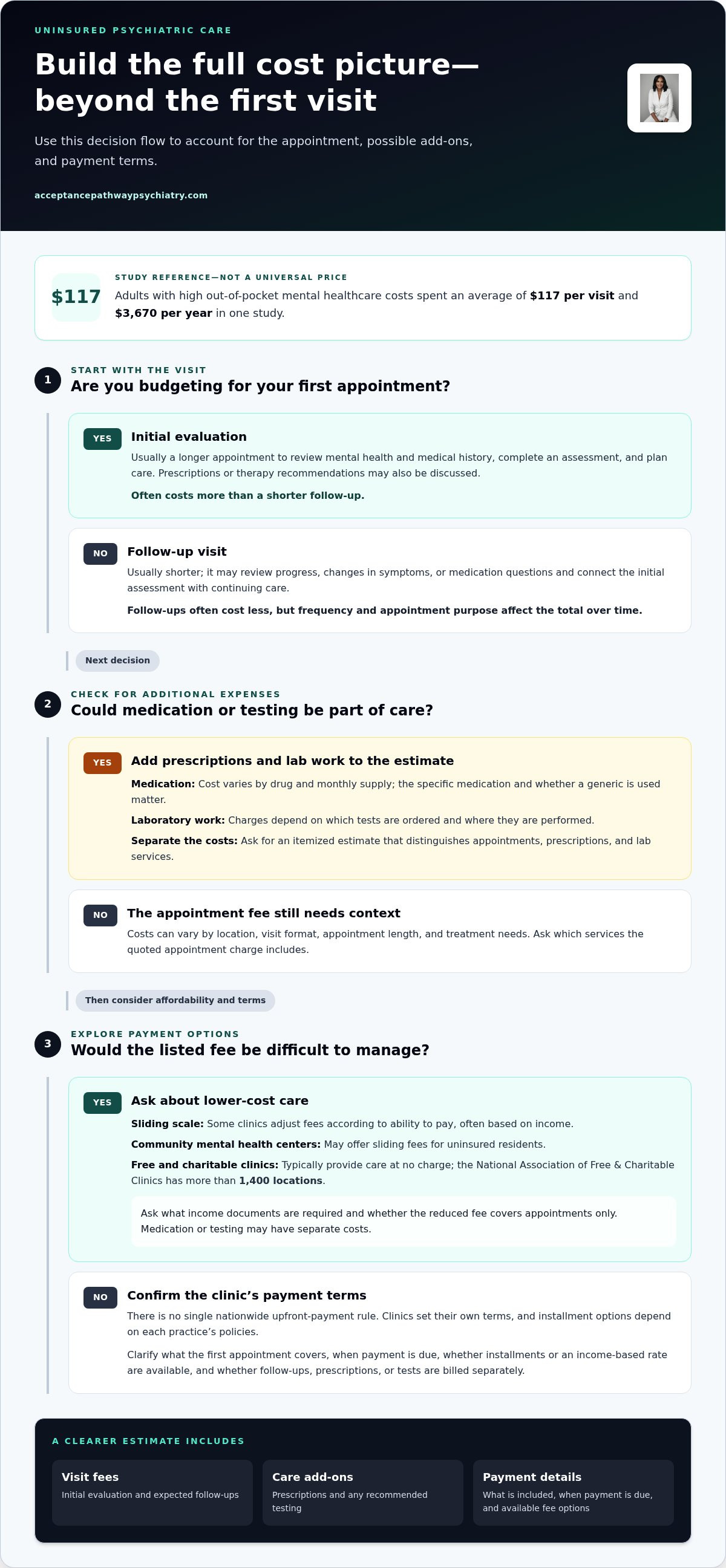
One study found that adults with high out-of-pocket mental healthcare costs spent an average of $117 per visit and $3,670 per year.
To see how cost and access challenges can shape mental healthcare, watch this segment from LastWeekTonight:
Sliding-Scale and Community Care
A sliding-scale fee adjusts a clinic’s charge according to a patient’s ability to pay, often based on income. This may make an appointment more manageable for someone without insurance, including people seeking support for depression.
Free and charitable clinics typically provide care at no charge. The National Association of Free & Charitable Clinics has more than 1,400 locations that can be searched by ZIP code or city and state. Some community programs also offer sliding-scale psychiatric services; local community mental health centers, for example, often offer sliding fees for uninsured residents.
Ask about the clinic’s income-based fee process and what documents it uses. A reduced charge may apply to appointments, while medication or testing may have separate costs. SAMHSA’s National Helpline can be reached at 800-662-4357 and provides assistance in English and Spanish, according to the Substance Abuse and Mental Health Services Administration.
Comparing Psychiatrist and Other Provider Costs
Psychiatrist and therapist fees can differ because appointments may include different services.
Psychiatric nurse practitioner fees vary, and there isn’t one comparable national price range to use here. Compare the appointment’s purpose and what it includes, such as medication care or psychotherapy, rather than comparing titles alone. The right visit depends on the support you’re seeking and the care involved.
Upfront Payments and Payment Plans
There is no single nationwide upfront-payment rule for uninsured psychiatric appointments. Clinics set their own payment terms, and installment options depend on each practice’s policies.
Before booking, ask what the first appointment’s charge covers, when payment is due, and whether the clinic offers installments or an income-based rate. Clarify whether follow-up appointments, prescriptions, or recommended tests are billed separately. These details help you estimate the full expense rather than focusing only on the first visit.
If cost concerns feel urgent during a mental health crisis, people in the United States can call the National Suicide and Crisis Lifeline at 988 from any phone, according to the Substance Abuse and Mental Health Services Administration.
Initial psychiatric evaluation and follow-up prices
Follow-up visits often cost less, but appointment length and purpose help explain the difference.
Initial Evaluation Fees and Duration
An initial evaluation is a longer appointment to understand your concerns and plan care. The time allows the psychiatrist to gather details that can guide next steps.
The appointment may include a review of your mental health and medical history, an assessment, and a personalized treatment plan. For example, someone describing symptoms associated with depression may discuss how long they’ve occurred and how they affect daily life. A diagnosis, such as a mood disorder, may inform treatment recommendations.
Prescriptions may be discussed during the evaluation when appropriate, along with recommendations for therapy. Ask which services are included in the initial charge and whether separate testing or lab work could add expenses. This helps you estimate what you may pay beyond the appointment itself.
Follow-Up Visit Prices
A follow-up is a shorter appointment to review progress and discuss ongoing care. Understanding its purpose and charge can help you estimate recurring costs after the initial assessment.
Follow-ups may focus on how a treatment plan is working, changes in symptoms, or medication questions. For example, a person managing anxiety might discuss what has changed since the previous appointment and what support is still needed. The conversation connects the initial assessment with continuing care.
Visit frequency and the purpose of each appointment affect your total cost over time. A treatment plan that includes therapy may involve separate appointments and charges. Clarifying what each follow-up covers helps you compare ongoing expenses with the initial evaluation cost.
A clear evaluation can help connect assessment findings with the next phase of care. Explore psychiatric care options as you consider what support may fit your needs.
Additional medication and laboratory expenses
Appointment fees aren’t the only expenses in psychiatric care. Prescriptions and laboratory work can add recurring or one-time costs, so include them when estimating your mental health budget.
Generic medication prices vary by drug and monthly supply.
Other common price ranges include:
- A full month’s supply of antidepressants is described as 30 doses.
These ranges show why the medication name and formulation matter. A prescription’s actual cost depends on the specific drug and whether a generic option is used. For example, a person taking a generic medication may face a different monthly expense from someone prescribed a different medication. Include each prescription in your monthly estimate, rather than counting only appointments.
Laboratory work can add expense when tests are recommended as part of care. The total depends on which tests are ordered and where they’re performed. A lab panel and a single test, for example, may have different charges. Ask for an itemized estimate that separates lab services from appointments and prescriptions. This makes it easier to see which costs recur and which relate to a particular test.
Medicare can help with eligible mental health care. In the United States, Medicare generally provides health insurance coverage to people age 65 and older, as well as certain younger people with qualifying conditions, according to the Centers for Medicare & Medicaid Services. Original Medicare covers inpatient and outpatient mental health services, including depression screening, psychiatric evaluation, and partial hospitalization.
Medicare coverage doesn’t mean every medication or laboratory charge is automatically covered. Benefits depend on the service and coverage involved, so distinguish an appointment from a prescription or test when reviewing expenses. A clear list of services can help you understand where coverage applies and which charges remain out of pocket.
Medicaid is another program to consider if you’re uninsured or have limited income. Eligibility and benefits are determined through state programs, so coverage and patient costs can vary. Review mental health benefits, medication coverage, and any applicable sliding-scale or cost-sharing terms together. This gives you a fuller picture than considering one appointment alone.
To build a practical estimate, list each prescription, expected refill schedule, and recommended lab test alongside appointment expenses. A monthly medication cost and a one-time laboratory charge, for instance, affect your budget differently. Keeping these categories separate helps you track ongoing expenses and see which costs may change as treatment evolves.
Factors that affect psychiatric care prices
Location, appointment type, treatment needs, and coverage all influence what psychiatric care costs. Geographic location can change the price of the same service by more than 40 percent. A psychiatric evaluation in a high-cost city may therefore have a different charge from a similar evaluation elsewhere.
The visit’s purpose matters, too. An initial assessment involves gathering history and evaluating symptoms, while a follow-up may focus on current treatment. Additional needs, such as diagnostic testing or laboratory work, can add separate charges. Compare what each appointment includes, not only the listed visit fee.
Telepsychiatry offers another way to receive care. Location, appointment format, and the services involved shape the fee. When weighing an in-person visit against a remote appointment, comparing the same type of service makes the difference clearer.
The Affordable Care Act requires most insurers to cover mental health and substance use disorder services. If you’re considering an Affordable Care Act Marketplace plan, compare its mental health coverage and expected out-of-pocket expenses. Premiums, deductibles, copayments, and coinsurance affect what you pay for covered care. Coverage details differ across plans, so review the benefit summary alongside the monthly premium.
Without insurance, lower-cost prescription options may include generic medications and free or charitable clinics. Generic psychiatric medications often cost less than brand-name versions, and a clinic with a pharmacy may provide medication at no cost. A generic medication’s price depends on the drug, while clinic services depend on the program.
Several practical steps can help you manage expenses:
- Compare the full charge for an evaluation with the charge for follow-up appointments.
- Keep prescriptions, tests, and appointments in separate budget categories.
- Look for a free or charitable clinic with a pharmacy if medication costs are difficult to manage.
- Compare Marketplace coverage by premiums and mental health benefits, not premium alone.
For example, someone who needs ongoing prescriptions should consider recurring medication costs alongside appointment fees. Someone seeking only an evaluation may focus on that visit and any recommended testing. These different needs can change which option feels affordable and how costs build over time.
Pricing also reflects how much care a person needs and how often appointments occur. A treatment plan involving regular follow-ups and prescriptions creates different ongoing costs from a single assessment. Tracking expenses by category gives you a clearer view of total spending and helps identify which factors affect your budget most.
Typical uninsured psychiatrist visit fees
The range is broad because providers set fees based on location, appointment type, and the care involved. A visit focused on medication may differ from a longer appointment centered on therapy or assessment.
Where you live can make a clear difference. That’s why a national typical fee may not reflect the charge in your community.
Remote appointment fees can overlap with in-person fees, so telepsychiatry isn’t automatically less expensive. Compare the same service and visit purpose. For example, compare medication follow-ups with medication follow-ups, not with an initial psychiatric evaluation.
Some psychiatric services involve more than a standard appointment. These different visit circumstances shouldn’t be treated as interchangeable fees.
- Initial psychiatric evaluation: $300 to $500 for the first intake session.
- Standard medication follow-up visit: $100 to $250 per session.
- Comprehensive therapy and medication management combination: $200 to $400 per hour.
Use these figures as distinct comparison points, not as a single bill estimate. A visit quote may cover the appointment only, while prescriptions, testing, or additional services can affect total spending. For example, someone arranging routine psychiatric care can separate the visit charge from medication expenses when planning a monthly budget.
Before scheduling, identify the appointment type and whether it’s in person or remote. Then compare the stated fee with the relevant range above. If you’re considering remote care, explore telehealth appointment options with Acceptance Pathway Psychiatry PLLC as one way to access psychiatric support.
Consider how often visits may occur, not just the charge for one session. A person with recurring appointments will have a different overall expense from someone seeking a single consultation. A simple budget can list each visit, its purpose, and any separate prescription or testing costs. This makes typical fees more useful for planning care to understand the true cost of psychiatrist without insurance.
Acceptance Pathway Psychiatry PLLC: Medication Management
Acceptance Pathway Psychiatry PLLC offers Medication Management for people seeking support with psychiatric prescriptions and ongoing treatment. This may be a helpful next step when you want to discuss medication as part of a broader mental health plan. Psychotherapy is also available for those seeking conversation-based support.
Depending on your needs, Creyos Cognitive Testing and Integrative Wellness Services may also support an individualized approach. These services can complement care, while your goals and concerns guide the conversation. Explore support options at your own pace and choose a path that feels right for you.
To learn more or discuss care, visit Acceptance Pathway Psychiatry PLLC.
Make room for the next step in your care
Thinking about the cost of a psychiatrist without insurance can feel like one more thing to manage while you’re weighing personal needs. You don’t have to solve every part of your care plan at once. Start by identifying what you want help with, which questions you’d like answered, and what kinds of support feel relevant.
Acceptance Pathway Psychiatry PLLC offers Medication Management and Psychotherapy, as well as Creyos Cognitive Testing. These services can support different needs, from discussing medication to exploring therapy or cognitive testing as part of care. A conversation about your priorities can help you consider a next step at a comfortable pace.
Contact Acceptance Pathway Psychiatry PLLC to learn more about care options. Taking one thoughtful step toward support is meaningful, and you deserve to approach it without judgment.
Frequently Asked Questions
Can You Negotiate Psychiatrist Fees?
You can ask about a lower fee, but each practice sets its own payment policies. Explain what you can manage and ask whether sliding-scale pricing or installment billing is available. Some free and charitable clinics provide care at no charge. Before booking, clarify whether the quoted amount covers only the appointment or related services such as testing. That distinction helps you discuss affordability with a clear understanding of the expense.
How Do Costs Vary by Condition or Specialty?
Costs can vary with the type and complexity of care involved. For example, an ADHD evaluation that includes diagnostic testing may involve different services from a medication follow-up for a previously assessed condition. An appointment focused on mood symptoms may also differ from one involving several concerns or a detailed history. Specialty, appointment length, and whether testing or therapy is included can all affect the charge. Compare the service provided, not just the condition name.
In-Network vs Out-of-Network: What’s the Difference?
An in-network provider has a contract with your insurance plan, while an out-of-network provider does not. In-network care generally follows the plan’s negotiated rates and cost-sharing terms. For out-of-network care, plan benefits determine whether part of the expense is reimbursed and how much you pay. Mental health parity laws prohibit insurers from setting lower coverage levels or higher copayments or coinsurance for mental health care than for physical care.
Is Telepsychiatry Cheaper Than In-Person Visits?
The fee depends on the provider, location, and appointment type. Compare remote and in-person appointments for the same service, such as medication follow-up, rather than comparing different visit purposes. Also consider practical costs like transportation or time away from work when weighing the overall impact of each format.
Quick Cost Snapshot: What Will You Actually Pay?
On the market, a standard psychiatrist visit is typically around $200. People searching “cost of psychiatrist without insurance” should treat that figure as a planning reference, not a guaranteed quote or a full estimate of care. Your total can include separate appointments, prescriptions, or laboratory work. For a clearer budget, list each expected service and recurring expense. The number of visits and care involved shape your overall spending more than one snapshot.
What Extra Costs Should You Expect?
Beyond the appointment, budget for prescriptions and any laboratory work recommended as part of care. Medication expenses depend on the specific drug and whether a generic is prescribed. Lab charges depend on the tests performed. For example, someone starting a new medication could have a prescription expense, while a recommended test may add a separate charge. Keep these costs in distinct categories so recurring medication expenses don’t get confused with one-time testing.
What Do I Do if I Can’t Afford a Psychiatrist?
Start by looking for a free or charitable clinic, since these clinics typically provide care at no charge. The National Association of Free & Charitable Clinics has more than 1,400 locations searchable by ZIP code or city and state. State Medicaid programs may also provide mental health coverage for eligible people. If you’re in crisis in the United States, call or text 988 for the National Suicide and Crisis Lifeline.
How Much Does an Initial Psychiatrist Appointment Cost Without Insurance in the US?
If you’re researching “cost of psychiatrist without insurance,” use this range as a starting point for estimating the first visit. The appointment may cover your mental health and medical history, an assessment, and care recommendations. Prescriptions may be discussed when appropriate, while testing or laboratory work can add separate expenses.


