

Persistent low mood, low energy, or little change in your outlook can be signs your antidepressant dose is too low, especially after 6 to 8 weeks of consistent use. These symptoms are a reason to discuss your progress with your prescriber, not proof that your dose needs to increase. Don’t change or stop your medication without clinical guidance.
It can be discouraging to keep taking medication and still feel much as you did before. Your experience matters. Tracking what has changed, what hasn’t, and when symptoms occur can make a medication review more useful. This article explains which ongoing symptoms may prompt a conversation, how progress is assessed, and what a prescriber may consider before adjusting treatment. It also explains why a gradual change, when appropriate, is safer than making medication decisions on your own, and how therapy can complement medication in depression care.
Key Takeaways
- Look for persistent symptoms and limited change in daily life, not just a single difficult day, when considering whether treatment is helping.
- Keep track of changes in mood, energy, outlook, and symptom frequency so you can describe your experience clearly during a medication review.
- Improvement may emerge gradually, and sleep, appetite, energy, or concentration can shift before mood does.
- A prescriber can weigh symptom response, side effects, other medications, and treatment options when deciding what to do next.
- Medication management and psychotherapy can be part of a coordinated approach to depression care.
How do I know if my antidepressant dose is too low?
Persistent depression symptoms may be among the signs your antidepressant dose is too low, particularly after 6 to 8 weeks of consistent use. But symptoms alone can’t show whether the dose needs adjustment or the medication isn’t helping.
Distinguishing a Low Dose From an Ineffective Medication
A dose that may be too low is one possibility when symptoms persist, but the medication itself may not be the right fit. This distinction matters: increasing a dose and switching treatment are different decisions, and a prescriber considers your response before recommending either.
Describe what has changed since starting treatment, including mood, energy, outlook, and day-to-day functioning. For example, note whether you have brief periods of relief or no meaningful change at all. A 1 to 10 scale can help you describe symptom intensity consistently during a medication review.
Antidepressants differ, so don’t compare your dose with someone else’s or assume a higher number means better treatment. Bring the medication name and dose, explain how consistently you take it, and share your full medication list. These details help the prescriber consider possible interactions and whether your current treatment suits your symptoms.
Discussing Dose Adjustments With a Doctor
A dose adjustment is a clinical decision based on your response, side effects, and other relevant details. Discussing it with your doctor matters because changing the dose yourself can make it harder to tell what is helping or causing problems.
Prepare by noting when you started the medication, any missed doses, changes in symptoms, and side effects. Include specific examples, such as trouble sleeping or low energy, and how often they occur. Share every medication you take, including nonprescription products, so the prescriber can consider possible interactions.
Your prescriber may recommend staying at the current dose, increasing it gradually, or considering another treatment if relief remains inadequate. A gradual increase may help reduce the risk of adverse effects. Ask what changes to watch for and when progress will be reviewed. Don’t adjust the medication on your own.
Therapy or counseling can complement antidepressant medication for depression. Therapy offers space to work on coping strategies while your prescriber monitors your medication response. For example, you might discuss persistent symptoms in therapy and bring a record of them to your next medication review. Each approach can address a different part of your experience.
How long to wait before assessing symptom improvement
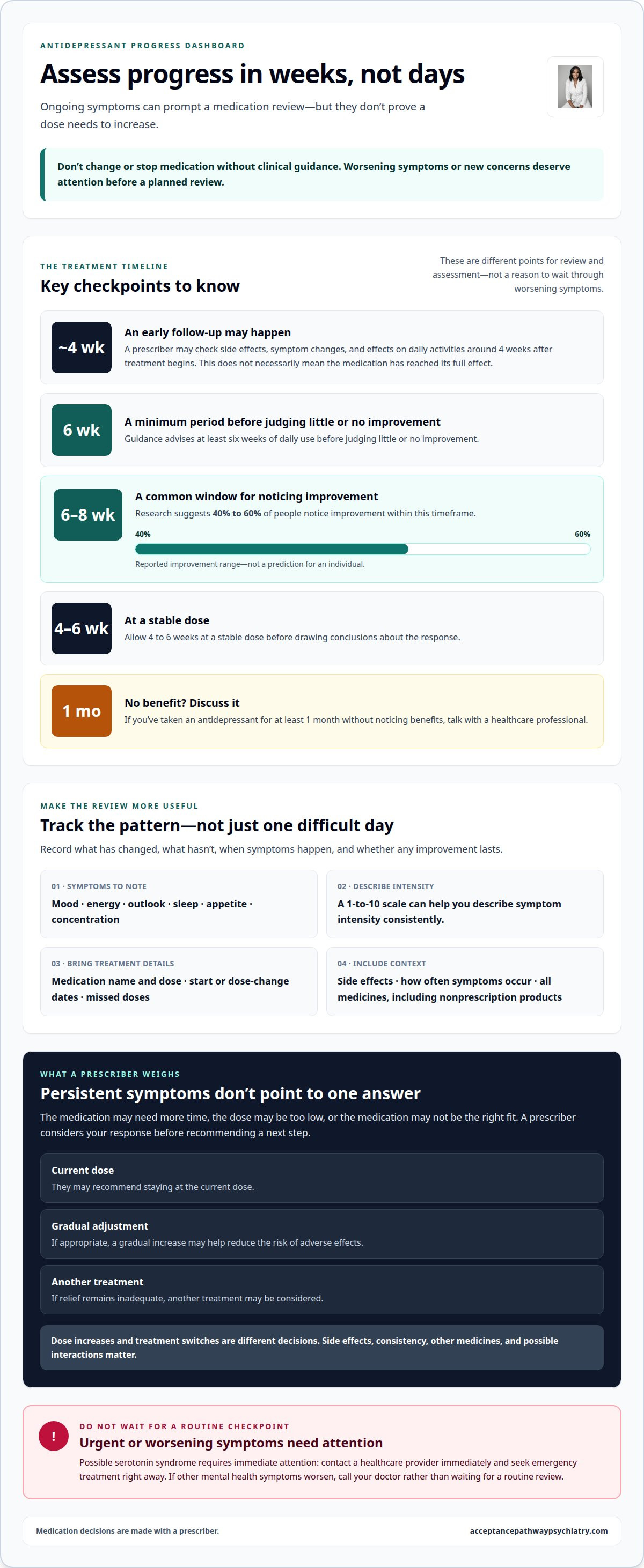
Antidepressant progress is usually assessed over weeks, not days. A new dose can take time to work as intended, so no change in the first few days doesn’t show whether treatment will help. However, worsening symptoms or new concerns deserve attention before a planned review.
Use follow-up points to assess progress
A prescriber may assess how an antidepressant is working around 4 weeks after treatment begins. This is an opportunity to discuss side effects, symptom changes, and how treatment is affecting daily activities. It doesn’t necessarily mean the medication has had enough time to reach its full effect.
For a fuller picture, consider the treatment timeline: research suggests 40% to 60% of people notice improvement within 6 to 8 weeks. Guidance also advises allowing at least six weeks of daily use before judging little or no improvement, and 4 to 6 weeks at a stable dose before drawing conclusions. These timeframes describe different checkpoints, not a reason to wait through worsening symptoms.
Record changes between appointments. Note whether sleep, appetite, energy, concentration, or mood has shifted, and whether any improvement lasts. Bring the dates you started medication or changed doses to your review. A clear timeline can help distinguish gradual progress from symptoms that remain unchanged.
Respond to persistent or changing symptoms
If you’ve taken an antidepressant for at least 1 month without noticing benefits, talk with a healthcare professional. Persistent depression symptoms, symptoms that become more frequent, or new symptoms are also reasons to call. Describe what changed, when it began, and how it affects your daily routine, such as sleeping or completing usual tasks.
Symptoms that return after a period of improvement also merit discussion. Note when they reappeared and whether anything changed around the same time, including how you took your medication. Early improvement that fades within days may not be a lasting response, so describe that pattern rather than judging treatment by one better day.
Know when symptoms need urgent attention
Possible serotonin syndrome requires immediate attention. Contact a healthcare provider immediately about symptoms that may indicate serotonin syndrome, and seek emergency treatment right away. Don’t wait for a routine appointment or scheduled assessment if you’re concerned about this reaction.
If other mental health symptoms worsen, call your doctor rather than waiting for a routine checkpoint. A treatment timeline helps assess progress, but it doesn’t replace getting help when symptoms intensify or change.
If you’re unsure how to describe a changing symptom pattern, a conversation about treatment progress can help organize the next steps.
Risks of changing or stopping medication without guidance
The dose a person needs depends on their symptom response, side effects, consistency in taking medication, and other medicines that may interact. These details help a prescriber weigh whether to maintain treatment, adjust the dose, or consider another approach.
Tolerance and Dose Changes
Tachyphylaxis describes a gradual decline in an antidepressant’s effect after a period of stability, including a pattern that develops after 6 or more months. Returning symptoms can feel like a dose has become too low, but they don’t establish the cause. A prescriber can review the timeline, medication use, and other medicines before considering a dose change or a different treatment.
Don’t increase, reduce, or stop an antidepressant on your own. A sudden change can make symptoms harder to interpret and may cause discontinuation syndrome, which can include withdrawal symptoms. If your prescriber recommends stopping, they can create a gradual tapering plan to help avoid discontinuation symptoms. Be open about missed doses or changes you’ve made so the review reflects what you’ve actually taken.
Mood and Emotional Changes
Mood or emotional changes after a medication change include shifts such as worsening depression or increased anxiety. They matter because a change in symptoms may call for timely clinical attention, not an unsupervised dose adjustment. Note when the change began, how it affects daily life, and whether it followed a missed dose or medication change.
Contact your doctor right away if suicidal thoughts begin after starting antidepressants. Explain specifically what changed and when; don’t wait for a routine medication review. Worsening or more frequent depression symptoms also warrant a call. A dated record of mood, anxiety, sleep, and medication use can help the prescriber understand the pattern.
Changing a dose without medical advice can obscure whether side effects or symptoms came from the medication, the dose, or another factor. For example, stopping suddenly and then feeling unwell can make it difficult to distinguish withdrawal symptoms from returning depression. Continue taking medication as prescribed while arranging a conversation about your concerns.
Bring an up-to-date medication list to the discussion, including nonprescription products. A prescriber can consider possible interactions alongside your symptom response and side effects. If treatment seems less effective after a stable period, explain when the change began and whether you missed doses. Those details help guide decisions better than comparing your dose with someone else’s.
Medication adjustments are collaborative decisions. Describe what you’ve noticed, ask what to monitor, and agree on how progress will be reviewed. If your prescriber recommends a stopping plan, follow its gradual schedule rather than ending treatment abruptly.
How long antidepressants take to work
Antidepressant effects usually build gradually, so feeling better may not happen all at once. Some people start to feel better after 1 to 2 weeks, but early changes don’t necessarily show the full benefit. The pace of improvement can differ from person to person, so a brief shift in mood is only one part of the picture.
According to Acceptance Pathway Psychiatry PLLC, antidepressants take time, usually 4−8 weeks, to work, and problems with sleep, appetite, energy, and concentration often improve before mood lifts. That order can make progress easy to miss if you look only for a clear change in sadness or outlook. Notice practical changes too, such as getting through a usual morning routine or concentrating on a familiar task.
Full effects may take 1 to 2 months, and some people may not experience an antidepressant’s full benefits for several months. Those timeframes aren’t contradictory: early changes can appear before the broader response develops. For example, sleep may improve while low mood remains. A single difficult day doesn’t erase earlier gains, just as one better day doesn’t establish lasting improvement.
Track changes across daily life
Choose a consistent way to record symptoms while treatment continues. A brief daily note can include sleep, appetite, energy, concentration, and mood. Use the same 1 to 10 scale from day to day if it helps you describe intensity. At a review, compare the notes across weeks rather than relying only on how you feel that day.
- Sleep: Note changes in falling asleep, staying asleep, or waking rested.
- Appetite: Record whether eating feels easier or remains difficult.
- Energy and concentration: Give a concrete example, such as finishing a work task or a household chore.
- Mood: Describe the pattern, including how often low mood appears and whether it lasts.
Bring your record to a medication review, along with the date you began treatment and any dose changes. It gives a clearer view of gradual effects than memory alone. If symptoms worsen, become more frequent, or new symptoms appear, contact your doctor rather than waiting for a milestone. A planned assessment period helps evaluate progress; it doesn’t mean ignoring a concerning change.
Keep taking medication as prescribed while assessing its effects. Don’t raise or stop a dose because improvement feels slow in the first few days. A prescriber can interpret the timeline, symptom pattern, and side effects together. This broader view helps distinguish a gradual response from treatment that may need reassessment.
Signs of a low antidepressant dose
Persistent depression symptoms after 6 to 8 weeks of consistent use may be signs that your antidepressant dose is too low. They can also mean the medication isn’t helping enough, so symptoms alone can’t determine the right change.
Look for a pattern, not just one difficult afternoon. Note whether low mood, low energy, or a negative outlook remain much as they were before treatment. Little meaningful change despite consistent use is a reason to discuss progress with your prescriber, not to increase the dose on your own.
Consider how symptoms affect everyday activities, too. Track examples such as difficulty sleeping, keeping up with work, or completing usual tasks. Depression can affect daily functioning, including sleep, so these details show how symptoms shape your routine. You might also note whether you feel less preoccupied with your mental health or have periods of improved mood.
- Symptoms remain: Low mood, low energy, or a bleak outlook continue without meaningful change.
- Daily tasks stay difficult: Sleep problems or trouble managing usual responsibilities persist.
- Improvement is limited: There are few noticeable periods of relief or fewer symptoms.
- Symptoms return: After a stable period, familiar difficulties reappear or become more frequent.
Side effects can complicate the picture. They often peak during the first two weeks of treatment and then subside, but their presence doesn’t show that the dose is too high or too low. Record what you notice and when it happens. Note whether the effects interfere with sleep, eating, or concentration, and discuss them during a medication review.
Distinguish ongoing depression symptoms from a possible medication reaction. Serotonin syndrome requires emergency treatment. Contact a healthcare provider immediately about symptoms that may indicate it, and seek emergency care right away. Don’t interpret a potentially serious reaction as proof that your antidepressant dose is insufficient.
For a useful review, note when you started the medication, whether you take it consistently, and which symptoms have changed. Include your current medication list, since interactions can affect treatment decisions. A prescriber can use these details to consider your response and side effects, and whether a dose adjustment or another treatment approach makes sense.
If symptoms persist and you’d like support assessing treatment progress, schedule a medication review.
Acceptance Pathway Psychiatry PLLC: Medication Management
Acceptance Pathway Psychiatry PLLC offers Medication Management for people who want support evaluating antidepressant response, side effects, or possible next steps. A medication review can help organize what you’ve noticed, including symptom changes, treatment history, and questions about adjusting your medication.
Psychotherapy can complement medication by offering space to work through depression and develop coping strategies. Acceptance Pathway Psychiatry PLLC also offers Creyos Cognitive Testing and Integrative Wellness Services. These options can be discussed as part of care when relevant to your concerns.
If persistent symptoms or medication questions are affecting your daily life, contact Acceptance Pathway Psychiatry PLLC to discuss care options.
Make Your Next Conversation Count
Noticing possible signs your antidepressant dose is too low can start a more focused conversation, but it isn’t a verdict on your treatment. Your notes can turn a difficult-to-describe experience into useful observations: what feels different, what remains hard, and what you hope daily life could look like.
Bring your questions and concerns to a mental health professional. You don’t need to arrive with a solution or decide what medication change to make. Sharing your experience creates room to consider the next step together, including how treatment fits your needs and priorities.
Contact Acceptance Pathway Psychiatry PLLC to discuss support for your mental health. Taking that step can help you move forward with greater clarity, one conversation at a time.
Frequently Asked Questions
How long do Prozac, Wellbutrin, and other antidepressants take to work?
Prozac, Wellbutrin, and other antidepressants can take weeks to months to reach their full effect. Some people begin feeling better after 1 to 2 weeks, while a broader response may take longer. The medication name alone doesn’t tell you exactly when you’ll notice a change. Track what shifts in daily life, such as sleep or concentration, and discuss the pattern with your prescriber.
How long should antidepressants take to work after starting or increasing a dose?
After starting or increasing a dose, allow time for the medication’s effects to develop; changes may not be noticeable in the first few days. A prescriber may assess response around 4 weeks after treatment begins, while conclusions about a stable dose often require more time. Record the date of the change and any symptom shifts so you can distinguish the new treatment period from what came before.
When should antidepressant dosage be adjusted, and who should make the decision?
The prescribing clinician should decide whether to adjust an antidepressant dose. They can consider how consistently you take it, symptom relief, side effects, and other medications. For example, ongoing difficulty with daily tasks may be relevant alongside your mood. Share what has changed and what remains difficult. Don’t change the dose yourself based on someone else’s treatment.
What is the usual process for safely increasing an antidepressant dose?
A prescriber may increase the dose gradually to reduce the risk of adverse effects. The approach depends on your response, current side effects, medication, and other medicines you take. Follow the plan and record any new symptoms after a change. If the instructions are unclear, ask the prescriber before changing anything rather than guessing or doubling a dose.
What are the risks of increasing an antidepressant dose too quickly or without medical advice?
Increasing a dose without guidance can raise the risk of adverse effects and make it harder to tell whether symptoms come from treatment or depression. It may also complicate the review of possible interactions with other medications. If you’ve already changed your dose, tell your prescriber what you took and when. Honest details help them assess the situation and advise on the next step.
Can missed doses or stopping an antidepressant cause symptoms that resemble a low dose?
Yes. Missing doses can make your medication routine inconsistent, complicating an assessment of whether treatment is helping. Stopping suddenly can cause discontinuation syndrome and withdrawal symptoms, which may be confused with returning depression or inadequate relief. Note when you missed doses or stopped treatment, along with any symptoms that followed. Tell your prescriber rather than restarting, stopping, or changing the dose on your own.
How should someone track symptoms and side effects before discussing an antidepressant dose with a clinician?
Use a brief daily log with the date, medication taken, symptoms, and side effects. Rate symptom intensity on a 1 to 10 scale, and add one real-life example, such as difficulty finishing a task or waking during the night. Note missed doses and other medications, too. This record helps your clinician compare changes over time instead of relying on a single difficult or unusually good day.


