

Cognitive skills practice may help support concentration and memory. A mental health approach to improving concentration and memory also considers sleep, emotional well-being, and physical health, since each can affect how you focus, learn, and recall information. Adults are generally advised to aim for 7 to 8 hours of sleep each night.
If focus feels harder than it used to, that can be frustrating, but it doesn’t mean you’re failing or not trying hard enough. Attention and memory are shaped by several connected factors. Understanding them can help you find practical ways to support your cognitive health.
This article explains how sleep and mental health relate to concentration, what cognitive skills practice may offer, and how health conditions or medications can affect memory and attention. You’ll also find everyday strategies for learning and recall, along with guidance on when persistent changes may warrant professional attention.
Key Takeaways
- Protect consistent, restorative sleep to support attention and the brain’s ability to form and retrieve memories.
- Use cognitive exercises, focused practice, and short breaks to build strategies for concentration and recall.
- Notice how stress, mood, and mental health can shape learning, and consider what support may help you stay engaged.
- Review health conditions and medications as possible influences on concentration, especially when memory changes affect daily activities or worsen.
- Psychotherapy, medication management, and Creyos Cognitive Testing can help explore cognitive concerns and possible next steps.
1. Sleep and memory
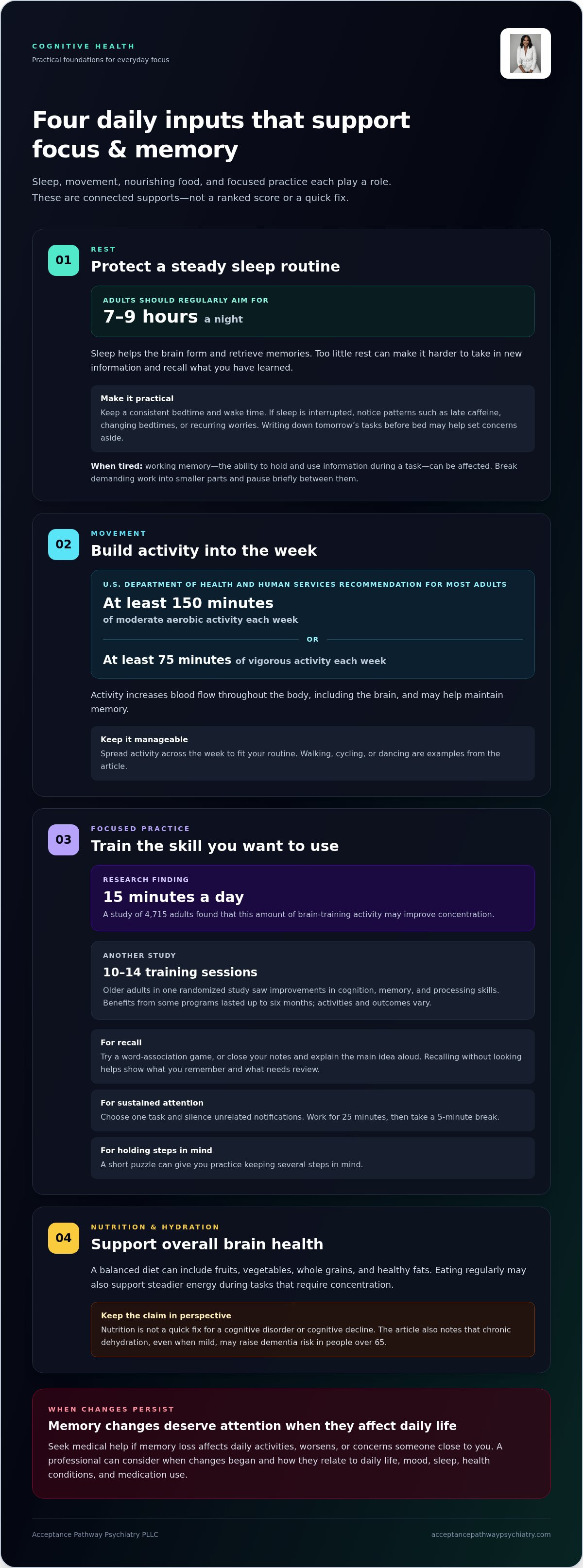
Sleep, exercise, and nutrition each shape concentration and memory in different ways. Adults should regularly get 7 to 9 hours of sleep a night, and the U.S. Department of Health and Human Services recommends at least 150 minutes a week of moderate aerobic activity for most adults. A balanced diet with fruits, vegetables, whole grains, and healthy fats supports overall brain health.
Sleep helps the brain form and retrieve memories. With too little rest, it can be harder to take in new information and recall what you have learned. You might forget instructions from a morning meeting or reread a paragraph without retaining it. Keeping a consistent bedtime and wake time can help establish a steadier sleep routine.
Restless or frequently interrupted sleep has also been linked to memory difficulties. If you wake repeatedly, look for patterns such as late caffeine, a changing bedtime, or recurring worries. Stress and anxiety can occupy your attention during the day, leaving fewer mental resources for listening, reading, or problem-solving. Before bed, try writing down tomorrow’s tasks to help set those concerns aside.
Mental fatigue matters, too. Cognitive fatigue can affect working memory, which helps you hold and use information while completing a task. For example, following several directions may feel harder when you’re tired. Break demanding work into smaller parts and pause briefly between them. Returning with a rested mind can make the next step easier to manage.
Sleep supports learning beyond the classroom. When studying new material, pause to recall the main idea without looking at your notes, then revisit it after a night of sleep. This helps you notice what you remember and what needs review. A consistent evening routine can make room for focused learning and restorative rest.
Movement can support cognitive health alongside sleep. Regular physical activity increases blood flow throughout the body, including the brain, and may help maintain memory. You can spread activity across the week to fit your routine. For example, a brisk walk after work adds movement without requiring a complicated plan.
Nutrition is another part of the picture, but it is not a quick fix for a cognitive disorder or cognitive decline. Choose meals with vegetables, fruit, whole grains, and healthy fats, and notice whether eating regularly supports steadier energy during tasks that require concentration. Pair this routine with sleep and short breaks. These practical steps address several influences on focus while leaving room to seek help if memory changes persist.
2. Can Cognitive Skills Therapy Help Strengthen Cognitive Function?
Cognitive training may offer a way to practice skills such as working memory, processing speed, and recall. A study of 4,715 adults found that 15 minutes a day of brain-training activities may improve concentration, while a review of 31 randomized controlled trials examined cognitive-training outcomes.
Training works best when it exercises a skill you want to use. Try a word-association game to practice recall, or solve a short puzzle that requires holding steps in mind. Older adults in one randomized study saw improvements in cognition, memory, and processing skills after 10 to 14 cognitive-training sessions. Benefits from some training programs lasted up to six months, though activities and outcomes vary.
Movement is another part of brain health. The U.S. Department of Health and Human Services recommends that most adults get at least 150 minutes a week of moderate aerobic activity, or at least 75 minutes a week of vigorous activity. A walk, cycling, or dancing can make exercise part of a regular routine. Physical activity supports blood flow throughout the body, including the brain, and may help keep memory sharp.
Cognitive symptoms can also be associated with mental health and brain chemistry. Low serotonin levels associated with depression can affect memory and learning. In Alzheimer’s disease, low acetylcholine levels can contribute to memory loss and impaired cognition. These connections do not identify the cause of someone’s symptoms on their own, but they show why ongoing changes deserve attention.
Small daily factors matter, too. Chronic dehydration, even when mild, may raise dementia risk in people over 65. Maintaining regular access to water can support hydration, especially during warm weather or physical activity. One study linked pet ownership with a “brain age” up to 15 years lower, but that finding doesn’t establish that having a pet prevents cognitive decline.
Seek medical help if memory loss affects daily activities, worsens, or concerns someone close to you. Repeated difficulty following familiar instructions or managing routine tasks, for example, is worth discussing. A professional can consider when the changes began and how they relate to daily life, mood, sleep, health conditions, and medication use. These details can help distinguish a persistent concern from occasional forgetfulness.
If concentration or memory changes are interfering with everyday life, cognitive testing may help organize a clearer picture of cognitive strengths and challenges. Use that insight alongside ongoing attention to exercise, hydration, and mental health.
3. Why Are Memory Skills, Attention, and Focus Important?
Evidence-based focus strategies include single-tasking, brief breaks, and active recall. Choose one task, silence unrelated notifications, and work for 25 minutes before taking a 5-minute break. To remember new information, close your notes and explain the main idea aloud. This quick retrieval step shows what you can recall and what needs another review.
Mindfulness may support concentration by training attention to return to the present moment. In a study involving 48 participants, mindfulness was associated with more efficient organization of brain function. Try sitting quietly for a few minutes each day and noticing your breathing, nearby sounds, and physical sensations. When your mind wanders, gently guide it back without judging yourself.
Students and adults can build a daily routine around repeatable cues. For example, read for 30 minutes and check every five minutes whether your attention has drifted. Write down the next action, such as summarizing a paragraph or solving one problem. Short breaks during study sessions can help support retention, while a predictable start time makes practice easier to maintain.
Memory games offer another way to practice storing and retrieving information. Use flashcards to test definitions, word associations to connect new terms with familiar ideas, or matching games to recall pairs. Repetition helps reinforce information, while chunking groups a long list into smaller sets. For example, divide a shopping list by meal instead of trying to remember everything at once.
Movement can support both mood and memory. Regular physical activity may help maintain memory by increasing blood flow throughout the body, including the brain. It also stimulates brain-derived neurotrophic factor, which supports neurogenesis, synaptic plasticity, and the survival of existing neurons. A walk between study blocks can provide movement and a mental reset without replacing focused practice.
Attention and working memory help people follow conversations, learn new material, and make everyday decisions. During a conversation, focus on the speaker and listen for the main point before planning your reply. If you lose track, ask for an idea to be repeated. These small habits can support attention and recall, while ongoing difficulties that affect daily tasks may be worth discussing with a professional.
4. Relationship between mental health and learning
Mental health can shape how readily you take in, organize, and use new information. Anxiety, for example, can draw your attention toward worries while you’re trying to follow a lesson or complete a task. Try writing down the concern, then identify one next step, such as reviewing a page or practicing a specific skill. This separates the task from the distraction and gives your attention a clear direction.
Learning also depends on how information moves through memory. Working memory can hold approximately 3 to 4 units of information at one time, so long instructions may feel difficult to manage all at once. Break a sequence into smaller steps, such as learning a recipe one stage at a time. How you engage with information in working memory influences how it is stored and later retrieved.
Information processing connects short-term learning with long-term memory. Slower processing can make it harder for information to enter short-term memory and be stored for later use. If a lesson moves quickly, pause after each concept and summarize it in your own words. Rephrasing an idea, such as a history lesson’s main cause and effect, gives you another opportunity to work with the material.
A new language or musical instrument offers structured practice with clear feedback. For someone focused on improving concentration and memory mental health, learning Spanish can connect a new word with a sentence they might actually use. During piano practice, listen to a short phrase, play it slowly, then repeat it without looking at the notes. These steps build specific skills through attention and practice, without measuring yourself against someone else’s pace.
Using several senses can make a lesson more vivid. For example, an approach to improving concentration and memory mental health could pair reading a science explanation with sketching a diagram and describing the process aloud. You might also connect a word or idea with a color, texture, smell, or taste when it fits naturally. Someone studying citrus fruit could link its name with its bright color and familiar scent.
Games and meaningful hobbies give learning a clear goal. A puzzle asks you to notice patterns, while a creative project asks you to plan and adjust as you go. A study involving 154 children suggested video gaming may improve visual selective attention, though how long the effect lasts is unclear. Treat a game as one engaging activity, not as a complete measure of learning or mental health.
5. Health conditions and other factors affecting concentration
Concentration and memory difficulties can have several causes, including depression, diabetes, head trauma, high blood pressure, high cholesterol, obesity, and sleep disorders. Stress, alcohol, dehydration, and some medicines may also affect thinking. Losing track of familiar tasks throughout the day, for example, may reflect more than distraction, especially if the change persists or worsens.
Depression can affect memory and learning, while anxiety may make it harder to sustain attention. These experiences can overlap: someone might reread an email several times, then forget its main request. Noticing when concentration shifts, such as during a stressful meeting or after poor sleep, can help you describe patterns and their effects on daily life.
Medicines are another factor to review. Some can affect memory, so keep a current list of prescriptions and over-the-counter products. Note when a difficulty began and whether it coincided with a medication change. A healthcare professional can review those details alongside other health conditions. Don’t stop or change a medicine on your own based only on memory concerns.
Alcohol can influence cognition, even after one alcoholic drink. If you notice difficulty following a conversation after drinking, note the timing and context rather than assuming it reflects a lasting change. Social interaction can help ward off depression and stress, both of which can contribute to memory loss. Staying connected with a trusted friend through a regular call is one practical example.
Social isolation may speed cognitive decline by as much as 50%. Small steps, such as sharing a meal or joining a familiar group activity, can create regular contact. Hydration also deserves attention: even mild chronic dehydration may raise dementia risk in people over 65. Keeping water nearby during routine activities can make it easier to drink throughout the day.
Vision and cholesterol are relevant to long-term brain health, too. A 2024 update to the Lancet Commission’s global dementia research added untreated vision loss and high LDL cholesterol to its list of dementia risk factors. If reading has become difficult, or a health check identifies elevated cholesterol, record the change and discuss how it fits with other concerns.
For persistent memory changes, write down specific examples, such as missed appointments, repeated questions, or trouble processing familiar instructions. Seek medical help if memory loss affects daily activities, worsens, or concerns someone close to you. A clear record of symptoms, health conditions, and medicines can make a conversation more useful. If these concerns are affecting daily life, explore mental health support as a next step.
Acceptance Pathway Psychiatry PLLC: Medication Management
Acceptance Pathway Psychiatry PLLC offers Medication Management for people whose treatment or medication concerns may affect focus, memory, or daily routines. Discussing when symptoms began, how they affect everyday tasks, and what medications you take can help clarify appropriate support. Psychotherapy can also address mental health concerns that interfere with concentration. Creyos Cognitive Testing can provide information about cognitive strengths and challenges, and Integrative Wellness Services offer another part of the practice’s mental health care.
If changes in memory or concentration persist or disrupt daily life, consider discussing your concerns with the practice. Contact Acceptance Pathway Psychiatry PLLC to take the next step.
Take a thoughtful next step
Improving concentration and memory through mental health care can begin with noticing what feels difficult and what support could make daily life easier. You don’t need a perfect explanation before starting a conversation. Brief notes about when focus slips, what you were doing, and how it affected your day can make your concerns easier to describe.
Choose one manageable action for now. You might track patterns, make space to discuss persistent changes, or consider what kind of support feels comfortable. The aim isn’t to judge yourself or force progress. It’s to approach the concern with curiosity and make room for a more informed next step.
Acceptance Pathway Psychiatry PLLC can be part of that conversation as you consider support for your mental health and cognitive concerns. Contact Acceptance Pathway Psychiatry PLLC to explore a next step that feels right for you. Taking time to understand your needs is a meaningful place to begin.
Frequently Asked Questions
Can Cognitive Skills Therapy Help Strengthen Cognitive Function?
Structured cognitive practice can support skills such as working memory, processing speed, and recall. Match practice to a real-life goal: if you lose track of instructions, practice repeating a short set of directions before starting. Psychotherapy differs from cognitive training. It can address mental health concerns that affect daily functioning, while cognitive testing can offer information about strengths and areas to explore.
What about brain-training programs?
Brain-training programs can provide structured practice for attention, memory, or problem-solving. Choose activities with clear feedback, such as remembering a sequence or sorting information by category, and notice whether the practiced task gets easier. A game score alone doesn’t show how well a skill transfers to work, school, or home life. Use these programs as one part of a broader routine, not as a replacement for care when difficulties persist.
What's fogging up focus?
Focus may feel cloudy when competing demands divide your attention, such as switching between messages during a work task or trying to study in a noisy room. Stress, poor sleep, mood concerns, health conditions, alcohol, and some medicines can also contribute. To spot patterns, note the time, setting, task, and anything that changed that day. Comparing your notes may reveal situations where concentration feels easier or harder.
Why Are Memory Skills, Attention, and Focus Important?
Attention helps you take in information, while memory lets you use it later. Together, these skills support everyday decisions, such as following a recipe, remembering a colleague’s request, or comparing choices before a purchase. When attention slips, details may not be registered clearly enough to recall. Try stating the main point of a conversation in your own words before moving to the next task.
Why Do Some People Struggle With Focus, Organization, and Follow-Through?
Focus and follow-through can be affected by mental health, sleep, physical health, competing demands, and how a task is structured. An open-ended project, for example, may feel harder to start than one with a clear first step. Write down one action you can complete, gather what you need, and set a reminder. Ongoing difficulties across different settings are worth discussing with a professional, rather than treating them as a character flaw.
How can stress, anxiety, and depression affect concentration and memory?
Stress and anxiety can pull attention toward worries, making it harder to stay with a conversation or absorb new instructions. Depression can also affect memory and learning. For example, someone may read a message while preoccupied and later struggle to recall its details. If this happens, pause and describe the immediate task in a few words. Persistent changes that disrupt daily responsibilities deserve thoughtful attention.
Which medications or supplements can affect concentration and memory, and what are the risks?
Some medicines can affect memory, though the effect varies by person and overall medication picture. Keep a current list of prescriptions, over-the-counter products, and supplements, and share it with a healthcare professional. Don’t stop prescribed medicine or add a supplement without discussing it first. Supplements aren’t a substitute for medical care. Consult your provider before use, especially if you’re pregnant, nursing, taking medication, or managing a chronic condition.
When should memory or concentration problems be evaluated by a doctor?
Seek medical help when memory loss affects daily activities, worsens, or concerns a family member or friend. Examples include repeatedly missing familiar appointments, struggling with routine tasks, or often needing the same information repeated. Before an appointment, note when the change began, specific examples, and how it affects your day. Include relevant health conditions and medicines so the conversation can consider the wider context.


