

Antidepressants can become less effective for some people over time, but that is not the same as becoming literally immune. If you’re asking whether you can become immune to antidepressants, a gradual loss of benefit is sometimes called tolerance or tachyphylaxis. Providers generally assess whether a medication is helping after six to eight weeks, but returning symptoms can have other explanations.
It can feel unsettling when a treatment that once helped no longer seems sufficient. This change does not mean you have done anything wrong, and it does not automatically mean the medication has stopped working permanently. Understanding what might be behind the shift can help you describe what you’re experiencing and discuss a thoughtful next step.
This article explains why symptoms may return, how tolerance differs from other causes, and what treatment changes or follow-up options may be worth discussing with a healthcare provider. It also explains why you should not change or stop medication on your own, and how ongoing support can help guide care.
Key Takeaways
- Notice what changed in your symptoms and when, then share that pattern during a follow-up.
- Review other medicines, substance use, and health changes as possible influences on treatment response.
- Discuss whether a dose adjustment, a different medication, or an added treatment could fit your needs.
- Psychotherapy alongside medication may offer another way to support depression care.
- Keep taking medication as prescribed until you’ve discussed any changes with a healthcare professional.
What causes depression medications to stop working?
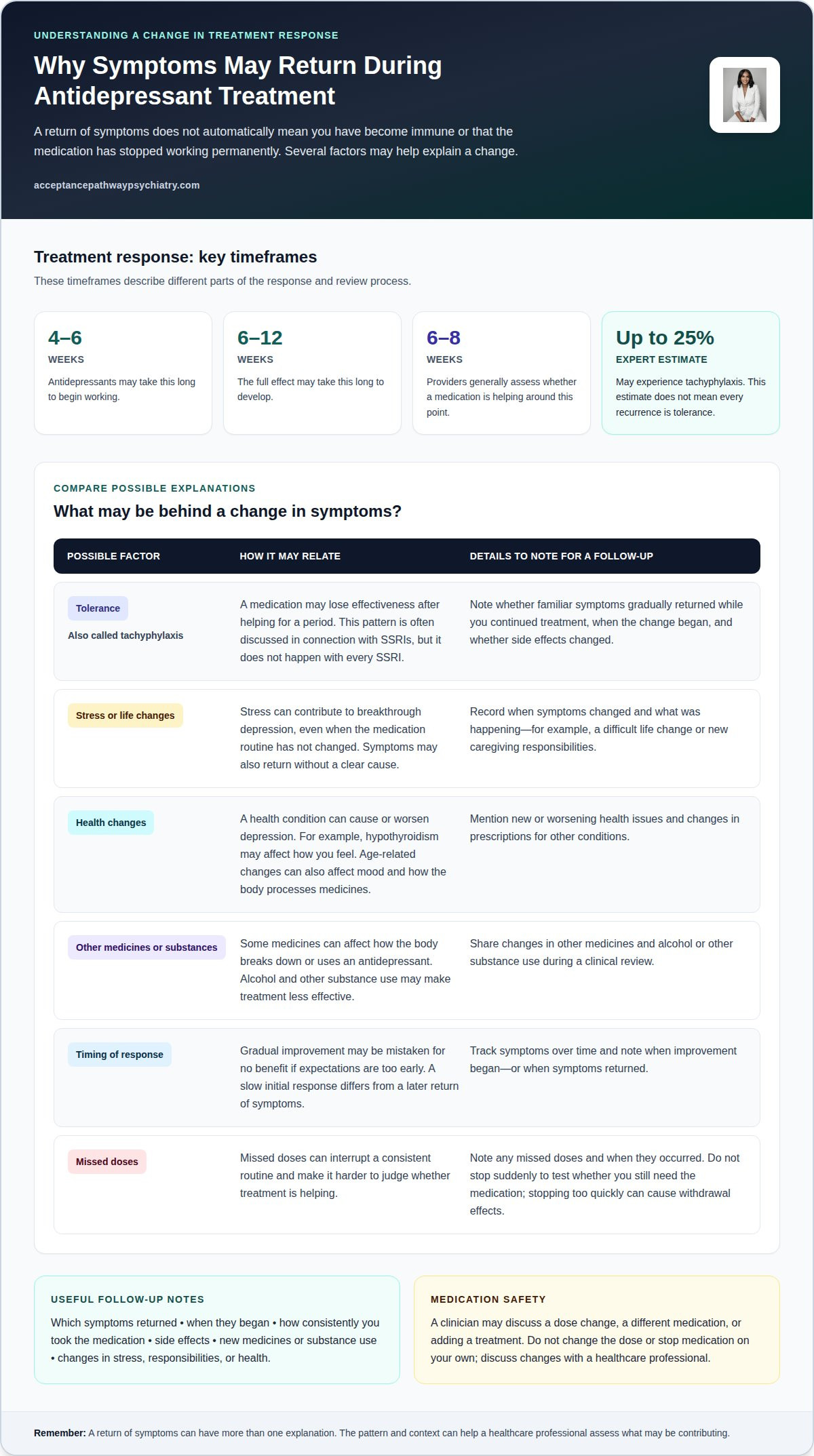
A change in antidepressant effects does not always mean your body has become immune. Stress, health changes, other substances, and the time treatment needs to work can all affect how symptoms change.
Factors Affecting Antidepressant Effectiveness
Antidepressant effectiveness can change when stress, health conditions, or other substances affect symptoms or medication processing. This matters because returning depression symptoms may have more than one reason, and noticing what changed can make a follow-up more useful. For example, caring for an aging parent can add stress while treatment continues, making it harder to tell whether medication effects have declined.
Hypothyroidism can cause or worsen depression, so a new or worsening health issue may change how you feel. Some medicines prescribed for conditions unrelated to depression can also affect how the body breaks down and uses an antidepressant. Alcohol and other substance use may make treatment less effective. Share changes in other medicines or substance use during a clinical review.
Timing matters, too. Antidepressants may take four to six weeks to begin working, while their full effect can take six to twelve weeks. If you expect a complete change early on, gradual improvement may seem like no benefit. Tracking symptoms during this period can help distinguish a slow response from a later return of symptoms.
Stress can trigger breakthrough depression, although symptoms may return without a clear cause. A difficult life change, such as taking on caregiving responsibilities, may coincide with lower mood even when your medication routine has not changed. Note when symptoms changed and what was happening at the time. That context can help clarify whether stress may be contributing.
Tolerance and Reduced Effectiveness Over Time
Antidepressant tolerance, also called tachyphylaxis, describes a medication losing effectiveness after it has helped for a period. It can matter when familiar symptoms gradually return despite continued treatment. Experts estimate that up to 25% of people treated for depression may experience tachyphylaxis. This estimate describes a possible pattern, not proof that every recurrence means tolerance.
Depression symptoms can return during treatment without tolerance. Stress, an underlying health condition, or changes in how the body processes medication may contribute. Providers generally assess improvement after six to eight weeks, so the timing and pattern of changes can help distinguish an incomplete response from a later decline.
Medications That May Lose Effectiveness
Antidepressant tachyphylaxis is often discussed in connection with selective serotonin reuptake inhibitors, or SSRIs. This identifies a medication class associated with the pattern, but it does not mean every SSRI will lose effectiveness. If symptoms return while you’re taking an SSRI as prescribed, note when the change began and whether other factors, such as stress or a new medication, changed around the same time.
Some people may develop tolerance over time, and a higher dose may be considered to achieve a similar effect. A higher dose can also increase side effects, so do not adjust your medication on your own. Describe symptom changes and any side effects at follow-up. The full context matters more than the medication class alone.
Medication changes and augmentation strategies
A change in symptoms can prompt a review of how you take an antidepressant and what else has changed. Missed doses, life circumstances, age-related changes, and pregnancy plans can all shape the treatment discussion.
Missed doses and changing circumstances
Missed doses can interrupt a consistent medication routine, making it harder to judge whether treatment is helping. If symptoms worsen, note any missed doses and when they occurred, then share that pattern at follow-up. Do not stop an antidepressant suddenly to test whether you still need it. Stopping many antidepressants too quickly can cause withdrawal effects, which may make it harder to interpret changes in mood or other symptoms.
Stressful life events can also coincide with worsening depression, even when your medication routine has stayed consistent. A change such as caring for an aging parent may affect your mood and daily routines. Write down when symptoms changed and any major shifts in responsibilities, sleep, or medication use. That timeline gives a healthcare professional useful context when considering whether treatment should change.
Age and medication processing
As people age, changes in the brain, thinking, and hormones can affect mood, while the body may process medicines differently. This can influence how a familiar prescription feels over time. A medication review can consider these changes alongside symptom patterns and side effects. Mention new prescriptions for other health conditions, too, because medicines unrelated to depression can affect how the body uses an antidepressant.
Discussing dose changes and additions
A healthcare professional may recommend changing an antidepressant dose, switching to another medication, or adding a medicine when symptoms return. The options depend on your response so far, side effects, and other medicines you take. In some situations, a clinician may recommend starting with half a dose and increasing it gradually. Do not make that adjustment yourself. Talk with a doctor before changing how you take medication.
Bring specific observations to the conversation: which symptoms returned, when they began, how consistently you’ve taken the prescription, and whether side effects changed. Also mention alcohol use or any new medicines, since these details may help explain a shift. Therapy may be part of a broader plan. Ketamine-related care, including esketamine, is a separate treatment discussion, not a reason to adjust medication on your own.
Pregnancy and treatment planning
If you’re pregnant or planning to become pregnant, talk with your primary care provider about current medications. Don’t stop or change an antidepressant on your own while making plans. A clinician can weigh the medication, symptoms, and treatment history when discussing next steps. For a focused discussion about changes to a prescription, medication follow-up can help organize those questions.
Treatment options when medication stops working
If antidepressants seem less effective, treatment can be reassessed rather than abandoned. A doctor considers symptom changes, side effects, medication history, and daily functioning before discussing possible options.
Reviewing the medication plan
A doctor may adjust the dose, switch to another antidepressant, or add a medication. The choice depends on how symptoms responded, which side effects appeared, and how consistently you took the prescription. For example, if you had partial improvement but still have persistent symptoms, you might discuss an adjustment or additional treatment. Switching can involve a planned transition, since stopping some antidepressants too quickly can cause withdrawal effects.
Increasing a dose can intensify side effects, while switching can bring withdrawal effects or new side effects. These risks make a supervised plan important. Do not change the dose or stop medication on your own.
Bring a concise record to your appointment: symptoms that remain, when they changed, missed doses, side effects, and other medicines or substances. These practical details can help your doctor review whether the current medication has had an adequate trial. For example, ongoing low mood and poor sleep may call for a different discussion than improved mood alongside difficult side effects.
When treatment resistance is considered
Treatment-resistant depression is generally diagnosed when at least two different first-line antidepressants do not improve symptoms. Approximately 30% of people diagnosed with major depressive disorder who have tried medication for it have treatment-resistant depression. That label describes limited response to treatment, not a personal failure or proof that no options remain. A psychiatrist can assess the diagnosis, prior medication trials, and factors that may affect response.
For adults with treatment-resistant depression, the FDA approved esketamine as an adjunct treatment in 2019, in combination with an oral antidepressant. Spravato is an esketamine nasal spray used alongside oral antidepressants for this condition. A healthcare provider must monitor people receiving esketamine in a clinical setting for at least two hours after taking it. It is a specific treatment option, not a routine substitute for reviewing current care.
Adding psychotherapy or other approaches
Adding psychotherapy to an antidepressant plan may help address symptoms and support progress alongside medication. Cognitive behavioral therapy, or CBT, is one form of psychotherapy that can be discussed as part of care. For people considering repetitive transcranial magnetic stimulation, combining CBT with traditional rTMS improved response rates by about 8% and remission rates by about 19% in the cited findings. These approaches differ, so the treatment discussion should connect the option to symptoms and previous care.
Medication management brings your response, dosage, side effects, and next treatment choices into one follow-up conversation. A written timeline of changes can make that conversation more specific and guide discussion of what to try next.
Can you become immune to antidepressants?
“Immune” is not usually the most accurate description when depression symptoms return during treatment. A clinician considers whether the change reflects a limited response, breakthrough depression, or another factor affecting mental health.
Defining Treatment-Resistant Depression
Treatment-resistant depression generally means symptoms haven’t improved after at least two different first-line antidepressants. The term matters because it describes response to treatment, not a person’s effort or ability to recover. About 30% of people diagnosed with major depressive disorder who have tried medication for it have treatment-resistant depression. A clinician reviews the medicines tried, how symptoms changed, and whether side effects affected treatment before applying this label.
This distinction also helps frame the next discussion: whether to revisit the diagnosis, adjust treatment, or consider another option. It does not mean every medication has been tried or that improvement is impossible. Depression and its effects vary, so a record of earlier treatments can help clarify what has and has not helped.
Breakthrough Depression and Returning Symptoms
Breakthrough depression describes symptoms that return or worsen during antidepressant treatment. Stress may contribute, though symptoms can return without an obvious trigger. Changes may include low mood, reduced interest, or other familiar signs that affect daily life. Tracking when your mood shifted, which symptoms returned, and any life changes can help distinguish a brief fluctuation from a sustained pattern.
Returning symptoms do not by themselves prove antidepressant tolerance or immunity. The current dose may no longer provide enough relief, or another health or medication factor may be involved. If your depression symptoms persist beyond a few days, discuss the change with a doctor. The conversation can focus on the pattern rather than assuming the medicine has permanently stopped helping.
Assessing Whether Medication Has Stopped Working
A doctor assesses response by comparing your current symptoms with your earlier baseline and treatment progress. Providers generally assess whether an antidepressant improves symptoms after six to eight weeks. They may also review how consistently you took it, side effects, other medicines, substance use, stress, and health changes. These details help distinguish a partial response from symptoms returning after improvement.
Prepare for your appointment by noting which symptoms changed, when they began, and how they affect work, relationships, sleep, or daily tasks. Include missed doses and any new prescriptions. This gives your doctor a clearer account than simply saying treatment feels ineffective. The assessment can then guide a discussion about whether the plan needs adjustment.
For adults with treatment-resistant depression, esketamine is an FDA-approved treatment option used alongside an oral antidepressant. It is administered as a nasal spray in a clinical setting, where a healthcare provider monitors the person for at least two hours after treatment. Esketamine may relieve symptoms within hours, but its role depends on treatment history and clinical assessment. It is an option to discuss, not a reason to change current medication without guidance.
Self-care and follow-up with a provider
When antidepressants seem to stop working, keep taking them as prescribed until a healthcare professional advises otherwise. Stopping suddenly can cause withdrawal effects, adding new symptoms and making it harder to understand what changed. If you’re not starting to feel better after a month, contact your doctor to discuss your response and next steps.
Make follow-up more specific by keeping a brief daily record. Note your mood, sleep, energy, medication use, missed doses, side effects, and major stressors. For example, recording that low mood returned after a change in work demands gives your provider useful context. Include your medication name, such as a selective serotonin reuptake inhibitor, and describe whether its relief has changed over time.
At your appointment, explain what improved at first and what has changed since. A provider can compare your current symptoms with your earlier baseline, review other medicines, and consider health or life changes. Bring questions about dosage, side effects, and possible alternatives. Do not increase, reduce, or stop a prescribed medication on your own, even if you feel it has stopped working.
Continuing medication after symptoms improve may help keep them from returning. The right duration depends on your treatment plan and response, so discuss ongoing use at follow-up rather than stopping when you feel better. If an antidepressant has helped before, tell your provider when the relief began and when symptoms returned. This timeline can help frame the next conversation without assuming tolerance is the only explanation.
Seek urgent help for self-harm or suicidal thoughts. Call 911 or go to an emergency room; in the United States, call or text 988, according to the Substance Abuse and Mental Health Services Administration. If symptoms have worsened, tell someone you trust and contact a healthcare professional promptly. Immediate safety takes priority over waiting for a routine medication appointment.
Concerns about serotonin-related medication also deserve clear follow-up. If you take a selective serotonin reuptake inhibitor and feel its effects have changed, describe the symptoms and timing rather than changing the dose yourself. A practical appointment note can include what you take, when you take it, recent missed doses, side effects, and the changes you want help addressing.
If you’re ready to review a medication plan and discuss changes in symptoms, schedule medication follow-up.
Acceptance Pathway Psychiatry PLLC: Medication Management
Acceptance Pathway Psychiatry PLLC offers Medication Management for people whose depression symptoms have changed or whose current treatment no longer feels helpful. A medication review can bring together your symptom timeline, how consistently you take the prescription, and any effects or side effects you’ve noticed. These details can support a clearer discussion about possible next steps without changing medication on your own.
Psychotherapy may also support care alongside medication, giving you space to work through experiences and symptoms affecting daily life. If you’re unsure what to raise, bring notes about what changed and when, along with questions about your treatment options.
Contact Acceptance Pathway Psychiatry PLLC to discuss Medication Management and follow-up.
Make your next step a clear conversation
Whether you can become immune to antidepressants may be the question that brought you here, but your experience deserves attention beyond a label. Consider what you want help with now: understanding a change in how you feel, reviewing your treatment, or finding support for daily challenges. Naming that priority can make your next conversation more focused.
Acceptance Pathway Psychiatry PLLC offers Medication Management, Psychotherapy, and Creyos Cognitive Testing. These services can support conversations about treatment and mental health from different angles. You can bring questions, concerns, and observations without needing to have a solution figured out first.
Taking the next step doesn’t require certainty about why symptoms changed. Start with the concern that feels most important, and let the conversation develop from there. Contact Acceptance Pathway Psychiatry PLLC to discuss your care. Your experience matters, and reaching out can be a steady beginning.
Frequently Asked Questions
What do you do when antidepressants aren’t working?
Keep taking the medication as prescribed and arrange a conversation with your healthcare provider. Before the appointment, note which symptoms remain, when they occur, and how they affect daily activities such as work or sleep. Include missed doses, side effects, and new medicines in your notes. If you’re thinking about suicide or self-harm, call or text 988 in the United States, according to the Substance Abuse and Mental Health Services Administration.
Can you still have bad days on antidepressants?
Yes. A difficult day can happen even when an antidepressant is helping overall, and one low day alone doesn’t show that treatment has failed. Look at the broader pattern: whether symptoms are becoming more frequent, lasting longer, or interfering more with daily life. For example, note whether a hard day followed a stressful event or appeared without an obvious trigger. Share a sustained change with your provider.
What is treatment-resistant depression?
Treatment-resistant depression describes depression that has not improved after at least two different first-line antidepressants. The term helps organize a treatment discussion, but it does not mean a person is resistant to every form of care. A useful next step is to prepare a record of past medications, how long each was taken, their effects, and any side effects. That history can help a provider consider what to revisit.
What other options are out there for TRD?
Options may include psychotherapy alongside medication, a change to the medication plan, or a treatment such as esketamine for eligible adults. Cognitive behavioral therapy combined with traditional rTMS has also been studied as an approach. These choices differ in how they are delivered and monitored. For example, esketamine requires observation by a healthcare provider in a clinical setting after treatment. Discuss previous treatments and current needs when considering alternatives.
What is antidepressant tachyphylaxis, and how is it different from relapse or worsening depression?
Tachyphylaxis describes a loss of benefit after an antidepressant has helped for a period. Relapse or worsening depression describes symptoms returning or intensifying without identifying the cause. These terms can overlap in a person’s experience, so the symptom pattern alone may not explain what happened. If you’re wondering whether you can become immune to antidepressants, track when improvement changed and discuss the timeline with a provider.
What causes an antidepressant to stop working, including missed doses, interactions, and life changes?
Several factors may contribute, rather than one clear cause. Missed doses can disrupt a consistent routine; some medicines can affect how the body processes an antidepressant, and alcohol or other substance use may reduce its effectiveness. Stress or a major life change can also coincide with returning symptoms. For example, note a new prescription or change in responsibilities alongside the date symptoms shifted, then share both details at follow-up.
What are the treatment options when an antidepressant stops working, such as dose changes, switching, or augmentation?
A healthcare professional may discuss adjusting the dose, switching to another antidepressant, or adding a medicine. The conversation can also include psychotherapy and, when appropriate, other treatment options. Each choice involves weighing your response so far, side effects, other medicines, and symptom changes. Write down what improved, what remains difficult, and what concerns you most. Do not change or stop a prescription on your own, since abrupt changes can cause withdrawal effects.
How long should you wait before changing antidepressants that seem ineffective?
Providers generally assess whether an antidepressant is improving symptoms after six to eight weeks, though the time needed for benefit varies. If you’re not starting to feel better after a month, contact your doctor rather than waiting silently or changing the medication yourself. Share whether you’ve taken it as prescribed, which symptoms continue, and any side effects. A provider can use those details to decide whether your current trial or treatment plan needs review.


