

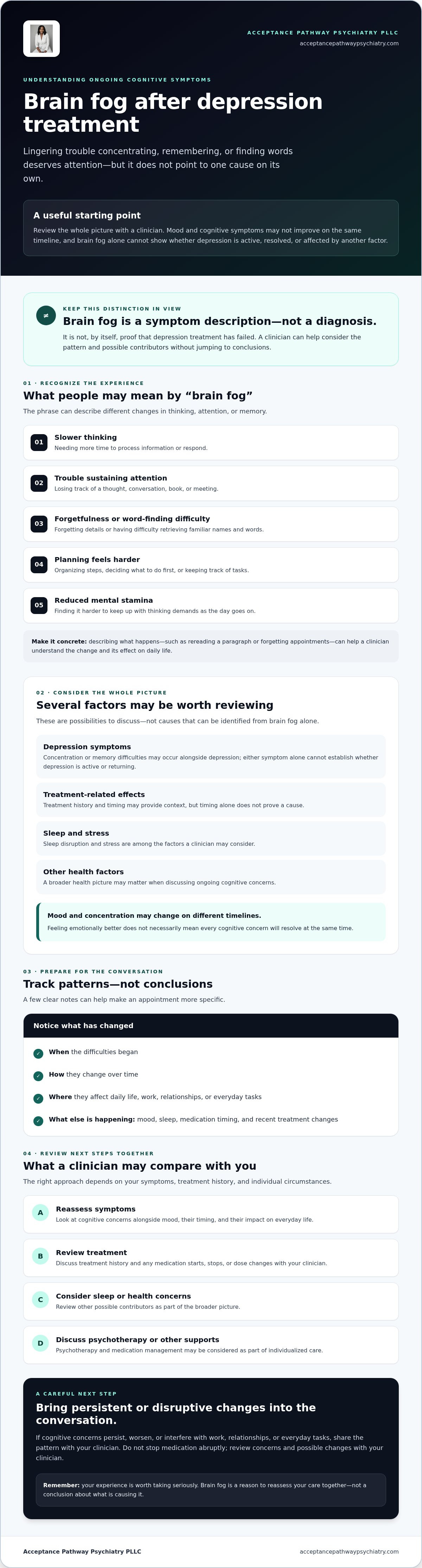
What if brain fog after depression treatment doesn’t mean your recovery has failed? Trouble concentrating, remembering details, or finding the right words can feel unsettling, especially when your mood has started to improve. It’s understandable to wonder whether depression, medication, sleep, or another factor is behind it. These symptoms deserve attention, but they don’t point to one cause on their own.
A thoughtful next step is to review the whole picture with a clinician rather than trying to diagnose yourself or stopping medication abruptly. This article explores why cognitive difficulties may continue after depression treatment, what changes or patterns to track, and what to discuss at an appointment. You’ll also learn how a clinician may consider possible explanations and help you weigh safe, individualized next steps. Your experience is worth taking seriously, and lingering brain fog can be a reason to reassess your care together.
Key Takeaways
- Brain fog is a lay term for cognitive difficulties, such as slower thinking, forgetfulness, or trouble finding words. It is not a diagnosis on its own.
- Brain fog after depression treatment can have several possible contributors. A clinician can help consider symptoms, treatment effects, sleep, stress, and other health factors without jumping to conclusions.
- Before an appointment, note when the difficulties began, how they change, and how they affect daily life. Tracking mood, sleep, medication timing, and recent treatment changes can help guide the conversation.
- A clinician may compare options such as reassessing symptoms, reviewing treatment, addressing sleep or health concerns, or discussing psychotherapy. Acceptance Pathway Psychiatry PLLC offers medication management and psychotherapy as possible supports for individualized care.
What Does Brain Fog After Depression Treatment Feel Like?
Brain fog is a lay term for perceived difficulties with thinking, attention, or memory. It isn’t a standalone diagnosis, and it can describe different experiences for different people. You might find it harder to follow a conversation, think at your usual pace, remember what you came into a room for, or find a familiar word. The phrase Clouding of consciousness describes a related clinical concept, but “brain fog” alone doesn’t identify what’s causing a person’s symptoms.
Mood and concentration don’t always improve in step. Someone may feel less weighed down emotionally yet still struggle with tasks that once felt routine. That difference can be frustrating, but cognitive symptoms by themselves don’t show whether depression is active, resolved, or affected by another factor.
For another perspective on experiences during antidepressant treatment, you can watch the video below. It offers a general discussion, not an assessment of your individual symptoms or a substitute for guidance from your clinician.
Which cognitive changes do people commonly mean by brain fog?
People may use “brain fog” to describe trouble holding attention on a book or meeting, losing track of a thought, or needing more time to respond. Others notice forgetfulness, difficulty retrieving names or words, or less mental stamina as the day goes on. Planning and organizing can feel harder too, such as deciding what to do first or keeping track of several steps in a task.
The intensity and effect on daily life vary. Rather than relying only on the label, try describing what happens: “I reread the same paragraph several times,” or “I’m forgetting appointments I used to remember.” Concrete examples help a clinician understand what has changed and how it affects you.
Does brain fog mean depression treatment has failed?
Brain fog is a description of symptoms, not a clinical diagnosis or proof that depression treatment has failed. Feeling emotionally better and returning to your usual concentration or functioning may not happen on the same timeline. There’s no single recovery schedule that applies to everyone, and ongoing cognitive concerns need to be considered alongside your mood, treatment history, and daily experience.
If brain fog after depression treatment persists, worsens, or interferes with work, relationships, or everyday tasks, bring it up with your clinician. They can review the pattern with you and consider what might be contributing rather than drawing conclusions from the symptom alone.
Why Can Brain Fog Continue After Depression Treatment?
There isn’t one explanation for brain fog after depression treatment. Cognitive difficulties may overlap with depression symptoms, treatment-related effects, disrupted sleep, stress, or other health factors. These are possibilities to review with a clinician, not conclusions you can draw from brain fog alone. The timing of symptoms, changes in treatment, and effect on daily life can help make that conversation more specific.
Research also describes cognitive difficulties that continue after depression symptoms improve. A report on a study in Lancet Psychiatry discusses cognitive deficits after depression, including concerns involving memory and attention. This doesn’t determine what’s happening for any one person, but it helps explain why a change in mood may not immediately resolve every cognitive concern.
Could depression symptoms themselves affect concentration and memory?
Difficulty concentrating or remembering can occur alongside depression, but either symptom alone can’t establish whether depression is active or returning. Notice whether changes in mood, motivation, sleep, and concentration began together or at different times. If cognitive concerns persist, worsen, or make daily responsibilities harder, share the pattern with the clinician supporting your care.
Could treatment, sleep, or another health factor contribute?
Treatment history can provide useful context, but timing alone doesn’t prove a cause. Make a note of medication starts, stops, or dose changes and when cognitive symptoms appeared. Don’t stop, skip, or adjust prescribed medication without guidance from the prescriber. Instead, ask whether the timing deserves review.
Sleep quality, stress, other medications, and physical health are also worth discussing. For example, note whether concentration feels different after a poor night’s sleep or during a stressful period. These details don’t diagnose the cause; they give your clinician a clearer picture to consider alongside your treatment and health history.
Brain fog can have overlapping contributors, so understanding it requires an individual assessment. Before an appointment, jot down what changed, when it started, how it varies, and which parts of daily life are affected. This record can help the conversation move beyond a broad label toward questions that fit your experience. If you’d like to review treatment concerns with a clinician, you can learn about psychiatric care and medication management at Acceptance Pathway Psychiatry PLLC.
How Can You Sort Through Possible Causes Safely?
A few brief notes can make it easier to explain what’s changed and when. You don’t need to identify the cause yourself or keep a perfect diary. The goal is to give your clinician a clearer picture of brain fog after depression treatment, including its pattern and effect on everyday life.
What should you track before speaking with a clinician?
Try these steps in whatever format feels manageable, such as a phone note or a short paper log:
- Note when it began. Record when you first noticed the difficulty and whether it appeared gradually or around a particular time.
- Describe the pattern and impact. Note when it occurs, what feels difficult, and whether it affects work, conversations, household tasks, or other parts of daily life. Include whether it feels mild, moderate, or severe to you.
- Record mood and sleep. Jot down relevant changes in mood, motivation, sleep quality, or stress. You might note, for example, whether concentration seems different after a restless night.
- Document treatment context. Note medication start dates, stops, or dose changes, along with other recent treatment changes. Prescription instructions or visit summaries can help you check details.
- Add other relevant context. Mention other medicines or substance use if they may be relevant to your care. Your clinician can help decide what details matter.
Keep it simple. A few examples are often more useful than trying to record every moment or interpret each change.
What questions can make a clinical review more useful?
Bring your notes and ask questions that leave room for uncertainty, such as:
- “What possible explanations fit the timing and pattern, and what can’t we tell yet?”
- “Should we review mood symptoms, treatment effects, sleep, or another health concern?”
- “What changes should I keep track of, and when should we follow up?”
A treatment review may include discussing your medication history, how you’ve been feeling, and any changes you’ve noticed. This psychiatric medication management guide offers more context on what that conversation can involve. Don’t stop, skip, or adjust prescribed medication on your own; ask the prescriber how to proceed if you have concerns.
Tracking can support a thoughtful conversation, but it can’t identify the cause or replace an individual clinical assessment. You’re bringing useful observations, not expected to arrive with a diagnosis.
Which Next Steps Might a Clinician Compare With You?
There’s no single next step that fits everyone experiencing brain fog after depression treatment. A clinician may consider your symptom pattern, treatment and health history, preferences, and potential risks before discussing options. The paths below are possibilities to explore together, not a checklist you need to complete or a promise of a particular result.
| Possible path | What it may clarify | What information may help | What it can’t guarantee |
|---|---|---|---|
| Reassess mood and symptoms | Whether cognitive changes appear alongside other changes in mood or daily functioning. | Your symptom timeline, mood changes, and effect on everyday activities. | A symptom review alone may not establish the cause. |
| Review current treatment | Whether treatment timing, benefits, or concerns merit further discussion. | Medication history, recent changes, and when symptoms began. | A review doesn’t guarantee a specific adjustment or outcome. |
| Discuss sleep or health concerns | Whether sleep patterns or other health factors deserve attention. | Sleep quality, relevant health history, and other medicines. | Considering a factor doesn’t confirm it is responsible. |
| Discuss psychotherapy | Whether therapy may fit your needs and preferences as part of care. | Your concerns, goals, and experience with treatment. | Therapy can’t promise a particular change in cognition. |
When might a medication review or therapy discussion help?
A medication management conversation can give you space to discuss what feels helpful, what concerns you, when symptoms occur, and whether the prescriber recommends any changes. Don’t adjust or stop medication on your own. Psychotherapy may also be discussed as one part of care, depending on your needs and preferences.
If cognitive concerns are persistent or longstanding, a clinician may consider whether further assessment is appropriate. This adult cognitive assessment guide explains assessment in the context of ADHD. Cognitive testing may describe aspects of performance, but it doesn’t independently identify the cause of brain fog.
Acceptance Pathway Psychiatry PLLC offers medication management and psychotherapy for individualized care discussions. Explore medication management and psychotherapy as possible options to discuss with a clinician.
When should symptoms receive prompt or urgent attention?
Contact a clinician promptly about new or worsening symptoms, or difficulties that substantially disrupt daily life. Sudden severe confusion or acute neurological changes, such as new trouble speaking or weakness, warrant urgent medical evaluation. If you’re in the United States and facing immediate danger or a suicidal crisis, call or text 988. Confirm current crisis-resource details when publishing or sharing this information.
How Can Ongoing Psychiatric Care Support a Thoughtful Reassessment?
Lingering cognitive concerns are worth bringing into follow-up, even if your mood has improved. A psychiatric appointment can provide space to review when the symptoms began, how your mood and treatment have changed, and what feels harder in daily life. The aim is to understand your experience together and consider appropriate next steps, not to assume one cause from the phrase “brain fog.”
What information can help make an appointment more focused?
A short, practical summary can help you get started. Consider bringing:
- A symptom timeline, including when concentration or memory changes began and whether they fluctuate.
- Examples of how the changes affect work, home responsibilities, conversations, or everyday tasks.
- A list of current and recent treatments, including changes you’ve noticed and questions about possible benefits or unwanted effects.
- Your personal goals. For example, improvement might mean being able to follow a meeting, finish a routine task, or feel more mentally present with family.
You don’t need to organize everything perfectly. Your observations and concerns are useful even if some details are uncertain. Sharing what matters most to you can help keep the conversation connected to your day-to-day needs.
What does collaborative follow-up look like?
Collaborative care means discussing options, what remains uncertain, and how your preferences and history fit into decisions. Depending on an individual assessment, care may involve a psychiatric evaluation, medication management, psychotherapy, or a referral when another type of assessment or support may be appropriate. Acceptance Pathway Psychiatry PLLC offers medication management and psychotherapy; neither service can guarantee a particular cognitive outcome.
A clinician may work with you to agree on what to monitor and when to follow up. If a treatment change is being considered, ask about its purpose, potential risks, and what to do if concerns arise. You should be able to share questions or reservations and understand the plan before moving forward.
For people experiencing brain fog after depression treatment, asking for help is reasonable, even when emotional symptoms have eased. Acceptance Pathway Psychiatry PLLC’s care options may be one place to explore a conversation about your concerns. Explore psychiatric care options.
Take a Clear Next Step With Your Concerns
Brain fog after depression treatment can have more than one possible contributor, and the symptom alone can’t tell you whether depression is active or what is affecting your concentration. Noting when it began, how it changes, and how it affects daily life can help make a conversation with a clinician more focused.
You don’t have to arrive with a diagnosis. Bring your questions, treatment history, and thoughts about what improvement would mean for you. Together, you and a clinician can review what’s known, discuss uncertainties, and consider next steps that fit your circumstances. Don’t stop or change prescribed medication without guidance from your prescriber.
Acceptance Pathway Psychiatry offers psychiatric evaluations, medication management, and psychotherapy. Telehealth appointments are also listed; confirm current availability and eligibility directly. If you’d like to explore whether the practice’s services may fit your needs, explore psychiatric care options.
Taking your cognitive concerns seriously is a thoughtful part of caring for yourself, even when your mood has improved. You deserve a conversation that makes room for your experience and supports a considered path forward.
Frequently Asked Questions
Can depression treatment cause brain fog?
It’s possible that treatment-related effects may contribute to cognitive symptoms, but treatment isn’t the only possible explanation. Depression itself, disrupted sleep, stress, other medicines, and health factors may also be relevant. The timing of symptoms in relation to a medication start or change can be useful context, but it doesn’t prove the cause. Share your concerns and treatment history with the prescriber before making any changes.
How long does brain fog last after depression treatment?
There isn’t one timeline that applies to everyone. How long brain fog lasts can depend on the factors involved, and concentration may not improve on the same schedule as mood. Note whether symptoms are improving, staying the same, or worsening, and how they affect daily life. If concerns persist or interfere with usual activities, ask your clinician to review them with you rather than waiting for a specific recovery deadline.
Can depression cause memory problems even after mood improves?
Yes. Cognitive difficulties involving attention or memory can continue even after mood symptoms improve for some people. That doesn’t, by itself, show that depression is active again or that treatment has failed. Describe what you’re noticing and whether it began or changed alongside your mood. A clinician can consider the whole pattern, including your treatment history and daily functioning, before discussing what might be contributing.
Should I stop antidepressants if I feel mentally foggy?
No. Don’t stop, skip, or change an antidepressant dose on your own because you feel mentally foggy. Contact the prescriber to discuss when the symptoms began, any recent medication changes, and your concerns. They can help you consider whether a review or adjustment is appropriate for your situation. If you’re worried about a medication effect, ask for guidance before making a change.
What should I tell my doctor about brain fog?
Share when the difficulties started, how often they happen, whether they’re changing, and how they affect work, home, or everyday tasks. Give specific examples, such as losing your place while reading or needing extra time to organize a routine activity. Also mention relevant mood or sleep changes, medication timing, recent treatment changes, other medicines, and questions you’d like answered. Brief notes can help you explain the pattern without needing to identify the cause.
Can therapy help with brain fog after depression treatment?
Psychotherapy may be discussed as part of care, depending on your needs and preferences. It can support work on depression-related concerns or coping with difficulties in daily life, but it can’t guarantee that cognitive symptoms will resolve or determine their cause on its own. A clinician can help you consider whether therapy fits alongside other appropriate follow-up. Acceptance Pathway Psychiatry lists psychotherapy among its services.
When is brain fog an emergency?
Seek urgent medical evaluation for sudden, severe confusion or acute neurological changes, such as new trouble speaking or weakness. Contact a clinician promptly if cognitive symptoms are new, worsening, or significantly disrupting daily life. If you’re in the United States and facing immediate danger or a suicidal crisis, call or text 988; for immediate physical danger, contact emergency services. Confirm current crisis-resource details when sharing this guidance.


