

What if keeping up with work, family, and daily responsibilities doesn’t mean your anxiety is under control? You can appear capable while carrying persistent worry, tension, or fear of failure inside. A psychiatrist for high-functioning anxiety can help you explore what’s happening, even if you’re still meeting your responsibilities.
You may wonder whether your distress is serious enough to deserve care, or worry that a psychiatric visit automatically means medication. Those questions are understandable. “High-functioning anxiety” is an informal term, not a formal diagnosis. A thoughtful evaluation can help clarify whether an anxiety disorder or another concern may be contributing to your experience. Medication isn’t necessary or appropriate for everyone.
This article explains how high-functioning anxiety may show up, what a psychiatrist may assess, and how care might include psychotherapy, medication management, or both when clinically appropriate. You’ll also learn what to expect from an evaluation and how to consider a next step at a manageable pace. You don’t have to wait until daily life becomes unmanageable to ask for support.
Key Takeaways
- Learn why “high-functioning anxiety” describes an experience rather than a formal diagnosis.
- Notice patterns a psychiatrist may explore, without treating symptoms as a self-diagnosis checklist.
- Understand how a psychiatrist for high-functioning anxiety can assess your concerns, even when you’re meeting daily responsibilities.
- Prepare for a first conversation by clarifying your concerns, questions, and appointment logistics.
- Explore how psychiatric evaluation, psychotherapy, and medication management may fit into an individualized care plan.
What Does High-Functioning Anxiety Mean, and Is It a Diagnosis?
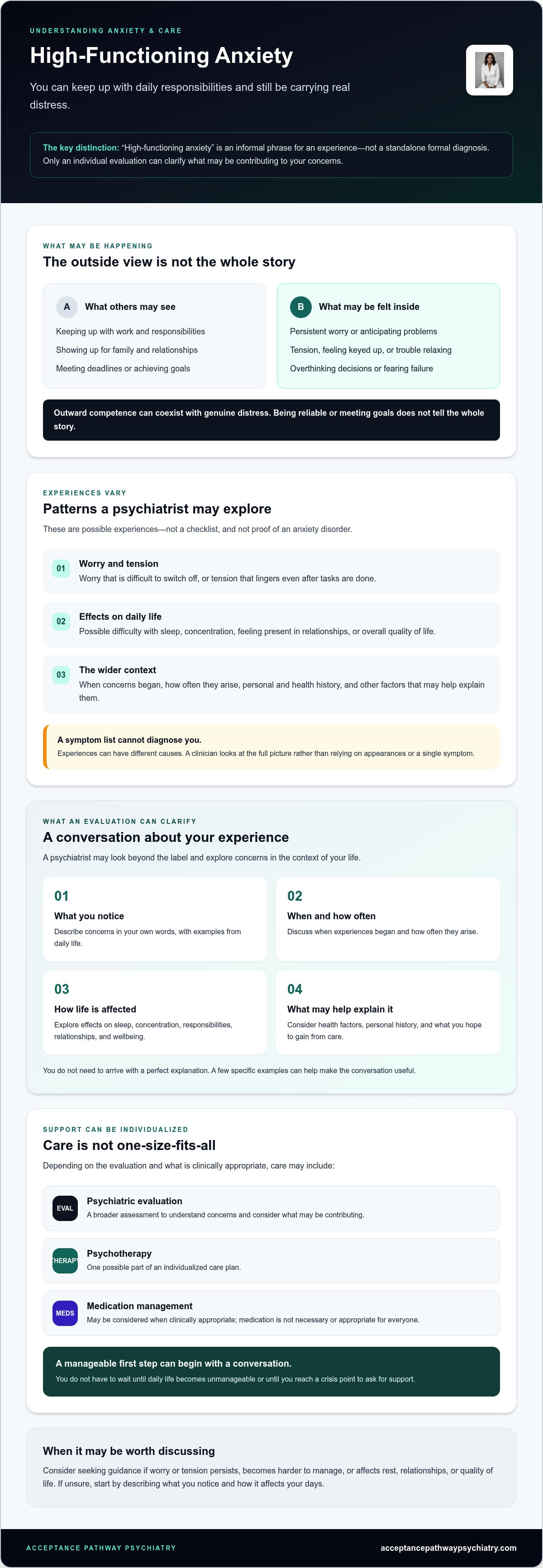
You may keep up with work, relationships, and everyday responsibilities while privately feeling tense or caught in persistent worry. Being reliable or achieving goals doesn’t tell the whole story of how you feel. If anxiety is taking a toll, your experience deserves attention, whether or not other people can see it.
“High-functioning anxiety” is an everyday phrase for experiencing anxiety while continuing to manage many daily responsibilities; it isn’t a standalone formal diagnosis. The phrase may help you describe your experience, but it can’t determine whether you have an anxiety disorder. A psychiatrist for high-functioning anxiety can discuss your symptoms and how they affect your life as part of a broader clinical assessment.
For a brief overview of how anxiety can be experienced, watch this video:
How can anxiety affect someone who appears to be coping?
Anxiety doesn’t look the same for everyone. Someone may meet deadlines and show up for others while privately overthinking decisions, anticipating problems, or struggling to relax. Tension may linger even during quiet moments. These are possible experiences, not a checklist, and they don’t establish a diagnosis on their own. Outward competence can coexist with genuine distress.
The phrase is sometimes used when someone experiences anxiety while maintaining many daily responsibilities, but a clinician looks beyond appearances. They may consider the nature and persistence of worry, its effects on wellbeing, and whether another explanation could fit. For example, Generalized Anxiety Disorder (GAD) is a formal diagnosis a clinician may consider when assessing ongoing anxiety. Only an individual evaluation can clarify what applies.
When can anxiety become worth discussing with a professional?
Consider seeking guidance if worry or tension persists, becomes harder to manage, or affects your rest, relationships, or quality of life. You don’t need to wait until you’re unable to meet responsibilities or reach a crisis point. Asking for support can be a thoughtful step toward understanding what you’re experiencing, not a judgment about how well you’re coping.
If you’re unsure whether your concerns “count,” start by describing what you notice and how it affects your days. A professional can help explore those concerns without assuming a diagnosis or treatment in advance.
What Symptoms and Patterns Might a Psychiatrist Explore?
An evaluation looks beyond whether you recognize yourself in a list of symptoms. A psychiatrist for high-functioning anxiety may ask what you’re experiencing, when it happens, how long it has been going on, and what changes in your day-to-day life. Your own account matters: the same experience can affect people differently, and outward performance doesn’t show the full picture.
What experiences may accompany persistent anxiety?
You might find it difficult to switch off worry after completing a task, or feel keyed up while handling responsibilities. For some people, anxiety may also make it harder to sleep, concentrate, or feel present in relationships. Others may notice physical sensations, but these can have different causes and aren’t proof of an anxiety disorder. Experiences vary, and no single symptom tells the whole story.
The National Institute of Mental Health offers an overview of different Anxiety Disorders, including how they may affect people. Reading about symptoms can offer useful context, but symptom lists cannot replace an individualized assessment. They can’t determine on their own what’s causing your experience or what kind of support may fit.
How does a psychiatric evaluation look beyond the label?
A clinician may invite you to describe your concerns in your own words, including when they began, how often they arise, and how they affect sleep, concentration, responsibilities, and relationships. They may also ask about personal and health history, current health factors, and what you hope to gain from care. You don’t need to arrive with a perfect explanation. A few specific examples from daily life can help make the conversation more useful.
Assessment is about understanding the wider context, not confirming a label you encountered online. A clinician may consider whether symptoms fit an anxiety disorder or whether other mental or physical health factors could be contributing. They may ask what has helped before and what feels manageable now. The goal is to build a clearer picture together and discuss appropriate options, rather than assume one diagnosis or treatment applies to everyone.
If you’re considering professional support, write down a few recent moments when anxiety felt difficult to manage and what impact you noticed. This gives you a grounded place to begin. You can also learn more about psychiatric evaluation and care through Acceptance Pathway Psychiatry PLLC.
Would a Psychiatrist Help If You Are Still Functioning?
Yes, a psychiatrist may be helpful even if you’re meeting responsibilities. Keeping up appearances or completing daily tasks doesn’t determine whether your distress matters or whether professional support could be useful. Consider the full picture: how anxiety feels to you, how long it has been affecting you, and whether it is interfering with the life you want to lead.
A psychiatrist for high-functioning anxiety can offer an evaluation to better understand your concerns, consider whether a mental health diagnosis may fit, and discuss possible next steps. An appointment doesn’t guarantee a diagnosis, prescription, or specific treatment. Recommendations depend on your symptoms, health and personal history, preferences, and clinical needs.
What can a psychiatrist contribute to anxiety care?
A psychiatric evaluation provides space to talk through what you’re experiencing and what you hope might change. The psychiatrist may explore possible explanations and discuss options with you, rather than assuming that outward functioning means everything is fine. You can ask questions, share what you’re comfortable with, and take part in decisions about care.
Different forms of support serve different purposes. An evaluation helps clarify concerns and consider care options. Psychotherapy offers a setting to work on thoughts, feelings, and patterns with a mental health professional. Self-guided strategies may help you notice patterns or practice ways of coping in daily life. These approaches aren’t a ranking, and a clinician can help you consider how they may fit together.
Routine psychiatric care is different from emergency crisis services. If you’re concerned about immediate safety, seek appropriate emergency or crisis support rather than waiting for a routine appointment.
How might psychotherapy and medication fit together?
Psychotherapy, medication management, or a combination may be considered, depending on the person and the clinical situation. Medication isn’t automatic, and whether to use it is a conversation between you and your clinician. You can discuss potential benefits, concerns, preferences, and questions before making a decision. To prepare, consider writing down what you’d like to ask about medication management.
If you’d like to explore whether an evaluation or care options might suit your needs, you can learn about psychiatric care at Acceptance Pathway Psychiatry. A manageable first step can be describing what has been difficult and asking what support may be appropriate.
How to Choose a Psychiatrist and Prepare for a First Conversation
Finding a provider can feel like another task to manage, so keep the process simple. Start by identifying what you hope to discuss: persistent worry, trouble resting, strain in relationships, or questions about possible care. You don’t need to know what diagnosis or treatment you need before reaching out. A psychiatrist for high-functioning anxiety should be willing to understand your experience rather than reduce it to how well you appear to be coping.
What questions can help you assess provider fit?
As you compare options, look for respectful communication, room to ask questions, and a willingness to make decisions collaboratively. You might ask:
- How do you approach an evaluation for ongoing anxiety?
- How are care recommendations discussed and adjusted to a person’s needs and preferences?
- Do you offer psychotherapy, medication management, or both, and what follow-up options are available?
- Do you offer telehealth appointments, and how can I confirm eligibility in my state?
- Do you accept my insurance, and what payment details should I understand before scheduling?
Answers can help you decide whether the approach feels like a good fit. Confirm insurance, payment, clinician availability, and telehealth eligibility directly with the practice, since these details can vary.
What can you bring to an initial psychiatric appointment?
A little preparation may help you make the most of the conversation, but it doesn’t need to be extensive. Consider bringing or noting:
- A brief timeline of when your concerns began and whether they have changed.
- One or two examples of how anxiety affects daily life, such as rest, concentration, or relationships.
- Your current medications and relevant health-history information.
- Questions about evaluation, psychotherapy, medication management, or possible next steps.
- A personal goal, such as understanding your symptoms or finding ways to feel less overwhelmed.
You can share uncertainty, pause to think, and ask for clarification. It’s okay if you don’t have every detail ready. The first conversation is a chance to explain what matters to you and learn how the clinician approaches care.
If you’d like to explore whether the practice’s approach may fit your needs, learn about psychiatric care options at Acceptance Pathway Psychiatry PLLC.
How Acceptance Pathway Psychiatry Can Support an Individualized Next Step
After learning about evaluation and possible care approaches, you may want to explore what a particular practice offers. Acceptance Pathway Psychiatry PLLC provides psychiatric evaluations, psychotherapy, medication management, integrative wellness services, and telehealth appointments. These options can support a conversation about your concerns, goals, and what kind of care may be appropriate for you.
What care options does the practice offer?
A psychiatric evaluation can help clarify what you’re experiencing and inform a discussion about next steps. Psychotherapy and medication management may be considered separately or together, depending on the evaluation, your preferences, and your individual needs. Medication isn’t an automatic part of care, and no single option is right for everyone.
The practice also offers integrative wellness services. Ask about these as you discuss your needs and the care plan that may fit. Your clinician can explain which available services are relevant to your situation. The goal is an individualized conversation, not a promise of a particular diagnosis, treatment, or result.
How can you take a manageable next step?
You can begin by reviewing the services and writing down a few questions. For example, ask how an evaluation works, whether psychotherapy or medication management could be discussed, and what information would be useful to bring. A short note about your main concerns and what you hope to understand can help you feel more prepared.
Before arranging an appointment, confirm clinician availability, payment options, and whether telehealth appointments are available to you. Telehealth eligibility can depend on your state, so check directly with the practice rather than assuming it’s available everywhere. Taking time to ask these practical questions can help you decide whether the next step feels manageable.
If you’re looking for a psychiatrist for high-functioning anxiety, exploring a practice’s approach can help you consider whether its services align with your needs. Explore care options with Acceptance Pathway Psychiatry.
Take a Thoughtful Next Step Toward Support
Managing daily responsibilities doesn’t mean you have to dismiss persistent anxiety. “High-functioning anxiety” is an informal description, not a diagnosis, and visible competence alone can’t show how much distress you’re carrying. A conversation with a psychiatrist for high-functioning anxiety may help you better understand your experience and consider care that fits your needs.
Acceptance Pathway Psychiatry offers psychiatric evaluations, psychotherapy, medication management, telehealth appointments, and integrative wellness services. These options can be discussed in light of your concerns and goals. Medication isn’t automatic, and an evaluation doesn’t guarantee a particular diagnosis or treatment. Before arranging an appointment, confirm availability, payment options, and whether telehealth is available to you in your state.
If you’re ready to learn more, explore care options with Acceptance Pathway Psychiatry. You can begin with questions, share what feels manageable, and take things one step at a time. Your concerns deserve a thoughtful response, even if you’ve been managing on the outside.
Frequently Asked Questions
What is high-functioning anxiety?
High-functioning anxiety is an informal phrase for experiencing anxiety while continuing to meet responsibilities or appear capable. It isn’t a standalone formal mental health diagnosis. The phrase may help you describe what life feels like, but it can’t establish whether you have an anxiety disorder. A qualified clinician can consider your symptoms, personal context, and how anxiety affects your life before discussing possible diagnoses or care options.
Can you have anxiety and still function normally?
Yes. A person may continue working, studying, or caring for others while experiencing persistent worry or distress internally. Outward functioning neither confirms nor rules out an anxiety disorder. If anxiety feels difficult to manage, persists over time, or affects your quality of life, a conversation with a qualified mental health professional may help you understand what’s happening and whether support could be useful.
When should I see a psychiatrist for anxiety?
Consider seeking an evaluation if worry or related distress persists, feels hard to manage, or affects sleep, relationships, concentration, or daily activities. You don’t have to wait until you can no longer meet your responsibilities. A psychiatrist for high-functioning anxiety can discuss your experience, consider possible explanations, and review care options. An evaluation doesn’t mean medication is necessary or that a specific diagnosis will be made.
What happens during a psychiatric evaluation for anxiety?
A clinician may ask about your concerns, symptoms, personal and health history, previous treatment, and goals for care. They may explore how anxiety affects different parts of your life and consider other factors that could be contributing. You can ask questions and share what feels relevant at your own pace. The evaluation helps inform a discussion of next steps, but doesn’t guarantee a particular diagnosis or recommendation.
Does seeing a psychiatrist mean I will have to take medication?
No. Seeing a psychiatrist is an opportunity to discuss your concerns and possible support, not a commitment to take medication. Depending on your evaluation and individual needs, options may include psychotherapy, medication management, other supportive approaches, or a combination. Medication isn’t appropriate for everyone. Decisions should be discussed collaboratively with your clinician, taking your preferences, circumstances, and clinical assessment into account.
Can telehealth psychiatry help with anxiety?
Telehealth may provide a way to discuss anxiety with a qualified clinician when virtual care is available and appropriate for you. Availability depends on your location and the clinician’s eligibility to provide care there, so confirm your state’s eligibility before scheduling. It’s also helpful to ask about appointment options and payment details, and to consider whether meeting virtually feels like a suitable format for your needs.


