

The best job for managing a career with bipolar disorder is one that fits your strengths and supports a steady routine, not a particular job title. Predictable hours, a manageable workload, and an environment that supports sleep and well-being may make work easier to sustain. The right fit is personal and can change over time.
It’s understandable to wonder whether your career goals can coexist with the realities of bipolar disorder. Work can bring structure and purpose, but mood changes, stress, and disrupted sleep may affect how a job feels day to day. You deserve practical support, not pressure to follow someone else’s path.
This article explains how to assess job fit, consider workplace accommodations, and notice early signs of mood changes. It also explores how treatment and realistic career planning can work together, helping you make decisions that reflect both your professional hopes and your mental health needs.
Key Takeaways
- Compare job duties and workplace routines with your strengths, stressors, and need for predictability.
- Consider practical adjustments, such as flexible hours, short breaks, or a quieter work area, and plan how to raise them at work.
- Notice personal shifts in mood, sleep, or stress early and decide what steps could help you stay supported.
- Connect career goals with ongoing treatment, and make a plan that can adapt as your needs change.
- Medication management and psychotherapy can be part of building a steadier foundation for work and career development.
1. What Are the Best Jobs for People With Bipolar Disorder?
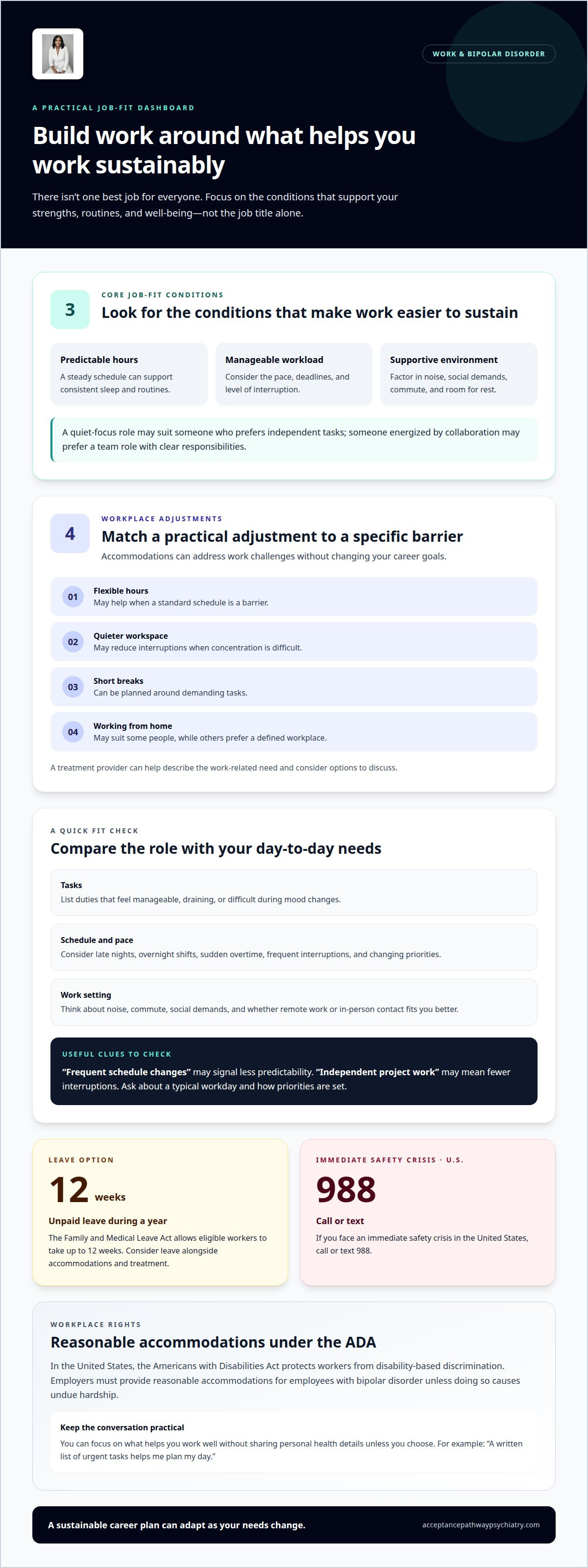
There isn’t one best job for everyone with bipolar disorder. A suitable role depends on your strengths, stressors, preferred pace, and need for routine. For example, someone who values quiet focus may prefer independent tasks over constant customer interaction. Someone energized by collaboration may thrive in a team role with clear responsibilities. Focus on the conditions that help you work sustainably, not the job title alone.
Yes. The Americans with Disabilities Act (ADA) protects workers from disability-based discrimination in the United States. According to the U.S. Department of Justice, employers must provide reasonable accommodations for employees with bipolar disorder unless doing so causes undue hardship. Your needs and job duties can help guide which adjustments may be useful.
Start by listing tasks that feel manageable, draining, or difficult during mood changes. Compare that list with job descriptions and workplace practices. Consider whether a role offers predictable hours, clear deadlines, and a manageable level of interruption. A daytime schedule or quieter office may suit someone who needs consistent sleep and fewer distractions. Ask about core duties during an interview; you don’t need to share personal health details unless you choose.
Accommodations can address specific barriers without changing your career goals. Examples include flexible hours, a quiet workspace, short breaks, or working from home. Consider which task each accommodation would support. If interruptions make concentration harder, for instance, you might request a quieter area or focused work periods. A treatment provider can help you describe the work-related need and consider options to discuss.
Remember, discussing a diagnosis is a personal choice. You can focus a conversation with a trusted supervisor on what helps you work well, such as written priorities or advance notice of schedule changes. Be specific: “A written list of urgent tasks helps me plan my day” gives a colleague a practical request. Clear expectations also support teamwork by reducing guesswork about deadlines, handoffs, and communication.
Practical tools can make workplace routines easier to manage. Use a calendar reminder for meetings, a notes app to capture instructions, or a task list to separate urgent work from later projects. If you’re comfortable, identify a trusted colleague who can help clarify a changed priority. Peer stories and support groups may also offer ideas for workplace conversations, while you keep your own needs and boundaries in view.
When symptoms make working difficult, leave may be one option to consider alongside accommodations and treatment. The Family and Medical Leave Act allows eligible workers to take up to 12 weeks of unpaid leave during a year, according to the U.S. Department of Labor. Understanding this option can help you plan a conversation about time away and a return-to-work approach.
2. Choosing a suitable job and work environment
If bipolar symptoms are affecting your performance, pause and identify the specific difficulty, such as concentration, attendance, or workload. Share the work-related need with a trusted supervisor and contact your treatment team to plan next steps. If you face an immediate safety crisis in the United States, call or text 988.
Work capacity can change over time, and difficulty staying in one role doesn’t erase your skills or career potential. Identify which job demands are hardest during challenging periods. For example, unpredictable shifts may be more difficult than a consistent schedule, while frequent interruptions may make detail-focused tasks harder. Naming the barrier can help you find a better fit.
Assess the work environment as carefully as the job title. A role with clear priorities, steady hours, and manageable social demands may feel very different from one with rotating shifts and constant urgent requests. Consider whether the commute, noise level, and pace leave enough room for rest and personal routines. Remote work or flexible scheduling may suit some people, while others prefer a defined workplace and in-person contact.
Make a simple job-fit checklist before applying. Include duties you enjoy, conditions that support focus, and demands that tend to drain you. Then look for clues in job postings: “frequent schedule changes” suggests less predictability, while “independent project work” may mean fewer interruptions. Ask focused questions about a typical workday and how priorities are set.
Bipolar disorder can affect energy, concentration, sleep, and how manageable tasks feel. These changes may affect attendance, productivity, communication, or deadlines. A written task plan can help you spot where work is slipping. For instance, if email responses are delayed, consider whether workload, unclear expectations, or a change in concentration may be contributing.
Protecting consistent routines can be part of choosing sustainable work. Consider whether a position regularly requires late nights, overnight shifts, or sudden overtime. If those demands disrupt sleep or make mood management harder, look for daytime hours or a more predictable schedule. Plan brief breaks around demanding tasks, such as stepping away after a long meeting or dividing a complex assignment into smaller stages.
When your performance changes, respond early rather than waiting for work problems to build. Write down what changed, when it began, and which duties are affected. Bring specific examples to a supervisor, such as missed handoffs or difficulty prioritizing competing requests. You can discuss adjustments to expectations without sharing a diagnosis if you prefer to keep health information private.
A career plan can include alternatives, not just one ideal role. Compare full-time work with part-time schedules, different duties, or a gradual return after time away. If work concerns and mood symptoms are becoming difficult to balance, ongoing bipolar disorder care can support conversations about treatment and career needs.
3. Seeking support from managers and employers
Workplace support can start with a practical conversation about what helps you do your job. You don’t have to disclose a diagnosis to ask for clearer priorities, written instructions, or a regular check-in. For example, you might say, “Could we review my top tasks at the start of each week?” This keeps the focus on a specific work need and solution.
Before speaking with a manager, decide what you want them to understand and what you’re comfortable sharing. You could explain that a changing schedule affects your ability to plan, then ask whether schedules can be shared in advance. If you need time to think, draft your request or practice it with someone you trust. A clear request gives the conversation a useful starting point.
If you choose to disclose bipolar disorder, share only what’s relevant to the support you’re seeking. You might explain how a symptom affects a work task, then describe an adjustment that could help. Keep notes about agreed changes, responsibilities, and follow-up dates. A short written recap can reduce confusion for you and your supervisor.
Some employers offer an Employee Assistance Program, or EAP, with counseling options or treatment referrals. Review your benefits information to learn what the program offers and how to access it. An EAP may be a starting point for support, while ongoing clinical care can address treatment needs beyond workplace concerns.
Occupational health staff, if available through your employer, may help connect work demands with health-related needs. Describe a specific challenge, such as difficulty concentrating in a noisy setting, and ask about possible workplace adjustments. If your employer doesn’t have occupational health staff, a human resources representative may explain internal procedures. Share only the details needed for your request.
Your clinical support network can help you prepare, too. A therapist can help you practice a workplace conversation, while a prescriber can discuss how symptoms or treatment routines relate to work. Bring concrete examples, such as disrupted sleep before early shifts or difficulty completing several urgent tasks. This keeps the conversation focused on your experience and practical next steps.
Bipolar-specific peer support can offer perspectives from people who understand similar work concerns. The Depression and Bipolar Support Alliance provides resources for people living with mood disorders. Online support groups, forums, and blogs can also connect people around shared experiences. Use peer stories to gather ideas, not as a substitute for advice tailored to your clinical needs.
A support network works best when each person has a clear role. You might involve a trusted colleague in day-to-day coordination, a supervisor in workload discussions, and a therapist in coping strategies. Choose people carefully and set boundaries around what you share. For instance, ask a coworker to flag changing deadlines without making them responsible for monitoring your health.
Review your plan after a change at work, such as a new supervisor or altered duties. Note what’s helping, what remains difficult, and whether the agreed support is being used. A calm follow-up with your manager can clarify expectations and keep workplace communication constructive.
4. Recognizing early signs of mood changes
Personal patterns can offer useful clues before work starts to feel harder. Notice changes in sleep, energy, concentration, or communication, then compare them with your usual routine. One late night or difficult meeting doesn’t establish a pattern. Repeated changes, such as sleeping less while feeling unusually driven or withdrawing from coworkers during a low period, are worth recording and discussing with your treatment provider.
Keep a simple record that connects mood with daily life. Each day, note your mood, sleep quality, energy, and a work detail, such as missed tasks or increased focus. Include context, too. A deadline, schedule change, conflict, or missed meal may help explain what was happening. Over time, your entries can show whether particular workplace demands tend to coincide with difficult periods.
Mood charting apps can make tracking more consistent, while a calendar or notes app can capture work patterns. Choose a tool you’ll actually use. A daily reminder can prompt a brief entry, and a private note can record a change without sharing health details at work. Keep entries factual: “slept poorly, reread the same report” is more useful than labeling yourself unproductive.
Use your record to create an early-response plan with your treatment provider. Identify personal signals that should prompt action, such as several nights of disrupted sleep or growing difficulty completing familiar tasks. Decide what you’ll do next: review your routine, contact a support person, or discuss symptoms with your provider. A written plan makes the next step easier to find when concentration feels strained.
At work, connect a change in mood with a specific task rather than drawing broad conclusions about your ability. If you’re losing focus, divide a report into smaller sections and record what remains. If you notice frequent mistakes, pause for a short break and check your work before sending it. These steps can help with the immediate task while you assess the wider pattern.
When early signs appear, consider whether a temporary adjustment could reduce pressure. You might clarify priorities, postpone a non-urgent task, or take a planned break before a demanding meeting. If symptoms affect attendance or your ability to work safely, contact your treatment provider and follow the plan you developed together. Don’t wait for a work problem to become the only signal that you need support.
Review your record during regular clinical check-ins. Bring a few entries showing what changed, when it happened, and how work was affected. For example, note whether a shift change came before sleep disruption or whether a quieter workday helped your concentration. This concrete information can support a focused conversation about mood patterns and practical next steps.
Tracking should support awareness, not become another performance target. If daily logging feels burdensome, jot down a brief note when something changes or review your calendar weekly. The goal is to recognize your patterns, share relevant observations, and respond early with support that fits your needs.
5. Mental health treatment and career development
Use one calendar to coordinate work shifts, medication routines, therapy appointments, and recovery time. Add appointment reminders and note work deadlines before accepting new commitments. If a recurring meeting conflicts with treatment, discuss scheduling options early with your manager or care team. Managing a career with bipolar disorder can mean adapting these routines as work demands change.
Treatment can support career development by helping you understand your needs and plan around them. Cognitive behavioral therapy, Family-Focused Therapy, Interpersonal and Social Rhythm Therapy, and medication can be effective treatments for bipolar disorder. A therapist can help you practice workplace conversations, while regular clinical check-ins can connect changes in symptoms with work goals.
For medication routines, keep an up-to-date list of prescriptions and questions for your prescriber. Note work-related concerns you want to discuss, such as a schedule change that makes your routine harder to follow. Medication decisions belong in conversations with your treatment provider, who can consider your symptoms, goals, and treatment history.
Build your career plan around achievable steps rather than one rigid outcome. A goal might be completing a training course, returning to a familiar role, or taking on a new responsibility after reviewing your workload. Break a larger aim into trackable tasks, then revisit the plan when work demands or health needs change.
Daily routines can connect mental health care with working life. The Substance Abuse and Mental Health Services Administration recommends regular exercise, a balanced diet, avoiding alcohol and substance use, adequate sleep, and taking medication as directed. You might schedule a walk after work or prepare meals before a busy week. These habits can support a steadier routine alongside clinical treatment.
Make your career plan flexible enough to account for setbacks. If a new responsibility increases stress, identify which part is difficult: the deadline, unclear expectations, or extra meetings. Then consider a practical adjustment, such as clarifying priorities or extending the timeline. Changing your pace can help you keep developing without treating one hard period as a failed goal.
Use regular check-ins with your healthcare provider to review treatment and work demands. Bring specific examples, such as a shift pattern affecting sleep or a task you’re ready to learn. You can also track progress toward a professional goal in a notes app, then use that record to guide conversations about next steps.
A sustainable approach to managing a career with bipolar disorder can include reviewing how treatment and work goals fit together. If medication routines, symptoms, or career demands feel difficult to coordinate, explore medication management support as part of connecting treatment with your work goals.
Acceptance Pathway Psychiatry PLLC: Medication Management
Acceptance Pathway Psychiatry PLLC offers Medication Management to help people connect bipolar disorder treatment with daily and career needs. If medication questions, mood changes, or work routines feel difficult to coordinate, you can discuss treatment as part of your care.
Psychotherapy can also help you explore workplace stress, recognize personal patterns, and make career goals feel more manageable. Creyos Cognitive Testing and Integrative Wellness Services are additional offerings that may fit into a broader mental health care plan. The right focus depends on the concerns you want to address and the support that feels useful to you.
Contact Acceptance Pathway Psychiatry PLLC to discuss treatment and career needs.
Take Your Next Career Step With Support
Your career doesn’t need to follow a straight line to be meaningful. As you think about managing a career with bipolar disorder, choose one workable next step, such as identifying a skill you want to develop or noting a question about treatment and work. You can revisit your plans as your needs and priorities change.
It may help to bring that goal into a conversation with a mental health professional. Together, you can consider how your current care relates to workplace demands and what support could help you move forward. You don’t need to settle every decision before asking for guidance.
If you’re ready to discuss care that supports your mental health and career goals, contact Acceptance Pathway Psychiatry PLLC. Your next step can be small and still move you toward a working life that better fits your needs.
Frequently Asked Questions
What Are the Best Jobs for People With Bipolar Disorder?
The best job is one whose demands fit your abilities, priorities, and health needs. Rather than focusing only on job titles, compare how roles handle autonomy, feedback, deadlines, and interaction with others. For example, someone who prefers clear direction may value a manager who regularly sets priorities. Someone who enjoys independent work may prefer fewer interruptions. Your experience is the strongest guide to what feels sustainable.
Talk about bipolarity at work?
You can talk about bipolar disorder at work in whatever way feels right for you. Some employees discuss only a work-related need, while others share their diagnosis with someone they trust. Consider your goal before starting the conversation: are you seeking understanding, a specific adjustment, or simply a supportive listener? A private conversation with a trusted colleague can help you decide what you feel comfortable sharing more broadly.
How can someone with bipolar disorder manage symptoms while working?
Pair a consistent personal routine with a plan for difficult workdays. Keep treatment appointments, follow the care plan you’ve discussed with your provider, and notice whether work demands are affecting your well-being. Before a demanding week, for example, review your calendar and identify commitments that may need discussion or rescheduling. If symptoms shift, contact your treatment provider rather than changing medication on your own.
What workplace accommodations can help employees with bipolar disorder?
Helpful accommodations depend on the barrier a worker is experiencing. A reduced or adapted workload may help during a difficult period, while flexible hours or part-time scheduling can address challenges with maintaining a full schedule. Under the ADA, employers must provide reasonable accommodations unless doing so causes undue hardship, according to the U.S. Department of Justice. A useful request connects a work-related limitation with an adjustment that could address it.
How do you request reasonable accommodations for bipolar disorder at work?
Start by explaining the work difficulty and the adjustment you think could help. For instance, describe how changing priorities make it hard to organize tasks, then ask whether priorities can be communicated in writing. Keep the conversation focused on job needs and possible approaches with your employer. To prepare, write down what’s difficult, what change you’re requesting, and how it would support your work.
Should you disclose bipolar disorder to an employer, and what are the risks and benefits?
Disclosure is a personal decision, and you don’t always need to share a diagnosis at work. Sharing may help explain why you’re requesting an adjustment or seeking support from a manager. It also means sharing private health information, and some people worry about stigma or being misunderstood. Weigh the potential benefit against your comfort level, and consider discussing your needs without naming the diagnosis.
What jobs and work environments may be a good fit for people with bipolar disorder?
A good fit depends on the person, not the diagnosis. Consider the role’s daily demands, including how much independence it requires, how priorities are set, and whether the workload changes often. For example, a job with clear responsibilities may suit someone who prefers defined expectations. Before accepting a position, consider which parts of the work match your interests and which demands might conflict with your well-being.
How can employees recognize and manage bipolar mood episodes at work?
Compare changes in your mood and functioning with your own usual patterns, rather than relying on a coworker’s interpretation. A noticeable change in your ability to complete familiar duties can be a reason to pause and use your support plan. If symptoms intensify, let a trusted support person or treatment provider know what has changed. For immediate danger or a crisis in the United States, call or text 988.


