

Imagine taking your medication every single morning, yet still living in the shadow of the next manic or depressive episode. You might feel physically stable, but perhaps you also feel like a "zombie," disconnected from the vibrant person you used to be. Many individuals find that while pills can level the emotional playing field, they don't always provide the practical coping skills needed for complex relationships or daily stress. If you have ever felt that something is missing from your treatment plan, you aren't alone in seeking a more holistic path. Utilizing combined therapy and medication for bipolar disorder creates a sturdy foundation that neither method can achieve in isolation.
We understand that managing a mood disorder is about more than just suppressing symptoms; it is about reclaiming your quality of life. This article will show you how the strategic integration of psychotherapy and medication management offers a far more resilient framework for lasting stability. You will learn how medication provides an essential biological floor while therapy builds a psychological ceiling. We'll explore how this collaborative approach helps reduce the frequency of relapses and gives you a genuine sense of agency over your mental health journey.
Key Takeaways
- Learn how medication management provides a necessary chemical anchor to stabilize acute symptoms like mania and psychosis.
- Understand the role of psychotherapy in identifying "prodromes," or subtle early warning signs, before they escalate into a full episode.
- Discover the clinical evidence showing how combined therapy and medication for bipolar disorder leads to more sustainable long-term wellness.
- See how objective data from Creyos cognitive testing can be used to refine your treatment and track your progress over time.
- Find out how an integrated care model simplifies your journey by managing both therapy and prescriptions through a single, collaborative partnership.
The Biological Foundation: How Medication Stabilizes Bipolar Symptoms
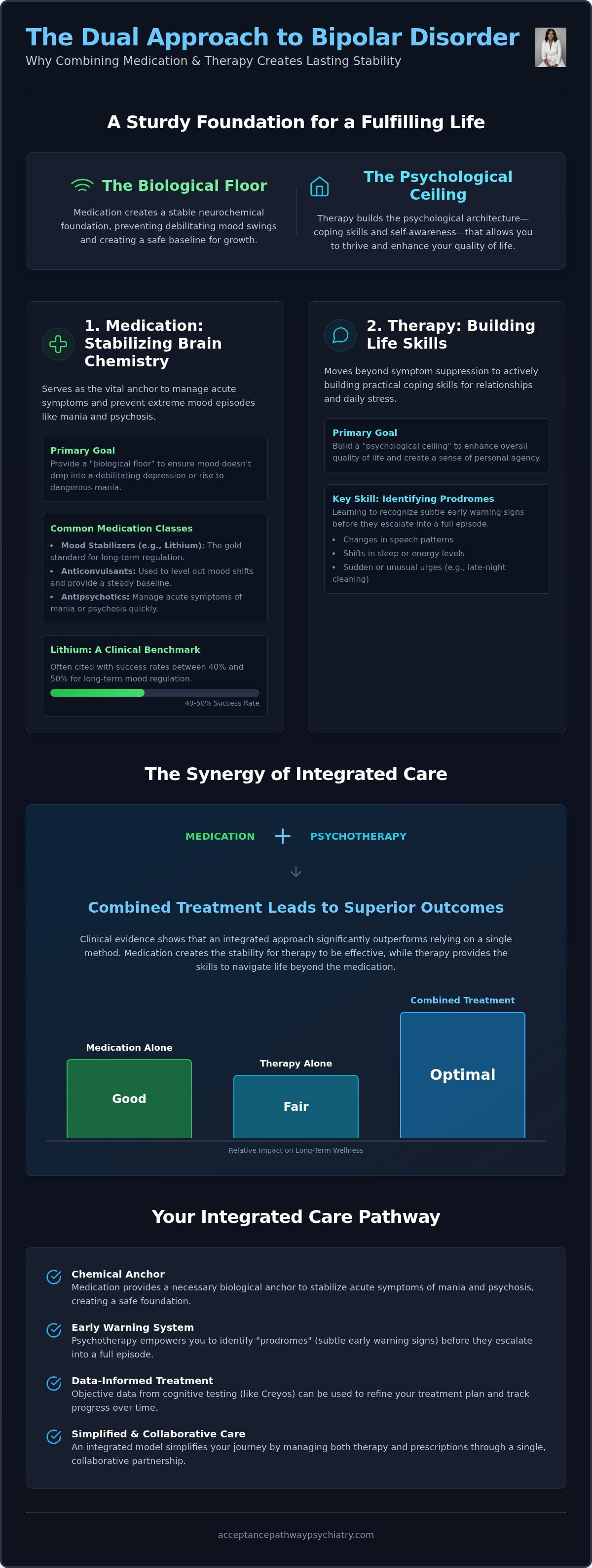
Bipolar disorder is often described as a pendulum, swinging between the high-energy intensity of mania and the heavy exhaustion of depression. Medication serves as the vital anchor that keeps this pendulum from swinging too far in either direction. By stabilizing brain chemistry, these treatments provide what clinicians call a biological floor. This floor ensures that even when life gets difficult, your mood doesn't drop into a debilitating void. It also creates a ceiling, preventing the impulsive or dangerous peaks of mania. Without this foundation, the emotional turbulence can make it nearly impossible to focus on personal growth or daily responsibilities.
When we discuss comprehensive treatment options for bipolar disorder, it's clear that medication is the first line of defense. However, it isn't a "set it and forget it" solution. It's a dynamic, iterative process that requires patience and close observation. Effective treatment often involves combined therapy and medication for bipolar disorder, where the medication creates the chemical stability needed for therapy to actually take root and be effective.
Common Medication Classes for Bipolar Stability
Lithium remains a gold standard for long-term mood regulation, with success rates often cited between 40% and 50% according to recent studies. Anticonvulsants are also frequently used to level out mood shifts and provide a steady baseline for the brain. While these provide long-term maintenance, second-generation antipsychotics are often introduced to manage acute symptoms of mania or psychosis quickly. Providers approach antidepressants with extreme caution. Without a mood stabilizer in place, antidepressants can cause "switching," where a patient is pushed from depression straight into a manic episode. Finding the right balance is a delicate task that requires professional expertise and a deep understanding of your unique history.
The Importance of Precision in Medication Management
Precision is everything in psychiatric care. Your body's response to a prescription can change based on age, stress levels, or even other health conditions. This is why psychiatric medication management is an evolving journey rather than a one-time fix. Regular follow-ups allow us to monitor blood levels, evaluate effectiveness, and manage side effects, ensuring the treatment remains supportive rather than overwhelming. Medication management is a partnership between provider and patient to optimize neurochemistry. Using combined therapy and medication for bipolar disorder ensures that as your biology stabilizes, you also have the psychological tools to handle the emotional shifts that remain.
The Psychological Architecture: Why Therapy is Essential for Long-Term Wellness
While medication provides the biological floor to keep you safe, therapy builds the psychological architecture that allows you to thrive. It shifts the focus from simply correcting chemistry to actively building life skills. This distinction is vital because stability is about more than the absence of symptoms. It is about the presence of a fulfilling life. Current research on combined therapy and medication shows that people who engage in both approaches experience significantly better outcomes than those who rely on pills alone. In a safe, non-judgmental space, you can move beyond survival mode and start working toward a "psychological ceiling" that enhances your overall quality of life.
One of the most practical benefits of therapy is learning to identify prodromes. These are the subtle early warning signs that a manic or depressive episode might be approaching. You might notice a slight change in your speech patterns, a sudden urge to clean the house at midnight, or a heavy feeling in your limbs. Recognizing these signs early allows you to intervene before a full-blown episode takes hold. This collaborative process between you and your therapist creates a sense of agency that medication alone cannot provide. Using combined therapy and medication for bipolar disorder ensures you have both the chemical stability and the mental awareness to navigate your journey with confidence.
Evidence-Based Modalities: CBT and DBT for Bipolar
Cognitive Behavioral Therapy (CBT) is incredibly helpful for reframing the negative thoughts that often follow a manic high. It helps you dismantle the shame or guilt that can linger after an episode. Dialectical Behavior Therapy (DBT) focuses on emotional regulation and distress tolerance. These are essential tools for managing the intense feelings that come with bipolar disorder. Therapy also provides a necessary space to process the trauma often associated with past manic episodes, helping you integrate those experiences into a cohesive and hopeful life story.
Social Rhythm Therapy: The Secret to Circadian Stability
A key component of long-term wellness is Interpersonal and Social Rhythm Therapy (IPSRT). Your brain chemistry is deeply tied to your biological clock. IPSRT emphasizes the importance of daily routines, such as consistent times for sleep, meals, and exercise. When your social rhythms are steady, your mood is much less likely to fluctuate. This therapy helps you protect your internal clock from external stressors like work deadlines or relationship conflicts. If you are looking for a treatment plan that feels truly holistic, finding a supportive partner at Acceptance Pathway Psychiatry can help you align these daily rhythms with your clinical care. Utilizing combined therapy and medication for bipolar disorder means you aren't just managing a condition; you are building a resilient lifestyle.
The Synergy of Integrated Care: How Combined Treatment Outperforms Monotherapy
Stability is rarely the result of a single intervention. Instead, it comes from a synergy where different treatments support and strengthen one another. We often see a "synergy effect" in patient care, where the combination of tools creates a result far greater than the sum of its parts. While medication addresses the "what" by leveling out neurochemical spikes, therapy addresses the "why" by exploring the triggers and behaviors that lead to instability. According to the National Institute of Mental Health information on bipolar disorder, this multi-faceted approach is essential for managing the condition's long-term complexities. By integrating these methods, we see a meaningful reduction in hospitalization rates and a more resilient path forward.
The beauty of this model lies in how the two disciplines interact. Medication makes therapy possible by providing a baseline of calm, while therapy makes medication sustainable by helping you manage the daily realities of living with a chronic condition. Using combined therapy and medication for bipolar disorder ensures that you aren't just reacting to crises as they happen. You are proactively building a life that is less vulnerable to the shifts of the disorder.
Medication Provides the Stability; Therapy Provides the Strategy
It's incredibly difficult to engage in deep psychological work when you're in the middle of acute mania or a heavy depressive episode. During these times, your brain is simply trying to survive. Medication creates the necessary emotional bandwidth, quieting the internal noise so that psychotherapy can actually take root. Once you're stable, therapy then becomes the vehicle for medication sustainability. Your therapist helps you navigate the fears or frustrations you might have about side effects, which significantly increases medication adherence. When you understand how your treatment works, you're much more likely to stay the course.
Comparing Monotherapy vs. Integrated Care
Relying on medication alone, or monotherapy, often leaves patients with "residual symptoms." You might not be in a full episode, but you still struggle with low-level anxiety, irritability, or social withdrawal. Integrated care fills these gaps. Choosing combined therapy and medication for bipolar disorder allows you to have a single, cohesive point of care where your psychiatric and therapeutic needs are managed together. This coordination ensures that nothing falls through the cracks. Research indicates that this integrated model reduces relapse rates by up to 40% compared to medication alone. This holistic strategy doesn't just treat a diagnosis; it supports the whole person.
Designing Your Personalized Integrated Care Plan
No two bipolar journeys are identical. Your experience with mood shifts, energy levels, and triggers is as unique as your fingerprint. Because of this, a "one size fits all" approach rarely leads to the lasting stability you deserve. We believe that you are the expert on your own lived experience. Our role is to act as a compassionate guide, combining your personal insights with clinical data to build a strategy that works for your specific life. This transition from reactive crisis management to proactive wellness is a powerful shift. It allows you to move from simply surviving to actively designing a life you enjoy.
A resilient foundation often requires looking beyond just the symptoms of mania and depression. By utilizing combined therapy and medication for bipolar disorder, we can address the whole person. This means looking at how your brain processes information, how your body rests, and how you fuel your recovery every day. It's about creating a plan that respects your history while focusing on your future potential.
The Role of Cognitive Testing in Precision Care
Many people living with bipolar disorder struggle with "cognitive fog," a lingering sense of mental sluggishness that can remain even when mood symptoms are stable. It can be difficult to tell if this is a side effect of medication, a residual symptom of depression, or an executive function issue. To gain clarity, we use objective data through tools like ADHD testing Fayetteville NC, specifically Creyos cognitive testing. This assessment helps us distinguish between mood-related challenges and cognitive hurdles. When we have objective data, we can make much more precise adjustments to your medication and therapy, ensuring we are targeting the right issues with the right tools.
Integrative Wellness: The Third Pillar of Support
While psychiatry and therapy are essential, integrative wellness serves as the third pillar of your care plan. Physical health is deeply intertwined with psychiatric stability. Simple yet profound shifts in nutrition, sleep hygiene, and mindfulness can significantly impact how you feel. For example, stabilizing your blood sugar or protecting your sleep window can reduce the biological stress that often triggers mood episodes. By creating a holistic environment that supports your clinical work, you give your brain the best possible chance to heal and stay balanced. If you are ready to move beyond basic symptom management, you can start your journey with a personalized integrated care plan today. Embracing combined therapy and medication for bipolar disorder within a wellness framework ensures that every part of your lifestyle is working toward your stability.
The Acceptance Pathway: Compassionate Support for Your Journey
At Acceptance Pathway Psychiatry, we believe that you shouldn't have to navigate the complexities of a mood disorder alone. Our philosophy is rooted in a collaborative partnership, where we act as supportive witnesses to your personal evolution. We've explored how medication provides the biological floor and therapy builds the psychological ceiling. By bringing these elements together, we offer a streamlined approach that values your time and your internal experience. Choosing combined therapy and medication for bipolar disorder within our practice means you have a single, dedicated team working in harmony toward your stability.
We understand the frustration of feeling like a "zombie" on medication or the fear that the next episode is just around the corner. Our integrated model is designed to replace that uncertainty with a sense of agency. When your providers communicate effectively, your care becomes a cohesive narrative rather than a series of fragmented appointments. This unified strategy allows us to adjust your plan in real time, ensuring that both your neurochemistry and your coping skills are receiving the attention they need.
What to Expect in an Integrated Treatment Model
Your journey begins with a comprehensive psychiatric evaluation. This is not a rushed checklist; it's a deep, trauma-informed conversation where we listen to your history, your concerns, and your goals. We coordinate your medication management and psychotherapy sessions so that your treatment feels seamless. This coordination ensures that your therapist and psychiatrist are always on the same page, providing a non-judgmental space where you can feel truly safe. We focus on creating an environment of psychological safety, allowing you to explore your challenges without the fear of being misunderstood or dismissed.
Beginning Your Path to Wholeness
Progress is possible. We know that modern life is busy, which is why we prioritize accessibility through telehealth and virtual appointments. You can receive high-quality, integrated care from the comfort of your own home, making it easier to maintain the consistency that bipolar stability requires. This flexibility ensures that your treatment fits into your life rather than forcing your life to revolve around your treatment. We invite you to take the next step toward a more resilient foundation. Whether you are looking for bipolar-specific care or want to explore ADHD treatment for adults Fayetteville NC as part of your broader wellness plan, we are here to support you. Lasting stability is a journey, and we would be honored to walk that path with you.
Empowering Your Journey Toward Lasting Stability
True stability is about more than just managing symptoms; it's about building a life that feels whole and resilient. We've explored how medication provides the essential biological floor while therapy creates the psychological ceiling needed for long-term growth. By choosing combined therapy and medication for bipolar disorder, you're investing in a strategy that addresses both your neurochemistry and your daily coping skills. This integrated approach doesn't just reduce the risk of relapse. It gives you the tools to navigate life's challenges with confidence and clarity.
At Acceptance Pathway Psychiatry, we provide compassionate, trauma-informed psychiatric care that treats you as a partner in your own healing. Our integrated medication and therapy model, supported by objective cognitive testing, ensures your treatment is as precise as it is empathetic. You don't have to settle for feeling disconnected or living in fear of the next episode. Schedule your comprehensive evaluation with Acceptance Pathway Psychiatry today. You have the strength to move forward, and we're here to support every step of your personal evolution.
Frequently Asked Questions
Is it possible to manage bipolar disorder with therapy alone?
While therapy is an essential component of wellness, most clinical guidelines recommend medication as the primary treatment for bipolar disorder. Bipolar is a biological condition involving shifts in brain chemistry that therapy alone cannot fully regulate. However, combined therapy and medication for bipolar disorder is the gold standard because it addresses both the chemical imbalances and the behavioral patterns that impact your daily stability and long-term quality of life.
How do I know if combined therapy and medication is right for me?
You might consider this approach if you feel stable on medication but still struggle with relationship conflicts or a lack of coping skills. It is also a great option if you experience residual symptoms like low-level anxiety or irritability. During a comprehensive evaluation, we discuss your history and goals to determine if an integrated plan can provide the deeper level of support you need to feel fully like yourself again.
What are the most common side effects of bipolar medications?
Side effects vary depending on the specific class of medication used. Some people experience weight changes, tremors, or sedation, while others may notice dry mouth or digestive issues. Because every body reacts differently, we treat medication management as a collaborative and iterative process. We monitor these effects closely and make adjustments to ensure your treatment supports your physical health just as much as your psychiatric stability and mental wellness.
How long does it take to see results from an integrated treatment plan?
Medication can often begin stabilizing acute symptoms within a few weeks, but the full benefits of psychotherapy usually take several months to unfold. Stability is a gradual process of building new habits and allowing your neurochemistry to find a steady baseline. Most patients notice a significant improvement in their sense of agency and emotional resilience within the first three to six months of starting a consistent, integrated plan.
Can I do both therapy and medication management via telehealth?
Yes, you can access both services through our secure telehealth platform. Virtual appointments offer a convenient way to maintain your treatment schedule without the stress of a commute. This accessibility is especially helpful for maintaining the consistency required for combined therapy and medication for bipolar disorder. You receive the same high level of clinical expertise and compassionate, trauma-informed support as you would during an in-person visit.
What should I do if I feel like my medication is making me feel 'flat'?
It's important to share these feelings with your provider immediately. Feeling "flat" or like a "zombie" is a common concern, but it doesn't have to be your permanent reality. We can often adjust the dosage or explore different medication classes to find a balance that stabilizes your mood without dulling your personality. Our goal is to help you feel vibrant and fully engaged with your life, not just symptom-free.
How does trauma-informed care change the approach to bipolar treatment?
Trauma-informed care shifts the focus from "what is wrong with you" to "what has happened to you." In bipolar treatment, this means acknowledging how past manic episodes or life stressors have impacted your nervous system. We prioritize creating an environment of psychological safety where you feel heard and respected. This approach ensures that your treatment plan honors your unique history while providing the specific clinical tools needed for your future progress.
What role does cognitive testing play in managing my mood disorder?
We use Creyos cognitive testing to gather objective data about your brain's executive function. This testing helps us distinguish between "cognitive fog" and actual mood symptoms, which is essential for making precise medication adjustments. By understanding how your brain processes information, we can tailor your therapy and medication to support your focus and mental clarity. It is a vital tool for moving beyond basic symptom management toward true cognitive wellness and stability.


