

Insurance can affect what you pay for psychiatric care, but your plan determines which services are covered and what costs you may owe. Finding a psychiatrist that accepts insurance is a starting point, not a guarantee that every appointment or service will be covered. Call the number on your insurance card to ask how your plan covers the care you need.
It’s understandable to want a clearer picture before your first appointment, especially when you’re weighing emotional and financial concerns. This guide explains what to expect during an initial psychiatry visit, how coverage may apply to therapy, medication-related care, and other behavioral health services, and why out-of-pocket costs vary.
You’ll also learn how your deductible, copay, and type of care can affect what you owe. Understanding the process can help you approach your first conversation with more clarity and focus on support that feels right for you.
Key Takeaways
- Review your plan’s behavioral health benefits to understand how therapy, prescriptions, and psychiatric visits may be covered.
- Know how an in-network copay and deductible can affect what you pay for care.
- Prepare for a first psychiatry appointment by thinking about your symptoms, health history, and treatment goals.
- Compare care options with your needs in mind, including medication management, psychotherapy, and cognitive testing.
- Use the factors that shape appointment costs to make a more informed plan for seeking care in Los Angeles.
Does insurance cover therapy, prescriptions and other behavioral health services?
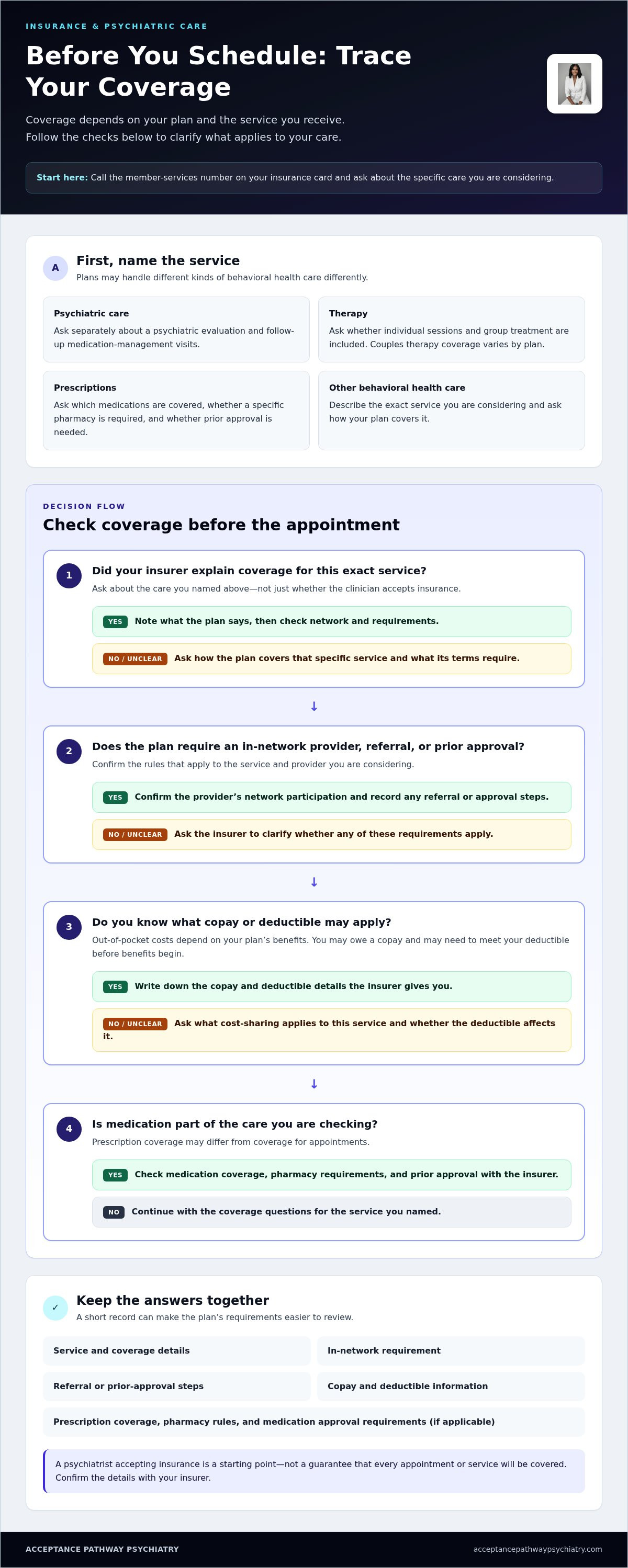
Coverage depends on your insurance plan and the service you receive. Call the number on your insurance card and ask how your plan covers therapy, psychiatric visits, prescriptions, and other behavioral health care. Ask whether you need a referral, whether the provider must be in-network, and what copay or deductible applies. These details can help you understand your benefits and plan for potential out-of-pocket costs before scheduling.
Coverage can differ by type of care. Your plan may handle psychotherapy differently from medication management or prescription drugs. For prescriptions, ask which medications are covered and whether the plan requires a specific pharmacy or prior approval. For therapy, ask whether individual sessions and group treatment are included. Coverage for couples therapy varies by plan.
A diagnosis may help explain why care is recommended, but coverage still follows your plan’s terms. Psychiatrists treat conditions such as depression, anxiety, ADHD, PTSD, and bipolar disorder. They may assess symptoms, discuss how mental health affects daily life, and recommend treatment options. Before an appointment, note what you’re experiencing and ask how the recommended care relates to your benefits.
Community support can complement ongoing mental health care. The 988 Suicide and Crisis Lifeline provides confidential support 24/7 across the United States for people considering self-harm. For non-urgent needs, classes and peer support groups may offer a place to learn and connect with others. These options serve different purposes from psychiatric evaluation and ongoing treatment, so consider what kind of support fits your situation.
Before joining a class or group, consider what you hope to gain. You might want education about a mental health condition, peer connection, or support after a loss. Check the group’s topic and format, and consider whether you feel comfortable participating. Groups can offer community support, while individual therapy and psychiatric care address personal treatment needs.
- Ask your insurer how it covers the specific service you’re considering.
- Ask whether a referral, prior approval, or in-network provider is required.
- Separate urgent crisis support from classes, peer groups, and ongoing care.
Keep your questions about symptoms, diagnosis, treatment, and coverage together. This can help you use each conversation well, whether you’re speaking with your insurer, attending a support group, or discussing mental health services with a practitioner. Each option can serve a different need, and understanding the differences can help you choose a practical next step.
Psychiatry evaluations and ongoing medication management
A psychiatric evaluation begins with a conversation about symptoms, health history, and daily functioning. For example, difficulty sleeping may relate to anxiety, mood changes, medication effects, or another concern. Sharing when symptoms began and how they affect work, school, or relationships helps shape the assessment. Bring a medication list, including prescriptions and supplements, and note questions you want answered.
An evaluation may lead to a diagnosis, treatment recommendations, or further assessment. A psychiatrist may discuss medication, psychotherapy, or both, based on the concerns you describe. Ask how follow-up visits work and what each appointment is intended to review. This helps you understand the care plan and how it may fit your routine.
Ongoing medication management involves more than receiving a prescription. It includes regular check-ins to review treatment as your needs change. At follow-ups, describe changes in symptoms and daily routines, along with any concerns about taking medication. This gives the prescriber useful context for discussing whether the current plan remains appropriate.
Insurance costs depend on your plan’s benefits and whether the clinician is in-network. You may owe a copay and need to meet your deductible before benefits begin. Ask your insurer how it handles psychiatric evaluations and follow-up medication visits separately. Also ask whether prescriptions use a separate pharmacy benefit, since medication coverage can differ from coverage for appointments.
When looking for a psychiatrist who accepts Medicaid, identify the exact Medicaid plan shown on your insurance card. Use its member-services number to ask whether a psychiatrist participates in that plan’s network and how evaluations and follow-up visits are covered. Apply the same approach with Medicare: acceptance and cost-sharing depend on the provider and plan. Record the answers, including any referral or authorization steps.
Treatment may combine medication, psychotherapy, and practical lifestyle changes. For example, someone working on anxiety might discuss medication options, therapy goals, and sleep routines as distinct parts of care. Lifestyle changes can support a plan, but they don’t replace an evaluation when symptoms disrupt daily life. Ask how each recommended service relates to your goals and insurance benefits.
Before scheduling, prepare three items: your insurance card, current medication list, and a short description of your main concerns. Then ask about network participation, copays, deductibles, and prescription coverage. For ongoing support, explore medication management as one part of a coordinated mental health care plan.
Psychiatrist qualifications and treatment options
Psychiatrists complete four years of medical school before psychiatry residency. Their training includes connections between physical and mental health, and lasts 8 to 10 years. This clinical background supports assessment of emotional concerns alongside relevant health history. At an appointment, patients can describe symptoms, past care, current medications, and changes in daily functioning. Those details help guide a discussion about treatment options.
Psychiatric care may involve medication, psychotherapy, or both. Medication discussions can cover the symptoms being treated, possible benefits, and concerns about taking it. Psychotherapy offers structured conversations about patterns, emotions, and coping strategies. Ask how each option relates to your goals and how progress will be reviewed. A treatment plan can change as your needs and responses become clearer.
Some people benefit from care that considers daily routines alongside clinical treatment. Sleep habits, stress, and regular activity can be useful topics in conversations about mental health. Integrative wellness services may complement other care by addressing broader aspects of wellbeing. They don’t replace a psychiatric evaluation or provide a diagnosis. Discuss how each part of a plan fits together and which concerns it addresses.
Psychiatrists treat a range of mental health conditions, including depression, anxiety, ADHD, PTSD, and bipolar disorder. Similar symptoms can have different causes, so describing their timing and impact matters. For example, explain whether low mood affects concentration, sleep, relationships, or work. A practitioner can use that context to consider possible diagnoses and discuss appropriate next steps.
A practitioner’s areas of focus can shape the treatment conversation. Some care may emphasize medication evaluation, while other options include psychotherapy or support for a particular condition. Before an appointment, write down your main concerns and treatment priorities. If ADHD is the concern, for instance, note specific challenges with attention or organization. Clear examples help keep the conversation grounded in your experience.
Insurance plans may treat psychiatric visits, psychotherapy, and prescriptions as separate benefits. Ask your insurer how each service is covered and whether a referral or in-network provider is required. Then compare those details with the treatment options discussed in your appointment. This connects clinical recommendations with practical access to behavioral health services, without assuming every option follows the same coverage rules.
A helpful plan makes room for questions and shared decisions. Ask what each recommended treatment is intended to address, how follow-up will work, and what changes to report. You can also discuss preferences, such as starting with psychotherapy or considering medication. Clear communication helps the practitioner understand what feels manageable and supports an approach tailored to you, not just a diagnosis.
Does Insurance Cover a Psychiatrist in Los Angeles?
Coverage depends on your insurance plan, the clinician’s network status, and the service you need. When searching for a psychiatrist that accepts insurance, compare in-person and telehealth options while considering care for anxiety, depression, or other disorders.
Insurance Coverage for Online Psychiatry
Online psychiatric visits may be covered when your plan includes the service and the clinician participates in its network. Call the number on your insurance card and ask how telehealth evaluations, follow-up sessions, and medication visits are handled. Ask whether online appointments have the same copay and deductible rules as in-person care. Coverage can differ by service, so ask about each one separately.
Telehealth coverage depends on your location, the clinician’s service area, and your plan’s network. Before booking, ask your insurer which online psychiatric providers serve your area. Also ask whether the plan treats a video evaluation differently from a follow-up session. This can help you compare options without assuming every online appointment has identical coverage.
Finding Care When In-Network Options Are Unavailable
If your plan’s directory shows no in-network psychiatrists, call member services and explain what you’re looking for. Ask for help finding a clinician who treats your needs, such as depression or anxiety, and accepts your specific plan. You can also ask whether out-of-network benefits apply and how those visits are processed. Record the representative’s guidance and any reference number provided.
Next, ask whether telehealth expands your network options or whether the plan offers another route to psychiatric evaluations. Request details about referrals, prior authorization, and documentation needed for an out-of-network claim. These steps clarify the plan’s process before you schedule. Keep the insurer’s answers with your plan information for easier follow-up.
For patients seeking care through Acceptance Pathway Psychiatry PLLC, network participation matters as much as a provider’s location. A nearby psychiatrist may not be in your plan’s network, while a telehealth clinician may serve your area. Ask the insurer to distinguish psychiatrists from therapists, since their services and benefits may be handled separately. If medication management is a priority, name that service during your search.
Medicare, Medicare Advantage, and Medicaid are separate coverage categories, and participation can vary by plan and provider. When searching, state the exact plan name shown on your card rather than asking only whether a clinician accepts insurance. Then confirm how initial evaluations, follow-up visits, and psychiatric medication care are treated. This gives you a clearer basis for comparing available options.
Before choosing an in-person or online appointment, write down your plan name, preferred care format, and main treatment need. Use these details when speaking with member services. If anxiety affects your daily routine, for example, explain that you’re seeking an evaluation and ongoing care. Clear information helps focus the search on relevant behavioral health services and practical coverage steps.
Psychiatrist appointment costs with and without insurance
Insurance may cover psychiatrist visits, but your plan sets the benefits and copay. A psychiatrist that accepts insurance may still be out-of-network for your specific plan. Ask your insurer how it covers an initial evaluation and follow-up appointments, and whether a deductible applies before coverage begins. This gives you a clearer estimate than relying on a general copay figure.
Without insurance, the cost of a psychiatric appointment depends on the visit type, length, and care involved. An initial evaluation differs from a follow-up focused on medication management. Ask what the appointment includes and whether recommendations for other services are billed separately. Comparing the same type of visit helps you understand cost differences.
With insurance, your out-of-pocket amount depends on network status, deductible, and the benefits for each service. A psychiatrist that accepts insurance might be in-network for one plan but out-of-network for another. Prescription coverage can also be separate from appointment coverage, so ask about medication benefits independently.
Before scheduling, have your insurance card ready and identify the service you need, such as an evaluation or medication follow-up. Ask whether the provider is in-network, whether a referral or authorization is required, and how the deductible affects your appointment. For telehealth, ask how the plan processes virtual visits. These details can clarify your likely costs before care begins.
Compare options using consistent details: appointment type, network status, and plan benefits. If symptoms lead to recommendations for multiple services, ask how each one is billed. The price depends on the case and is given after a quote request; cost factors include appointment type, clinical needs, and insurance benefits.
For video appointments, include telehealth coverage in your cost questions. Ask whether the session follows the same copay and deductible rules as an in-person visit. If you’re ready to discuss care options, explore telehealth appointments as one way to access support. Clear questions can help you plan a manageable next step.
Insurance may cover psychiatrist visits, but your copay depends on your plan, network status, deductible, and appointment type. Ask your insurer what amount applies to your visit.
Acceptance Pathway Psychiatry PLLC: Medication Management
Acceptance Pathway Psychiatry PLLC offers medication management for people seeking support with psychiatric treatment. Ongoing management provides space to discuss progress and treatment questions when medication is part of your care plan. The practice also offers psychotherapy, Creyos Cognitive Testing, and integrative wellness services. These options may suit different mental health support needs and help you explore how services relate to your goals.
Before beginning care, consider your goals and the questions you want to discuss, including how insurance may apply. A clear conversation can help you understand each service’s role and decide on an appropriate next step.
To learn more, visit Acceptance Pathway Psychiatry PLLC.
Take the Next Step Toward Care That Fits
Choosing a psychiatrist that accepts insurance can make care more manageable, but finding an approach that feels right matters too. Think about what you want support with, what questions you’d like to ask, and which care options you feel comfortable exploring. You don’t need to have every answer before starting a conversation.
Acceptance Pathway Psychiatry PLLC offers medication management, psychotherapy, and Creyos Cognitive Testing. These services can support different needs, from discussing medication as part of treatment to exploring concerns through psychotherapy or cognitive testing. Sharing your goals can help make an initial conversation more focused and useful.
If you’re ready to explore care, contact Acceptance Pathway Psychiatry PLLC to take a thoughtful next step. Moving at a pace that feels manageable is a meaningful way to begin.
Frequently Asked Questions
What should I expect during my first psychiatry appointment?
Expect a focused conversation about what brings you in and what support you’re seeking. Beforehand, write down when your concerns began, what tends to make them better or worse, and how they affect your daily routine. You can also bring relevant health records or a list of questions. If you’re unsure where to begin, describing a recent example can help start the discussion.
Can I manage my medications through telehealth?
Telehealth can support medication management when the clinician offers virtual appointments and your plan covers them. Prepare a current medication list, including supplements, and note any changes or concerns to discuss. Telepsychiatry requires a reliable internet connection and a private space. Ask your insurer whether virtual medication visits follow the same benefits as in-person appointments.
Can I see a psychiatrist without a referral?
Sometimes, but the answer depends on your insurance plan and its required care pathway. Review your member materials or call the number on your insurance card. Ask whether a primary care referral is needed for an initial psychiatric evaluation and whether follow-up care requires separate authorization. Getting the plan’s instructions first can help prevent a referral-related delay.
How do I find a psychiatrist who accepts my health insurance?
Start with your insurer’s provider directory or member-services number, using the exact plan name on your card. Search specifically for psychiatrists, then narrow the results by the care you need, such as medication management or an evaluation. A directory is a useful starting point, but confirm the clinician’s network status for your specific plan before arranging an appointment.
Which insurance plans do psychiatrists commonly accept?
There’s no single plan list that applies to every psychiatrist. Acceptance Pathway Psychiatry PLLC lists TRICARE East, Humana Military, Aetna, Blue Cross and Blue Shield of North Carolina, BlueCross BlueShield Massachusetts, Cigna, Optum/United Healthcare, UMR, Oscar Health, Oxford, Medicaid, and Medicare. Network status depends on the specific plan and applicable service area, so don’t assume every listed option applies to every member.
How can I verify a psychiatrist is in network with my insurance?
Call the insurer using the number on your card and provide the psychiatrist’s name and your exact plan. Ask whether that clinician is in-network for the service you need, not just whether the insurer appears in a general directory. Write down the representative’s answer and any reference details. This gives you a record if questions about your benefits arise later.
What are the out-of-network costs for seeing a psychiatrist?
Out-of-network costs depend on your plan’s deductible, reimbursement terms, and the provider’s fee. Ask the insurer what documentation it requires and what portion of an eligible claim it may reimburse. Acceptance Pathway Psychiatry PLLC allows out-of-network patients to claim benefits, but reimbursement isn’t guaranteed. Keep receipts and claim paperwork together so you can follow your plan’s submission process.
Does insurance require a referral to see a psychiatrist?
Referral requirements vary by plan, so check your benefits before scheduling. Ask whether you need a referral for the first visit, whether it must come from a primary care clinician, and whether it applies to ongoing appointments. A referral requirement is separate from confirming network status. Having both answers helps you understand the plan’s process before arranging care.


