

Did you know that while 84 percent of adults believe mental health conditions are nothing to be ashamed of, nearly the same amount still feel the weight of societal stigma? If you are feeling nervous about seeing a psychiatrist, you are certainly not alone. It's common to worry that your struggles aren't "bad enough" to justify professional help or to fear being labeled with a scary diagnosis. You might even feel anxious about losing control over your treatment or being forced to take medication.
We understand these fears and want to help you find a sense of psychological safety. Your first visit shouldn't feel like a medical interrogation. Instead, it's a collaborative partnership focused on your personal evolution. In this article, we provide a clear roadmap for your first session. You will discover exactly what happens during a clinical evaluation, how to prepare your history, and why this appointment is a supportive step toward wholeness rather than a loss of autonomy.
Key Takeaways
- Understand why feeling nervous about seeing a psychiatrist is a natural biological response to the unknown and how to ground yourself before your visit.
- Learn about the Biopsychosocial evaluation, a holistic method that looks at your biology, psychology, and social environment to provide a complete picture of your health.
- Overcome fears about being forced into medication or feeling like your struggles aren't "bad enough" to justify professional care.
- Follow five practical steps to prepare for your session, including tips on organizing your medical history and current symptoms.
- Discover how to move from initial anxiety to an empowered partnership that prioritizes your personal evolution and wholeness.
Why It’s Completely Normal to Feel Nervous About Seeing a Psychiatrist
Walking into a psychiatrist's office for the first time can feel like standing on the edge of a significant life change. It's completely natural to find yourself feeling nervous about seeing a psychiatrist because you're preparing to open up about your most private thoughts and experiences. This vulnerability is a sign of strength, but it often comes with a physical and emotional weight that can feel overwhelming.
Biologically, your brain is wired to be cautious of the unknown. When you face a new environment or a situation where you feel exposed, your amygdala may trigger a mild stress response. In other medical fields, this is often called "white coat hypertension," but in mental health, it’s a standard reaction to the courage required for self-disclosure. Acknowledging this biological reality can help you feel more grounded as you approach your appointment.
To help ease some of those initial worries, watch this video that explains what to expect during your first visit:
It’s helpful to distinguish between healthy nerves and avoidance behavior. Healthy nerves are the fluttery feelings that come with doing something important for your well-being. Avoidance behavior, however, is the inner voice that tells you to cancel because things "aren't that bad" or because you're afraid of what you might discover. By recognizing this distinction, you can treat your anxiety as a passenger on your journey toward healing, rather than the driver.
Instead of viewing a psychiatrist as a distant medical authority, try to see them as a clinical ally. A clinical psychiatric assessment is a collaborative process where you and the provider work together to understand your unique story. They are there to offer supportive witnessing and professional expertise to help you move toward wholeness.
The Stigma of the "Medical Model"
Historically, many people believed that seeing a psychiatrist was only for those in extreme crisis. Modern psychiatry has evolved significantly, shifting away from a cold, institutional approach toward one focused on personal evolution. While psychiatric medication management is a valuable tool for many, it's just one part of a broader toolkit. Your care plan may also include psychotherapy, lifestyle adjustments, and integrative wellness practices.
The Fear of Being "Labeled"
A common worry when feeling nervous about seeing a psychiatrist is the fear that a diagnosis will define your character. In reality, a diagnosis is simply a roadmap for your treatment. It helps us identify patterns and select the most effective evidence-based interventions for your specific needs. We identify these symptoms together through a shared dialogue, ensuring your unique experience remains the priority. You are a whole person, not just a collection of checkboxes on a clinical form.
What Actually Happens During a Psychiatric Evaluation?
If you are feeling nervous about seeing a psychiatrist, the first few minutes of your visit are designed to put those fears at rest. A professional evaluation begins with a warm greeting and an intentional effort to establish psychological safety. This isn't an interrogation; it's a conversation. We use a "Biopsychosocial" approach, which means we look at your biology, your internal psychology, and your social environment to understand the whole picture of your life.
During the mental health screening process, your provider will ask about your medical history, sleep patterns, and family background. These questions help us rule out physical causes for your symptoms, such as thyroid issues or vitamin deficiencies, and identify inherited traits. This thoroughness ensures we aren't just treating a symptom, but supporting you as a complete person. You and your provider will then enter a collaborative goal-setting phase, where you decide what success looks like for your journey. If you find yourself feeling nervous about seeing a psychiatrist, remember that you remain the expert on your own life throughout this process.
Understanding Clinical Consultation Fees and Logistics
The first session is typically a comprehensive evaluation that lasts between 45 and 90 minutes. Because this initial intake requires more time and depth than a routine follow-up, fees and insurance coverage may differ. Transparency is vital for your peace of mind, so we encourage discussing these details upfront. Remember, this first meeting is also a mutual interview. It's your chance to see if the provider feels like a supportive ally who truly understands your needs.
The Role of Modern Diagnostics
To remove the guesswork from your care, we often incorporate objective data through advanced tools. For example, specialized ADHD testing can provide clear insights into focus and executive function. We use the Creyos system, which is a non-intimidating way to measure brain health through simple cognitive tasks. This data allows us to build a precise treatment plan tailored to your brain's unique strengths. If you're ready to start this collaborative process, you can explore our integrative wellness services to see how we support your growth.
Addressing Common Fears: Medication, Stigma, and "Being Enough"
When you find yourself feeling nervous about seeing a psychiatrist, it's often because your mind is utilizing protective mechanisms. These fears act as a shield against the vulnerability of sharing your inner world. While these instincts are natural, they can sometimes prevent you from accessing the support you deserve. By identifying these specific worries, you can begin to gently set them aside and approach your first session with a sense of clarity.
One of the most frequent concerns involves the fear of being forced to discuss traumatic events before you're ready. It's vital to know that you remain in control of your narrative. A compassionate provider understands that trust is built over time. You are never required to dive into deeply painful memories during a first visit if you don't feel safe doing so. Your autonomy is the foundation of the therapeutic relationship.
The Truth About Medication Management
A common misconception is that a psychiatric evaluation is simply a gateway to a prescription. In reality, medication is always a collaborative choice, not a mandate. Many patients find success through psychotherapy alone or by combining clinical support with integrative wellness strategies. The ultimate goal of medication is to provide the stability necessary for personal progress. We aim to support your internal balance so you can engage more fully with your life; we don't want to "numb" your emotions or change your fundamental character.
The "Am I Sick Enough?" Myth
If you're feeling nervous about seeing a psychiatrist, you might worry that your struggles aren't "bad enough" to justify a professional's time. This is a significant barrier to healing. Mental health exists on a spectrum, and "preventative psychiatry" is a valid and proactive way to care for yourself. Consider your mental health in the same way you view your physical health. You don't wait for a broken bone to see a doctor; you go for annual exams to stay ahead of potential issues.
Research from the National Alliance on Mental Illness indicates that the average delay between the onset of symptoms and professional intervention is 11 years. Waiting for a crisis often makes the journey to recovery longer and more complex. Seeking help early isn't a sign of weakness or an overreaction. It's a courageous step toward wholeness that honors your unique experience and prevents future distress. You don't need to be in a state of emergency to deserve a listening ear and expert guidance.
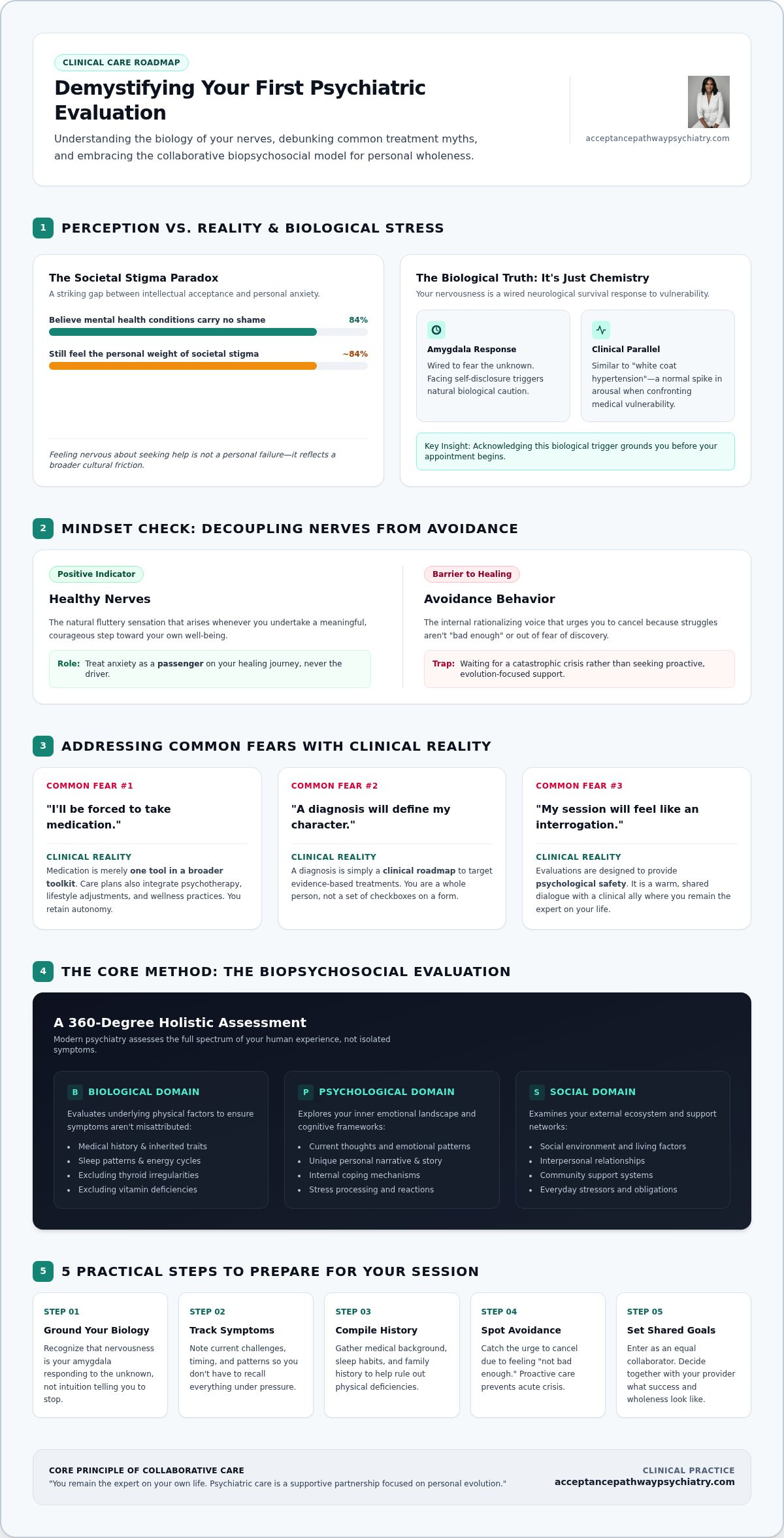
5 Practical Steps to Prepare for Your First Session
Preparation is one of the most effective ways to lower your anxiety. If you are feeling nervous about seeing a psychiatrist, having a structured plan ensures that you don't forget important details when you're in the moment. These steps help you transition from a place of uncertainty to a position of empowered partnership.
- Step 1: Write a Bullet Point Biography. You don't need to write a novel. Simply list your current symptoms, when they started, and any significant life events that feel relevant. This acts as a safety net if your mind goes blank during the session.
- Step 2: List all current medications and supplements. Include the exact dosages and how long you've been taking them. This includes vitamins, herbal remedies, and over-the-counter sleep aids, as these can impact your neurochemistry.
- Step 3: Identify your "Top 3 Goals." Ask yourself what you want to achieve. Whether it's "sleeping through the night" or "feeling less overwhelmed at work," clear goals help your provider tailor their approach.
- Step 4: Prepare your environment. If you've chosen Telehealth appointments, check your internet connection and camera. For in-person visits, plan your route to avoid the stress of being late.
- Step 5: Give yourself permission to be "imperfect." You don't have to have all the answers. It's okay to cry, to pause, or to say "I don't know." Your psychiatrist is there to be a supportive witness, not a judge.
Creating a Safe Physical and Mental Space
If you are meeting via Telehealth, choose a private room where you won't be interrupted. Good lighting helps your provider see your expressions, which is vital for connection. Keep "grounding objects" nearby, such as a warm cup of tea or a soft blanket, to help you stay present. For in-person visits, try to arrive 10 minutes early. Use this time to breathe and center yourself in the waiting area rather than scrolling on your phone. Finally, create a "post-session" plan. Schedule at least 15 minutes of downtime after the appointment to process your thoughts before jumping back into your daily routine.
Questions You Should Ask Your Psychiatrist
A collaborative relationship is a two-way street. Don't hesitate to ask questions that help you feel more secure in your care. If you are feeling nervous about seeing a psychiatrist, asking these questions can help establish a sense of transparency:
- "What is your philosophy on medication vs. therapy?"
- "How do we track my progress over time?"
- "What should I do if I have questions between appointments?"
Ready to take the next step toward wholeness? You can schedule your initial evaluation today to begin your journey toward personal evolution.
Finding Your Path: How Collaborative Care Supports Your Growth
The journey toward mental wellness often begins with a heavy heart and a mind full of questions. If you have been feeling nervous about seeing a psychiatrist, it's helpful to remember that the most difficult step is already behind you. Deciding to prioritize your well-being is a profound act of courage. As you move from that initial state of nervous entry into an empowered partnership, you will find that psychiatry isn't about being "fixed." It is about discovering the tools you need for personal evolution and long-term wholeness.
In this collaborative relationship, the roles are clearly defined to support your success. You are the absolute expert on your own life, your history, and your internal feelings. Your psychiatrist acts as the expert on the clinical tools, diagnostic precision, and therapeutic interventions that can support your progress. By combining these two forms of expertise, we create a path toward holistic healing that honors your unique experience. Integrative wellness looks beyond just symptoms; it focuses on your biology, your environment, and your future potential to thrive.
The Acceptance Pathway Approach
At our practice, we value the concept of "supportive witnessing." This means we provide a non-judgmental space where you are seen and heard without the weight of cold clinical detachment. We offer a range of specialized services designed to meet you where you are, ensuring that your care plan is as unique as your story. For those navigating specific challenges with focus or executive function, we provide integrated ADHD treatment for adults that combines modern testing with compassionate care. Whether you are seeking medication management or psychotherapy, our goal is to help you move at your own pace toward your goals.
Taking the First Step Toward Wholeness
Starting this process is simpler than you might expect. When you reach out to schedule an initial evaluation, you won't be met with cold bureaucracy. Our administrative team is specifically trained to handle first-time nerves with deep empathy and professional care. They understand the vulnerability involved in making that first call and are here to guide you through the logistics with warmth and patience. This initial contact is designed to be a bridge to the psychological safety you'll experience in your sessions.
You deserve a life that feels balanced and full of possibility. By choosing to step into this partnership, you are reclaiming your narrative and investing in your future health. There is no need to wait for a crisis to begin your evolution toward a more vibrant version of yourself. Begin your journey with a compassionate psychiatric evaluation today.
Ready to Begin Your Journey Toward Wholeness?
Your first visit is the start of a supportive partnership focused on your personal evolution. We have explored how a clinical evaluation works and shared practical steps to help you feel prepared and in control. By organizing your medical history and identifying your top goals, you can enter your session feeling empowered rather than overwhelmed. Modern psychiatry is about collaborative growth, ensuring that you remain the expert on your own life throughout the process.
If you are still feeling nervous about seeing a psychiatrist, remember that we prioritize your psychological safety above all else. Our team offers a non-judgmental, trauma-informed environment where your unique story is the focus. Whether you prefer the flexibility of Telehealth appointments or an in-person visit, our integrative wellness model ensures you receive care that respects your whole self. You don't have to navigate this path alone.
The hardest part was deciding to seek support, and now you have a clear roadmap to guide you forward. Schedule Your Compassionate Psychiatric Evaluation today to begin your journey toward lasting health. We are here to be a steady witness to your progress.
Frequently Asked Questions
Is it normal to cry during my first psychiatry appointment?
It is completely normal to cry during your initial session. Crying is a natural physical response to the vulnerability and emotional weight of sharing your story. Psychiatrists are trained to provide a supportive, non-judgmental space for these expressions. You don't need to apologize for your feelings. This release often marks the beginning of your healing process as you start to address the internal experiences you've been carrying alone.
Will I be diagnosed with something on the very first day?
You will often receive a preliminary diagnosis after your first evaluation. This diagnosis serves as a clinical roadmap to guide your treatment plan and ensure you receive the most effective evidence-based care. However, we view a diagnosis as a description of current symptoms rather than a permanent label or a definition of your character. It's a collaborative tool that we use together to track your personal evolution and progress over time.
Can I see a psychiatrist just for therapy, without taking medication?
Yes, you can certainly seek care for psychotherapy without pursuing medication. While psychiatrists have the medical training to prescribe, many also offer talk therapy as a primary treatment option. Your care plan is a mutual partnership, and we respect your autonomy in choosing which tools feel right for your journey. Many patients find significant success through integrative wellness strategies and therapy alone, while others choose to combine these with medication management.
What if I don’t feel a "click" with my psychiatrist after the first visit?
Finding the right fit is essential for your progress. If you don't feel a sense of psychological safety or a "click" with your provider, it's perfectly acceptable to seek a second opinion. A strong therapeutic alliance is one of the most significant predictors of successful outcomes. You deserve to work with a clinical ally who makes you feel heard and understood. We encourage you to prioritize your comfort as you navigate your path toward wholeness.
How long does a typical psychiatric evaluation last?
A typical initial psychiatric evaluation standardly runs between 45 and 90 minutes. This duration allows enough time for a comprehensive look at your medical history, family background, and current symptoms. Unlike a brief follow-up, this first session is an in-depth clinical dialogue designed to build a complete picture of your health. Having this dedicated time ensures that we don't rush the process and can establish a stable foundation for your future care.
What should I do if I feel too nervous to even make the phone call?
If you are feeling nervous about seeing a psychiatrist, making that first phone call can feel like a massive hurdle. Many practices offer online scheduling or email contact options to help lower this barrier. You can take your time to fill out digital forms in a space where you feel safe. Our administrative team understands these first-time nerves and is trained to respond with empathy and patience, ensuring you feel supported from your very first interaction.
Will my employer or family find out that I am seeing a psychiatrist?
Your privacy is protected by strict federal HIPAA regulations and clinical ethics. Unless you provide written consent, your employer, family members, or friends cannot access your mental health records. Confidentiality is a cornerstone of the relationship between a patient and their provider. We go to great lengths to ensure your information remains secure, providing you with the peace of mind needed to be fully honest and open during your clinical sessions.
Can a psychiatrist help me with ADHD testing as an adult?
Yes, a psychiatrist can provide specialized ADHD testing for adults to ensure diagnostic precision. We use advanced tools like Creyos Cognitive Testing to gather objective data on your focus, memory, and executive function. This process removes the guesswork from your treatment plan and helps us understand your brain's unique strengths. If you're feeling nervous about seeing a psychiatrist for ADHD, know that these modern assessments are non-intimidating and designed to support your personal growth.


