

Recent 2025 research involving over 58,000 participants confirms that physical responses to medication vary widely, with some people experiencing significant changes in heart rate or weight. If you are currently dealing with persistent nausea, fatigue, or the fear that your medication is changing your personality, it's natural to feel frustrated. Managing side effects of antidepressants shouldn't be a trade-off for your mental health. It is a biological dialogue that helps us fine-tune your path to wellness.
It's exhausting to feel like your progress is stalled by physical discomfort or a slow pace of change. We believe you deserve a treatment plan that feels supportive rather than overwhelming. In this guide, you'll learn practical coping strategies and a collaborative framework for working with your provider to find relief. We'll preview how to communicate your concerns clearly, explore integrative wellness options, and show you how to adjust your plan safely so you can move forward with confidence.
Key Takeaways
- Understand why your brain needs a two-to-four-week "window of adjustment" to recalibrate and why early discomfort isn't a sign of treatment failure.
- Discover practical tools for managing side effects of antidepressants, including dietary changes for nausea and dose timing adjustments to improve your sleep.
- Learn how to identify long-term symptoms like emotional blunting and the specific criteria for deciding when it's time to pivot your treatment plan.
- Master a clear framework for communicating with your psychiatrist using a "Side Effect Log" to ensure your concerns are heard and addressed accurately.
- Explore how an integrative wellness approach and a collaborative partnership with your provider can support your body's healing process throughout your journey.
Understanding the Antidepressant Adjustment Period
Starting an antidepressant is a courageous step toward healing, yet the first few weeks can feel like a physical hurdle. You might expect to feel better immediately, but instead, you're met with nausea, fatigue, or a strange sense of restlessness. This experience is common. Managing side effects of antidepressants starts with understanding that these symptoms aren't a sign that the medication is "wrong" for you. Rather, they are evidence that your brain chemistry is actively recalibrating to new neurotransmitter levels.
Why Your Body Reacts Early in Treatment
Many people are surprised to learn that serotonin receptors aren't just in the brain. In fact, a vast majority of these receptors live in your digestive tract. When you begin a medication that increases serotonin, your gut reacts before your mood does. This is why nausea or digestive changes often appear in the first few days. Additionally, Antidepressant side effects can stem from a temporary surge in neuroplasticity. Your brain is literally rewiring itself to process signals more effectively. This "startup" phase is a high-energy transition that feels different from the long-term maintenance phase, where your body eventually reaches a steady state of equilibrium.
The 'Wait and See' Strategy: When Patience is Therapeutic
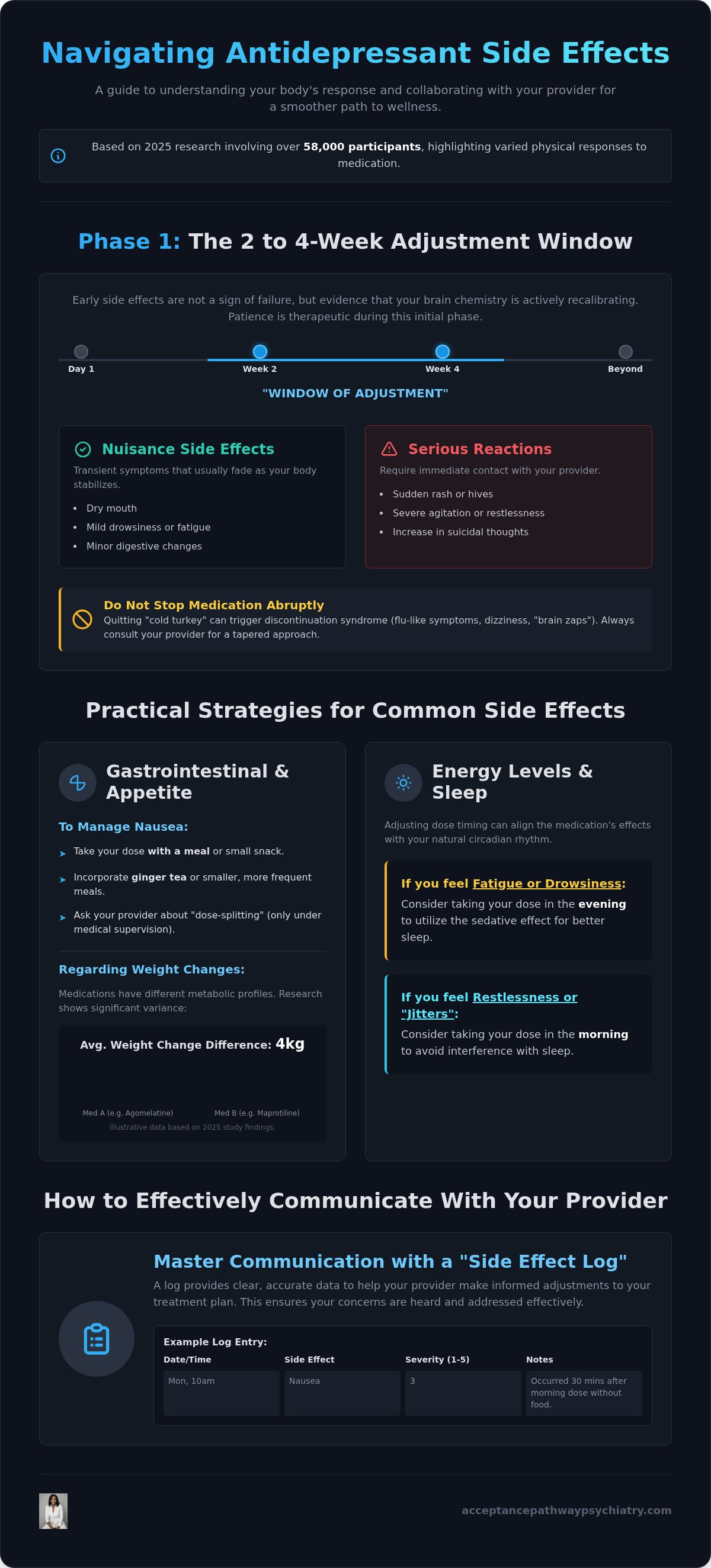
The "window of adjustment" typically lasts between two and four weeks. During this time, it's helpful to distinguish between "nuisance" side effects and serious adverse reactions. Nuisance symptoms, like a dry mouth or mild drowsiness, are transient and usually fade as your system stabilizes. However, serious reactions require immediate contact with your provider. These include a sudden rash, severe agitation, or an increase in suicidal thoughts, which the FDA monitors through a standing "black box" warning for individuals under 25.
Whatever you do, don't stop your medication abruptly. Quitting "cold turkey" can trigger discontinuation syndrome, leading to flu-like symptoms, dizziness, or sensory disturbances often described as "brain zaps." Managing side effects of antidepressants is a collaborative process that requires a tapered approach if a change is needed. The adjustment period is a natural phase of neurological recalibration where your body learns to function at a new baseline. Setting realistic expectations for this first month allows you to stay the course while your brain does the quiet, heavy lifting of healing.
Practical Strategies for Managing Common Physical Side Effects
While the biological shifts in your brain are invisible, the physical sensations in your body are very real. Managing side effects of antidepressants is a practical challenge that requires a mix of clinical strategy and gentle self-care. Most physical symptoms are manageable with small adjustments to your daily routine, allowing you to stay committed to your mental health goals without constant discomfort.
Managing Gastrointestinal and Appetite Shifts
Nausea is one of the most frequent reasons people consider stopping their medication early. Since serotonin receptors are abundant in your gut, taking your dose with a meal or a small snack can significantly buffer this response. You might also find relief by incorporating ginger tea or smaller, more frequent meals into your day. For those experiencing more persistent issues, some providers suggest "dose-splitting," though you should only do this under direct medical supervision to ensure your blood levels remain stable.
Weight changes are another common concern that benefits from an informed perspective. A 2025 study of over 58,000 participants found a 4kg difference in average weight change between specific medications, such as agomelatine and maprotiline. Understanding these differences helps you and your provider choose a path that respects your metabolism. You can find additional ways to cope with side effects by focusing on integrative wellness strategies that balance nutrition and movement during your treatment. If you feel your current plan isn't aligning with your physical health, our medication management services can help you refine your approach.
Energy Levels: From Fatigue to Restlessness
Your medication's impact on your energy often depends on when you take it. If you feel drowsy or "heavy" during the day, shifting your dose to the evening may help you utilize that sedation for better sleep. Conversely, if you feel restless or experience "jitters," a morning dose is usually more appropriate. Your circadian cycle is unique, and finding the right rhythm for your body is a key part of the collaborative process.
- Sleep Hygiene: Limit caffeine and alcohol, as they can amplify medication-induced insomnia or daytime grogginess.
- Gentle Activity: Short walks or light stretching can help ground your nervous system if you feel a sense of internal restlessness.
- Hydration: Keeping water nearby helps mitigate dry mouth and the minor dizziness that can occur when standing up too quickly.
By treating these physical responses as data points rather than obstacles, you gain a sense of agency over your treatment. Managing side effects of antidepressants becomes much easier when you have a clear plan and a supportive partner to help you navigate the nuances of your body's healing process.
Evaluating Long-Term Side Effects: When to Pivot
While the initial adjustment period focuses on physical sensations like nausea, long-term care requires a more nuanced evaluation of your quality of life. Managing side effects of antidepressants over months or years involves monitoring your metabolic health, such as blood pressure and weight, to ensure the treatment remains safe for your body. If a side effect persists beyond the first few months, it isn't something you simply have to "live with." It is a signal that your treatment plan might need a strategic pivot. We view these moments not as setbacks, but as opportunities to refine your care.
Navigating Sexual and Emotional Changes
Two of the most common reasons for long-term frustration are sexual dysfunction and emotional blunting. Sexual side effects, such as changes in libido or arousal, are incredibly common but often go unmentioned due to discomfort. We encourage an open, non-judgmental dialogue about these experiences, as several clinical strategies exist to address them without stopping your medication entirely. Similarly, some people experience "apathy syndrome," a feeling of being "too neutral" or emotionally numb.
Psychotherapy is a vital tool here. It helps us distinguish between medication-induced blunting and residual symptoms of depression that haven't fully lifted. Clinical research plays a major role in understanding and managing antidepressant side effects, showing that these experiences are often dose-dependent. By identifying these patterns early, we can adjust your treatment to ensure you feel like yourself again, rather than a muted version of who you are.
The Role of Precision in Medication Adjustments
Finding your "therapeutic window" is a delicate process. Sometimes, a very small dosage tweak is enough to eliminate a side effect while maintaining the medication's efficacy. This is where professional psychiatric medication management becomes essential. We look at the whole picture to decide whether to switch your medication entirely or augment it with a secondary treatment to offset specific issues.
- Switching: This involves a "cross-taper," where we slowly decrease one medication while starting another to prevent withdrawal.
- Augmenting: Adding a low-dose secondary medication can sometimes resolve issues like fatigue or sexual side effects while keeping your primary progress intact.
- Monitoring: Regular check-ins allow us to track metabolic changes before they become long-term health concerns.
Managing side effects of antidepressants is never a "one size fits all" journey. Whether we are adjusting a dose or exploring a new class of medication, the goal is always the same. We want to find the precise balance that supports your mental health while honoring your physical well-being. You are the expert on your own experience, and your feedback is the most important tool we have.
How to Effectively Communicate with Your Psychiatric Provider
Your journey with medication is a mutual partnership, not a one-way street. While your provider brings clinical expertise, you are the only one with first-hand knowledge of how a treatment feels in your daily life. Effective communication is the bridge that turns your personal experience into a tailored care plan. Managing side effects of antidepressants depends heavily on the quality of the information you share during your check-ins.
Many people hesitate to bring up side effects because they fear being seen as "difficult" or worry that their only option is to stop treatment. We want to reassure you that your feedback is the most valuable data point we have. It allows us to move beyond trial and error and toward a more precise, compassionate form of care. When you speak up about your discomfort, you aren't complaining; you are helping us fine-tune your path to wellness.
Using Data to Improve Your Care
When you describe a symptom as "bad," it can be difficult for a provider to know exactly how to adjust your dose. Instead, try creating a Side Effect Log that tracks the frequency and severity of your symptoms. Use a scale of 1 to 10 to rate your discomfort. A rating of 3 might suggest a symptom is manageable, while an 8 indicates it significantly disrupts your day. Pay close attention to timing. Does the nausea happen within thirty minutes of taking your pill, or does the fatigue hit four hours later? A side effect log transforms subjective discomfort into actionable clinical insights.
Preparing for Your Medication Management Appointment
Before your next appointment, organize your thoughts using the Three-Question Rule. Focus on the Intensity (how strong is it?), Duration (how long does it last?), and Impact (what does it stop you from doing?). Using specific terminology helps your provider understand the urgency of your situation. For instance, "transient" symptoms come and go, while "persistent" ones stay for weeks. If a side effect is "intolerable," it means it is preventing you from functioning or making you want to stop treatment entirely.
Don't be afraid to discuss the trade-off between symptom relief and the side effect burden. You shouldn't have to choose between feeling less depressed and feeling physically unwell. If you are just beginning this process, you can learn more about Finding the Right Medication for Your Unique Journey. If you are struggling with your current regimen, our telehealth appointments offer a safe, non-judgmental space to discuss adjustments and explore new options together.
A Compassionate Approach to Medication Management
At Acceptance Pathway Psychiatry, we believe that medication is only one part of your personal evolution. You aren't a patient to be managed. You're a partner in a shared journey toward wholeness. Managing side effects of antidepressants is a process that requires patience, honesty, and a steady, reliable presence by your side. We act as supportive witnesses to your progress. This ensures that every adjustment is made with your unique internal experience in mind.
The first few months of treatment are a time of significant transition. It's during this window that the body and brain work hardest to find a new equilibrium. We emphasize professional humility and clinical authority to create a space where you feel safe discussing your concerns. You don't have to settle for a treatment plan that feels like a burden. Instead, we work together to find a balance that allows you to feel like your most authentic self.
Our Collaborative Fine-Tuning Process
We prioritize frequent check-ins during the initial phase of your care. These appointments are vital for monitoring your body's response and making real-time adjustments to your plan. Whether you utilize our telehealth appointments for convenience or prefer in-person visits, our goal is to provide consistent, non-judgmental support. We also incorporate integrative wellness services to address the physical toll of neurological changes. By looking at nutrition and lifestyle, we create a holistic environment that supports your body while your brain chemistry heals.
Beyond Medication: A Holistic Path Forward
True healing often requires a multi-faceted approach. Combining psychotherapy with medication management usually leads to more robust long-term outcomes. While medication helps recalibrate neurotransmitters, therapy provides the tools to navigate the emotional landscape of recovery. To ensure our adjustments are based on more than just subjective feelings, we use Creyos cognitive testing. This provides objective data on your memory, focus, and processing speed. This data helps us refine your treatment with clinical precision.
You don't have to navigate the complexities of managing side effects of antidepressants alone. We are here as your allies. We offer the clinical knowledge and compassionate guidance needed to find your specific path to improvement. Moving from merely surviving side effects to thriving in your daily life is possible. With a clear plan and a supportive partner, you can move forward with a sense of quiet strength and confidence.
Moving Forward with Confidence and Clarity
Your journey toward mental wellness is a path of personal evolution, and you deserve to feel supported every step of the way. Managing side effects of antidepressants is a collaborative effort that transforms physical discomfort into meaningful data for your care. By understanding the natural recalibration of the adjustment period and using tools like a side effect log, you move from merely surviving treatment to actively shaping it. This partnership ensures that your treatment plan respects both your mind and your body.
At Acceptance Pathway Psychiatry, we provide expert medication management for depression and anxiety with a focus on your unique experience. Our approach integrates wellness strategies and Creyos cognitive testing to ensure your treatment is as precise as it is compassionate. You don't have to navigate these challenges in isolation. We are here to act as supportive witnesses to your progress, offering a steady and non-judgmental environment where your voice is always heard.
Schedule a compassionate medication management consultation today.
Healing is a patient, steady process of becoming whole again. We look forward to being your allies in this journey toward a brighter, more balanced life.
Frequently Asked Questions
How long do antidepressant side effects usually last?
Most side effects resolve within two to four weeks as your brain chemistry adjusts to the medication. This period is often called the "window of adjustment" where your nervous system recalibrates to new neurotransmitter levels. If your symptoms don't begin to fade after the first month, they are considered persistent and require a collaborative discussion with your provider to refine your treatment plan.
Can I skip a dose of my antidepressant to avoid side effects for a day?
You should never skip a dose to avoid temporary discomfort. Skipping even a single pill can trigger discontinuation syndrome, which causes dizziness, flu-like symptoms, or sensory disturbances often described as "brain zaps." Managing side effects of antidepressants requires maintaining consistent blood levels to allow your body to stabilize safely without the shock of sudden chemical fluctuations.
What should I do if my antidepressant is making me feel more anxious at first?
It is common to feel a temporary increase in "jitteriness" or internal restlessness during the first week of treatment. This reaction usually stems from the initial surge in neuroplasticity as your brain responds to the medication. If the anxiety feels unmanageable or prevents you from resting, contact your provider to discuss a temporary dose adjustment or a shift to a morning dosing schedule.
Is it normal to gain weight while taking antidepressants?
Weight changes are a documented side effect, though the impact varies significantly depending on the specific medication. A 2025 study analyzed over 58,000 participants and found a 4-kilogram difference in average weight change between certain antidepressants. While a survey of long-term users found that 65% experienced some weight gain, this can often be mitigated through careful medication selection and integrative wellness strategies.
What are the signs that a side effect is serious and needs immediate medical attention?
Seek immediate medical help if you experience a sudden rash, swelling, or a significant increase in suicidal thoughts. The FDA continues to require a "black box" warning for these risks in children and young adults under 25. Other urgent signs include severe agitation, confusion, or a high fever, which could indicate a rare but serious reaction that requires an emergency evaluation.
How do I know if I should switch medications or just wait it out?
The decision to switch usually depends on whether a side effect is "transient" or "intolerable." If a symptom like nausea hasn't faded after four weeks, or if it prevents you from working and functioning, it is time to discuss a pivot. Managing side effects of antidepressants involves a delicate balance where the benefits of symptom relief must always outweigh the physical or emotional burden of the treatment.
Can psychotherapy help me manage the side effects of my medication?
Psychotherapy is an essential tool for distinguishing between medication side effects and residual symptoms of your condition. For example, therapy can help you identify if "emotional blunting" is caused by the medication or is a lingering part of the depression itself. Combining therapy with medication management provides a holistic support system that addresses both your biological needs and your emotional well-being.
What is the best time of day to take my antidepressant to minimize side effects?
The ideal time depends on how the medication affects your energy levels and circadian rhythm. If your dose causes daytime drowsiness or "heaviness," taking it in the evening can help you utilize that sedation for better sleep. Conversely, if you feel energized or struggle with insomnia after your dose, taking it in the morning is usually the best way to minimize sleep disruptions.


