

Choosing to start a prescription can feel like a life-saving relief, yet 68% of Americans still feel a deep sense of hesitation about the long-term side effects of anxiety medication. You might worry that staying on a pill for years will eventually change who you are, impact your heart health, or make you feel "trapped" by dependency. These concerns are natural and valid. They are a sign that you value your holistic well-being and want to remain the pilot of your own life. We believe that your treatment should be a mutual partnership, one that prioritizes your internal experience and physical safety just as much as it manages your symptoms.
This guide provides a clear and compassionate understanding of how anxiety medications affect your body over time and how to manage them for lasting wellness. You will gain a balanced view of the risks and benefits, along with actionable ways to reduce side effects through regular clinical monitoring and integrative care. We will explore the reality of long-term stability and the collaborative steps you can take to ensure your treatment evolves alongside your personal growth. You deserve to feel empowered and informed, knowing that medication is a dynamic tool for your evolution rather than a static sentence.
Key Takeaways
- Understand the clinical transition from acute relief to long-term stability and what a 12-month treatment window means for your body.
- Identify the specific long-term side effects of anxiety medication across different classes, from metabolic changes to cognitive health.
- Explore how medication interacts with neuroplasticity to support healthy brain pathways rather than causing permanent personality changes.
- Learn proactive, integrative ways to mitigate side effects through a collaborative partnership with your psychiatric provider.
- Discover the importance of regular evaluations and cognitive testing in ensuring your treatment plan evolves alongside your personal progress.
Understanding the Context: When is Anxiety Medication Used Long-Term?
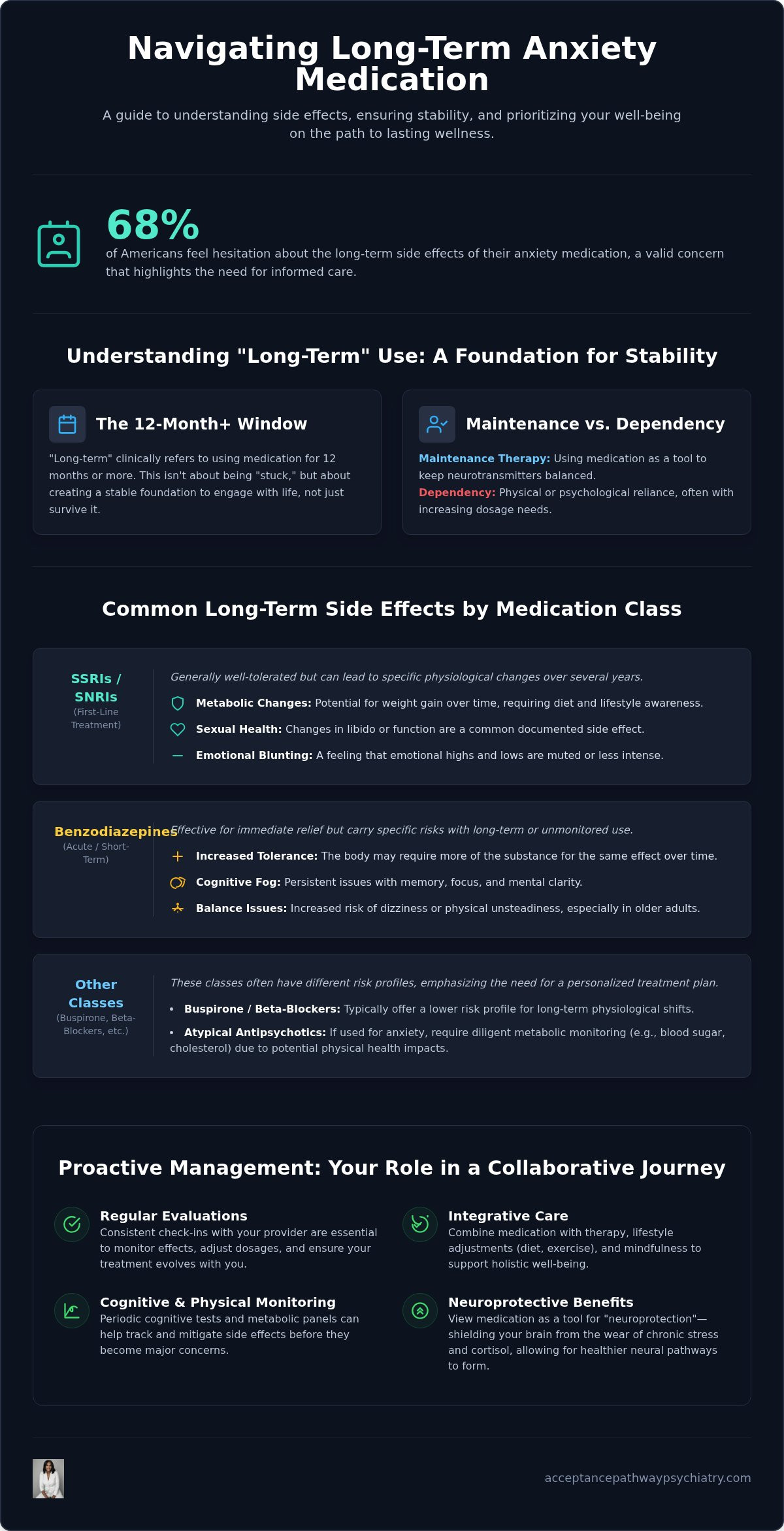
Beginning a journey with mental health treatment often starts with a focus on immediate relief. When we talk about "long-term" use in a clinical setting, we are typically referring to a duration of 12 months or more. This transition from acute symptom management to sustained stability is an intentional choice made between you and your provider. It isn't about being stuck; it's about creating a foundation where you can actually engage with your life rather than just surviving it. Seeking long-term stability is a brave step toward personal evolution, and it reflects your commitment to a life defined by peace rather than panic.
There is a vital distinction between maintenance therapy and dependency that many people find confusing. Maintenance therapy involves using medication as a reliable tool to keep your neurotransmitters balanced, much like how one might use a corrective lens for vision. In contrast, dependency often refers to a physical or psychological reliance where the body requires increasing amounts of a substance to function properly. While Benzodiazepine medications are sometimes used for short-term relief, they carry different risks for dependency compared to daily maintenance medications like SSRIs or SNRIs. Understanding these nuances helps you stay informed about the long-term side effects of anxiety medication while focusing on your wellness. It empowers you to view your prescription as a supportive ally in your healing process.
The Role of Chronic Anxiety Management
Some individuals have biological profiles that naturally require sustained neurotransmitter support to maintain a sense of calm and clarity. For these people, medication provides "neuroprotection" by shielding the brain from the wear and tear of chronic stress and high cortisol levels. By keeping the nervous system in a regulated state, you allow your brain to form healthier neural pathways over time. This process is about more than just feeling better; it is about protecting your cognitive health for the years ahead. Maintenance therapy serves as a steady bridge that allows for deeper holistic healing and personal evolution.
The Importance of Continuous Medication Management
Managing your mental health is a dynamic process, not a "set it and forget it" task. Your body changes, your environment shifts, and your needs evolve as you move through different stages of life. Regular check-ins with a professional are essential to monitor how you feel and to ensure that the long-term side effects of anxiety medication don't become chronic burdens. These evaluations allow for precise adjustments that keep you moving forward with confidence. Our approach to Psychiatric Medication Management ensures that your treatment remains a mutual partnership focused on your unique journey toward wholeness.
Common Long-Term Side Effects by Medication Class
Understanding how different classes of drugs interact with your biology over several years is a key part of informed care. While first-line treatments like SSRIs and SNRIs are generally well-tolerated, they can lead to specific physiological changes when used as a multi-year maintenance tool. For instance, many people report concerns regarding weight gain, changes in sexual health, or a sense of "emotional blunting" where the highs and lows of life feel muted. These experiences are widely documented in patient perspectives on long-term antidepressant use, highlighting the need for a treatment plan that adapts as your life does.
Other medication classes carry different profiles. Benzodiazepines, while effective for acute relief, present specific risks when used long-term, including increased tolerance, persistent cognitive fog, and potential balance issues. In contrast, options like Buspirone or Beta-blockers typically offer a lower risk profile for long-term physiological shifts. If your care plan includes atypical antipsychotics for anxiety, your provider will likely prioritize metabolic monitoring to keep a close eye on your overall physical health. Partnering with a provider for consistent medication management helps you stay ahead of these shifts rather than reacting to them after they become bothersome.
Metabolic and Physical Changes
Extended use of certain anxiety medications can influence how your body processes energy. Over a period of two to five years, some individuals may notice a gradual increase in weight or shifts in blood sugar and cholesterol levels. This doesn't mean these outcomes are inevitable. By monitoring these physical health markers through regular lab work and clinical evaluations, you can make proactive lifestyle adjustments. We focus on a mutual partnership where we track these metabolic markers together, ensuring your physical vitality remains a priority alongside your mental stability.
Cognitive and Emotional Shifts
After years of treatment, you might wonder if your memory or focus has changed, or if you're experiencing "emotional blunting," a feeling of being stuck in a gray area. It's often difficult to tell if these shifts are a result of the medication, the natural aging process, or the underlying anxiety itself. Utilizing tools like cognitive testing can provide objective data to help us understand exactly how your brain is functioning. This clarity allows us to distinguish between side effects and other factors, ensuring your long-term side effects of anxiety medication are managed with precision and empathy.
Addressing the Objection: Dependency and Brain Health
One of the most frequent concerns we hear is the fear that medication will fundamentally change who you are. You might worry that your creativity, your drive, or your sense of humor will fade. It's important to understand that medication is designed to treat the symptoms of a condition, not to overwrite your identity. In fact, many people find that once their anxiety is managed, they feel more like themselves than they have in years. Modern neurotransmitter theories have moved beyond the idea of a simple "chemical imbalance." We now understand that anxiety often involves complex signaling pathways and brain circuit regulation. A collaborative expert helps you navigate these nuances, acting as a supportive witness to your progress and ensuring you never feel trapped on a path you didn't choose.
Dependence vs. Addiction: A Clinical Distinction
It's common to confuse physiological dependence with addiction. When your body receives a consistent dose of a substance, it naturally adapts. This is a standard biological response, not a sign of a disorder. This distinction is why tapering is a mandatory safety protocol. Slowly reducing a dose allows your nervous system to readjust smoothly. Many non-habit-forming options used for long-term care don't carry the same risks as other substances. Reviewing a comprehensive Anxiety Medication guide can help you understand the different profiles of these drugs. By working closely with a provider, you ensure that your body remains in balance while avoiding the risks often associated with long-term side effects of anxiety medication.
Long-Term Neuroplasticity and Healing
Chronic stress is hard on the brain. Untreated, it can actually lead to structural changes that make it harder to feel calm. Medication helps prevent this by creating the "mental space" necessary for healing. When your nervous system isn't constantly in a state of high alert, you can finally engage with psychotherapy and lifestyle changes. This creates a positive feedback loop of neuroplasticity, where your brain learns to sustain its own stability. Medication acts as a scaffold for emotional growth, providing the temporary support needed while you build your own internal strength. This proactive approach helps mitigate the long-term side effects of anxiety medication by ensuring the lowest effective dose is used over time.
Proactive Management: How to Mitigate Side Effects
Managing your symptoms shouldn't feel like a passive experience. We view treatment as a dynamic tool within a collaborative partnership. This model moves away from the traditional approach where a provider dictates care and toward a mutual relationship where your internal experience is the primary guide. One of our most effective strategies is dose optimization. By identifying the lowest effective dose, we can maintain your emotional stability while significantly reducing the risk of long-term side effects of anxiety medication. We also utilize objective data from Creyos cognitive testing. This testing provides a clear baseline and ongoing tracking of your memory, focus, and processing speed. It ensures that your treatment supports your cognitive health as you grow and evolve over the years.
Integrative Wellness Strategies
Your daily habits are a powerful extension of your clinical care. They play a massive role in how your body responds to treatment over several years. Nutritional support can help manage the metabolic shifts we discussed earlier, such as changes in blood sugar or cholesterol. Focusing on gut health is particularly essential since a significant portion of the body's serotonin is produced in the digestive system. Consistent sleep hygiene also ensures your medication works effectively while reducing the risk of daytime grogginess. Regular physical activity is another vital tool. It helps mitigate potential weight gain and provides a natural, biological boost to your mood. These aren't just general suggestions. They are clinical interventions that work in harmony with your medication to promote wholeness.
The Clinical Monitoring Protocol
A structured monitoring schedule is the best way to prevent minor side effects from becoming chronic issues. We recommend a consistent schedule for blood work and physical exams to track your internal health markers. During these check-ins, we can discuss the possibility of supervised dose reductions or even medication holidays if your symptoms have remained stable for an extended period. These adjustments are not a sign that you are failing or regressing. Instead, they represent a proactive response to your personal progress. Consistent, non-judgmental communication with your provider is the foundation of this entire process. If you want to refine your current plan with a provider who views you as a partner, our Medication Management services are designed to support your unique journey.
A Compassionate Path Forward with Acceptance Pathway Psychiatry PLLC
At Acceptance Pathway Psychiatry PLLC, we believe your mental health journey is about more than just managing a diagnosis. We view you as a whole person with a unique history, values, and goals. Our approach to medication management is designed to support your personal evolution, ensuring that your treatment plan adapts as you do. By focusing on the person rather than just the prescription, we can more effectively monitor the long-term side effects of anxiety medication and make adjustments that prioritize your quality of life. We're here to provide a steady, reliable presence as you navigate your path toward wholeness.
We've found that the most profound healing often happens when we combine psychotherapy and medication. While medication provides the biological stability you need to function, therapy offers the tools to process your experiences and build lasting resilience. This integrated approach ensures that you aren't just masking symptoms but are actively moving toward a state of wellness. Our telehealth appointments make this consistent care accessible, allowing you to maintain your progress and stay connected with Acceptance Pathway Psychiatry PLLC from the comfort of your own home.
Your Journey, Your Voice
You are the expert on your own life, and we treat our relationship as a mutual partnership. We involve you in every decision regarding your treatment plan, from the initial evaluation to any adjustments made years down the line. We've cultivated a warm, non-judgmental environment where you can speak openly about your concerns without fear of being dismissed. Whether you're worried about physical changes or emotional shifts, we're committed to finding the exact balance that supports your lifestyle. Your voice is the most important part of the clinical process.
Next Steps: Booking a Comprehensive Evaluation
Transitioning from a generic provider to specialized psychiatric care at Acceptance Pathway Psychiatry PLLC is a significant step toward informed wellness. During your first comprehensive evaluation, we'll take the time to understand your full history and your specific concerns about the long-term side effects of anxiety medication. We'll review your current treatment and discuss how our integrative wellness services and Creyos cognitive testing can better support your goals. We'll work together to ensure your treatment remains a supportive ally in your life. It's entirely possible to live a balanced, fulfilling life where you feel empowered and in control. You aren't alone on this path, and we're ready to be a supportive witness to your continued growth and peace.
Empowering Your Long-Term Wellness Journey
Choosing to stay on a prescription for the long haul is a proactive step toward stability and personal evolution. By understanding the potential long-term side effects of anxiety medication, you're already taking charge of your health. We've explored how consistent monitoring and dose optimization can protect your physical and cognitive vitality over time. You don't have to navigate these complexities alone; your provider should be a steady ally in your wellness.
Our team combines clinical authority with deep empathy to ensure your care remains a mutual partnership. We utilize precision cognitive testing and integrative wellness strategies to track your progress and adjust your plan as your life changes. You deserve a treatment approach that values your wholeness and supports your unique path toward healing. It's time to move beyond survival and into a life where you feel truly grounded. Begin your journey toward balanced mental health with a compassionate evaluation. We're here to be a supportive witness to your growth every step of the way.
Frequently Asked Questions
Can anxiety medication cause permanent brain damage?
No clinical evidence suggests that standard anxiety medications cause permanent brain damage. In fact, many treatments act as a neuroprotective shield by reducing the harmful effects of chronic, high-cortisol stress on your nervous system. By stabilizing your internal environment, these medications allow your brain to build healthier neural pathways over time. We prioritize your cognitive health through regular evaluations to ensure your treatment remains a supportive tool for your mental clarity and evolution.
Will I have to take anxiety medication for the rest of my life?
Taking medication is not a permanent sentence; it's a dynamic tool for your current stage of life. While some individuals benefit from multi-year maintenance therapy to maintain stability, others work with their providers to taper off once they've built robust coping skills. The decision is always part of a mutual partnership between you and your clinician. We focus on your personal progress, adjusting your care as your needs and environment change over time.
What should I do if I start gaining weight on my medication?
If you notice weight changes, the first step is to discuss this with your provider during a non-judgmental clinical review. We can implement metabolic monitoring to track blood sugar and cholesterol levels while exploring nutritional support or dose optimization. In some cases, shifting to a different medication with a lower metabolic impact can help. We treat the whole person, ensuring that your physical vitality is never sacrificed for the sake of emotional stability and peace.
Is it possible for side effects to appear after years of taking the same drug?
Yes, it's possible for new responses to emerge even after years of consistent use. Your body's metabolism, hormonal balance, and lifestyle naturally shift as you age, which can change how you process your prescription. These shifts are a primary reason why we emphasize the importance of regular psychiatric evaluations. Staying proactive allows us to identify and manage the long-term side effects of anxiety medication before they impact your daily quality of life or personal growth.
How do I know if a side effect is from the medication or my anxiety?
Distinguishing between the two requires a careful clinical evaluation since anxiety itself often causes physical symptoms like fatigue, heart palpitations, or digestive issues. We use baseline tracking and consistent check-ins to monitor how your symptoms change in relation to your dose. This collaborative approach helps us determine if a symptom is a medication effect or a sign that your underlying anxiety needs more support. Objective data ensures your treatment plan is precise and effective.
Can long-term use of SSRIs affect my memory or focus?
Some individuals report "emotional blunting" or cognitive fog after extended use of certain medications. To understand these shifts, we utilize Creyos cognitive testing to objectively monitor your memory, focus, and processing speed. This data helps us see if the long-term side effects of anxiety medication are impacting your cognition or if other factors are at play. If focus becomes an issue, we can adjust your treatment to better support your mental sharpness and daily functioning.
What is the safest anxiety medication for long-term use?
There isn't a single "safest" option because the ideal medication depends entirely on your unique biological makeup and health history. SSRIs and SNRIs are generally considered first-line treatments for long-term care due to their established safety profiles. Others, like Buspirone, offer a lower risk for certain physical side effects. Our goal is always to find the lowest effective dose that provides maximum stability while respecting your body's internal environment and your long-term health goals.
What happens if I suddenly stop taking my anxiety medication after several years?
Stopping your medication abruptly can lead to discontinuation syndrome, which involves uncomfortable symptoms like dizziness, nausea, or a significant spike in anxiety. Your nervous system has adapted to the presence of the medication over several years; it needs time to readjust. Tapering is a mandatory safety protocol that we manage carefully to ensure your transition is smooth and safe. Always consult with your provider before making any changes to your dosage or schedule.


