

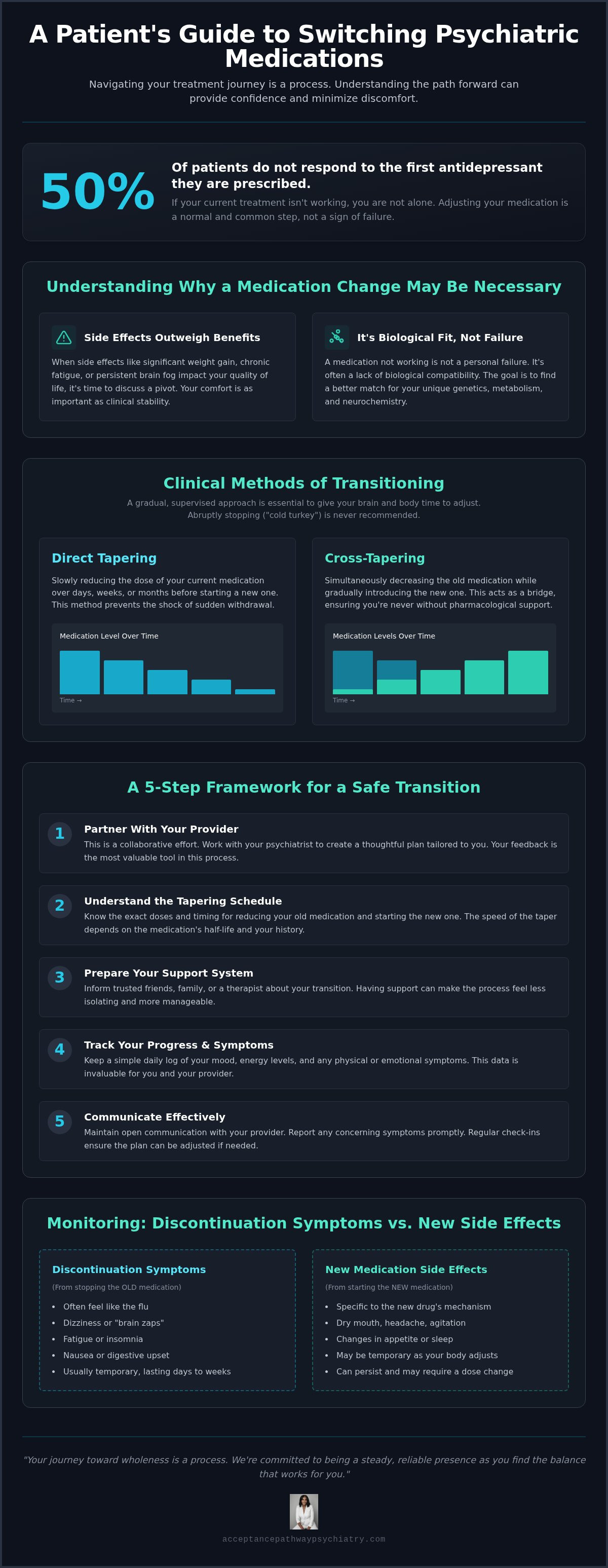
Did you know that approximately 50% of patients don't respond to the first antidepressant they're prescribed? If you're feeling like a failure because your current treatment hasn't provided the relief you expected, please know you aren't alone. It's completely normal to feel anxious about the transition, especially when you're worried about withdrawal symptoms or the possibility of your original symptoms returning during a gap in care. You deserve a clear, supportive path forward when switching psychiatric medications safely.
We're here to help you understand the clinical methods and safety protocols that make these transitions manageable. By reading this guide, you'll learn exactly how to navigate tapering and transitions with minimal discomfort and maximum confidence. We will walk through the collaborative steps of building a partnership with your psychiatrist, the specifics of tapering schedules, and the practical tools you can use to track your progress every step of the way. Your journey toward wholeness is a process, and we're committed to being a steady, reliable presence as you find the balance that works for you.
Key Takeaways
- Understand why adjusting your treatment is a normal step in your personal evolution rather than a sign of failure.
- Discover the clinical differences between tapering and cross-tapering to ensure you're switching psychiatric medications safely.
- Learn a 5-step framework for preparing your environment and support system for a predictable, calm transition.
- Identify how to distinguish between temporary discontinuation symptoms and the internal effects of a new medication.
- Gain practical tools to track your progress and communicate effectively with your provider during the monitoring phase.
Understanding Why a Medication Change May Be Necessary
Finding the right therapeutic fit isn't always a one-step process. In fact, it's a common part of the journey toward mental wellness. Many people feel a sense of frustration or even shame when their first prescription doesn't deliver the results they hoped for. It's vital to understand that a change in your treatment plan isn't a setback; it's a strategic pivot. The ultimate goal of modern care is precision psychiatry. This approach focuses on identifying the most effective dose of a medication that carries the lightest possible burden on your daily life.
When your quality of life begins to suffer because of your treatment, "staying the course" can actually be counterproductive. You might find that your progress has plateaued, or perhaps new health developments mean your current medication is no longer the safest choice. In these moments, the process of switching psychiatric medications safely becomes a collaborative effort between you and your provider. It requires a thoughtful plan, often involving Tapering (medicine), to ensure your brain and body have time to adjust to a new chemical environment. We view this transition as an evolution of your care rather than a restart.
When Side Effects Outweigh the Benefits
There is a significant difference between a "nuisance" side effect and one that is truly intolerable. A nuisance might be a slightly dry mouth that you can manage by staying hydrated. However, intolerable side effects like significant weight gain, chronic fatigue, or persistent brain fog can fundamentally alter how you experience your world. These burdens often lead to people stopping their medication entirely without guidance, which is risky. Your feedback is the most valuable tool we have in this process. If a medication makes you feel like a shell of yourself, it's time to discuss a pivot. We prioritize your comfort as much as your clinical stability.
The Concept of Therapeutic Failure vs. Biological Fit
We should stop using the word "failure" when a medication doesn't work. It isn't a personal failure, and it isn't even necessarily a failure of the drug itself. Instead, it's often a lack of biological compatibility. Our genetics and metabolism dictate how we process specific molecules. Some people clear medications too quickly, while others are highly sensitive to even small doses. Biological fit is the intersection of a drug's specific mechanism and your unique neurochemistry. Reframing the conversation this way allows us to look for a better match with curiosity rather than defeat. When switching psychiatric medications safely, we use this understanding to move closer to a solution that respects your body's unique needs.
The Clinical Methods of Transitioning: Tapering and Cross-Tapering
Stopping a medication abruptly, often called going "cold turkey," is never recommended in psychiatric care. Your brain is an incredibly adaptive organ. When you take a medication long-term, your neural pathways and neurotransmitter receptors adjust to its presence. Removing that support suddenly can cause a significant shock to your nervous system. This is why switching psychiatric medications safely requires a methodical, clinical approach that respects your internal biology and gives your brain time to recalibrate.
Why Tapering is Non-Negotiable
Tapering is the process of slowly reducing your dose over days, weeks, or sometimes months. This gradual reduction is essential because of neuroplasticity. When a medication is present, your brain may decrease the number of available receptors for certain chemicals, a process called downregulation. If the medication disappears overnight, your brain is left with too few receptors to handle its natural chemical signals. This often leads to "rebound" symptoms, where the original anxiety or depression returns with more intensity than before. The speed of your taper depends largely on the medication's half-life. Clinical research on Switching and stopping antidepressants shows that a slow, supervised reduction is the most effective way to prevent withdrawal discomfort and maintain emotional stability.
The Benefits of Cross-Tapering
Cross-tapering is a sophisticated method where you introduce a new medication while simultaneously decreasing the old one. It acts as a bridge between two different chemical supports. This technique is designed to maintain a "therapeutic floor," ensuring your brain is never left without any pharmacological support. By overlapping the two treatments, we can minimize the "gap" where symptoms might otherwise spike. It's a way to keep you grounded while your system transitions to a new molecule. This method is often preferred when a patient is currently in a vulnerable state and cannot risk a period without active treatment.
While most transitions require these gradual steps, direct swaps are possible in rare cases. A direct swap involves stopping one medication one day and starting another the next. This usually only occurs when medications are in the same class and have nearly identical chemical structures. Because every individual's metabolism is unique, professional oversight remains the most important safety factor. Partnering with a specialist for consistent medication management ensures that your vitals and mood are monitored closely during this period. Switching psychiatric medications safely is a collaborative science. It's about finding the right pace for your body so you can move toward your wellness goals without unnecessary distress.
A 5-Step Framework for a Safe Medication Transition
While your provider brings clinical expertise to the table, you are the expert on your own internal experience. A successful transition isn't just about changing a prescription; it's a collaborative process that integrates your lifestyle, history, and goals. By following a structured framework, you can move through this change with a sense of order and predictability. This preparation turns an uncertain time into a manageable journey, ensuring that switching psychiatric medications safely remains the top priority for both you and your care team.
Step 1: The Pre-Switch Consultation
The foundation of any change is a thorough review of where you've been. During this initial meeting, we look at your full medication history to identify patterns in how you've reacted to previous treatments. We'll set clear, compassionate goals for what the new medication should achieve, whether that's better symptom control or fewer side effects. We will discuss your psychiatric medication management plan in detail so you know exactly what to expect in the coming weeks. This transparency helps lower anxiety and builds a mutual partnership from the start.
Step 2: Designing Your Custom Taper Schedule
There's no such thing as a "one size fits all" schedule in mental health care. Your brain's needs are unique, and your taper must reflect that. We factor in your current work demands, family stressors, and even upcoming travel to ensure the timing is right. Your provider will choose from various switching strategies for antidepressants or other medications based on your specific neurochemistry. This step defines the exact dosage increments you'll follow, providing a clear roadmap for your body to adjust slowly and safely.
Step 3: Establishing a Symptom Baseline
To know where you're going, you need to know exactly where you are. We recommend using a mood journal or a tracking app for at least a week before the transition begins. This data creates an objective baseline of your current state. You'll work with your provider to identify "red flag" symptoms that require immediate contact. By sharing these baselines, you give your care team the tools to make real-time adjustments if you experience unexpected discomfort.
The final stages of the framework ensure long-term stability:
- Step 4: Active Transition and Monitoring. This is the phase where consistency is key. Regular check-ins via telehealth or in-person visits allow us to monitor your vitals and emotional state as the new medication takes effect.
- Step 5: Post-Transition Review. Once you've reached your target dose, we evaluate the results together. We'll determine if the new "biological fit" is meeting the goals we set in Step 1 and make any final refinements to your wellness plan.
Effective communication is what prevents minor side effects from becoming major hurdles. When switching psychiatric medications safely, you are never walking the path alone. Every step is designed to keep you grounded and supported as you move toward a more balanced life.
Monitoring Your Progress and Managing Potential Side Effects
The days and weeks following a change in your treatment plan are often the most sensitive. You might feel hyper-aware of every physical sensation, wondering if what you're feeling is a sign of progress or a cause for concern. Monitoring these shifts is a core part of switching psychiatric medications safely, as it allows your provider to distinguish between temporary adjustment periods and the need for a dosage change. This phase requires patience, but it's also a time where your body is doing the important work of finding a new equilibrium.
Discontinuation Syndrome vs. New Side Effects
It can be confusing to tell whether a symptom is caused by the medication you're leaving or the one you're starting. Discontinuation syndrome, often called withdrawal, occurs when your body misses the old chemical support. Common signs include dizziness, "brain zaps" (brief, electric-shock sensations in the head), irritability, or flu-like body aches. In contrast, new medication side effects often involve digestive changes like nausea or shifts in your energy levels. Timing is often the best clue. Withdrawal symptoms typically peak within the first few days of a dose reduction, while new side effects usually emerge shortly after you take the new pill.
We generally encourage patients to stay the course through "nuisance" side effects, such as a slightly dry mouth or mild fatigue, as these often fade within two weeks. However, you should never feel like you have to suffer in silence. If you experience a significant spike in anxiety, suicidal thoughts, or physical distress that prevents you from functioning, it's time to call your psychiatrist. Your safety is our highest priority, and we can always adjust the speed of your transition to make it more comfortable.
The Integrative Support System
While medication addresses the biological side of your wellness, your lifestyle and environment provide the foundation for success. During a transition, your nervous system is extra sensitive. Prioritizing consistent sleep, deep hydration, and nutrient-dense meals can help stabilize your mood. Integrative wellness acts as a supportive framework that complements pharmacological changes by addressing your health from multiple angles. This might include using mindfulness techniques to manage a temporary spike in anxiety or adjusting your daily routine to reduce unnecessary stressors.
Beyond physical habits, psychotherapy serves as a critical safety net during this time. A therapist can help you navigate the emotional "noise" that sometimes accompanies a chemical shift, helping you differentiate between a true relapse of symptoms and the temporary turbulence of a medication switch. If you feel unsteady during your transition, we're here to provide the consistent monitoring you need. Contact our team today to ensure your monitoring plan is as supportive as possible.
Partnering with a Medication Management Expert for Stability
A safe medication switch requires more than just a new script. It requires a witness to your journey. While we've discussed the clinical protocols and monitoring strategies in previous sections, the human element remains the most vital factor in your success. You deserve a provider who sees you as a whole person rather than a set of symptoms. A compassionate, non-judgmental expert prioritizes your safety while validating the vulnerability you feel during this time of change. This partnership provides the quiet strength you need when your internal environment feels unsteady.
Telehealth appointments have revolutionized how we support patients during these sensitive windows. When you're in the middle of a taper, waiting weeks for a follow-up isn't practical. Telehealth allows for frequent, low-pressure check-ins from the comfort of your own home. This flexibility ensures that we can catch minor issues before they become crises, providing the consistent presence necessary for switching psychiatric medications safely. It's about maintaining a steady, reliable connection that mirrors the therapeutic pace of your healing.
The Acceptance Pathway Approach
Our practice is built on the foundation of collaborative expertise. We don't dictate your care; we partner with you to find the path that feels right for your biology and your lifestyle. We use a methodical, steady pace to ensure you feel grounded throughout every phase of your personal evolution. The trust required for this partnership begins during your first medication management appointment. In this session, we listen to your story, address your fears about withdrawal, and begin co-creating a transition plan that respects your unique neurochemistry.
Your Next Steps Toward Healing
Please don't feel like you have to settle for "good enough" if your current medication isn't truly helping you thrive. Feeling like a failure because a molecule didn't match your body is a burden you don't have to carry. If you're experiencing intolerable side effects or a plateau in your progress, it's time to initiate a conversation about a pivot. Switching psychiatric medications safely is a standard part of high-quality mental health care, and we're here to guide you through it with clinical precision and deep empathy.
Your journey toward wholeness is ongoing, and a medication change can be the catalyst for the next stage of your healing. You have the tools, the framework, and the right to seek a better quality of life. Schedule a consultation to discuss your medication management needs and take the first step toward a more balanced, vibrant future.
Embracing Your Journey Toward Wholeness
Transitioning to a new treatment plan is a significant step in your personal evolution. It isn't a sign of failure; it's a proactive choice to find a biological fit that truly supports your life. You now have a clearer understanding of how methodical tapering and proactive symptom monitoring create a stable environment for change. By focusing on precision and partnership, you can move through this sensitive phase with confidence and peace of mind. Our team is here to provide the clinical expertise and deep empathy required for switching psychiatric medications safely, ensuring you never have to walk this path alone.
We offer expert psychiatric evaluations and flexible telehealth or in-person appointments to fit your unique lifestyle. Our goal is to be a steady, reliable presence while you find the balance you deserve. Take the first step toward a more effective treatment plan with our compassionate medication management services. You are worthy of a life that feels vibrant and manageable, and we're honored to witness your progress toward healing.
Frequently Asked Questions
Is it safe to switch psychiatric medications while pregnant or breastfeeding?
Yes, switching medications during pregnancy or breastfeeding is possible and often necessary to maintain the parent's emotional stability. We perform a careful risk-benefit analysis to select the safest options for both you and your baby. This process requires close coordination with your obstetrician to ensure a supportive, healthy environment throughout your journey.
What are 'brain zaps' and are they dangerous during a medication switch?
Brain zaps are brief sensations that feel like a mild electric shock in the head, and they aren't physically dangerous. While they can be unsettling, they're a common sign that your nervous system is adjusting to a chemical change. Understanding these sensations is a key part of switching psychiatric medications safely, as it helps reduce the anxiety that often accompanies a taper.
How long does it typically take to complete a cross-tapering schedule?
A cross-tapering schedule typically lasts between two and four weeks, though the exact timing depends on your unique neurochemistry. Some medications with longer half-lives may require a more patient approach to prevent withdrawal discomfort. Your provider will design a specific timeline that balances your need for relief with the necessity of a gradual, safe transition.
Can I switch from a brand-name medication to a generic version safely?
You can usually switch from a brand-name medication to a generic version with a high degree of safety. The FDA requires generic drugs to have the same active ingredients and strength as their brand-name counterparts. While most people don't notice a difference, some individuals with high sensitivity may experience minor shifts in how they feel during the transition.
What should I do if my symptoms get significantly worse during a switch?
If your symptoms get significantly worse, you should reach out to your psychiatrist immediately rather than waiting for your next scheduled appointment. We can adjust your taper speed or the timing of your new dose to provide more stability. Clear, real-time communication ensures that we can pivot your plan to keep you grounded and safe.
Will I have to take time off work while switching my mental health meds?
Most people don't need to take extended time off work, though planning a dose change for a Friday can provide a quiet weekend for adjustment. If your job requires high levels of concentration or physical safety, we can discuss a more conservative schedule. Our goal is to ensure your treatment supports your daily life rather than disrupting it.
How often should I see my psychiatrist during the transition period?
You'll likely see your psychiatrist more frequently during a transition, often every one to two weeks. These check-ins allow us to monitor your progress and make small, precise adjustments to your plan. Telehealth appointments make these frequent touchpoints much more accessible, allowing you to stay connected with your care team without the stress of travel.
Can cognitive testing help determine which medication is right for me?
Creyos cognitive testing is primarily used to assess ADHD and cognitive function rather than determining specific medication switches for mood disorders. While it provides valuable data about your brain's processing speed and memory, it isn't a direct tool for predicting which antidepressant will be the best biological fit. We use it as part of a broader, integrative assessment of your overall mental health.


