

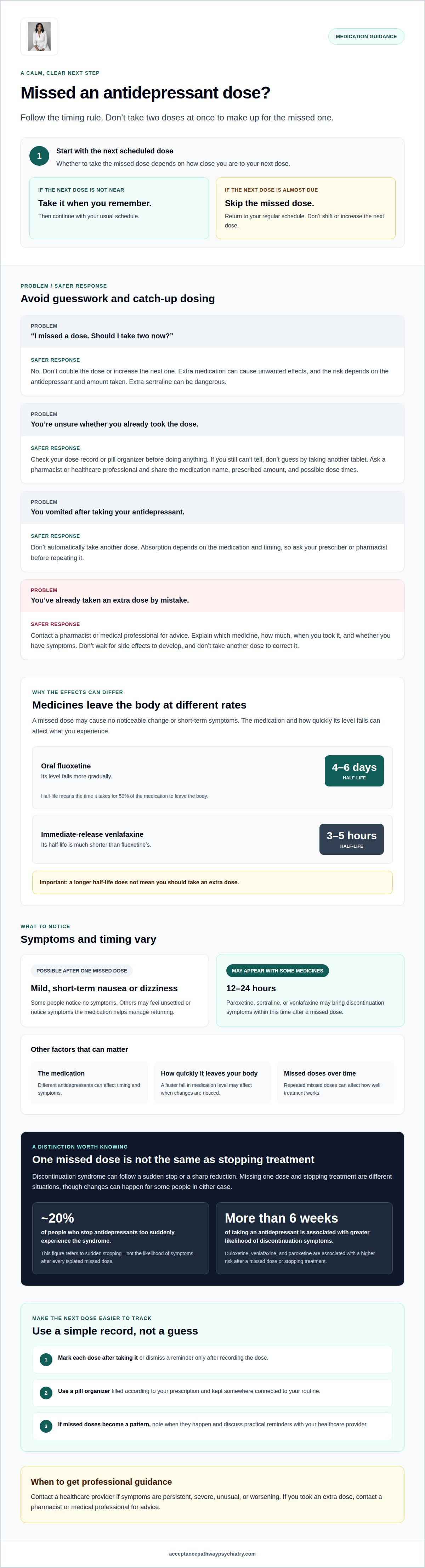
A missed antidepressant dose calls for a steady next step, not a catch-up dose. If you’re wondering what to do when you miss a dose of antidepressants, take it when you remember unless it’s almost time for your next dose. Then skip it and return to your usual schedule. Don’t take two doses at once to make up for the missed one.
It’s understandable to worry about what one missed dose might mean. Some people notice short-term symptoms, while others feel no change. The effects can depend on the medication and how long it stays in your body. If you’ve taken an extra dose by mistake, or have persistent, severe, unusual, or worsening symptoms, contact a healthcare provider for guidance.
This article explains what a missed dose may mean, why doubling up can be risky, and what discontinuation symptoms may feel like. You’ll also learn when to reach out for support, especially if missed doses are becoming a pattern.
Key Takeaways
- The effect of a missed dose can vary with the antidepressant and how long it stays in your body.
- Some medications may bring on discontinuation symptoms sooner than others, so notice and describe any changes you experience.
- Repeated missed doses can affect how well treatment works; patterns are worth discussing with your prescriber.
- Learn which symptoms call for prompt medical guidance and how medication management can help you build a steadier plan.
What Happens If I Miss a Day of My Antidepressants?
Missing a dose may cause no noticeable change, or it may bring short-term symptoms. What happens depends partly on the medication and how quickly its level falls in your body.
When to Skip a Missed Dose
Usually, take a missed dose when you remember, unless it’s almost time for your next dose. In that case, skip the missed dose and return to your regular schedule. This helps avoid taking doses too close together. For example, if you remember shortly before your next scheduled dose, leave the missed tablet out rather than shifting or increasing your next dose.
Oral Fluoxetine Missed-Dose Guidance
For oral fluoxetine, follow the general timing rule: take a missed dose when remembered unless the next dose is near. Fluoxetine has a half-life of 4-6 days, meaning it takes that long for 50% of the medication to leave the body. Its level falls more gradually than that of immediate-release venlafaxine, whose half-life can be three to five hours. A longer half-life doesn’t mean you should take an extra dose.
Symptoms and Factors After a Missed Dose
Possible effects after one missed dose include mild, short-term nausea or dizziness, though some people notice no symptoms. The medication matters: paroxetine, sertraline, or venlafaxine may bring discontinuation symptoms within 12 to 24 hours after a missed dose. The number of missed doses and how quickly the medication leaves your body also affect what you may experience.
You might also feel unsettled or notice a return of symptoms the medication helps manage. These effects don’t automatically mean the treatment has stopped working. Still, regularly missing doses can reduce how well an antidepressant works. If missed doses become a pattern, note when they happen and discuss practical reminders with your healthcare provider.
If you vomit after taking an antidepressant, don’t automatically take another dose. Absorption depends on the medication and timing, so contact your prescriber or pharmacist for instructions before repeating it.
For additional resources or help connecting with mental health services in the United States, call SAMHSA’s National Helpline at 1-800-662-4357, according to the Substance Abuse and Mental Health Services Administration.
Why not to double a dose
Taking two antidepressant doses together to make up for a missed dose isn’t recommended. Don’t adjust the amount on your own: an extra dose can be dangerous with medicines such as sertraline.
Risks of Taking a Double Dose
A double dose means taking extra medication to replace a missed dose instead of following the prescribed schedule. This matters because the extra medicine can cause unwanted effects, and the risk depends on the antidepressant and the amount taken. Taking extra sertraline can be dangerous. Don’t use changes in depression symptoms, dizziness, or a meal as reasons to take more.
Antidepressants differ, so a rule that applies to one medicine may not apply to another. The name on the prescription, its directions, and the time each dose was taken are important details when you seek advice. Don’t try to make up for a missed dose by increasing the next one, splitting tablets, or changing the timing without instructions. Adjustments can make it harder to know how much you’ve taken.
Ways to Avoid Double Doses
A simple record can help you avoid uncertainty about whether you’ve taken your medication. Mark each dose after taking it, or set a reminder that you dismiss only after recording the dose. If you use a pill organizer, fill it according to your prescription and keep it somewhere tied to your routine, such as beside an item you use at breakfast.
Before taking a dose when you’re unsure, pause and check your record or organizer. If you still can’t tell whether you took it, don’t guess by taking another tablet. Contact your pharmacist or healthcare professional and share the antidepressant’s name, prescribed amount, and the times you may have taken it. Clear details help them advise you about your specific medication, rather than relying on assumptions about another drug or dose.
If you’ve already taken an extra dose, contact a pharmacist or medical professional for advice. Explain which medicine you took, how much, when you took it, and whether you’ve noticed symptoms. Take the possibility seriously if it was sertraline, because an extra dose can be dangerous. Don’t wait for dizziness or other side effects to develop before seeking guidance, and don’t take another dose to try to correct the situation.
Medication questions can also be discussed as part of support with medication concerns, especially if uncertainty about doses keeps recurring. The goal is a clear routine that follows your prescription, not increasing, skipping, or combining doses to compensate. A consistent record can also help you explain what happened if you need professional advice.
What is discontinuation syndrome?
Antidepressant discontinuation syndrome can follow a sudden stop or a sharp reduction in medication. Recognizing its timing and symptoms can help distinguish a medication change from other concerns.
Antidepressants Linked to Discontinuation Symptoms
Duloxetine, venlafaxine, and paroxetine are associated with a higher risk of withdrawal symptoms after a missed dose or stopping treatment. The medicine’s half-life, how long you’ve taken it, and whether you’ve missed doses repeatedly all affect the likelihood of symptoms. For example, symptoms can appear within hours after a missed dose of a short-acting medication.
Discontinuation symptoms are more likely when someone has taken an antidepressant for more than six weeks. About 20% of people who stop antidepressants too suddenly experience the syndrome. That figure describes sudden stopping, not the likelihood of symptoms after every isolated missed dose. Missing one dose and stopping treatment altogether are different situations, although both can lead to changes for some people.
Symptoms of Discontinuation Syndrome
Symptoms may include nausea, dizziness, and unusual or worsening flu-like feelings. They can begin within two to four days after stopping, though symptoms from a short-acting medication may appear sooner. Timing alone cannot identify the cause, so note when symptoms began and whether they followed a missed dose or a change in treatment.
For many people, discontinuation symptoms are mild and resolve within one to two weeks, though they may last from a week to a couple of months depending on the person and circumstances. After restarting an antidepressant, symptoms usually go away within a few days. These patterns vary, so contact a healthcare professional about persistent, severe, or worsening symptoms.
Discontinuation syndrome does not mean a person is addicted to antidepressants. It refers to symptoms that can happen when medication is stopped suddenly or reduced, not evidence of addiction. Feeling unwell after a dose change can still be distressing, and it’s reasonable to discuss symptoms openly. A prescriber can consider the medication, treatment duration, missed-dose pattern, and symptom timing when planning next steps.
Stopping antidepressants abruptly can cause symptoms, while a gradual change allows the body time to adjust. If you’re considering stopping, talk with a healthcare professional about a tapering plan rather than making the change suddenly. Record the medication, recent dose changes, and symptoms such as nausea or dizziness. Those details make the conversation more specific and help support a plan suited to your treatment.
What to do after missing a dose
Knowing what to do when you miss a dose of antidepressants starts with the instructions for your specific medication. Don’t take extra doses to make up for missed ones. The right next step depends on when you remember and when your next dose is due.
Steps After a Missed Dose
Check the medication’s written directions, then follow the missed-dose guidance for that prescription. If you remember close to the next dose, skip the missed one and return to your regular schedule. For example, note when you remembered and when your next dose is scheduled before deciding what to do. This clarifies the timing and helps avoid taking doses too close together.
If the directions don’t explain your situation, contact your pharmacist or prescriber before changing the dosage. Share the medication name, prescribed amount, when you last took it, and when you noticed the missed dose. These details help them give advice for your prescription, rather than relying on instructions for another antidepressant.
Afterward, use a simple reminder or dose log to record your next scheduled dose. A calendar entry or phone alert can make it easier to see whether you’ve already taken medication, particularly when your daily routine changes.
Missing Antidepressants for One Day
Missing a dose of antidepressants may cause no noticeable change, but some people experience symptoms. The effect depends partly on the medication and how quickly its level falls in the body. A missed dose of a short-acting antidepressant may bring discontinuation symptoms sooner than one of a medication that stays in the body longer.
Possible symptoms include nausea or dizziness, though one missed day doesn’t mean everyone will experience withdrawal. For paroxetine, sertraline, or venlafaxine, discontinuation symptoms may occur within 12 to 24 hours after a missed dose. Record when symptoms begin and whether they change, so you can describe the pattern accurately if you seek guidance.
Handling Multiple Missed Doses
Missing more than one dose, or repeatedly missing doses over a short period, can lead to effects of sudden withdrawal. Don’t take several doses together or choose a new restart amount yourself. Contact your prescriber and explain how many doses you missed, your prescribed dosage, and when you last took the medication.
If you’re unsure what to do when you miss a dose of antidepressants after missing several doses, share those details with your prescriber before changing your routine. Regularly missing medication can also reduce how well it works. If remembering is difficult, ask about strategies that fit your day, such as reminders or a dose log.
If you’re considering stopping treatment, discuss gradual dose reduction with a healthcare professional instead of stopping abruptly. The medication and your circumstances matter when planning a safe change. Be open about missed doses, symptoms, or concerns. That information helps shape a clear next step.
When to contact a healthcare provider
Contact a healthcare provider if missed doses lead to persistent or severe withdrawal symptoms, or unusual, worsening flu-like symptoms. Details about the medication, missed doses, and changes you notice can help your doctor assess what support may be appropriate.
Reach out promptly if symptoms are unusual or getting worse after a missed antidepressant dose. For example, worsening flu-like symptoms or severe dizziness warrant a conversation with a healthcare professional. Discontinuation syndrome can resemble other health concerns, so describe when symptoms began and whether you recently missed doses, changed your dosage, or stopped taking the medication.
Contact your prescriber or pharmacist if you’ve taken an extra dose by mistake. Share the medication name, amount, and time taken, along with any symptoms. This information matters because antidepressants differ, including selective serotonin reuptake inhibitors (SSRIs), and advice depends on the specific medicine and situation. Don’t take another dose to correct an extra one without instructions.
Repeatedly forgetting medication is also a good reason to ask your doctor for support. They can discuss strategies that fit your routine, such as reminders or a dose log. If the prescribed schedule is hard to follow, explain what gets in the way, whether it’s a changing workday, difficulty remembering, or uncertainty about when you last took a dose.
Prepare a short record before contacting a healthcare professional. Include:
- The antidepressant name and prescribed dosage.
- When you last took it and how many doses you missed.
- When symptoms began and whether they are improving or worsening.
- Any extra dose or recent change to your medication routine.
These details help focus the conversation on your immediate concern. A missed dose, repeated interruptions, and symptoms after stopping treatment may call for different next steps. If you’re considering stopping an antidepressant, discuss a gradual plan rather than making sudden changes. Your doctor can consider the medication, the pattern of missed doses, and your symptoms together.
If you’re in the United States and experiencing suicidal thoughts or a mental health crisis, call or text 988. The 988 Suicide & Crisis Lifeline is available free, 24 hours a day. For additional resources or help connecting with mental health services, call SAMHSA’s National Helpline at 1-800-662-4357, according to the Substance Abuse and Mental Health Services Administration.
For ongoing questions about missed doses or your prescribed routine, get support with medication concerns and discuss a plan that fits your care.
Acceptance Pathway Psychiatry PLLC
Acceptance Pathway Psychiatry PLLC can help you discuss missed doses, medication concerns, and treatment goals through Medication Management. If keeping track of doses is difficult or you’re unsure how symptoms relate to your medication, a conversation can clarify your questions and support a consistent treatment plan.
Psychotherapy can also provide space to explore how depression, anxiety, or other concerns affect daily life alongside medication treatment. You don’t need to have every detail figured out before asking for support. Bring your questions and share what you’ve noticed about missed doses or symptoms.
Contact Acceptance Pathway Psychiatry PLLC to discuss support for your mental health care.
Make your next step a supported one
Knowing what to do when you miss a dose of antidepressants can make an uncertain moment easier to handle. You can also use the experience to identify support that could help you stay consistent with your care, such as a medication routine that fits your day or space to talk through treatment concerns.
Acceptance Pathway Psychiatry PLLC offers Medication Management and Psychotherapy, along with Creyos Cognitive Testing. These services can be part of a broader conversation about your mental health needs and the questions you want to raise. You don’t need to have everything figured out before asking for support.
Contact Acceptance Pathway Psychiatry PLLC to discuss your care and possible next steps. You deserve thoughtful support as you move forward.
Frequently Asked Questions
How long do these symptoms last?
Discontinuation symptoms often ease within one to two weeks, though some people experience them for a week to a couple of months. After restarting an antidepressant, symptoms usually go away within a few days. Keep track of when symptoms began and whether they’re changing. Persistent, severe, or worsening symptoms are reasons to contact a healthcare professional, especially after a medication change or repeated missed doses.
What Should I Do if I Forgot to Take My Antidepressant?
Use your medication’s instructions to decide whether to take the forgotten dose or skip it. If you remember close to the next scheduled dose, leave the missed dose out and resume your usual timing. For example, write down when you last took the medication before deciding what to do. If the directions don’t make the next step clear, contact your pharmacist or prescriber rather than guessing.
What can you do if you’re having antidepressant withdrawal symptoms?
Contact your healthcare professional if withdrawal symptoms are severe, persistent, or getting worse. Share the medication name, when you last took it, any recent dose changes, and when symptoms began. Nausea or dizziness after a missed dose can be useful details to mention. Don’t stop, restart, or change your prescribed amount to manage symptoms without professional guidance. The appropriate next step depends on the medication and your treatment history.
What should you do if you miss a dose of an antidepressant?
Follow the missed-dose directions for your specific medication, and don’t take an extra dose to compensate. If you miss more than one dose, contact your prescriber with the medication name, prescribed amount, and dates or times missed. That information helps clarify what to do next. If missed doses keep happening, ask about practical ways to remember, such as a medication log or a daily reminder.
Should you take a missed antidepressant dose as soon as you remember or skip it?
Take the missed dose when you remember unless it’s almost time for your next dose. In that case, skip it. Timing matters because taking doses too close together can increase the amount of medication taken within a short period. Check your medication’s written directions, since advice should match the specific antidepressant. A note of when you remembered can help you follow the schedule consistently afterward.
What should you do if it is almost time for your next antidepressant dose?
Skip the missed dose and take your next dose at its regular time. Don’t move the schedule to fit in both doses, and don’t take them together. For example, if you notice the missed tablet shortly before your usual evening dose, leave the earlier one out. If you’re unsure whether the next dose is near, check the medication instructions or ask a pharmacist before taking extra medication.
Should you double an antidepressant dose after missing one?
No. Don’t take two doses at once to make up for a missed antidepressant dose. An extra dose of sertraline can be dangerous, and risks vary by medication. If you’ve already taken extra medication, contact a pharmacist or medical professional and explain the drug, amount, and timing. Don’t take more until you receive advice about your next scheduled dose.
What are the risks of missing a dose of SSRIs, SNRIs, or other antidepressants?
Risks vary with the medication, how long it stays in the body, and whether doses are missed repeatedly. Paroxetine, sertraline, and venlafaxine may cause discontinuation symptoms within 12 to 24 hours after a missed dose. Symptoms can include nausea or dizziness, while recurring missed doses can reduce how well treatment works. Fluoxetine leaves the body more gradually, but that doesn’t make doubling a dose appropriate.


