

Being afraid of psychiatric medication doesn’t mean you’re being unreasonable. Fear may come from concerns about side effects, dependence, sexual changes, or feeling unlike yourself. Overcoming fear of psychiatric medication can begin by identifying what worries you and discussing potential benefits and risks with a prescriber before deciding what to do.
It’s understandable to want relief and still feel cautious about medication. Psychiatric medications can cause side effects, and the possibilities depend on the medication and your individual circumstances. You don’t have to dismiss your concerns or decide before you feel ready to have a thoughtful conversation.
This article explores why medication can feel frightening and how therapy may help you work through those concerns. You’ll also learn what to consider when thinking about antidepressants, possible side effects, and fears that medication could change your personality. The aim is to help you approach the decision with greater clarity, at a pace that feels manageable.
Key Takeaways
- Identify which part of taking medication feels most unsettling so you can bring a specific concern into a conversation with a prescriber.
- Therapy can offer space to explore medication fears and consider treatment options at a pace that feels manageable.
- Ask how a proposed medication may fit your goals, health history, and concerns about side effects or changes in how you feel.
- Notice changes in mood, sleep, appetite, energy, or side effects to help inform conversations about treatment.
- Feeling cautious doesn’t mean you have to make a decision based on fear; understanding your options can help you choose a path aligned with your values.
Why do I have a fear of taking medication or pills?
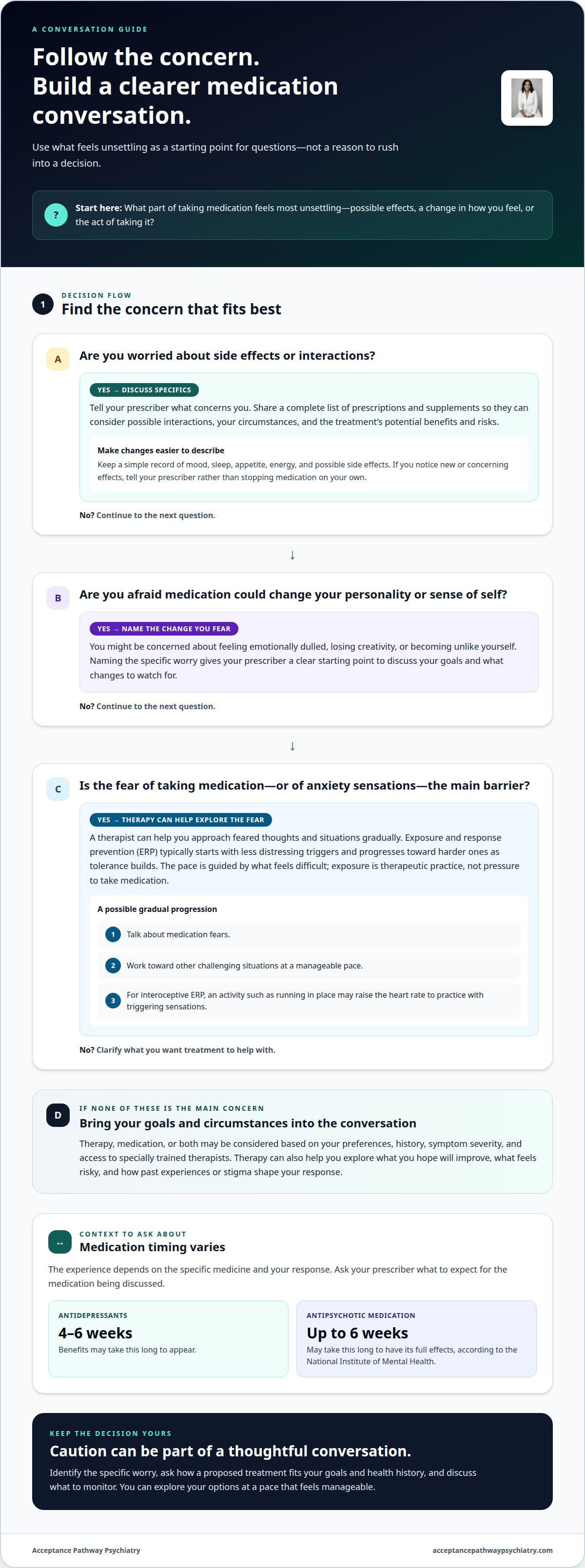
Fear often centers on what medication might change: physical comfort, mood, sexual health, or a sense of control. Learning about possible side effects and interactions can make the decision more specific and give you useful questions to discuss with a prescriber.
Side-Effect Concerns and Interactions
Side-effect concerns are worries about unwanted changes that may occur while taking medication. Psychiatric medications can cause effects ranging from mild to severe, and some can affect sexual health. The possibility can feel especially alarming when anxiety makes you closely monitor yourself for signs that something is wrong.
Interactions matter, too. Other prescriptions and supplements can affect how a psychiatric medication works or increase unwanted effects. Even a supplement you consider routine may be relevant when discussing a new prescription. Share a complete list of medications and supplements with your prescriber so they can consider your health circumstances and the treatment’s potential benefits and risks.
When starting an antidepressant, antipsychotic, mood stabilizer, or anxiety medication, expect the experience to depend on the specific medicine and your response. Antidepressant benefits may take 4-6 weeks to appear, while the National Institute of Mental Health says antipsychotic medication may take up to 6 weeks to have its full effects.
Discussing and Tracking Side Effects
Discussing and tracking side effects means telling your prescriber what concerns you and noting changes as they happen. A simple record of mood, sleep, appetite, energy, and possible side effects can make changes easier to describe. For example, noting when your sleep changed gives the conversation more detail than trying to recall the whole week.
If you notice new or concerning effects, tell your prescriber rather than stopping medication on your own. Mention other prescriptions and supplements, too, since interactions can matter. Keeping a record of symptoms can help distinguish a possible side effect from a change in the underlying condition, supporting a more informed conversation about what to do next.
Some concerns focus less on a physical symptom and more on identity. You may worry about feeling emotionally dulled, losing creativity, or becoming unlike yourself. Naming the specific fear, such as “I’m concerned this could affect my personality,” gives your prescriber a clear starting point to discuss your goals and what changes to watch for.
Can therapy help before starting medication?
Yes. Therapy can give you space to explore concerns about medication, understand anxiety, and consider treatment choices before deciding what feels right. For panic attacks and panic disorder, psychotherapy is an effective first-choice treatment. Medication, therapy, or both may be considered based on your preferences, history, symptom severity, and access to specially trained therapists. For some people, overcoming fear of psychiatric medication starts with understanding what they’re afraid of losing or protecting.
Working With Fear Gradually
Pharmacophobia means fear of taking medication. Exposure and response prevention (ERP) can help people approach feared thoughts and situations gradually rather than avoid them entirely. A therapist typically starts with less distressing triggers and progresses toward harder ones as the person builds tolerance.
For example, ERP might begin with talking about medication fears, then move toward other challenging situations. Interoceptive ERP may use an activity such as running in place to raise the heart rate. This can help someone become more familiar with physical sensations that trigger anxiety. The therapist supports the person in facing those sensations without responding through avoidance or compulsions. The pace is guided by what feels difficult, so exposure is therapeutic practice, not pressure to take medication.
Therapy, Medication, and Daily Supports
Cognitive behavioral therapy (CBT) helps people learn through experience that panic symptoms are not dangerous. A therapist might help someone notice a racing heart, examine the fear attached to it, and practice responding differently. Therapy can also help identify situations associated with anxiety and develop practical steps, such as returning to an activity that fear has narrowed.
Starting with therapy can be a useful way to explore concerns without treating medication as an automatic next step. Counseling may help clarify what you hope will improve, what feels risky, and how stigma or past experiences shape your response. If your needs change, these conversations can also help you consider whether medication management could be part of your care.
Medication and therapy can be combined when that approach fits a person’s circumstances and preferences. For example, therapy may help build skills while medication is considered for symptoms affecting daily functioning. Mindfulness and meditation are other non-medication practices that can support calm and relaxation. These options can be discussed as parts of a plan, rather than competing choices.
Small, manageable steps can make the process less overwhelming. You might start by naming one specific fear in a counseling session, such as concern about losing control, then explore what information or support would help. Therapy may support overcoming fear of psychiatric medication by helping you face uncertainty and make room for questions without demanding an immediate decision. Psychotherapy offers a setting to examine these concerns and work toward a response that fits your needs.
There is no single treatment path that suits everyone. The decision between psychotherapy, medication, or a combination can reflect your history, treatment goals, symptom severity, and access to specialized therapy. A thoughtful conversation can help you weigh those factors and choose a next step that reflects your needs, not pressure from stigma or fear.
Will psychiatric medication change my personality?
Psychiatric medication is intended to reduce symptoms that interfere with daily functioning and emotional well-being, not change your identity. Still, concerns about feeling emotionally dulled, less creative, or unlike yourself deserve a clear conversation. A licensed psychiatric provider can consider your symptoms, treatment goals, and personal concerns when discussing whether medication may be helpful.
Fear can also affect whether someone takes a prescription as directed. The research cited in the topic reports that up to half of people don’t always take prescribed medication as directed. If worry makes taking medication feel difficult, tell your prescriber rather than quietly skipping doses. Naming the concern, such as “I’m worried I won’t feel like myself,” gives the conversation a specific place to begin.
Ask how the treatment plan will respond if your feelings or symptoms change. Medication management may involve starting at a low dose and increasing it slowly, with regular check-ins with a psychiatrist or nurse practitioner. You can discuss which changes matter to you, such as concentration, emotional range, or creativity, and how those observations can guide follow-up conversations.
Some people choose psychotherapy without medication, while others combine therapy with medication. Counseling can help you explore thoughts about identity, stigma, and treatment while working on symptoms that affect daily life. Regular workouts may help ease anxiety symptoms and can be discussed as one part of a broader treatment plan. These options can be part of a treatment discussion, not proof that one approach suits everyone.
To find affordable psychiatric care and medication in the United States, start by reviewing your health plan’s mental health and prescription benefits. Costs depend on your coverage, the medication, and the care arrangement. Ask about these factors before beginning treatment.
Stopping psychiatric medication suddenly can bring rebound or discontinuation symptoms with some medicines. Some medications need to be tapered gradually, so discuss any change with your prescriber and follow an agreed plan rather than stopping on your own.
Whether you’re taking medication now or still considering it, your questions belong in the treatment plan. Raise concerns about personality, side effects, or affordability during follow-up, and describe specific changes in mood, sleep, energy, or daily functioning. Those details help your mental health professional understand how treatment feels in your life and consider the next step with you.
Fear of antidepressants and other psychiatric medications
Fear can grow when medication feels unfamiliar or its possible effects seem hard to predict. Some people worry about emotional changes, dependence, or whether treatment will suit their needs. If your fear feels like a phobia, discussing the specific concern can help separate it from the broader symptoms of anxiety disorders. For example, you might fear feeling less like yourself or wonder how long treatment could last.
Antidepressants may take 4-6 weeks for benefits to appear, so improvement may not feel immediate. The time can feel difficult if you expect a quick change, but the reason for treatment and the symptoms being addressed matter when considering options. Antidepressants are described as an option for longer-term anxiety and fear relief, while benzodiazepines are generally prescribed for short-term use. Anxiety medication can provide temporary relief, but it isn’t a cure.
For panic disorder, the FDA-approved SSRIs listed are fluoxetine, paroxetine, and sertraline. Venlafaxine, also known as Effexor XR, is FDA approved for panic disorder as well. These names are examples, not personal recommendations. A prescriber considers the condition being treated, your goals, health history, and possible risks when discussing which medication may be appropriate.
Alprazolam and clonazepam are benzodiazepines approved by the FDA for panic disorder. They’re generally used short term because they can cause mental or physical dependence. They may also interact with other drugs and cause dangerous side effects. Benzodiazepines aren’t a good choice for people with a history of alcohol or drug use problems. Sharing that history and a full list of other drugs helps inform the discussion.
Some younger people starting antidepressants may experience a temporary increase in suicidal thoughts, making close follow-up important. If you’re beginning treatment, agree on how follow-up will happen and tell your prescriber about changes in thoughts or mood. This concern deserves direct attention, not silence or shame. A clear plan can make it easier to discuss what you notice and decide how to respond.
Some psychiatric medications also need gradual tapering to reduce the risk of rebound or discontinuation symptoms. Don’t stop or change medication suddenly on your own; discuss changes with the prescriber managing your treatment. A medication conversation can cover what benefits to look for, which effects to report, and how long to allow for a response. This information can help you make a considered choice without accepting every frightening prediction about treatment as fact.
Common fears about psychiatric medication
Medication fears often focus on specific changes: weight gain, dulled emotions, sexual dysfunction, dependence, or feeling like a “zombie.” These concerns can overlap, but each points to a different worry. For example, fear of emotional numbness may center on connection with loved ones, while weight concerns may relate to health or self-image. Naming the specific fear can make it easier to discuss.
- Weight gain: A patient may worry that changes in appetite or weight could affect health or confidence. Describe the concern clearly, including why that change would matter to you.
- Dulled emotions: Someone may fear feeling less joy, sadness, or connection. Explain which feelings you want treatment to help with and which parts of emotional life you want to preserve.
- Dependence: This concern can involve fear of needing medication indefinitely or difficulty stopping. Ask how treatment duration and any eventual medication change would be discussed.
- Sexual dysfunction: A person may fear changes in desire or sexual functioning. Bringing this concern into the treatment conversation gives it space alongside other symptoms and goals.
- Feeling like a “zombie”: This phrase may describe fear of feeling detached, slowed, or unlike yourself. Say what “not myself” means in your daily life, such as difficulty connecting or concentrating.
These fears deserve a specific conversation, rather than a general decision for or against every prescription. A medication’s possible effects and risks vary, and the relevant question is how they relate to your symptoms, health circumstances, and priorities. For example, someone worried about emotional blunting can explain which changes would interfere most with work, relationships, or daily routines.
Separate a feared possibility from an effect you’re experiencing now. If your concern comes from a friend’s story, describe what happened and what you fear it could mean for you. If you already notice a change after starting medication, record what changed and when. Those details make the concern concrete without assuming every patient will respond the same way.
An informed decision doesn’t require ignoring discomfort or believing medication is the only answer. It means weighing your concerns alongside symptoms or disorders that interfere with daily life and understanding how treatment choices relate to your goals. You can also discuss what follow-up would look like and which changes should prompt a conversation, especially if an effect feels severe.
If these concerns are making it hard to consider treatment, talk through your medication concerns in a supportive conversation. Naming the fear is a practical starting point for deciding what information and care may help.
Acceptance Pathway Psychiatry PLLC: Medication Management
Acceptance Pathway Psychiatry PLLC offers Medication Management to help you discuss treatment goals, concerns about medication, and possible next steps. If fear makes it difficult to consider medication, you can bring those concerns into a conversation rather than making the decision alone. The discussion can also include how Medication Management may fit alongside Individual Therapy, which offers space to explore emotional concerns and coping strategies.
Appointments are available in person and through telepsychiatry. Depending on your needs, Creyos Cognitive Testing and Integrative Wellness Services are also available. Telepsychiatry requires a reliable internet connection and a private space. A useful starting point is the concern affecting you now, whether that’s uncertainty about medication, questions about treatment, or a wish to explore therapy.
Contact Acceptance Pathway Psychiatry PLLC to discuss your concerns and consider a supportive next step.
Move Forward With a Conversation
You don’t need to resolve every concern before taking a next step. Begin by describing what feels most difficult, what you hope might change, and what you want to protect in your daily life. That conversation can turn a broad fear into questions that feel clearer and more manageable.
Overcoming fear of psychiatric medication doesn’t mean forcing yourself to take a prescription. It means having room to understand your choices and consider what fits your values. You can take time to reflect, bring up new concerns, and decide what you’re comfortable discussing next.
If you’re ready to talk through your concerns, contact Acceptance Pathway Psychiatry PLLC. A thoughtful conversation is a meaningful step, and you can approach it at a pace that feels right for you.
Frequently Asked Questions
How do I know if medication management is right for me?
Medication management may be worth discussing if symptoms are disrupting daily life or current support isn’t meeting your goals. Start by describing what feels hardest, what you’ve tried, and what you hope could change. Your health history, preferences, symptom severity, and concerns all matter when considering options. Medication management can include reviewing those factors and discussing whether medication belongs in your care plan.
How do I stop being scared of medication?
You may not be able to switch off fear instantly, but you can make it more specific and manageable. Write down the concern that feels strongest, such as fear of losing control or becoming dependent, and bring it into a conversation with a mental health professional. Therapy can help you explore the fear gradually. You can also ask for information in smaller steps instead of trying to resolve every concern at once.
Is anxiety medication right for you?
Anxiety medication may be an option if anxiety symptoms interfere with work, relationships, or daily tasks. Whether it fits depends on your symptoms, health history, treatment preferences, and the potential benefits and risks of a particular medication. Psychotherapy is another option, and some people consider therapy and medication together. A useful discussion starts with what anxiety prevents you from doing and what kind of change you hope treatment will support.
Is it normal to be afraid of psychiatric medication?
Yes, people can feel afraid or uncertain about psychiatric medication. Concerns may involve side effects, dependence, stigma, or feeling unlike yourself. Fear may be especially strong if you’ve had a difficult experience with medication before or heard a worrying story from someone close to you. You don’t need to hide these feelings during a treatment discussion. Naming one specific concern can make it easier to address directly.
What are common fears and misconceptions about psychiatric medications?
Common fears include weight gain, sexual changes, dulled emotions, dependence, and feeling like a “zombie.” One misconception is that every medication has the same effects for every patient. Possible effects differ by medication and personal circumstances, so another person’s experience doesn’t predict yours. Rather than treating a fear as certain, ask how it relates to the specific prescription being considered and which changes are worth discussing.
How can I talk to a psychiatrist or primary care doctor about fears of psychiatric medication?
Start with a direct statement, such as, “I’m interested in feeling better, but I’m worried about taking medication.” Then explain your main concern and mention any prescriptions or supplements you use. You can ask what the medication is intended to help, what effects to watch for, and how follow-up will work. If you’re unsure during the appointment, say so. Your questions help shape a more informed conversation.
How long do psychiatric medications take to work, and how is progress monitored?
The timeline varies by medication and treatment goal. Antidepressant benefits may take 4-6 weeks to appear; the National Institute of Mental Health says antipsychotic medication may take up to 6 weeks for full effects. Progress can be discussed through follow-up appointments and observations about symptoms and daily functioning. For a practical example, note whether sleep, concentration, or ability to complete usual activities changes over time.
What are the common side effects and serious risks of psychiatric medications?
Possible side effects range from mild to severe and vary across medications. Common concerns include sexual dysfunction, weight gain, or dulled emotions. Some medicines can interact with prescriptions or supplements, so share what you take with your prescriber. Younger people starting antidepressants may experience a temporary increase in suicidal thoughts, making close follow-up important. Report concerning changes promptly, and seek emergency help if you may be in immediate danger.


