

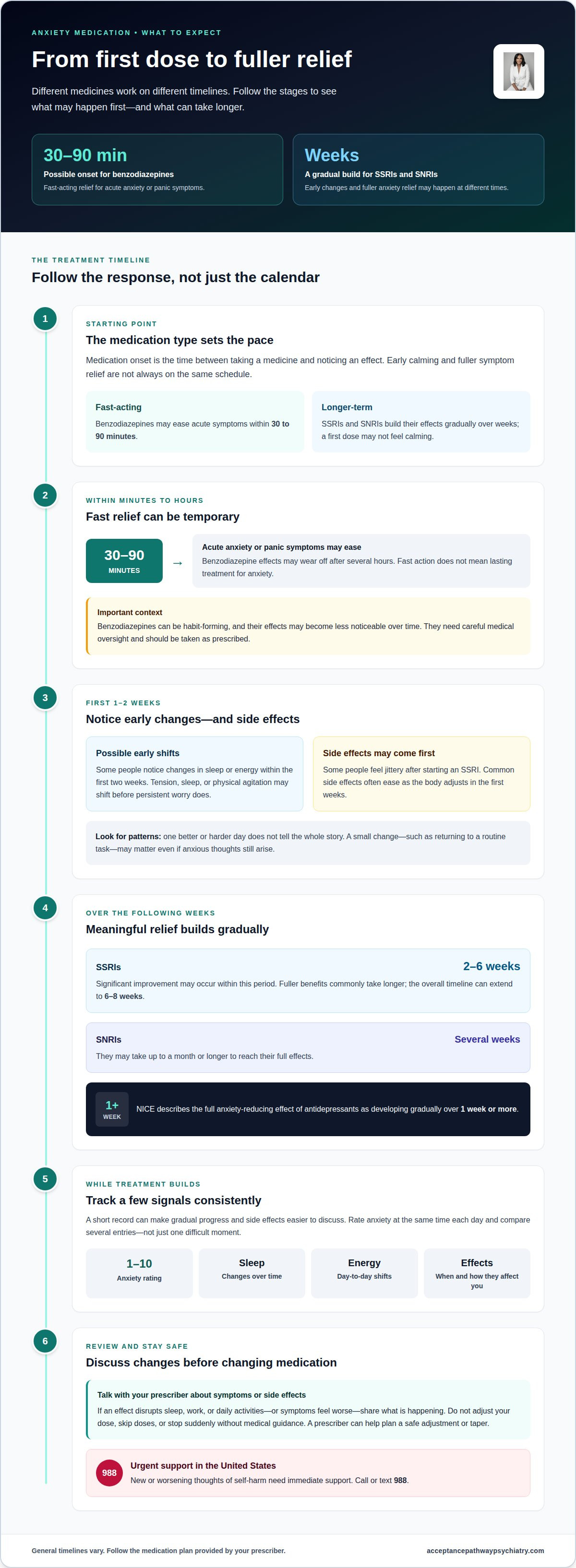
If you're wondering how long it takes for anxiety medication to work, fast-acting medicines may ease acute symptoms within 30 to 90 minutes. Longer-term medicines such as SSRIs and SNRIs may take 2 to 4 weeks to bring initial relief and 6 to 8 weeks to reach their fuller effect.
Waiting for a change can feel difficult, especially when side effects appear before your anxiety improves. A slow start doesn’t automatically mean a medication isn’t helping: different medicines work on different timelines, and early effects may not be the same as lasting relief. This article explains what to expect from short-term and longer-term anxiety medicines, how to recognize gradual progress, and why it’s important to discuss side effects or symptom changes with your prescriber before adjusting or stopping medication. Understanding the general timeline can make the wait feel more manageable and help you have a clearer conversation about your care.
Key Takeaways
- Different anxiety medicines follow different timelines, so the medication type helps explain what changes to expect first.
- Track shifts in anxiety, sleep, energy, and side effects to make conversations about treatment progress more specific.
- Don’t change your dose or stop medication abruptly; a prescriber can help plan a safe adjustment or taper.
- If symptoms feel worse or side effects are difficult to manage, share what’s happening with your prescriber rather than waiting in silence.
- New or worsening thoughts of self-harm need immediate support; call or text 988 in the United States.
How Long Does It Take for Anxiety Medications to Work?
The timeline depends on the medication: benzodiazepines may ease acute anxiety within 30 to 90 minutes, while longer-term medicines usually build their effects over weeks. The difference matters when you’re deciding what changes to expect and when to discuss your response.
How Quickly Common Anxiety Medications Start Working
Medication onset is the time between taking a medicine and noticing an effect. It matters because early calming and fuller symptom relief can happen on different schedules. Benzodiazepines may act within 30 to 90 minutes, while SSRIs and SNRIs generally take longer to provide meaningful anxiety relief. For example, a person taking an SSRI may not feel calmer after the first dose.
There isn’t one standard cost for common anxiety medications in the United States. With insurance, your out-of-pocket costs depend on your plan’s coverage and cost-sharing. Without insurance, the medication, strength, and quantity affect the price.
Benzodiazepine Effects and Short-Term Use
Benzodiazepines are fast-acting medicines that can reduce acute anxiety or panic symptoms. Their effects may begin within 30 to 90 minutes and wear off after several hours. That speed can matter during a short-term period of intense symptoms, but it doesn’t mean the medicine provides lasting treatment for anxiety. The intended use and response need careful medical oversight.
Benzodiazepines can be habit-forming, and their effects may become less noticeable over time. Short-term anxiety medicines shouldn’t be taken daily unless a doctor explicitly recommends it. If a benzodiazepine is prescribed alongside an SSRI, a typical plan may use it for 2 to 4 weeks, then taper it as the SSRI takes effect. Follow the prescribed plan, and don’t adjust or stop the dose on your own.
Therapy and supportive lifestyle changes can provide coping tools while medication takes effect. Psychotherapy can help you work with anxious thoughts and responses, while steady routines and calming practices may support day-to-day well-being. These approaches can complement medication planning, but they don’t replace instructions for taking prescribed medication.
Medication decisions can also feel harder when anxiety affects safety. If you have new or worsening thoughts of self-harm, contact a provider immediately; the Substance Abuse and Mental Health Services Administration lists 988 as the Suicide and Crisis Lifeline number.
Early calming effects versus full therapeutic relief
An early calming effect isn’t the same as full therapeutic relief. A medicine may first affect tension, sleep, or physical agitation, while persistent worry takes longer to change. Recognizing this difference can help you notice progress without expecting anxiety to disappear immediately. For example, returning to a routine task may be meaningful even if anxious thoughts still arise. Look for patterns over time rather than judging treatment by one difficult morning.
Antidepressants used for anxiety, including SSRIs and SNRIs, build their effects gradually. According to the National Institute for Health and Care Excellence (NICE), the full anxiolytic effect develops gradually over 1 week or more. SSRIs may bring significant improvement within 2 to 6 weeks, while fuller benefits commonly take longer. SNRIs can take several weeks, up to a month or longer, to reach their full effects.
These timelines describe a gradual response, not an overnight switch. Some people notice early changes in sleep or energy within the first two weeks, before anxiety itself feels easier to manage. For example, sleeping more consistently may make the day feel more manageable even if worry remains. A change in one symptom doesn’t mean every aspect of mental health has improved at the same pace.
Side effects can appear before the intended benefit. During the first 1 to 2 weeks, some people experience effects such as feeling jittery after starting an SSRI. Common side effects often ease as the body adjusts in the first weeks. If an effect disrupts sleep, work, or daily activities, record when it happens and how it affects you. Share that pattern at your next appointment.
Simple tracking can make small changes easier to describe. Rate anxiety from 1 to 10 at a consistent time, and note sleep, energy, and any side effects alongside the rating. Compare several entries rather than relying on memory or a single day. For instance, a steady change in morning anxiety may be easier to spot in a short record than during a stressful moment.
At an appointment, these observations help frame a focused conversation about timing, symptoms, and treatment response. If discussing changes remotely feels more comfortable, a telehealth appointment can provide a setting to review what you’ve noticed and discuss next steps.
Risks of changing or stopping medication without medical guidance
Changing a prescribed dose can affect both side effects and anxiety symptoms. Stopping suddenly may also cause unwanted effects, so discuss a safe taper plan with your prescriber before making a change. A gradual plan lets the prescriber consider the medication, dose, treatment duration, and symptoms you’re experiencing. Don’t skip doses or take extra medication to compensate unless instructed.
Early treatment can feel uneven. In a clinical trial, about 15% of patients reported worsening anxiety symptoms after two weeks of SSRI treatment. Some people also notice shifts in worry or restlessness before they experience lasting relief. These changes deserve attention, but they don’t automatically show whether a medication will ultimately help. Record when symptoms started and how they affect daily activities.
Physical changes can offer useful clues. For example, note whether muscle tension changes as sleep becomes lighter, or whether your energy shifts alongside your appetite. Record when each change occurs, how long it lasts, and whether it follows a dose change. A clear record can help distinguish a brief adjustment from a pattern worth discussing. It also gives your prescriber concrete details to review during an appointment.
Share these observations with the person managing your prescription. Explain your dose, any missed doses, when symptoms changed, and which effects interfere with work, sleep, or relationships. If anxiety feels worse after starting an SSRI, describe the change promptly rather than adjusting the medication yourself. Your prescriber can consider symptom severity, side effects, treatment duration, and your response before recommending a change.
Improvement can also affect decisions about stopping. People who benefit from an antidepressant for anxiety are recommended to continue it for at least 12 months after achieving remission to help prevent symptoms from worsening again. Remission means symptoms have eased substantially, but that doesn’t make an unplanned stop safe. The right timing and taper depend on the treatment plan and your situation.
After symptoms improve, some people continue medication for months, with any taper planned gradually. Your prescriber can explain what changes to watch for during a reduction and when to follow up. If anxiety returns or new effects appear, report when they began and how intense they are. This information helps guide the next step without abrupt changes or guesswork.
Anti-anxiety medication onset timelines
Anxiety medicines can work on different schedules, from noticeable short-term effects to benefits that build over several weeks. Knowing the expected timeline for your medication can help you describe changes clearly.
Typical Onset and Full-Benefit Timeline
A medication’s onset is when its effects first become noticeable; its full benefit may develop later. This distinction matters because an early change in feeling doesn’t necessarily mean a disorder’s symptoms are fully managed. Some long-term anxiety medicines bring early changes within one to two weeks, while full benefits may take four to six weeks or longer.
For example, a person may notice less physical tension before worry changes. Buspirone, some antihistamines, and some anticonvulsants used for anxiety can take 4 to 6 weeks before people notice a difference. The medication class and the symptom being treated help explain why two people may experience different timelines.
To track your response, note changes in anxiety, sleep, and daily activities as treatment continues. Compare how you feel over several weeks instead of treating one difficult day as the whole picture. For example, record whether panic attacks feel less disruptive, even if they haven’t stopped. These notes can make treatment conversations more specific.
Buspirone Onset and Full Benefits
Buspirone is taken consistently to build toward an effect, rather than providing immediate relief. Its clinical effect may begin after 2 to 4 weeks, while full benefits may take 4 to 6 weeks of consistent daily use. This timeline matters during a period of anxiety because a person may not feel an immediate change after a dose.
It can also take time for a dose to reach an effective level. The U.S. National Library of Medicine notes that buspirone may take several weeks to reach an effective dose. The time to benefit can therefore include both gradual dose adjustment and the medication’s developing effect. Follow the prescribed schedule rather than changing doses in search of faster relief.
Therapy can offer another way to work with anxiety while buspirone’s effects develop. For example, therapy may help someone practice responding to a feared situation instead of avoiding it. This support addresses coping and behavior, while medication follows its own timeline. It won’t make buspirone act immediately or replace your prescribed medication plan.
Use your symptom notes to describe what has changed, what remains difficult, and when each change began. If improvement is gradual, details such as fewer sleep interruptions or more manageable worry can make progress easier to discuss. A clear timeline can also help distinguish early changes from fuller benefits as treatment continues.
How long-term anxiety medications take to work
Long-term medication is intended to build a steadier response, not necessarily stop anxiety immediately. For antidepressants prescribed for an anxiety disorder, the common timeline for noticing a difference is 4 to 6 weeks. The answer depends partly on the medication, the dose reached, and whether symptoms are changing. Generalized anxiety may involve persistent worry, tension, or sleep disruption, so progress can appear in one area before another.
SSRIs and SNRIs are taken consistently because their benefits develop over time. Early changes in sleep or energy may appear before worry feels easier to manage. For example, someone with generalized anxiety might find it easier to fall asleep while still feeling anxious during the day. That change is worth tracking, but it doesn’t by itself show the medication’s full benefit.
Use your prescribed dose and schedule as the basis for assessing the timeline. A dose change affects how long you’ve been taking a consistent dose, so note when you started the current amount. Useful details to discuss include which symptoms changed, when they changed, and how your daily routine is affected. These observations can help distinguish a partial response from no noticeable change.
If there’s no improvement after six full weeks at a therapeutic dose, discuss alternatives with the prescriber. A therapeutic dose means the dose selected for treatment, rather than simply the amount first prescribed. If symptoms haven’t fully eased within 12 weeks, a healthcare provider may consider switching to another anxiety medication. These points create opportunities for review, not a reason to stop taking medication without guidance.
Buspirone offers another example of why consistency matters. Its clinical effect may begin after 2 to 4 weeks, with full benefits taking 4 to 6 weeks of consistent daily use. Reaching an effective dose can also take several weeks. Missing doses or changing the schedule makes it harder to understand the response, so discuss adherence difficulties during a medication review.
Before a follow-up conversation, record anxiety symptoms alongside sleep, energy, and daily functioning. For example, note whether worry interrupts fewer tasks, even if it remains present. If you’re considering whether your current plan fits, discuss medication management as a way to review progress and treatment options with professional guidance.
Acceptance Pathway Psychiatry PLLC: Medication Management
Acceptance Pathway Psychiatry PLLC offers Medication Management to help you review your progress and discuss medication questions. Consider reaching out if symptoms remain difficult, side effects concern you, or you’re unsure how to discuss a dose change with your prescriber. The conversation can focus on your current symptoms, medication experience, and treatment goals.
Psychotherapy may also help you work with anxious thoughts and daily challenges. Integrative Wellness Services provide another part of the practice’s mental health care. These services can complement a medication discussion as you consider which support fits your needs.
If you’d like support reviewing your anxiety treatment, contact Acceptance Pathway Psychiatry PLLC.
Make your next treatment conversation count
Understanding how long it takes for anxiety medication to work can help you set clearer expectations, but your own experience matters too. Notice what is changing in your daily life and what still feels difficult. These observations can help shape a more useful conversation about your care.
Support can involve more than medication alone. Acceptance Pathway Psychiatry PLLC also offers Psychotherapy and Creyos Cognitive Testing, which may be relevant to broader mental health needs. The next step should make room for your concerns and goals.
Arrange a conversation with Acceptance Pathway Psychiatry PLLC to discuss support for your anxiety care. You deserve thoughtful guidance as you find a path forward.
Frequently Asked Questions
How Long Does Buspirone Take to Work?
Buspirone may begin producing a clinical effect after 2 to 4 weeks, with fuller benefits taking 4 to 6 weeks of consistent daily use. For example, a person might notice a gradual change in how often anxiety interrupts daily tasks rather than a sudden shift. Follow the prescribed schedule and note meaningful changes over time. If taking it consistently is difficult, discuss that with the prescriber before changing the dose.
How can I tell if my mental health medication is actually working?
Look for steady changes in symptoms and daily functioning, not only a single calm day. For example, notice whether anxiety makes it easier to finish a routine task or stay engaged in a conversation. A simple rating from 1 to 10 can help you compare days, alongside notes about sleep and energy. Bring those observations to a follow-up so the treatment response can be discussed with specific examples.
What About Benzodiazepines?
Benzodiazepines can begin relieving acute anxiety within 30 to 90 minutes, and their effects may last several hours. They may be prescribed for short-term use, including alongside an SSRI while that medicine takes effect. Because benzodiazepines carry a risk of dependence and may lose effectiveness, take them only as prescribed. For example, don’t take an extra dose because anxiety returns before the next planned dose.
What should I do if my medication doesn’t seem to be working?
Keep taking medication as prescribed and arrange a conversation with your prescriber about your experience. If there’s no improvement after six full weeks at a therapeutic dose, discuss alternatives. Note your current dose, how consistently you take it, and which symptoms remain difficult. If you’re considering stopping or changing the amount, raise that concern first so any changes can be planned safely.
What should I expect during the first few weeks on a new medication?
The first weeks can involve side effects before clear anxiety relief appears. For example, someone starting an SSRI may feel jittery at first, while sleep or energy may also change. Some side effects improve within 1 to 2 weeks as the body adjusts. Keep notes on when an effect appears and how it affects your routine, then share concerning or disruptive changes with the prescriber.
How long do SSRIs and SNRIs take to reduce anxiety?
SSRIs may take 2 to 6 weeks to produce significant improvement in anxiety, while SNRIs can take several weeks to a month or longer for fuller effects. An early change, such as better sleep, may come before a noticeable reduction in worry. Track which symptoms shift and when. If symptoms worsen or side effects interfere with daily life, discuss them with the prescriber rather than changing the dose yourself.
How quickly do buspirone and hydroxyzine work for anxiety?
Buspirone typically takes 2 to 4 weeks to produce a clinical effect, with full benefits building over 4 to 6 weeks of consistent daily use. Hydroxyzine is an antihistamine used for anxiety; some antihistamines used for anxiety take 4 to 6 weeks for people to notice a difference. The medications aren’t interchangeable, so follow the directions for the medicine prescribed to you.
What factors affect how long anxiety medication takes to work?
The medication type, prescribed dose, consistency of use, and symptoms being treated all shape the timeline. For example, a fast-acting medicine used for acute anxiety follows a different pattern from a daily antidepressant for ongoing symptoms. Dose adjustments can also affect how you assess progress. Consider how long it takes for anxiety medication to work alongside changes in symptoms and daily functioning, rather than judging by one isolated day.


