

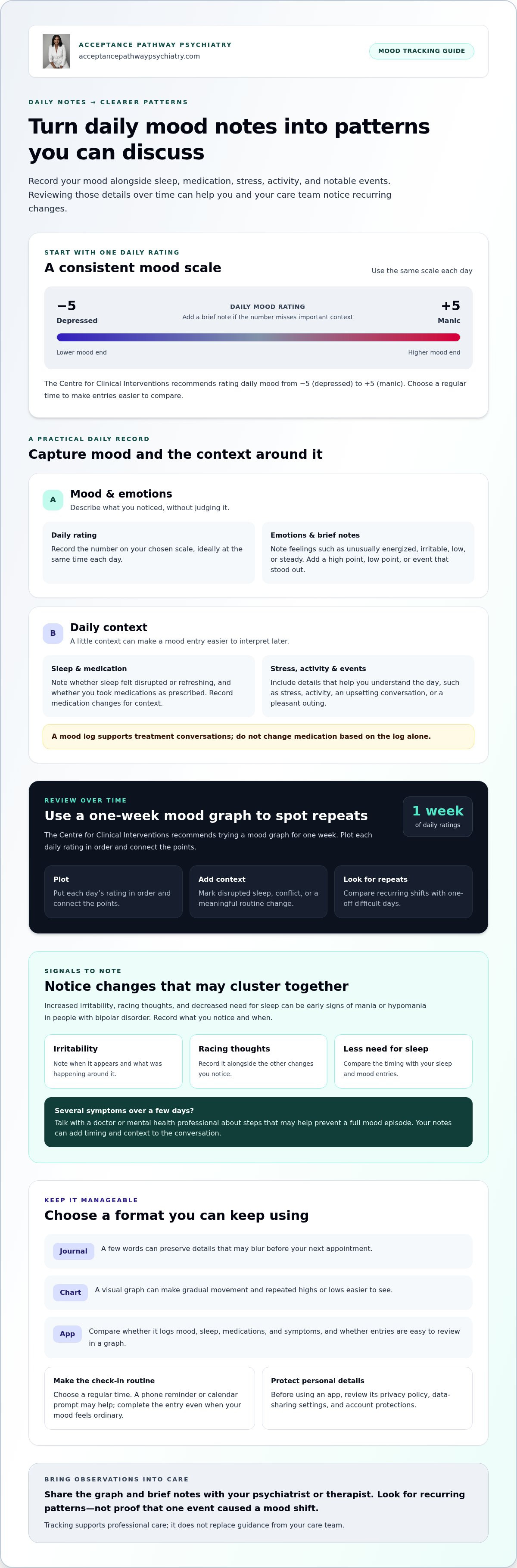
A daily record can help turn mood shifts into patterns you can notice and discuss. Mood tracking for bipolar disorder means recording your mood and related details, such as sleep, medication, stress, and activity. The Centre for Clinical Interventions recommends rating daily mood on a scale from -5 (depressed) to +5 (manic).
It can be hard to tell what may be influencing how you feel in the middle of a difficult day. A simple, steady check-in gives you a clearer record over time without asking you to judge or explain every change.
This guide explains what to track, how to look for recurring patterns and possible triggers, and how to build a manageable routine. You’ll also learn how to use your notes in conversations about care, while remembering that tracking supports professional care rather than replacing it.
Key Takeaways
- Use a mood graph to review changes across a week and look for recurring shifts rather than drawing conclusions from one difficult day.
- Notice early changes such as increased irritability, racing thoughts, or needing less sleep, and record what was happening around them.
- Make check-ins easier to sustain by choosing a regular time and a format that fits your routine, such as a journal, chart, or app.
- Bring your observations to appointments so you and your care team can discuss patterns and consider next steps together.
- If several symptoms occur over a few days, talk with a doctor or mental health professional about steps that may help prevent a full mood episode.
What is mood tracking for bipolar disorder?
Mood tracking for bipolar disorder means recording your mood alongside daily details that may add context. A brief log can make changes in mood easier to review over time.
Daily Mood and Emotion Logs
Choose a regular time to note your mood and the emotions you noticed that day. For example, record feeling unusually energized, irritable, low, or steady instead of relying on a broad label alone. Add a brief note about what stood out. DBSA says tracking mood changes can help people learn what supports their personal wellness.
Keep entries descriptive, not judgmental. A few words about a high or low point can preserve details that may otherwise blur together before your next appointment. Add a notable event, such as an upsetting conversation or a pleasant outing, if it helps explain the day’s emotional tone.
Sleep and Medication Entries
Record sleep and medications alongside your mood so you can compare them later. Note whether sleep felt disrupted or refreshing, and whether you took medications as prescribed. Don’t change medication based on a log alone. Tracking can support treatment conversations, but it doesn’t replace guidance from the prescribing professional.
DBSA identifies medication interactions, substance use, nutrition, and exercise as useful wellness details to track. Include only details that help you understand your experience. For example, a brief note about exercise or a medication change gives more context than a mood rating alone.
Mood Scales and Reminders
A consistent scale makes daily entries easier to compare. The Centre for Clinical Interventions recommends rating mood from -5 (depressed) to +5 (manic). Record the number at the same time each day, then add a short description if the rating doesn’t capture the full experience.
A daily phone reminder or calendar prompt can help make logging a routine. Use a neutral label, such as “mood check-in,” and complete the entry even when your mood feels ordinary. Daily records can reveal gradual changes that a single high or low rating may miss.
Bipolar Mood Tracking App Options
There isn’t one best app for everyone in the United States. Compare whether options let you log mood, sleep, medications, and symptoms, then review entries in a clear graph. Some apps include reminders or symptom checklists. A paper journal or visual chart can work, too.
Apps may offer free features, paid plans, or both, and costs and features vary by app and plan. Before entering sensitive mental health details, review the app’s privacy policy, data-sharing settings, and account protections. Mood logs can contain personal information, so sharing permissions and access controls matter.
To share records with a psychiatrist or therapist, bring your log to an appointment or use an app’s export or sharing options. Include dates and brief notes that explain unusual highs or lows, sleep changes, or medication entries. DBSA says journals can preserve details that help interpret a mood graph later.
Identifying mood patterns and potential triggers
A single difficult day cannot explain a larger mood pattern. Compare entries over time and note which changes recur alongside sleep, stress, activity, or other daily events. The goal is to recognize useful signals, not label every feeling as a symptom or assume that one event caused a mood shift.
Start by looking for changes that cluster together. Increased irritability, racing thoughts, and decreased need for sleep can be early signs of mania or hypomania in people with bipolar disorder. Your log may show these changes emerging around the same time. Record what you notice and when, rather than waiting until the shift feels unmistakable.
Look for patterns in low moods, too. For example, several entries might show poor sleep before a depressive episode, or a stressful event followed by a noticeable mood change. These are observations, not proof of cause. Other factors may be involved, so record surrounding behaviors and circumstances before deciding what a pattern might mean.
To make changes easier to see, the Centre for Clinical Interventions recommends trying a mood graph for one week. Plot each daily rating in order and connect the points. Add brief notes beside days with disrupted sleep, conflict, or a meaningful change in routine. A visual line can make gradual movement and repeated highs or lows easier to recognize than separate entries.
Review the graph in sections instead of searching for a perfect explanation. Ask yourself:
- Do similar mood shifts appear after a particular event or routine change?
- Does sleep change before, during, or after a mood shift?
- Are irritability, racing thoughts, or reduced need for sleep appearing together?
- Which observations repeat, and which happened only once?
These questions keep your interpretation grounded in your own record. A stressful meeting followed by one restless night is different from a recurring sequence across multiple entries. Note what happened without blaming yourself or assuming every difficult experience is a trigger. These details can help you and your care team decide which changes deserve attention.
If several symptoms occur over a few days, the Centre for Clinical Interventions advises considering action and talking with a doctor or mental health professional about steps to prevent a full-blown mood episode. Bring the graph and relevant notes so the discussion includes timing and context. If reviewing your observations raises questions about your mental health, talking with a mental health professional can help you consider them within your overall care.
Tracking mood, energy, sleep, medication, stress, and activity
Record mood, energy, sleep, medications, stress, activity, and notable events in one daily entry. Focus on symptoms that affect your day rather than trying to capture every thought or feeling.
Common signs to note include low or elevated mood, irritability, racing thoughts, changes in energy, and changes in sleep. If detailed logging becomes repeated checking or increases distress, simplify your entry and discuss the change with your doctor or therapist.
Mood Changes and Symptoms
Describe what changed and how it affected your day. For example, note racing thoughts alongside difficulty concentrating, or irritability that disrupted a conversation. The Centre for Clinical Interventions recommends recording symptoms that interfered with most day-to-day activities. This keeps your record focused on meaningful changes, not every passing emotion.
Use plain descriptions and keep them consistent. “Low energy; skipped usual walk” gives more context than “bad day.” Note whether symptoms felt different from your usual experience, then discuss recurring observations with your doctor or therapist.
Energy, Sleep, and Activity Logs
For sleep, record whether it felt restful or disrupted and note changes in your usual routine. Pair that entry with a short description of your energy, such as “steady through work” or “restless by evening.” The daily Bipolar Disorder: Mood Log records mood, sleep, and common symptoms of mood episodes.
Add physical activity, stress, and notable events when they help explain the day. A missed walk, a tense meeting, or a change in routine can provide context for a mood shift. These entries don’t prove what caused a change, but they help you review what happened around it.
Keep medication information factual. Record whether you took prescribed medications as directed, along with relevant timing or changes. You can also list supplements and substance use in the same daily record, then discuss any questions with your doctor. Don’t use tracking notes to change medication on your own.
A phone, paper journal, or calendar can hold these details. Choose one format and use brief entries, such as:
- Mood and symptoms: low mood, irritability, or racing thoughts.
- Sleep and energy: disrupted sleep; tired in the morning.
- Medication and context: taken as directed; stressful workday; no walk.
Reviewing entries together can help your care team understand your experience and consider treatment. If a tracking device or app prompts constant checking, turn off extra reminders and keep one planned check-in. A useful log should support reflection, not take over your attention.
Building a consistent tracking routine
A routine works best when tracking has a clear place in your day. The Centre for Clinical Interventions recommends rating your mood at the same time each day. Choose a moment you can usually protect, such as after breakfast or before bed. A predictable cue makes the habit easier to remember and keeps entries more comparable.
Pair your check-in with something you already do. For example, open your journal after brushing your teeth or complete an app entry when you set an evening alarm. Keep the task small: record your mood, sleep, and one notable change. If you have more energy, add details about medications, stress, or activity.
A daily routine can also support the habits around your check-in. It might include a consistent sleep schedule, regular meal times, physical activity, mood check-ins, and medication reminders. Choose a realistic cue for each activity. A calendar reminder can prompt a meal, while a recurring alarm can signal your mood entry.
Some days will feel harder to record, especially during depression or a busy stretch. Make a brief entry rather than abandoning the routine. “Low mood, poor sleep” still preserves useful information. If you miss a day, resume with the current day instead of guessing how you felt earlier. Accuracy matters more than filling every blank.
Reviewing a graph can give your routine a practical purpose. The Centre for Clinical Interventions recommends trying a mood graph for one week to look for patterns in mood fluctuations. During that week, keep your check-in time steady and note meaningful changes. A therapist can help you discuss observations, including possible early signs of a depressive episode.
- Choose a cue: connect the entry to breakfast, medication reminders, or bedtime.
- Keep it brief: use a short note when a full entry feels difficult.
- Resume without backfilling: restart after a missed day using what you know now.
- Review with care: bring a graph or journal to a therapist appointment.
Adjust the routine when a reminder becomes easy to ignore. Move it to a more dependable time of day or simplify the form by using fewer fields. The goal is a record you can maintain through changing moods and schedules. Over time, this steady practice can make your experiences easier to reflect on and discuss as part of treatment.
Mood tracking and bipolar disorder self-management
A mood record is most useful when it helps you understand changes and prepare for conversations about care. Its purpose is to support decisions, not diagnose an episode or replace treatment.
Mood Tracking for Self-Management
Review your entries for changes that affect daily life, such as disrupted sleep followed by lower mood or rising energy alongside racing thoughts. DBSA says daily tracking can help people understand their overall mood and well-being. Notes about significant experiences can also help explain a graph later, especially when the day’s rating alone lacks context.
Use those observations to prepare practical questions for your care team. For example, note when a mood change began, what else changed, and whether it affected work, relationships, or routine. Bring your record to an appointment and discuss how it may inform care. A log can help the team assess responses to medication or therapy and consider treatment adjustments.
Responding to Concerning Mood Signs
If entries show several symptoms over a few days, the Centre for Clinical Interventions advises considering action and talking with a doctor or mental health professional about preventing a full-blown mood episode. Share dates and observations, including sleep changes, irritability, racing thoughts, or symptoms affecting daily activities. Don’t wait for the graph to provide certainty.
Suicidal thoughts need immediate attention. Tell someone you trust and seek urgent help from a health professional or emergency service. Mood tracking can support that conversation, but it isn’t a crisis response plan and shouldn’t delay reaching out.
Turn your observations into a simple plan with your care team. You might identify changes that warrant a call, routines that support stability, and whom to contact if symptoms intensify. Write the plan somewhere easy to find, such as beside your journal or in a phone note. Revisit it together when treatment or circumstances change.
Apps may let you download or export records, while paper charts can be brought to appointments. Choose the format that makes sharing manageable, then focus on entries relevant to your questions. DBSA notes that daily tracking can help reveal how sleep, exercise, diet, and social interaction relate to mental health. Treat those links as observations to discuss, not proof of cause.
Keep tracking proportionate to its purpose. If repeated checking increases distress, simplify the log to one planned daily entry and discuss the effect with your therapist or doctor. The goal is a useful record that supports self-management, not constant monitoring. Your care team can help decide which details matter and how to use them alongside other parts of your care.
Acceptance Pathway Psychiatry PLLC: Medication Management
Acceptance Pathway Psychiatry PLLC offers Medication Management and Psychotherapy for people living with bipolar disorder. Mood records can help you bring specific observations, such as changes in sleep or mood, into treatment conversations. Discuss medication decisions with the prescribing professional rather than making them based on tracking notes alone.
If you’re looking for support with medication or want to explore therapy alongside your self-management routine, these services may be a helpful next step. Acceptance Pathway Psychiatry PLLC also offers Integrative Wellness Services and Creyos Cognitive Testing.
To learn more, contact Acceptance Pathway Psychiatry PLLC.
Let your next step be a conversation
A tracking practice doesn’t need to become a test you have to pass. Its value can come from helping you describe your experience in your own words, including what feels manageable and what you’d like help understanding. Let your notes support curiosity, not pressure to find a perfect explanation for every change.
If you’re ready to bring your observations into your care, mood tracking for bipolar disorder can be a starting point for discussing what support may fit your needs. Acceptance Pathway Psychiatry PLLC offers Medication Management, Psychotherapy, and Creyos Cognitive Testing to support conversations about treatment and mental health concerns.
Contact Acceptance Pathway Psychiatry PLLC to explore a next step that feels right for you. Each small act of noticing and sharing can help you approach your care with greater clarity.
Frequently Asked Questions
How does mood tracking help people with bipolar disorder?
Tracking can make changes easier to describe and discuss during care. A dated record can show how symptoms and daily functioning changed together, giving your care team context when considering your response to medication or therapy. DBSA says daily tracking can help you understand your overall mood and well-being. Use your record to prepare a focused question, such as whether a recurring change deserves attention.
What is the best way to track bipolar mood, sleep, energy, and medication?
Choose a journal, chart, or app that lets you capture these details in one place. Keep observations factual and easy to compare: note your mood, energy, sleep quality, and whether you took medication as prescribed. Add a brief context note when something stands out. For example, distinguish “woke several times” from “sleep caused my low mood.” Separating the observation from your interpretation keeps the notes useful without treating a possible connection as proven.
How often should someone with bipolar disorder record their mood?
Record your mood daily, ideally as part of a regular routine. A consistent record can remain useful even after you’ve learned to recognize your own warning signs. If a full entry feels difficult, make a brief note rather than stopping altogether. A short daily record also gives your care team a clearer timeline than occasional recollections, which may leave gaps about when a change began or what else was happening.
How can mood tracking reveal triggers, patterns, or early warning signs of mania and depression?
Compare dated entries for changes that recur together, such as reduced sleep alongside rising energy or stress followed by a mood shift. Increased irritability, racing thoughts, and decreased need for sleep can signal early mania or hypomania. The Centre for Clinical Interventions recommends trying a mood graph for one week. If several symptoms appear over a few days, discuss them with a doctor or mental health professional.
What are the best bipolar mood tracking apps in the United States?
There isn’t one best app for everyone. Compare whether an app can log mood, sleep, medications, and symptoms and display entries in a clear graph. Reminders and symptom checklists may also be useful.
What privacy and data security risks do bipolar mood tracking apps have?
Mood logs can contain sensitive personal information. Before entering details, review the app’s privacy policy, data-sharing settings, and account protections. Check who can access or receive your records.


