

Online psychiatric care can help college students maintain support during school breaks, but telehealth access depends on where a student is physically located, clinician licensing, appointment availability, and insurance coverage. A psychiatrist for college students online can provide a way to discuss symptoms, medication questions, or next steps without relying solely on campus-based care.
It makes sense to wonder whether support can continue when classes end, travel plans change, or the usual campus routine disappears. Breaks can interrupt established care, and students may need different kinds of support, from talk therapy to medication management or an assessment for attention and focus concerns.
This article explains how virtual therapy and psychiatry can fit into student life, what can affect continuity during breaks, and when ADHD testing may be worth considering. It also outlines the differences between therapy and psychiatric care, helping you identify a next step that fits your needs.
Key Takeaways
- Learn how therapy and psychiatric care differ, and which concerns each may help address.
- Consider practical ways to preserve privacy and keep care coordinated when your routine changes.
- Recognize how test anxiety and academic stress can affect well-being, and what therapy may help you work on.
- Notice when ongoing attention or focus difficulties may make ADHD testing worth discussing.
- Understand what factors shape virtual appointment access and how to identify a next step that fits your needs.
Are There Telehealth Mental Health Programs for College Students?
Yes. College students in the United States can access online therapy and psychiatry, although location, licensing, availability, and insurance affect their options. Before scheduling, identify where you’ll be physically located during the appointment.
Online Psychiatry and Telehealth Scheduling
Online psychiatric care uses telehealth appointments to discuss mental health concerns, treatment options, and medication needs. The right service is one that can address a student’s needs and provide care where they’ll be during the visit. Check the appointment format and schedule, then choose a time that works around classes, work, or travel.
What are the best online psychiatry services for college students? The best fit depends on location, appointment availability, insurance, and whether the student wants to discuss medication, therapy, or both. Before booking, confirm how appointments work from a dorm, family home, or internship location.
Telehealth Availability and State Licensing
Telehealth access can depend on the student’s location during the appointment and the clinician’s licensing. A student attending school in Oregon but visiting family in Washington should consider where they’ll be for each session. The clinician must be authorized to provide care in the state where the student is located, so crossing a state line can affect access.
What rules apply to online psychiatric prescriptions and controlled medications in the United States? Requirements depend on the medication and applicable state and federal rules, so students shouldn’t assume every prescription can be handled the same way online. Raise medication questions when scheduling and discuss the specific treatment with the prescribing clinician.
Insurance for Telehealth Psychiatric Care
Coverage varies by insurance plan and service. Some online psychiatry platforms accept insurance and let students check coverage before booking, but the plan determines which appointments and clinicians qualify. Review the plan’s telehealth benefits and whether it covers care while temporarily outside the student’s home state. This can help prevent insurance surprises during winter break or summer travel.
Comparing Online, Campus, and In-Person Care
Campus counseling may offer free or low-cost support, but a campus center may not have a psychiatrist who can prescribe medication. Online care can make appointments easier to fit around classes and travel. In-person psychiatry offers face-to-face visits, while telehealth removes the trip to an office. The right format depends on the student’s needs and circumstances.
When should a student seek urgent or emergency mental health care instead of online psychiatry? For immediate emergency assistance, call 911, according to the National 911 Program. For crisis support, call 988, the telephone number for the National Suicide & Crisis Lifeline, which is available 24/7. Online appointments are not a substitute for emergency help.
Privacy and continuity of care during school breaks
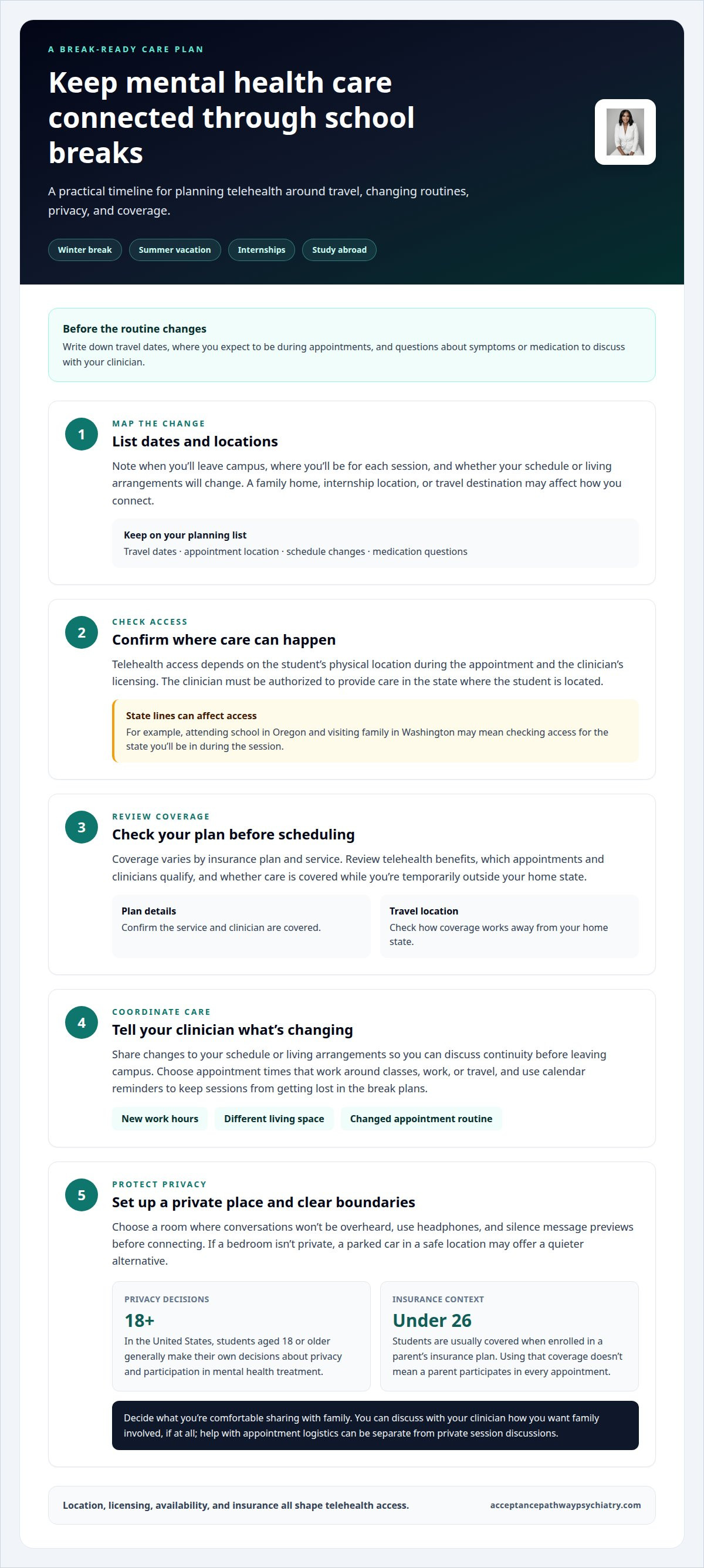
Winter break, summer vacation, internships, and study abroad can disrupt a student’s usual care routine. Planning before leaving campus can make it easier to continue sessions and discuss changes in symptoms. Start by noting travel dates, where you’ll be for each appointment, and any medication questions to raise with the clinician. Calendar reminders can help keep appointments from getting lost among travel plans.
For continuity, tell the clinician when your schedule or living arrangements will change. A student returning home may need to connect from a different private space, while an internship can bring new work hours. Telehealth for behavioral health care may support access, continuity, privacy, and convenience, according to the U.S. Department of Health and Human Services. Location still matters because care across state lines can affect whether a clinician is licensed to provide the session.
Privacy and parental involvement are separate from the question of who pays for care. In the United States, students aged 18 or older generally make their own decisions about privacy and participation in mental health treatment. They can discuss with the clinician how they want family involved, if at all. For example, a student may want a parent’s help with appointment logistics while keeping personal session discussions private.
Insurance can add another layer. Students under 26 are usually covered when enrolled in a parent’s insurance plan, but using that coverage doesn’t mean a parent participates in every appointment. Before scheduling, understand how the plan handles telehealth and insurance communications, and decide what information you’re comfortable discussing with family. If a parent helps with insurance details, agree on what they need to know and what remains part of the student’s care conversation.
A private setting can make an online session more comfortable during a crowded break at home. Choose a room where conversations won’t be overheard, use headphones, and silence message previews before connecting. If a bedroom isn’t private, a parked car in a safe location may offer a quieter alternative. These steps can reduce interruptions without requiring you to explain your symptoms to roommates or relatives.
Concern about social judgment can also make it harder to seek support. The U.S. Department of Health and Human Services notes that telehealth may reduce barriers such as fears of stigma. A student who feels uneasy about being seen entering a counseling office may prefer connecting from a private space. Either way, discussing privacy expectations at the start of a session helps establish a clear, comfortable plan for care during school and breaks.
What Is Online Therapy for College Students?
Online therapy gives students a private space to discuss emotional concerns and practice coping strategies. Sessions can focus on anxiety, depression, test pressure, or changes in academic and social life.
Anxiety, Depression, and Academic Stress
Academic stress can affect sleep, concentration, motivation, and confidence. For example, anxiety before an exam may lead someone to avoid studying, while performance anxiety can make presentations feel overwhelming. Therapy can help students describe these patterns and identify practical coping strategies for classes, exams, and relationships.
Depression can affect feelings, thinking, sleep, eating, and daily activities, according to the National Institute of Mental Health. A student might notice low energy, lose interest in campus activities, or struggle to complete assignments. Discussing when these changes began, how often they occur, and how they affect daily routines gives therapy a clearer starting point.
Burnout can also emerge when academic demands leave little room for rest or meaningful social connection. In therapy, a student can explore what contributes to the strain, such as a packed course load or pressure to meet personal expectations. Naming a specific challenge, like a recurring late-night study routine, can turn a broad concern into a workable focus.
Therapy may also address adjustment to college life, relationship problems, or identity exploration. Students can describe what they want to change without needing a diagnosis before seeking support. A first goal might be managing anxiety before class participation or finding a steadier routine during exams.
Improving Anxiety and Depression Symptoms
Progress starts with understanding symptoms and their impact. A student and therapist can discuss what feels hardest, what has already helped, and which parts of school or daily life are affected. Treatment plans reflect the symptoms present and conversations about the best way forward, rather than assuming one approach suits every student.
For anxiety, sessions may help students notice situations that trigger distress and develop ways to respond. A student who fears speaking in seminars might identify the thoughts and physical feelings that arise, then work toward manageable steps for participating. For depression, therapy can focus on changes in mood, routine, connection, and activities that once felt meaningful.
Tracking changes between sessions can help. Brief notes about sleep, mood, class attendance, or anxious moments give students concrete examples to discuss. A record may show whether symptoms shift with exams, social pressures, or changes in routine. It also helps the student and therapist revisit goals and adjust their focus as needs evolve.
Online therapy isn’t limited to discussing past problems. Students can bring a current challenge, such as a test, a difficult conversation, or trouble keeping up with coursework. Together, they can set a specific goal for the session and consider steps that fit the student’s circumstances.
Benefits of virtual counseling for busy student schedules
Virtual counseling can fit around lectures, work shifts, and campus commitments without adding a trip to an office. For a student balancing classes and a part-time job, a remote session can reduce travel and make it easier to protect time for care.
A traditional psychiatric visit can take two hours when transportation and waiting-room time are included. A virtual appointment removes the commute, though students still need a private place and a reliable internet connection. For example, someone with a gap between classes might attend from a quiet room rather than travel across town.
Scheduling can also matter during high-demand periods, such as midterms or finals. Some online providers offer evening or weekend appointments, giving students more options around classes and work. When considering counseling, look for a time that supports a consistent routine rather than waiting until stress disrupts school or relationships.
Location remains part of access. A student physically located in New York or Massachusetts needs telehealth care from a clinician authorized to provide services in that state. This can affect appointments during school breaks, internships, or travel. Plan sessions around where you’ll be at appointment time, not only where your college is located.
Virtual counseling can serve students across the United States, but it doesn’t make every clinician available in every state. Licensing and appointment availability determine who can provide care. Students traveling between states can discuss their schedule when arranging ongoing sessions, helping avoid unexpected interruptions when moving from campus housing to a family home.
Recognizing a need for support can start with changes in daily life. Persistent anxiety, depressed mood, social isolation, substance use, or withdrawal from classes and activities can be reasons to consider counseling. For example, missing lectures after weeks of low mood is a concrete concern to raise in a session, rather than waiting for academic performance to worsen.
Continuing counseling often depends on whether sessions fit a student’s life and goals. A recurring appointment that works with a lab schedule may be easier to maintain than one requiring a long commute. Students can discuss what has changed, what remains difficult, and whether the current approach is useful. Counseling can address coping skills, relationships, and academic pressure, while medication management involves a separate discussion of medication needs with a qualified clinician.
The U.S. Department of Health and Human Services says telehealth can support access, convenience, privacy, and continuity of behavioral health care. These benefits can matter when class demands make an office visit difficult or a student wants to reduce travel barriers. Virtual counseling is one format to consider alongside the student’s needs, schedule, and location.
When to consider psychiatry or ADHD testing
Consider psychiatric care when emotional or attention-related concerns keep affecting classes, relationships, sleep, or daily routines. The average age of onset for many mental health conditions, including anxiety disorders and bipolar disorder, falls between 18 and 25 years old. A college student doesn’t need to wait until academic performance declines before discussing symptoms with a health care professional.
Psychiatry and therapy offer different kinds of support. A psychiatrist is a medical doctor who can diagnose mental health conditions and prescribe medication, while a therapist focuses on talk-based treatment. A student considering medication, experiencing persistent symptoms, or seeking a clinical evaluation may find a psychiatric appointment useful. The focus should be the student’s concerns and how they affect everyday life.
ADHD testing may be worth considering when attention, organization, or follow-through problems repeatedly interfere with school or other responsibilities. For example, a student might miss deadlines across several courses despite trying different planning approaches. Before an appointment, note specific examples, when they occur, and how they affect academic and daily life. This gives the conversation practical detail beyond a general feeling of being distracted.
Attention difficulties can have different explanations, so one struggle with studying doesn’t establish ADHD. A useful assessment conversation considers patterns across settings and the student’s history, rather than focusing only on one difficult semester. Bring examples from classes, home, or work, such as repeatedly losing track of tasks or struggling to complete assignments. A clinician can use these details to discuss whether further evaluation makes sense.
Creyos Cognitive Testing can help explore cognitive concerns alongside discussion of symptoms and functional challenges. Results should be considered within the broader clinical picture, not treated as a stand-alone diagnosis. Students can ask how testing relates to a specific concern, such as whether ongoing organizational difficulties merit further evaluation. The goal is to clarify possible next steps, not to assign a label based on one experience.
Campus health services can be a starting point for discussing concerns, but a referral from a campus health center isn’t required to schedule a psychiatric appointment at a clinic. Online appointments can also support access when a student’s location and the provider’s licensing allow telehealth care. Consider seeking an evaluation when concerns persist, affect more than one part of life, or remain difficult despite efforts to manage them.
If attention or cognitive concerns are disrupting school, explore Creyos Cognitive Testing as a possible step in understanding them.
Acceptance Pathway Psychiatry PLLC
Acceptance Pathway Psychiatry PLLC supports students seeking mental health care when school routines shift or concerns start affecting daily life. Psychotherapy offers space to work through emotional challenges, while Medication Management addresses questions about psychiatric medication. For students wondering whether attention or cognitive concerns merit closer assessment, optional Creyos Cognitive Testing may help explore next steps. Integrative Wellness Services offer another way to consider well-being as part of care.
Students can turn to these services to understand symptoms, discuss treatment options, or consider whether cognitive testing may be useful. The best starting point depends on the concern they want to address and the kind of support they’re seeking.
Contact Acceptance Pathway Psychiatry PLLC to discuss a next step.
Choose a Next Step That Fits Your Needs
Starting care doesn’t require having every answer. You can begin with one clear concern, such as a change in mood, questions about medication, or persistent difficulty with attention. A psychiatrist for college students online can help you explore psychiatric concerns and consider care options, while therapy provides space to work through emotional and academic challenges.
At Acceptance Pathway Psychiatry PLLC, students can access Psychotherapy, Medication Management, and optional Creyos Cognitive Testing. The first step is to name what feels most difficult and what kind of support you hope to find. From there, a conversation can help clarify a direction that feels manageable and relevant to your situation.
If you’re ready to discuss your needs, contact Acceptance Pathway Psychiatry PLLC. Taking that step can make room for thoughtful support as you move through school and beyond.
Frequently Asked Questions
Can a college student get a psychiatric appointment without their parents knowing?
Generally, students aged 18 or older make their own decisions about mental health care and privacy in the United States. They can seek treatment without parental involvement and decide whether to include family in conversations. To protect privacy during scheduling, use contact details you can access privately and choose a place where others won’t overhear the appointment. Insurance arrangements may affect what information family members see, so consider that separately.
How do I know if I need a psychiatrist or a therapist in college?
A psychiatrist is a medical doctor who can assess mental health conditions and prescribe medication; a therapist focuses on talk-based care. Consider a psychiatric appointment if you want to discuss medication or need a clinical assessment. Therapy may suit concerns such as managing stress, relationships, or coping patterns. Depending on their needs and goals, some students benefit from both forms of care.
How long does it take for psychiatric treatment to start working?
The timeline depends on the treatment. Antidepressants typically take 4-6 weeks to reach their full effect, while ADHD stimulant medications may show results sooner. A medication’s early effects and its full benefit aren’t always the same, so note changes in sleep, mood, focus, or side effects. Bring those observations to follow-up discussions to help guide care.
How can college students find an online psychiatrist in the United States?
To find a psychiatrist for college students online, first consider whether the clinician can provide care where you’ll physically be during appointments. Then consider availability, insurance coverage, and whether the service fits your needs, such as discussing medication. If you travel between campus and home, include both locations in your planning because state licensing can affect telehealth access.
Does student health insurance cover online psychiatry visits?
Coverage depends on the student’s specific plan, the clinician, and the appointment type. Some online psychiatry platforms accept insurance and let students check coverage before booking. Review the plan’s telehealth benefits, network rules, and any costs that apply. Coverage for a therapy appointment doesn’t necessarily mean every psychiatric service is covered, so consider the appointment type when reviewing benefits.
What is the average cost of an online psychiatrist without insurance?
There isn’t one dependable average cost for every online psychiatric appointment. Prices can vary by clinician, appointment type, visit length, and whether the visit is an evaluation or follow-up. For a specific clinic, the price depends on the case and is provided after a quote request. Ask what the quoted service includes so you can compare the care being discussed, not just the appointment format.
Can online psychiatrists prescribe medication to college students?
Psychiatrists can prescribe medication when clinically appropriate, but an online appointment doesn’t mean every medication can be prescribed in every situation. Rules and requirements can vary by medication and location, particularly for controlled medications. Share your current medications and relevant treatment history during the appointment. The psychiatrist can discuss suitable options, explain any applicable limits, and determine whether telehealth is appropriate for that care.
How do I book and prepare for a first online psychiatry appointment?
Clinics may schedule appointments by phone, email, or an online form. Before the visit, gather a list of current medications, questions, and examples of concerns affecting school or daily life. Acceptance Pathway Psychiatry PLLC lists initial psychiatric evaluations as 60-90 minutes and follow-up visits as typically 30-60 minutes. For telepsychiatry, prepare a reliable internet connection and a private space where you can speak comfortably.


